


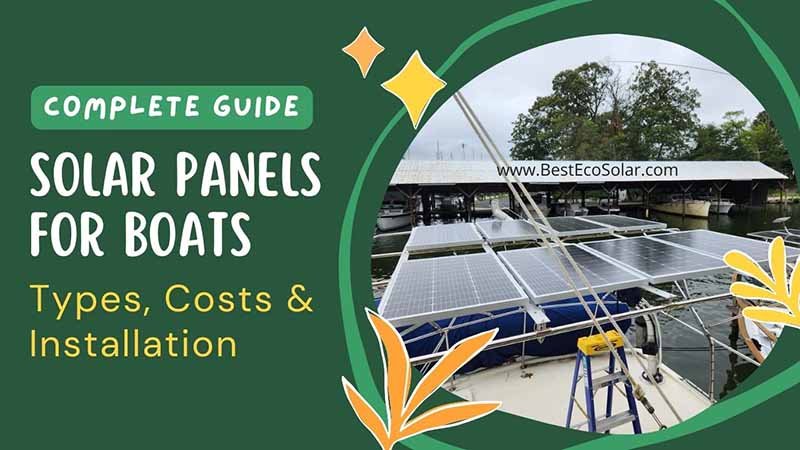
Harness the Sun: Your Complete Guide to Solar Panels for Boats
Solar Panels for Boats – Imagine this: you’re anchored in a secluded cove, the sun is blazing, and your friends are sweating. While others debate firing up a noisy generator, you’re enjoying ice-cold drinks from a running fridge, with a fan humming and all your devices charged. This isn’t magic; it’s the reality of modern marine solar power.
This year, turning your boat into a clean, silent energy haven is more affordable and achievable than ever. Whether you’re a weekend sailor or a liveaboard cruiser, this guide will navigate you through everything you need to know about choosing, installing, and benefiting from solar panels for your boat.

Why Your Next Boat Upgrade Should Be Solar
Forget the loud, fume-belching generators of the past. Installing a solar system for your boat is like hiring a silent, tireless crew member whose only job is to create free power. The benefits extend far beyond just keeping the lights on.
- Silence and Serenity: The most immediate change you’ll notice is the peace and quiet. A typical marine generator can burn half a gallon to a full gallon of expensive fuel every hour it runs. Solar panels work without a whisper, preserving the tranquil sounds of the water around you.
- Freedom and Independence: With a properly sized system, you can say goodbye to “generator anxiety.” You can explore remote anchorages, stay longer on the hook, and power everything from navigation electronics to refrigeration without ever needing to plug into shore power or run a noisy engine.
- Kind to Your Wallet and the Planet: After the initial investment, sunlight is free. You’ll save significantly on fuel costs. Environmentally, a modest 200W solar setup can prevent about 300 pounds of CO₂ emissions annually compared to generator charging.
- Battery Wellness Program: Solar panels are exceptionally gentle on your boat’s batteries. They provide an ideal, automated three-stage charge cycle (bulk, absorb, and float) that can extend battery life by 2-3 years compared to less consistent charging methods.
Navigating Your Options: Types of Marine Solar Panels
Not all solar panels for boats are created equal, especially in a marine environment. Not much different from what solar panels are needed for housing. The right choice depends on your boat’s layout, your power needs, and your budget. Let’s dive into the three main categories.
1. Flexible Solar Panels: The Shape-Shifters
Think of these as the versatile adventurers of the solar world. Made with lightweight, bendable materials like thin-film photovoltaic cells, they can conform to curved surfaces such as cabin tops, biminis, and dodgers.
- Pros: Their ultra-lightweight and flexible nature makes them perfect for boats where drilling isn’t an option or where surfaces aren’t flat. They can often be mounted with strong marine adhesives.
- Cons: They generally have a lower efficiency and power output per square foot than rigid panels and may have a shorter lifespan. They also tend to be less shade-tolerant.
- Best For: Sailboats with canvas tops, boats with complex curves, and sailors looking for a lightweight, low-profile installation.
2. Rigid Solar Panels: The Powerhouses
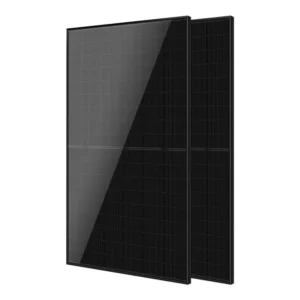
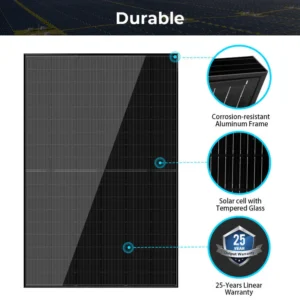
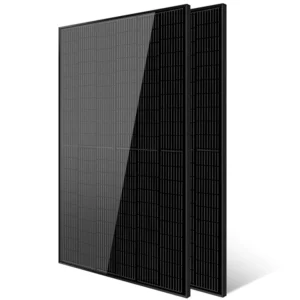
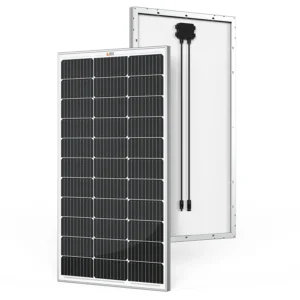
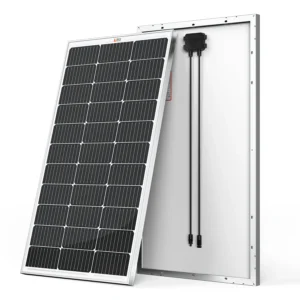
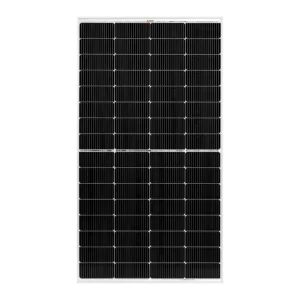
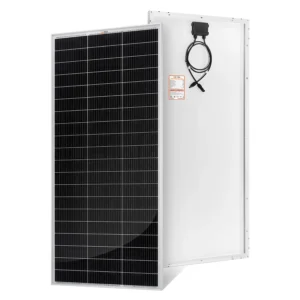
These are the classic, glass-fronted panels you likely picture. They are typically mounted on frames or arches and are built for maximum durability and efficiency.
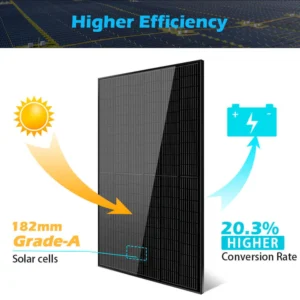
- Pros: They offer the highest solar panel efficiency (with premium models using SunPower Maxeon cells reaching up to 25.4%) and the most power per square foot. They are built to last, often coming with 25-year performance warranties.
- Cons: They are heavier, require sturdy mounting solutions (like stern arches or pole mounts), and cannot bend to fit curved surfaces.
- Best For: Powerboats with hardtops, vessels with dedicated mounting arches, and any boater who needs to maximise power generation from limited space.
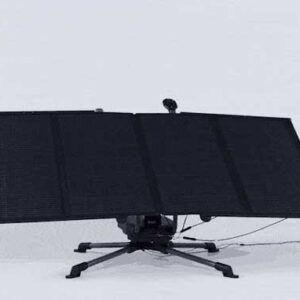
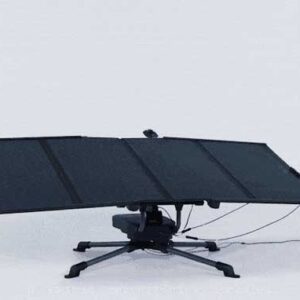
3. Portable Solar Panels: The Plug-and-Play Solution
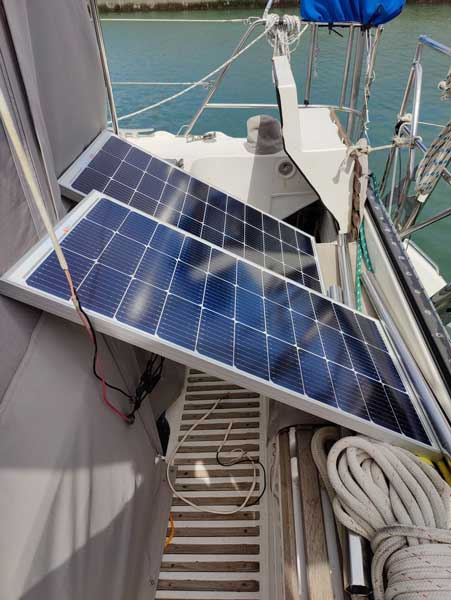
Increasingly popular, these foldable or briefcase-style panels offer ultimate flexibility. You can deploy them on deck when sunny and stow them away when not in use.
- Pros: Zero permanent installation required. They are easy to set up, transport, and can be positioned for optimal sun angle throughout the day. They are a fantastic and cost-effective way to start with solar power.
- Cons: They need to be secured or stored when underway, and can be less convenient than a “set it and forget it” permanent system.
- Best For: Day boaters, anglers, sailors who want supplemental power, and anyone not ready for a permanent installation.
| Features | Flexible Panels | Rigid Panels | Portable Panels |
|---|---|---|---|
| Efficiency | Moderate (Lower power density) | High (Up to 25.4%) | Variable (Often Moderate) |
| Weight & Profile | Very Light, Low-profile | Heavy, Requires Structure | Light, Stowable |
| Durability | Good (But may degrade faster) | Excellent (25-year warranties common) | Good (But requires handling) |
| Installation | Easy (Often adhesive) | Complex (Needs mounting hardware) | Trivial (No installation) |
| Surface Compatibility | Curved/Uneven Surfaces | Flat, Stable Surfaces Only | Anywhere (When deployed) |
| Best Use Case | Biminis, curved cabin tops | Hardtops, stern arches, frames | Supplemental power, small boats |
Solar Panel Supplier
| Name | Price Range | Details |
|---|---|---|
| SunGoldPower | $165 – $936 | View Collections |
| Rich Solar | $69.99 – $499.99 | View Collections |
Charting Your Course: How to Choose the Right System
Selecting your marine solar setup isn’t just about picking a panel. It’s about designing a system that meets your unique energy appetite. Follow this roadmap.
1. Step 1: Calculate Your Daily Power Consumption
This is the most crucial step. You can’t size a system if you don’t know what it needs to power.
- Make a List: Write down every electrical device on your boat.
- Note Power Draw: Find each device’s wattage (usually on a label).
- Estimate Daily Use: How many hours do you run each item per day?
- Do the Math: Multiply watts by hours to get watt-hours (Wh). For example, a 12V fridge drawing 5 amps (60 watts) running for 8 hours uses 480 watt-hours.
Don’t forget to account for battery self-discharge (about 1% per day for lead-acid) and add a 20-30% buffer for cloudy days and system losses.
2. Step 2: Understand Real-World Solar Production
A panel’s “rated wattage” is a laboratory ideal. Real-world output depends on “peak sun hours.” In sunny coastal areas, you might average 5-6 peak hours in summer.
- Simple Formula: Daily Watt-Hours Needed ÷ Peak Sun Hours = Minimum Solar Array Size (in Watts)
- Example: If you need 1,500 Wh daily and get 5 peak sun hours, you need at least a 300-watt solar array.
3. Step 3: The Essential Components Beyond the Panel
A solar panel alone is just one piece of the puzzle. A complete system includes:
- Charge Controller: The brain of the operation. It regulates the voltage and current from the panels to charge your batteries safely and efficiently. MPPT (Maximum Power Point Tracking) controllers are the gold standard, as they can extract up to 30% more power than older PWM types, especially in less-than-ideal conditions.
- Battery Bank: Your energy reservoir. Lithium Iron Phosphate (LiFePO4) batteries are revolutionising marine power. Though costlier upfront, they allow you to use 80%+ of their capacity (vs. 50% for lead-acid), last thousands of cycles, and charge faster, making them ideal partners for solar.
- Inverter: Converts stored DC battery power into AC power to run household appliances like laptops, blenders, or microwaves.
4. Step 4: Prioritise Marine-Grade Durability
The marine environment is brutal. Always look for:
- Waterproof Rating: An IP68 rating is ideal, meaning the panel is completely dust-tight and can withstand continuous immersion in water.
- Corrosion Resistance: Frames, junction boxes, and connectors should be made of or coated with corrosion-resistant materials like anodised aluminium.
- Shade Tolerance: Shadows from sails and rigging are inevitable. Panels with bypass diodes (which isolate shaded sections) or advanced cell technologies like SunPower can perform significantly better under partial shade.
Installation Insights and Pro Tips
You’ve chosen your gear. Now, how do you get it on your boat?
- DIY vs. Professional: Flexible and portable panels are very DIY-friendly. Installing rigid panels on arches or complex wiring often benefits from a professional touch, especially to meet safety standards like ABYC.
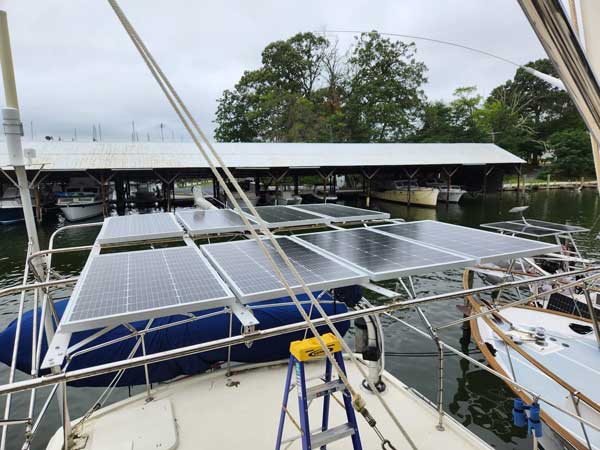
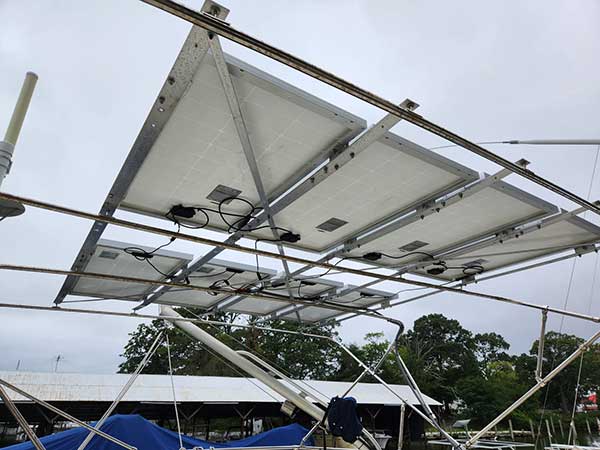
- Mounting Matters: For flexible panels, use a high-quality, UV-resistant marine adhesive like 3M VHB tape. For rigid panels, ensure your arch or frame is over-engineered for the load and windage. Always allow for airflow underneath to prevent heat buildup.
- Wiring Wisely: Use tinned copper marine-grade wire to fight corrosion. Size wires to minimise voltage drop (under 3% is ideal) and install fuses or breakers close to the battery for safety.
Conclusion: Set Sail into a Brighter, Quieter Future
Embracing Solar Panels for Boats is no longer a niche luxury; it’s a smart, accessible upgrade that enhances every aspect of being on the water. It grants you freedom from fuel docks and generator noise, reduces your environmental wake, and coddles your expensive batteries.
By understanding your power needs, choosing the right type of durable marine panel, and building a complete system with a quality controller and battery bank, you can unlock true energy independence. Start planning your system today. Your future self, relaxing in a silent, sun-powered anchorage, will thank you.
 FAQs About Solar Panels for Boats
- Can regular house solar panels be used on a boat?
While physically possible, it’s not generally recommended. Dedicated marine solar panels are built with corrosion-resistant materials and have higher waterproof (IP) ratings to withstand constant salt spray and harsh UV exposure. Residential panels may degrade faster in this environment. - How many solar panels do I need to run a refrigerator on my boat?
A typical 12V marine refrigerator might use 40-60 amp-hours (approx. 480-720 watt-hours) per day. To replenish this in 5 peak sun hours, you’d likely need a 100W to 150W solar panel, assuming no other significant loads. Always calculate your total daily consumption for accurate sizing. - Do I need a special charge controller for a marine solar system?
Yes, a charge controller is mandatory to protect your batteries from overcharging. For a marine system, an MPPT charge controller is highly recommended due to its superior efficiency, especially in variable light conditions on a boat. - Will solar panels charge my batteries on cloudy days?
Yes, but at a reduced rate. Modern panels can still produce 10-25% of their rated power under heavy cloud cover. This is why sizing your system with a buffer (20-30% more than your minimum calculation) is crucial for maintaining power through consecutive cloudy days. - Is there a tax credit for installing solar panels on my boat?
Potentially, yes. The federal Residential Clean Energy Credit (30%) may apply to boats that qualify as second homes—specifically those with sleeping, cooking, and toilet facilities. However, tax law is complex and subject to change (with proposals affecting 2026), so you should consult a qualified tax professional for advice on your specific situation.
You Might Also Like