



Anker SOLIX E10 Review: Is This Compact Powerhouse Worth It?
Portable power stations are everywhere right now. From camping trips to emergency home backup, everyone wants reliable power without the noise of a gas generator. And that brings us to the big question: Is the Anker SOLIX E10 the right portable power station for you?
Anker SOLIX E10 review – In this detailed review, we’ll break down performance, battery technology, charging speed, real-world usability, comparisons, and whether it’s worth your money in 2026. I’ll keep it simple, honest, and practical—just like you’d expect from a friend who’s already tested it.
What Exactly Is the Anker SOLIX E10? (And Why Should You Care?)
Let’s start with the basics. The Anker SOLIX E10 isn’t just another portable power station you wheel out during a storm. This is a permanent, scalable, whole-home battery backup system designed to be the heart of your home’s energy ecosystem.
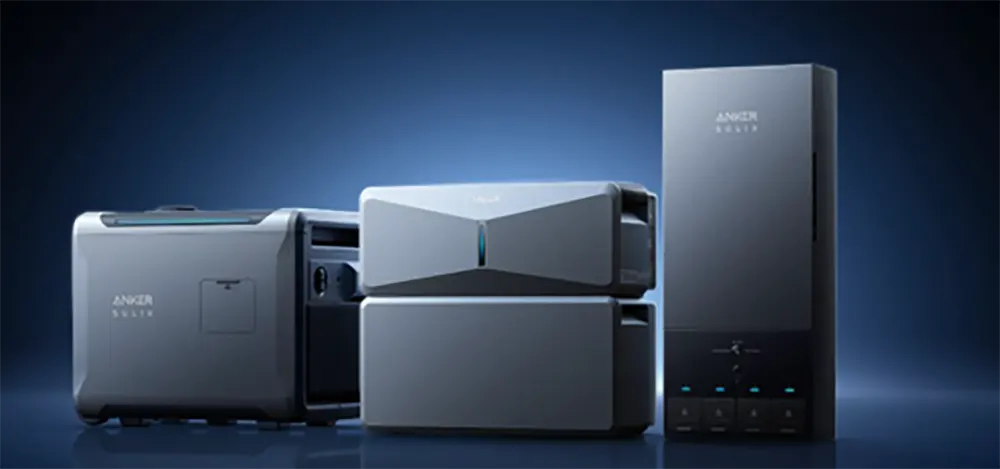
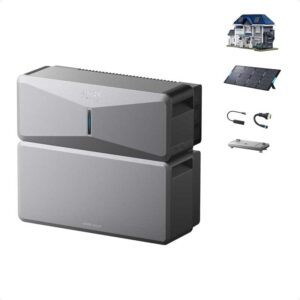
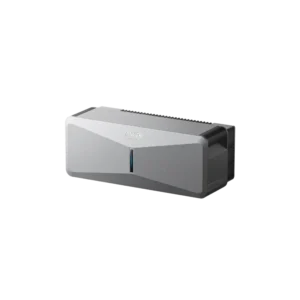
Think of it less like a giant camping battery and more like a tiny, high-tech power plant for your house. The base system includes a Power Module (which houses the inverter and brains) and a 6 kWh battery pack. It’s modular, meaning you can stack these up like LEGO bricks to increase capacity. Need more power? Just add another battery or another unit.
The Anker SOLIX E10 is a modular whole-home backup battery system designed to provide seamless, automatic power to your entire house during an outage. Launched as part of Anker’s new SOLIX lineup, this energy storage system (ESS) aims to compete with established players like the Tesla Powerwall by offering a scalable, high-performance solution at a competitive price point. In this in-depth Anker SOLIX E10 review, we put its 7.68kW continuous output, 30kWh expandability, and smart home integration to the test to determine if it’s the right home battery backup for your family’s needs.
Think of it as a giant power bank with serious muscle. It stores energy, lets you plug in multiple devices, and can recharge through wall outlets, car chargers, or solar panels.
But here’s the real question: Does it compete with bigger brands in the portable power station space?
Let’s dig in.
Anker SOLIX E10 Power Output and Surge Capacity (LRA)
Let’s be real: in an Anker SOLIX E10 review, the specs are the main event. And honestly, they are staggering for a first-generation system.
1. 7.68kW Continuous Output and 10kW Turbo Mode Explained
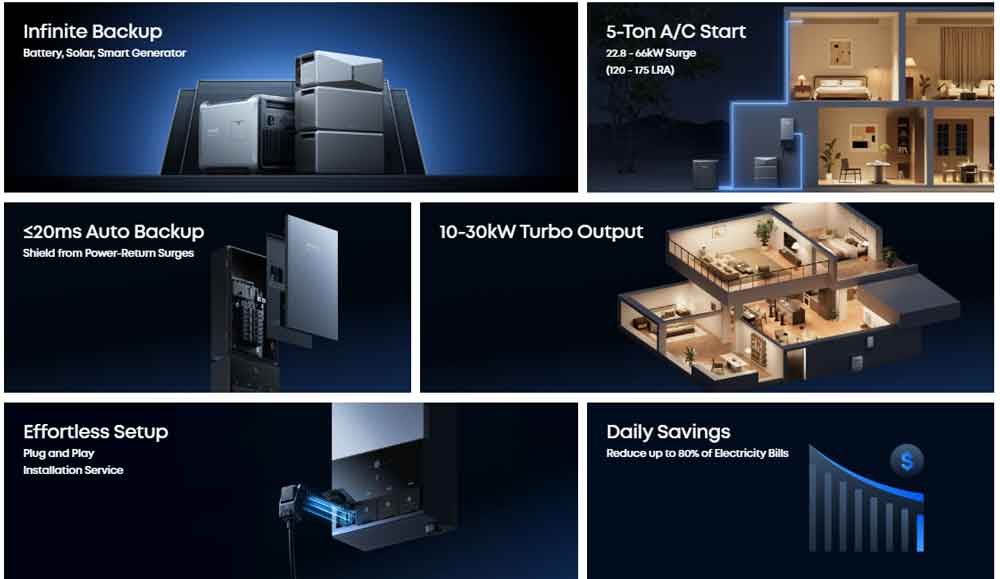
A single E10 unit delivers a continuous output of 7.68 kW. But here is where it gets spicy: Anker has a “Turbo Mode.” When you need to fire up something thirsty—like a central air conditioner—the system can kick out 10 kW for up to 90 minutes. That is a massive surge capability.
2. Surge Capacity Test: Handling High LRA Appliances
If you combine two E10 units, the surge capacity hits a jaw-dropping 66 kW. For those not fluent in electrician-speak, that is enough grunt to start almost any residential appliance you can throw at it, including a 5-ton AC unit with a high starting wattage.
3. The 20ms Switchover
Have you ever been watching TV during a brownout, and the lights flicker just long enough to reboot your router? With the Anker’s modular battery and the Power Dock, the transfer switch happens in under 20 milliseconds. For context, that is faster than a blink. You won’t even notice the grid went down.
Anker SOLIX E10 Modularity and Scalability
One of my favorite aspects of this Anker SOLIX E10 review is the scalability. You don’t have to fork over forty grand right out of the gate to get started.
1. Stackable 6kWh Battery Modules for Custom Capacity
The system is built on 6 kWh batteries. You can start with one, but if you later decide you want to store more solar energy, you just stack another one on top. It’s a plug-and-play design that doesn’t require an electrician to reconfigure everything.
2. Going All Out: 90kWh Configuration
If you combine three E10 units (which includes three inverters and nine battery packs), you can achieve a massive 90 kWh of storage. Anker claims this is enough to power the average U.S. home for up to 15 days during an outage. Of course, if you’re running the AC constantly, that number drops, but for emergency preparedness, that is a fortress-level of security.
Anker SOLIX E10 Specifications
1. Power Module
| Rated Voltage | 120 / 240 VAC (Split Phase) | Rated Frequency | 60Hz |
| Maximum Continuous Output Power (With Battery) | 7,680W, 32A | Turbo Backup Output Current (With Two Batteries) | 10,000W, 41.6A (90 Minutes) |
| LRA Equivalent Ability | 120A (1 Inverter, 1 Battery) 155A (1 Inverter, 2+ Batteries) 275A (2+ Inverters, 2+ Batteries Each) |
AC Input Port Recharging | 1,800W, 120V / 15A *<3 hours when the current exceeds 12A 7,680W, 240V / 32A |
| AC Input Port Bypass | 9,600W, 240V / 40A | PV (Solar) Input | 2× 4,500W, 30 to 450V(DC), 15A(Imp) |
| DC Generator Input | 5 Years | ||
| Enclosure Type | NEMA TYPE 4 (IP66) | Operating Temperature | -4°F to 131°F (-20~55°C) |
| Connectivity | Wi-Fi, Bluetooth | Dimensions (W × H × D) | 26.4″ × 11.8″ × 10.2″ (670 × 300 × 260 mm) |
| Weight | 60.6 lb (27.5 kg) |

2. Battery Module
| Battery Type | Li-ion (LFP) | Capacity | 6,144 Wh per Battery | Up to 30 kWh Total Capacity with One Power Module |
| Voltage | 400V | Certification | UL 9540, UL 9540A |
| Warranty | 5 Years | Enclosure Type | NEMA TYPE 4 (IP66) |
| Operating Temperature | -4 °F to 131 °F (-20~55°C) | Installation Option | Floor Mounting Or Wall Mounting |
| Dimensions (W × H × D) | 26.4″ × 12.7″ × 11.1″ (670 × 322 × 281 mm) | Weight | 130 lbs (59 kg) |
Solar Input and MPPT Performance for the Anker SOLIX E10
What good is a big battery if you can’t fill it for free? The E10 is designed with solar in mind.
1. 9kW per unit
Each E10 unit supports up to 9 kW of solar input. This is significant because it means you can over-panel your array to capture energy even on cloudy days. With three units, you’re looking at a massive 27 kW solar input capacity.
2. Compatibility
Anker claims it works with “all solar panels”—rigid, portable, or third-party AC solar systems. So, if you already have panels on your roof, chances are the E10 can integrate with them without you having to rip everything out and start over.
The Dynamic Duo: Power Dock vs. Smart Inlet Box
This is where things get a little tricky, and it’s vital to understand the difference. Anker offers two main ways to connect this beast to your home.
1. The Power Dock (Full Automation)
The Power Dock is the gold standard. It is essentially a smart electrical panel that replaces or works alongside your existing breaker box. It gives you 200-amp whole-home backup, meaning literally every light, outlet, and appliance in your house can run off the battery. It handles the automatic 20ms switchover we talked about earlier. This is the “set it and forget it” option.
2. The Smart Inlet Box (The Budget Hero)
If you’re handy or want to save money, the Smart Inlet Box is your friend. Priced at around $399, this is a manual transfer solution. It connects to your existing panel via an interlock kit. During an outage, you have to physically go to the panel and flip the main breaker off and the inlet on. It’s not automatic, but it costs significantly less and is much easier to install.
Built Like a Tank: NEMA 4 and Temperature Resilience
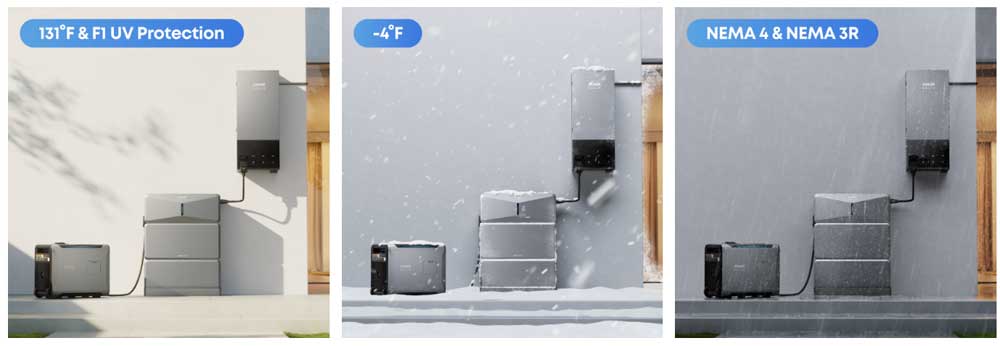
If you’ve ever owned a generator, you know the elements are the enemy. The Anker SOLIX E10 features an all-metal NEMA 4 enclosure with UV protection. It’s rated to operate in temperatures ranging from a frigid -4°F all the way up to 131°F. Whether you mount it in the garage or outside on a concrete pad, it’s built to survive snow, rain, and dust.
The Smart Generator: The Ultimate Backup Plan
Here’s a scenario: It’s the dead of winter, you’ve had a week of blizzards, and your solar panels are covered in snow. Your battery is running low. What do you do?
Enter the Smart Generator 5500. This is a tri-fuel generator (gasoline, propane, or natural gas) that talks to the E10. When the battery hits a certain low point, the generator automatically kicks on to recharge it. Once the battery is full, it shuts off. You don’t have to go outside in the cold to pull a cord. It’s like having a pit crew for your house.
Anker SOLIX E10 Price, Cost, and Configuration Guide
Let’s talk turkey. None of this is cheap, but compared to a Tesla Powerwall, the pricing is competitive.
| Configuration | Components Included | Price (Approx.) | Best For |
|---|---|---|---|
| Base System | 1 Inverter + 1 Battery | $4,299 | Essential circuits, getting started |
| + Smart Inlet | 1 Inverter + 1 Battery + Inlet | $4,599 | DIYers on a budget |
| + Power Dock | 1 Inverter + 1 Battery + Dock | $5,799 | Automatic whole-home backup |
| Full Monty | 1 Inverter + 2 Bat. + Dock + Gen | $7,399 | Off-grid capability, total peace of mind |
Note: Prices are based on MSRP and may vary with promotions.
Anker SOLIX E10 vs. The Competition
| Feature | Anker SOLIX E10 | Tesla Powerwall 3 | EcoFlow DELTA Pro Ultra |
|---|---|---|---|
| Base Price | $4,299 | ~$8,200-$9,300 | $4,099 |
| Base Capacity | 6.14 kWh | 13.5 kWh | 6.14 kWh |
| Max Capacity | 30.7 kWh (per inverter) | Up to 13.5 kWh per unit | 90 kWh (with 15 batteries) |
| Continuous Output | 7.68 kW | 11.5 kW | 7.2 kW (per inverter) |
| Peak/Surge Output | 10 kW (Turbo) / 37.2 kW LRA | 22 kW | 10.8 kW (per inverter) |
| Solar Input (Max) | 9 kW (per unit) | ~20 kW | 5 kW (per unit) |
| Battery Chemistry | LFP (LiFePO4) | LFP (LiFePO4) | LFP (LiFePO4) |
| Warranty | 5 Years (System) | 10 Years | 5 Years |
| Scalability | Modular (stackable batteries) | Fixed unit | Modular (stackable batteries) |
| Transfer Switch | Power Dock (Auto) / Smart Inlet (Manual) | Integrated | Smart Home Panel 2 (Auto) |
| Generator Support | Yes (Smart Generator 5500) | Limited | Yes (via AC charging) |
| Installation | Professional required | Professional required | Professional required |
Anker SOLIX E10 Installation: DIY vs. Professional Setup
Anker is really pushing the “DIY-friendly” angle here, and to a certain extent, they are right. The stackable design means you can literally lift the batteries and click them into place.
However, connecting it to your house is a different story. If you go with the Smart Inlet Box and you know your way around a breaker panel (and your local electrical codes), a competent DIYer can handle this. But if you opt for the Power Dock, you need a licensed electrician. Messing with a 200-amp service is not the time to watch a YouTube tutorial.

Real User Impressions: The DIY Community Chimes In
Since the February 2026 release, the DIY solar forums have been buzzing. One user, “Linwood,” on the DIY Solar Forum, detailed his installation of the E10 with a Smart Inlet Box. He mentioned he was moving away from a traditional gas generator because it was “a pain to use.” He appreciated that the E10 allowed him to charge from his EV in a pinch, acting as a massive backup battery for his backup battery.
However, other users raised concerns about the generator pass-through. If you hook up a standard generator that isn’t an inverter model, you have to watch the Total Harmonic Distortion (THD). The E10 needs clean power to charge efficiently.
Final Verdict: Anker SOLIX E10 Review Summary
So, after looking at all the angles, where does the Anker SOLIX E10 land?
It is arguably one of the most versatile home backup systems to hit the market in 2026. It combines the raw power needed for a modern home with the intelligence to save you money daily through peak shaving (storing cheap energy and using it when rates are high).
| Pros | Cons |
|---|---|
| Insane 66kW surge capacity with dual units. | Base battery (6kWh) is small for whole-home use; you’ll likely need more. |
| Highly scalable from 6kWh to 90kWh | The “DIY” installation still requires electrical knowledge for the inlet. |
| Tri-fuel smart generator integration is seamless. | Premium pricing adds up quickly when scaling. |
| 20ms automatic switchover with Power Dock. | Slightly heavy |
| Fast charging |
If you’re looking for a system that grows with your needs and offers the flexibility of solar, grid, and generator charging, the E10 is a home run. It’s not just a battery; it’s an energy management system.
FAQs About Anker SOLIX E10
With LiFePO4 battery chemistry rated for 3000+ cycles, it can last 8–10 years with normal use.
Yes, most standard refrigerators run between 100–800W, which is well within its 1800W output capacity.
Yes. It supports up to 600W solar input with MPPT optimization for efficient charging.
Yes, you can charge the unit while powering connected devices.
They’re close competitors. Both offer LiFePO4 batteries and high output. The choice depends on pricing, availability, and ecosystem preference.
Technically, yes, but practically, it depends on your usage. With a max configuration of 90kWh and 27kW of solar input, you could absolutely go off-grid, especially in sunny climates. However, for the average user, it’s best viewed as a backup with daily energy savings, rather than a full off-grid replacement.
If you’re using the Smart Inlet Box and have the wiring pre-run, a licensed electrician can have it ready in a few hours. The Power Dock installation is more involved and might take a full day, as it requires integrating with or replacing your main service panel.
In most cases, yes. Anker states it is compatible with all solar panels, including third-party AC solar systems. However, you should always check the voltage and connector types with an installer to be 100% sure.
No sun, no grid, and a dead battery? That’s where the Smart Generator shines. It will automatically kick on to recharge the batteries using propane or natural gas, giving you effectively "infinite" backup power until fuel runs out.
Absolutely. The stackable, plug-in design is a genuine highlight. Once the base unit and inverter are mounted, adding an extra 6kWh battery is as simple as lifting it onto the stack. It clicks in, and the system recognizes it immediately.
You Might Also Like