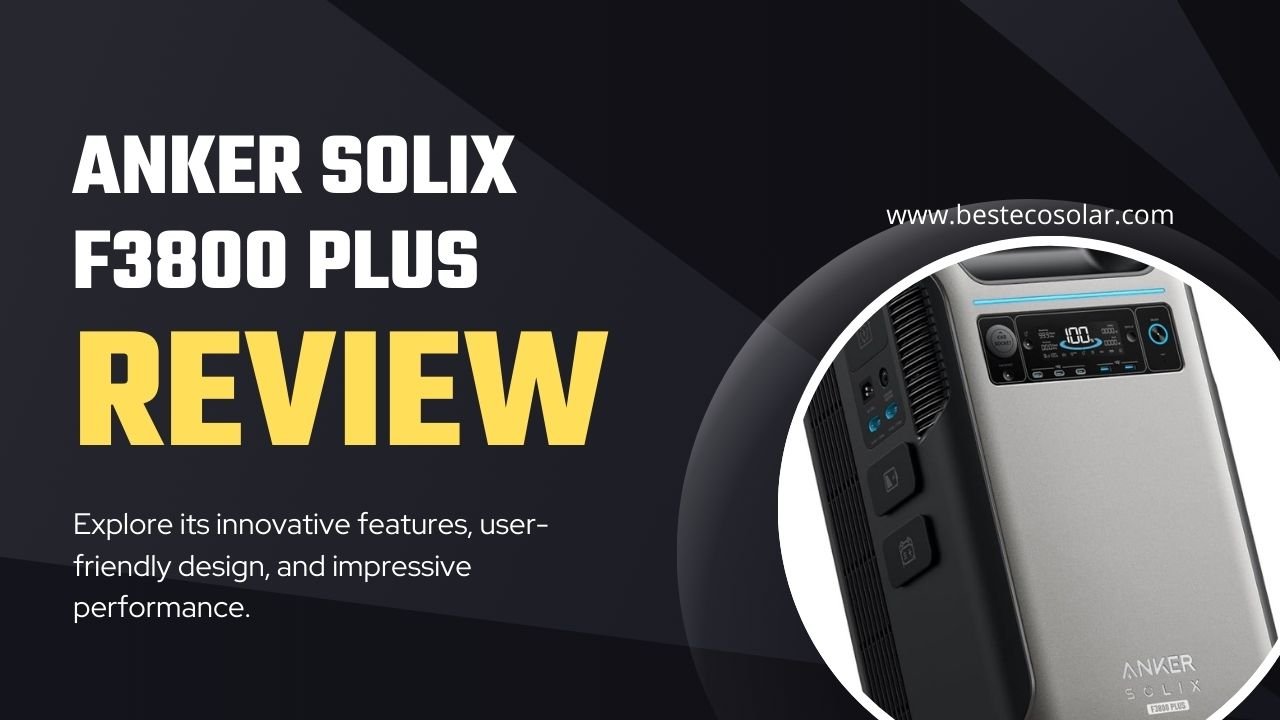
Ultimate Review of the Anker SolX F3800 Plus Portable Power Station and Solar Charging System
Anker Solix F3800 Plus Review – Power outages, off-grid adventures, or construction work—reliable portable power is more important than ever. The Anker SolX F3800 Plus offers a versatile solution with plenty of features packed into one unit. With a built-in battery, multiple outlets, solar compatibility, and even generator input, this system aims to serve many needs. In this review, we’ll test its performance, see how it handles real-world loads, and explore how it might fit your energy needs.
What is the Anker SolX F3800 Plus?
This portable power station combines a battery, an inverter, and solar charge controllers in a compact package. It produces both 120V and 240V power from one device, which means you can run larger appliances without needing multiple units. Designed for outdoor adventures, backup power, or off-grid living, it aims to replace traditional generators with cleaner, quieter energy.
1. Key Features and Specifications
- Battery capacity: 3.8 kWh, expandable up to 7.6 kWh with additional batteries
- Built-in inverter: Converts stored power into usable AC electricity
- Multiple outputs: USB ports, 120V AC outlets, RV-style plug
- Upgraded MPPT charge controllers: Handle 165V and 17A for efficient solar input
- Dual voltage output: 120V and 240V, without needing to parallel units
- Generator input: New feature allowing charging from gas-powered generators
- App control: Firmware updates, monitoring, and settings adjustment via smartphone

2. What’s New and Better?
Compared to previous models, the F3800 Plus has improved charge controllers for faster solar charging. It also features a proprietary generator port that communicates with your generator for better control. The handle and connector updates give it a modern, rugged feel, making it suitable for many off-grid applications.
How Does It Perform?


1. Charging Capabilities
A. Solar Charging in Action
Anker Solix F3800 Plus Review – We hooked up four 410W solar panels from Anker in series, creating a total of 820W of peak power. These panels are UL-listed and look sleek. They produced steady power, reaching 1300W-1600W during peak sunlight. The upgraded MPPT controllers managed this efficiently, charging the battery in just under 2.5 hours. That’s quick for a system of this size, especially in cold or partially cloudy weather.
B. Charging from a Wall Outlet
When plugged into a standard 120V wall socket, it charged just as fast. Since it’s designed to act as a UPS, it can supply power to devices even while charging. The device’s display showed a 26% charge at startup, but after a couple of hours, it was fully topped off. It’s a reliable way to keep power available during outages.
2. Powering Loads and Handling Surges
We tested running a 240V space heater using the AC outlets. As soon as we plugged it in, the system powered right up, providing 4,800W at peak. It handled continuous loads with ease, running for hours without issues. During extended use, the battery slowly drained, but the system remained stable and responsive.
3. Battery Expansion and Capacity
Adding an extra expansion battery doubled the total capacity from 3.8 kWh to 7.6 kWh. The process was simple—just connect the beefy cables and turn on the units. We then ran a 500W heater to see how much energy was available. Over four hours, it consumed about 6.7 kWh, showing the system can reliably power big appliances for hours. Plus, with the extra battery, you get more runtime without sacrificing portability.
4. Firmware and App Features
Using the Anker app, we updated the firmware to the latest version. This process was straightforward and gave us access to new features like the generator input. Remote management means you can monitor power levels, update firmware, and tweak settings without fiddling with buttons on the device. This makes it easier to keep everything running smoothly.
Compatibility with Solar and External Power
1. Using Anchor Solar Panels
The 410W Anchor panels are a perfect match for this system. Connecting two panels in series creates a voltage around 74- 75V, well within the MPPT controller’s capacity. We kept an eye on the open-circuit voltage, which was around 73V, stable and safe for the controllers. Peak sunlight pushed the system to produce full rated power, charging the battery quickly.
2. Linking with Gas Generators
A feature that excited us is the generator input port. Using the included adapter cable, we connected a Honda EU6500 generator. The system recognized the input and entered pass-through mode, powering loads directly from the generator while simultaneously charging the batteries. We tested powering a space heater from the generator and saw the system handle around 5,500W of input. It also maintained the 240V output, perfect for big appliances.
In practice, when the generator was running, the system balanced power flow, ensuring the batteries stayed topped off. The ability to seamlessly switch between solar, generator, and grid-like power makes this a flexible tool for many applications.
Real-World Use Cases
This system suits many scenarios. For off-grid living, it offers clean, quiet power for lighting, refrigerators, or small appliances. Emergency preparedness is another strong point, keeping essential devices running during outages. Construction sites and remote job locations benefit from reliable, portable power, reducing reliance on noisy generators.
RVers and campers also find the multiple outlets helpful. The RV-style plug and dual voltage options simplify hookup in various settings. Plus, the ability to recharge from a generator or solar expands flexibility and independence.

Practical Tips for Best Results
- Configure panels carefully: Series connection increases voltage. Know your climate and panels’ specs.
- Update firmware regularly: To unlock new features and maintain security.
- Use the right generator: At least 8,000W rated output if you plan to run large loads or multiple batteries.
- Manage loads carefully: Large surges or overloads can trip the system. Always match your appliances’ power needs.
- Extend battery life: Store in cool places, avoid deep discharges, and keep firmware current.
Conclusion of Anker Solix F3800 Plus Review
The Anker SolX F3800 Plus proves to be a versatile, powerful portable energy system. It’s fast solar charging, expandable capacity, and incorporation of generator input make it a top choice for off-grid, emergency, or worksite use. The app integration adds convenience, while the ability to handle high loads makes it reliable for demanding tasks.
If you want a single, all-in-one power station that covers your needs from camping to construction, this is a great option. It’s robust, simple to use, and future-proof with firmware updates. Check the links below for pricing and further details.
Power up confidently knowing your energy needs are covered—whether in the woods, at home, or on a job site. The Anker F3800 Plus is ready to serve you wherever power is needed.
You Might Also Like
- EcoFlow River 3 Plus VS River 3
- Portable Lithium Power Station
- Powerstation Camping 1000 Watt
- Portable Power Station For Camping
- Solar Generator For Camping