



Pecron E3600 LFP Review: BUDGET Power Station Solar Generator
Pecron E3600 LFP Review – Picture this: the power goes out during a storm, and you need enough juice to run your fridge, lights, and even a dryer without skipping a beat. That’s where the Pecron E3600 LFP comes in. This beast of a portable power station packs 3600 watts of clean power at a price that makes premium brands sweat—only 42 cents per watt. But hype alone doesn’t cut it. We tested it hard to see if it lives up to the buzz or falls flat.
Pecron built the E3600 LFP to handle big jobs on a budget. Its 3.72 kWh battery lasts through 3500 cycles, and you can expand it for more storage. With three solar controllers, it pulls in sunlight like a pro. At under $1600 on pre-order, it’s a steal. Yet, real tests reveal strengths and a few bumps. Let’s break down what makes this unit tick and where it stumbles.

Pecron E3600 LFP: Powering Your World
The Pecron E3600 LFP shines when you need reliable power for tough tasks. It delivers steady output for home backups or off-grid adventures. You get options to scale up, too. No more guessing if it’ll handle your setup—it does, with room to grow.
1. Unveiling the 3600-Watt Inverter and Battery Core
The heart of this power station is its 3600-watt pure sine wave inverter. It runs smoothly, like grid power, so sensitive gear won’t glitch. We pushed it to see real limits.
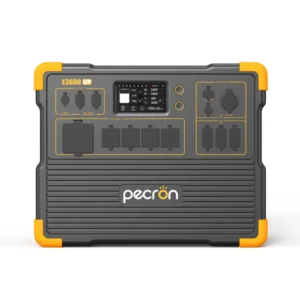
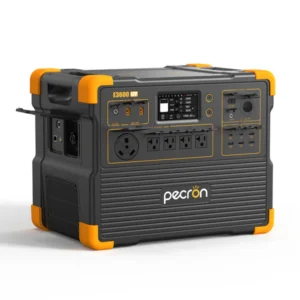
- Pure Sine Wave Output: 3600 watts steady, peaking at 4400 watts in bursts.
- AC Outlets: Four spots for 20 amps each, plus a full 30-amp TT-30R hookup.
- Battery Capacity: 3.72 kWh using safe LiFePO4 cells.
- Cycle Life & Lifespan: Holds up for 3500 cycles to 80% health, about 10 years if you use it daily.
- Tested DC Capacity: Pulled 2650 Wh at 20 amps (86% of rated); 2590 Wh at 10 amps (84%).
- Tested AC Capacity: Delivered 2770 Wh (90% efficiency).
These numbers mean it stores and gives back most of what it holds. You won’t waste much time on idle time. For daily needs, it’s a solid pick.
2. Expandable Storage for Extended Power Needs
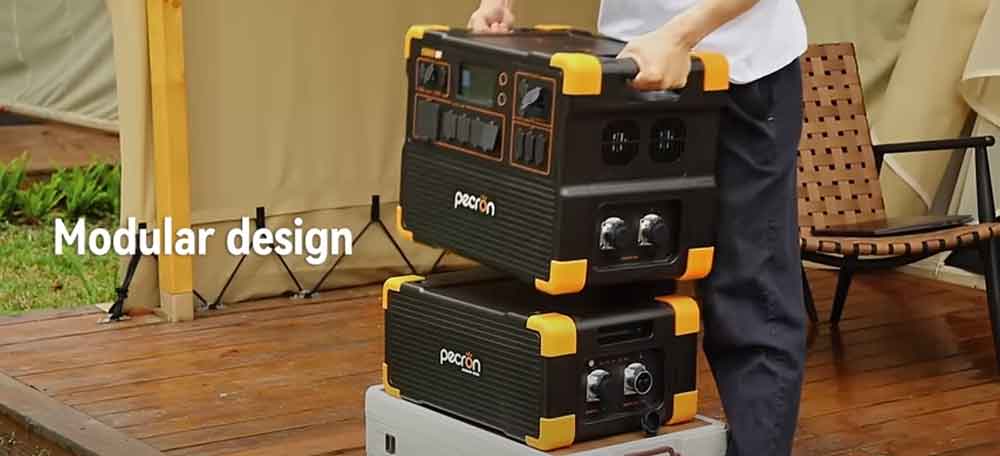
Want more than one day’s power? The E3600 LFP grows with you. Hook up extra batteries through the built-in ports. This turns it into a home backup system.
- Expansion Ports: Two bidirectional spots for up to four 3 kWh add-ons.
- Maximum Storage: Hits 15 kWh total—enough for an average house’s full day.
- Real-world Implication: Run essentials longer without recharging often.
Imagine powering lights, fans, and a small AC unit for hours. It’s flexible for RVs or cabins. Just plug and expand as needs change.
3. Split-Phase Capability for High-Demand Appliances
Pair two units, and you unlock 240-volt power. This matters for big tools or home gear that standard 120 volts can’t handle. It’s like doubling your muscle.
-
Battery, Power Station, smart devices
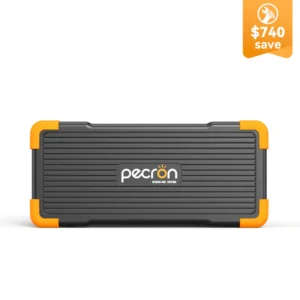
Original price was: $1,499.00.$809.00Current price is: $809.00. Select Your Options
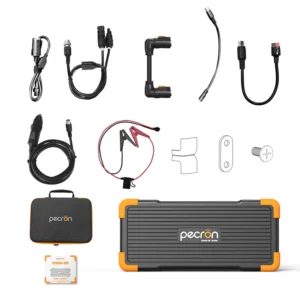
- Dual Unit Pairing: Use a hub and data cable to link them.
- 240V Split-Phase Output: Combines two 120V lines for 240V at the same beat.
- Combined Output: 7200 watts continuous.
- Appliance Examples: Handles ovens, dryers, pumps, and heaters easily.
- Demonstration: Fired up a 240V air compressor without a hitch.
- Testing Limitations: No AC charging in this mode—solar only works.
We tested it on real loads. The compressor hummed to life at 587 watts per unit. It splits work evenly. Great for workshops, but remember, no grid top-up here.
Charging the Behemoth: Versatile Input Options
Pecron E3600 LFP Review – Recharging the E3600 LFP is straightforward and fast. You have choices from wall plugs to solar panels. Pick what fits your spot. It adapts to slow or quick fills.
1. Rapid AC Charging: From Grid to Full Power
Wall power gets you back online in hours. The setup uses a special cable to control speed. You tweak it to match your outlet.
- Proprietary AC Connector: Data pins set the rate to 15 amps standard.
- Standard 15A Charging: 1800 watts max, full in 2 hours.
- Optional 30A Cable: 3200 watts, done in 1.3 hours.
- Adjustable Charge Rate: Set from 10% to 100% on screen or app.
- Minimum AC Charge Rate: Floors at 400 watts—might strain small car inverters.
- AC Charging Noise: Hums at 44 decibels, barely noticeable.
At 50%, it halved to 900 watts clean. But 10% still pulled 400 watts, not ideal for weak sources. Still, it’s quick for most setups.
2. Solar Powerhouse: Triple MPPT Controllers
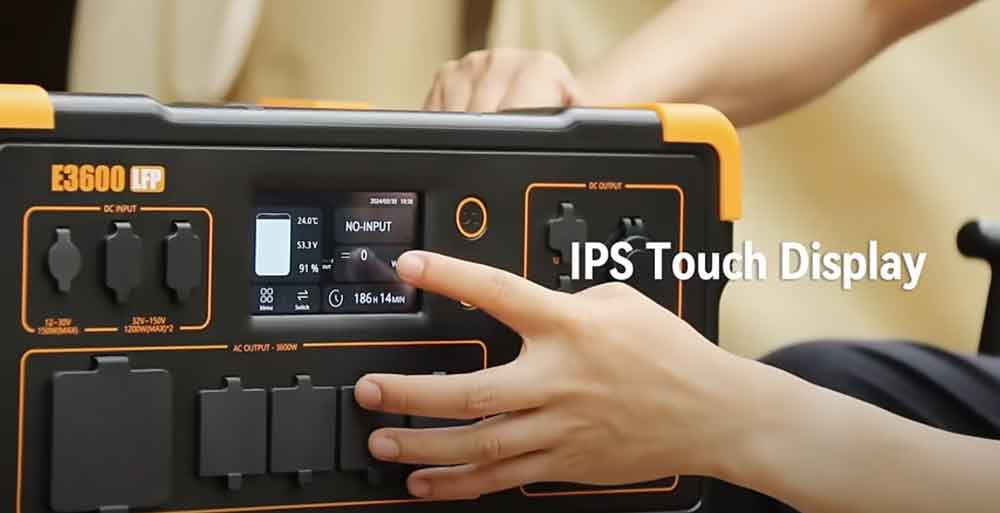
Sunlight charges it best with three built-in trackers. Each handles different panel types. Total input tops out high.
- Three MPPT Controllers:
- Low-voltage: 12-30 volts, 7 amps (150 watts) on barrel plug.
- Two high-voltage: 32-150 volts, 20 amps each (1200 watts per) on XT60.
- Maximum Solar Input: 2500 watts combined.
- Charging Time: 2.5 hours on a sunny day.
- Included Adapters: MC4 to XT60 for easy panel links.
- Low Voltage Controller Performance: Maxed 150 watts at 30 volts.
- High Voltage Controller Performance: Hit 1166 watts at 150 volts per unit.
- Self-Correcting Input: Fixes over-voltage without shutdown.
We ran all three at once—nailed 2500 watts. Low one took a 12-volt feed fine. High ones loved series panels. It’s a solar champ for campers.
3. Auxiliary Charging: Car and External Battery Options
For on-the-go use, use your vehicle’s outlet. It’s slow but handy. Or tap another battery.
- Car Charging: 150 watts from 12V or 24V sources via barrel plug.
- Car Charger Limit: Caps at 7 amps on 12 volts.
- Car Charging Time: Takes 34 hours to fully.
Plug into your truck during a trip. It sips power without draining the starter battery fast. Good backup when the sun hides.
Connectivity and User Experience: Features and Interface
The E3600 LFP feels user-friendly once you learn it. Screen and app make checks easy. Outputs cover phones to tools.
1. Intuitive Interface and Remote Control
The display lights up with touches. Buttons back it up if tech fails. App lets you monitor from afar.
- Color Touchscreen Display: Shows stats in color under load.
- Physical Buttons: AC and DC toggles start everything—no main switch.
- App Control: Adjusts settings on iOS or Android phones.
- Redundancy: Buttons work solo if the screen glitches.
Hold a button to boot. App syncs remote tweaks. It’s simple for tech newbies. Colors pop during alerts, too.
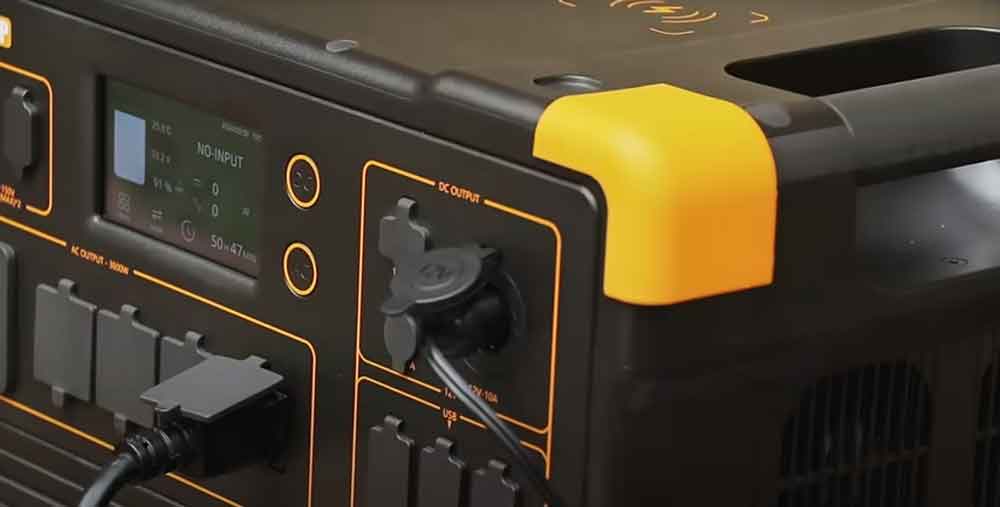
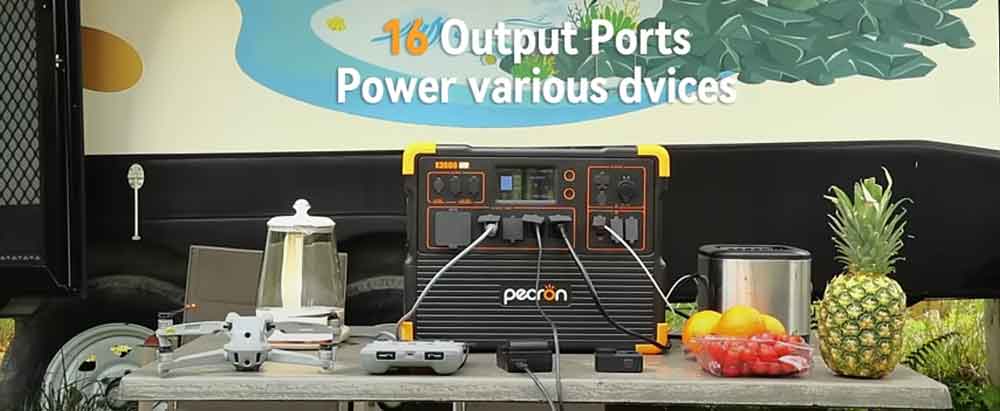
2. Diverse Output Ports: Powering All Your Devices
Ports match most gadgets. From USB to heavy DC, it’s covered. Wireless adds convenience.
- AC Outlets: As above.
- 12V DC Outputs:
- Cigarette lighter: 10 amps steady.
- Barrel output: 5 amps.
- 30A regulated 12V: XT60-EF, spiked over 400 watts briefly.
- USB Outputs:
- Four USB-A for quick charges.
- 18W USB-C.
- 100W USB-C PD, tested at 103 watts.
- Wireless Charging: Two 15W pads on top.
Phone topped from 30% in under two hours wirelessly. DC held 13 volts at 10 amps. Laptops love the PD port. Just note that wireless needs DC on.
3. Standby Power Consumption: Understanding Idle Drain
Leave it on, and it sips battery. Know this to plan long sits. The AC side draws more.
- DC Circuit Standby: 15 watts always.
- AC Inverter Standby: 46 watts idle.
- Full Battery Drain: Gone in three days with the inverter running.
Over 12 hours, DC used 184 Wh. AC took 185 Wh in four hours. Turn off when not needed to stretch life.
Performance and Durability: Real-World Testing
Tests push limits to find truths. We ran loads, checked heat, and watched for breaks. Most passed, but one spot failed.
1. Sustained Load and Overload Testing
Heavy use shows if it holds. We cranked it for minutes. No smoke, no fuss.
- Sustained Load Test: 3640 watts for five minutes, stable.
- Max Capacity Test: 4400 watts short-term, no crash.
- Inverter Temperature: Hit 125°F max—fine for size.
- Voltage Sag: Dipped to 115 volts under push, okay.
- Sine Wave Quality: Clean trace on scope every time.
Timer ticked without issues. Fans spun steadily. It cooled quickly after.
2. Noise Levels and Environmental Factors
Sound matters in quiet spots. We measured close up. Interference popped up in tests.
- Noise Level (Max Power): 52-53 decibels, like a fridge.
- Radio/EMF Interference: Pegged 80 units—high for sensitive stuff.
- AM Radio Interference: Buzz even after shutdown; wireless lingered.
Amp test had slight hum, not bad for gigs. But EMF lit up meters. Keep radios away.
3. Critical Failure: The 12V DC Output Issue
Mid-test, DC died. Zero volts out. We dug in.
- Failure Description: All 12V ports went dark after loads.
- Testing Context: Hit after two amp draws and time-lapses.
- Pecron’s Response: Engineering sample flaw; retail fix promised.
- Cause Hypothesis: Heat fried the circuit.
- Impact: Big red flag, but prototypes aren’t final.
Pecron says they tested retail units clean. We await updates. It shook trust a bit.
Verdict and Value Proposition: Is the Pecron E3600 LFP Worth It?
Pecron E3600 LFP Review – The E3600 LFP packs power few match at this price. It shines in output and solar pull. Yet flaws like the DC fail linger. Weigh them against your needs.
1. Strengths and Weaknesses: A Balanced Perspective
Pros outweigh cons for most. But know the gaps.
- Strengths:
- Killer value at 42 cents per watt.
- Huge 3600W clean output.
- Grows to 15 kWh storage.
- Three MPPTs for 2500W solar.
- 240V mode for big gear.
- Wireless pads included.
- Strong efficiency at 86-90%.
- Five-year warranty.
- Weaknesses:
- DC circuit failed in the test.
- Special AC cable locks you in.
- Screen needs UI tweaks.
- High EMF output.
- Slow charge min too fast for cars.
- Wireless drains standby.
It covers basics well. Extras like the app help.
3. The Value Proposition: Unbeatable Price for Power
At $1519 with code, it’s a bargain. Add batteries for 33 cents per Wh. Rivals cost double.
- Pre-order Price: $1599 base, $1259 discounted.
- Cost per Watt: Below 42 cents.
- External Battery Value: $809 for 3 kWh.
- Competitor Comparison: Matches pricier models’ features.
Solar bundles fit, too. Check Pecron’s site.
4. Final Recommendation: A Powerful Choice with Caveats
Pecron E3600 LFP Review – Grab the E3600 LFP if you want high power cheap price. It’s great for backups or solar setups. Watch for DC fixes—Pecron vows improvements. For sensitive tech, test EMF yourself. Overall, it defies low-cost doubts. Ready to power up? Scan the code below or hit the link for deals. Your grid-free life starts here.
You Might Also Like