



Battery Evo Walrus G3: The Ultimate Home Backup Power Solution Review
BatteryEvo Walrus G3 Review – Six months ago, a power station buyer’s guide video was released, but the home backup power solutions category was left largely untouched. This was due to limited exposure to available options. However, that has changed significantly in recent months. This review focuses on the BatteryEvo Walrus G3, a standout product due to its simplicity, massive battery capacity, and incredibly low cost per watt-hour.
1. Understanding Battery Evo and the Walrus G3
1.1 Who is Battery Evo?
Battery Evo is based in Los Angeles, California, and has been in the solar battery storage business for seven years. They offer a range of products, including solar storage solutions like the Walrus and Rhino series, smaller battery systems, and even massive high-capacity products such as the Komodo electric generator tank. Their commitment to the industry is evident in their direct communication and California-based team.
1.2 The Walrus G3: Unpacking the Specifications
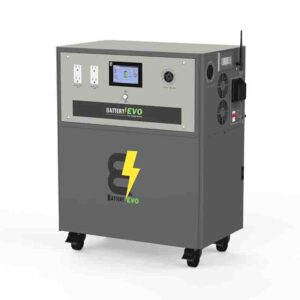
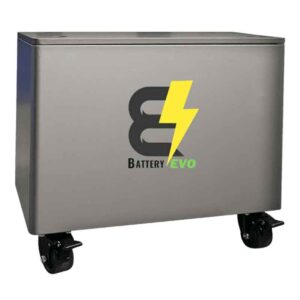
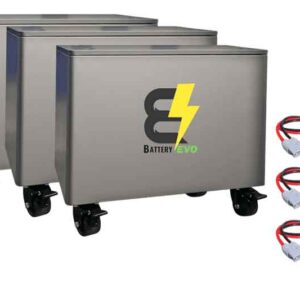
The Walrus G3 is a substantial piece of equipment, boasting a 22 kWh battery bank that weighs around 400 lbs. It comes on caster wheels, making it surprisingly mobile for its size. Setup is straightforward: the inverter and battery units are separate but easily connected via a large DC cable.
- Inverter Capacity: The unit is rated for 12.5 KVA, but it’s important to note that this isn’t the continuous wattage output. The Walrus G3 can sustain a continuous load of 10,000 watts (10 kW).
- Physical Design: It features a two-piece cabinet design, with the battery below and the inverter on top. Locking casters add stability when positioned.
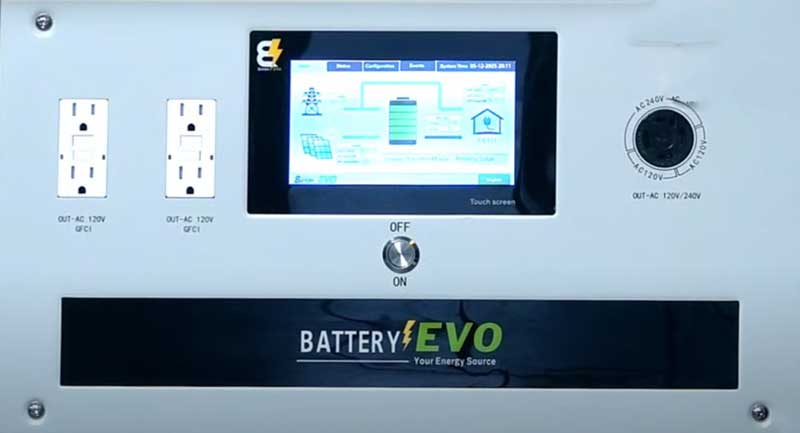
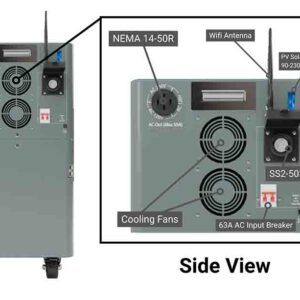
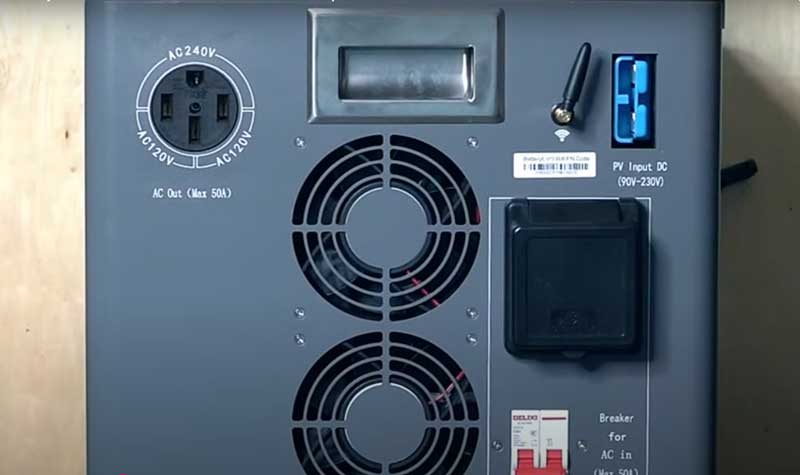
- Outlets and Ports: You’ll find four GFCI 15-amp, 3-prong outlets on the front. There’s also a 240-volt, 30-amp L1430 receptacle and a 50-amp NEMA 1450 receptacle, similar to a dryer plug. For solar input, there’s a PV connector with an MC4 adapter. AC charging is handled via an SS250P twist-lock 50-amp connector.
- Display and Connectivity: A user-friendly touchscreen LCD display provides all necessary information. The unit also offers wireless app connectivity, though initial setup might require some troubleshooting.
2. Key Features and Performance Testing
2.1 Inverter Performance: Sustaining High Loads
During testing, the Walrus G3 demonstrated its ability to handle significant loads. A 30-minute test was conducted to see if it could sustain close to its 10kW rated output. For this, EV charging was used, requiring a neutral-ground bond. This bond was established using a UL1530 plug with the neutral and ground wired together.
- 10kW Sustained Output Test: The unit performed admirably, reaching 9.4 kW during the EV charging test. It maintained this output for the full 30 minutes.
- EV Charging Use Case: The 50-amp NEMA 1450 output proved effective for charging an electric vehicle. The test highlighted the importance of the neutral-ground bond for EV charger compatibility.
- Decibel Meter Readings: The fans did kick in during high-load operation. The unit registered around 65 dB when the fans were active, which is noticeable but manageable.
- Real-world Wattage Achieved: The test confirmed a peak output of 9.4 kW, limited by the EV charger’s 40-amp capability.
2.2 Usable Capacity Test: Real-World Energy Delivery
A test was performed to determine the usable capacity of the 22 kWh battery. Charging an EV via a 120V outlet was chosen as a worst-case scenario due to lower efficiency and longer inverter run times. This test helps understand parasitic draw and overall energy delivery.
- Worst-Case Scenario: Discharging at a low rate of 1,400 watts via a 120V outlet maximizes the time the inverter is active, revealing potential energy losses. The observed no-load draw was around 57 watts, or about 0.25% of capacity per hour, which is typical for a 10kW inverter.
- Impact of Configuration Settings: Crucially, adjusting the battery configuration parameters in the “Set Battery” menu to match the manual’s specifications significantly improved performance. Incorrect initial settings led to odd state-of-charge behavior.
- Usable Capacity Achieved: After correcting the settings, the test yielded 19.53 kWh of usable capacity. This is an excellent result, exceeding the previous tests and coming close to the rated 22 kWh, even with a higher cut-off state of charge.
2.3 Menu System and Advanced Configuration
The Walrus G3’s touchscreen LCD offers a comprehensive interface for managing its functions. Navigating the menus provides access to various settings that can optimize the unit for different needs.
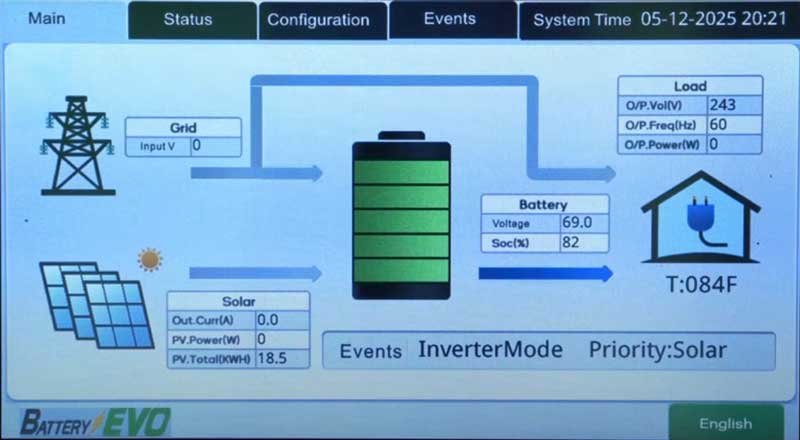
- Main Menu Overview: Displays critical information like grid or solar input voltage, battery state of charge, and output load. It also shows solar production in kilowatt-hours.
- Configuration Options:
- Users can set output voltage (typically 120V in the US) and frequency (60Hz).
- AC charge amperage can be adjusted, useful for circuits with lower capacity.
- Solar charge current can also be limited.
- The unit can operate in UPS mode or inverter mode. Inverter mode is ideal for off-grid applications.
- Priority settings allow users to prioritize solar input or grid power. “Grid Time Control” enables charging during off-peak hours for cost savings.
- A “Save Mode” acts as an eco-mode, shutting down the inverter when no load is detected.
- The “Set Battery” parameters are vital for performance and should be verified against the manual.
- Event Logging: The system logs events, which can be helpful for troubleshooting.
3. Solar Integration: Maximizing Renewable Energy Input
Integrating solar power with the Walrus G3 involves understanding its input limitations. These constraints influence how solar arrays can be configured for optimal charging.
3.1 Solar Input Limitations and Considerations
The Walrus G3 has a few key limitations regarding solar input. The most significant is the 230V maximum input voltage. This directly impacts how solar panels can be wired.
- 230V Voltage Limit: This ceiling prevents connecting long strings of solar panels. Exceeding it can cause the unit to malfunction or be damaged.
- 5,000W Solar Input Cap: The unit is capped at a maximum of 5,000 watts of solar input. Even if a larger array is connected, the unit will only utilize up to this amount.
- Impact on Over-paneling: The voltage limit means that simply adding more panels in series to a large array is not feasible. Careful configuration is required to manage voltage.
3.2 Practical Solar Array Setup for the G3
To work within the Walrus G3’s limitations, a specific solar array configuration is necessary. This involves balancing voltage and current to maximize power generation without exceeding the unit’s input thresholds.
- Panel Configuration: The reviewer used nine Hyundai bifacial 395W solar panels. These were spread across two mounting systems.
- Series-Parallel Stringing: Each solar panel has an open-circuit voltage of about 50 volts. To stay under the 230V limit, the nine panels were divided into three series strings of three panels each. This results in approximately 150 volts per string.
- Combiner Box Functionality: A four-string combiner box was used to connect these three series strings in parallel. This consolidates the power into a single output cable.
- Wire Gauge Limitations: The 10-gauge solar cable used has a 30-amp limit. By connecting the strings in parallel, the current increased, but the total current remained within the safe limit for the cable.
- Maximizing Generation on Cloudy Days: This setup allows for better energy capture on days with variable sunlight. While the total input is capped at 5,000W, maximizing the available solar power is key.
4. Design, Durability, and Expansion
The Walrus G3 is built with user-friendliness and safety in mind. Its modular design and integrated safety features contribute to its overall appeal.
4.1 Build Quality and Safety Features
Battery Evo has prioritized accessibility and safety in the Walrus G3’s construction. Replacing internal parts is made easier by its modular nature.
- Modular Design: The internal components are designed for accessibility. This simplifies potential repairs or part replacements.
- Integrated Fire Suppression: A temperature-activated fire extinguisher module is built into the battery cabinet. This provides an extra layer of safety in the unlikely event of a battery cell failure.
- Battery Cell Technology: The Walrus G3 utilizes EV-grade NMC battery cells, similar to those found in electric vehicles. These cells are rated for up to 3,000 cycles, offering 5-10 years of use before capacity drops significantly.
- Warranty: Battery Evo stands behind its product with a 10-year warranty, reflecting confidence in the battery cell quality.
4.2 Capacity Expansion and Future-Proofing
While the 22 kWh capacity is substantial, the option to expand is available. However, this comes with practical considerations related to charging times.
- Expansion Module Availability: Additional 22 kWh expansion modules can be added, potentially up to seven. This dramatically increases the total storage capacity.
- Recharge Time Considerations: Expanding the capacity significantly impacts recharge times. With the 5kW solar input limit, fully recharging an expanded system could take several days.
- External Charge Controller Possibility: Theoretically, an external charge controller could be used to increase solar charging power. However, this is an untested solution and adds considerable cost, making the built-in 5kW limit more practical for most users.
-
Battery, Power Station, smart devices
Original price was: $6,099.00.$3,699.00Current price is: $3,699.00. Buy Now
5. Use Cases and Value Proposition
The Walrus G3 is well-suited for several specific applications where its capacity and cost-effectiveness shine. It offers a compelling solution for those seeking reliable backup power or ways to reduce energy costs.
5.1 Ideal Scenarios for the Walrus G3
This unit excels in situations where a large amount of stored energy is needed. It can provide significant backup during power outages or help offset daily energy expenses.
- Extended Home Backup (24-48 Hours): For powering essential household appliances during outages, the 22 kWh capacity offers substantial run time. This is especially true if a solar setup isn’t included.
- Off-Grid Living with Moderate Solar: Users with 4-5 kW of solar can use the Walrus G3 to power their critical loads almost entirely off-grid. This can lead to substantial savings on utility bills.
- EV Charging Optimization: The unit is particularly effective for reducing EV charging costs. It can store solar energy or off-peak grid power for vehicle charging, significantly lowering expenses.
5.2 Unbeatable Cost Per Watt-Hour
One of the most impressive aspects of the Walrus G3 is its pricing. It offers exceptional value, making large-capacity home backup more accessible.
- Pricing Breakdown: With a current price around $5,000, the 22 kWh capacity translates to under $0.24 per watt-hour. This is remarkably low for an all-in-one system.
- DIY Comparison: Building a similar system from scratch, purchasing separate batteries and an inverter, would likely cost thousands more. It would also involve more complex wiring and assembly.
- Battery Sourcing Advantage: Battery Evo achieves this low cost by sourcing high-capacity battery packs directly from EV manufacturers. These are new packs that were rejected for various reasons, allowing for significantly reduced pricing.
- Limited Batch Availability: Due to their unique sourcing method, Battery Evo often produces the Walrus G3 in limited batches. Potential buyers should be aware that the unit may be out of stock between production runs.
6. Conclusion: Is the Battery Evo Walrus G3 the Right Choice?
BatteryEvo Walrus G3 Review – The Battery Evo Walrus G3 stands out as a powerful and cost-effective home backup power solution. Its simplicity, massive 22 kWh battery capacity, and integrated 10 kW inverter make it an attractive option for many. The use of reliable EV-grade NMC battery cells and a 10-year warranty adds further peace of mind.
However, potential buyers should consider the 5kW solar input limit. Fan noise during operation is also a factor, though it’s generally manageable. The unit’s impressive value proposition, driven by Battery Evo’s innovative battery sourcing, positions it as a top contender for those seeking a plug-and-play, high-capacity energy storage system. If you prioritize capacity and cost-effectiveness over advanced solar integration capabilities, the Walrus G3 is certainly worth a close look.
If you’re interested in learning more, check the links provided in the video description for Battery Evo’s website. You might also find a discount code available. If you found this review helpful, please give it a like and leave your questions or comments below. Your feedback is greatly appreciated, and thanks for watching!
You Might Also Like