Whole Home Battery Backup: The Complete 2026 Guide to Powering Every Room During an Outage
Ever sat in the dark during a storm, phone flashlight in hand, wondering why your neighbour’s porch light was still glowing? That’s usually the moment people start googling “whole home battery backup” at 11 p.m. I get it. Losing power isn’t just inconvenient anymore.
What Exactly Is a Whole Home Battery Backup System?
A whole home battery backup is a stationary energy storage system, usually built from lithium iron phosphate (LFP) cells, that’s wired into your home’s electrical panel to keep every circuit running when the grid drops out. Unlike a small power station you’d plug a lamp into, a true whole-house battery backup ties directly into your breaker box (or a dedicated sub-panel), so the transition from grid power to stored power happens automatically, often in milliseconds.
Think of it like a relay race. The grid is running the first leg, and the moment it stumbles, the battery grabs the baton without missing a stride. Your fridge doesn’t blink. Your Wi-Fi router doesn’t reboot. Your HVAC keeps humming. That seamlessness is the whole point of a whole-home setup, as opposed to a partial system that only shoulders a handful of “essential” loads.
How Does a Whole House Battery Backup Actually Work?
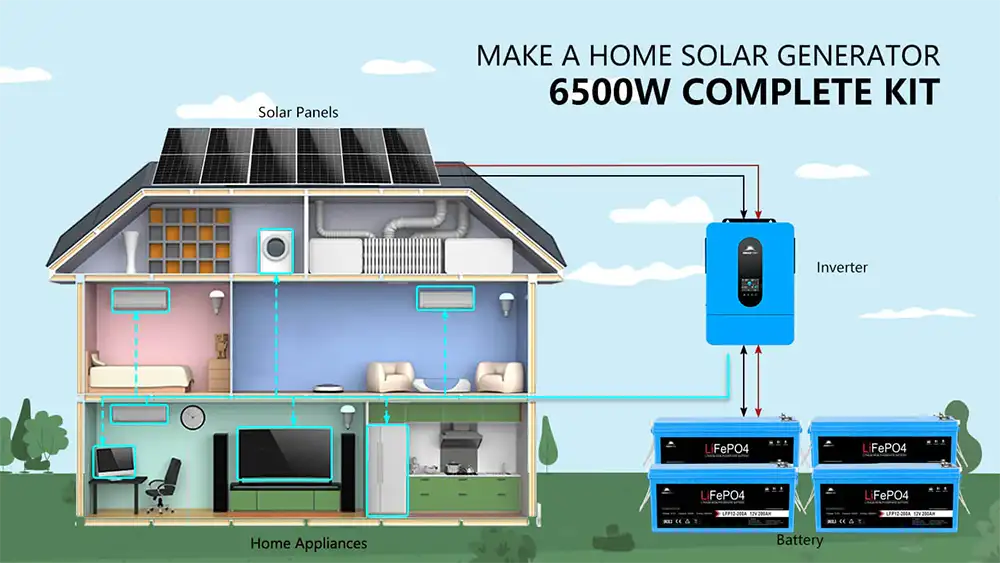
At its core, a home battery backup stores electricity, either pulled from the grid during off-peak hours or generated by rooftop solar panels, inside battery modules for later use. When utility power fails, an inverter converts that stored DC energy into the AC electricity your appliances need, and a transfer switch reroutes your home’s wiring to draw from the battery instead of the grid.
Most modern systems pair with solar panels, which means the battery backup for whole-home use isn’t just sitting there waiting for an outage. During normal daily life, it’s soaking up excess solar production, shaving your utility bill during peak pricing hours, and quietly building a buffer for the next storm. It’s a bit like a squirrel stockpiling acorns; except instead of nuts, it’s stockpiling kilowatt-hours, and instead of winter, it’s prepping for the next grid hiccup.
Whole Home Battery Backup vs Partial Home Backup: What’s the Real Difference?
This is where a lot of homeowners get tripped up. A partial backup system covers your “must-haves”: refrigerator, lights, Wi-Fi, maybe a sump pump.
A whole home battery backup covers everything literally: your central air conditioner, your electric range, your dryer, your EV charger, and the works. The trade-off is capacity and cost. Whole-home coverage typically demands 30 kWh or more of stored energy, since that roughly mirrors what an average household burns through in a day.
Partial systems can get by with a fraction of that. So ask yourself honestly: do you need your whole house running normally during a blackout, or would you be fine keeping the lights on and the fridge cold for a couple of days?
There’s no wrong answer here; it’s about matching the system to your actual risk tolerance and budget.
Whole Home Battery Backup vs Gas Generators
The Noise and Fume Problem Nobody Talks About
Standby generators have been the default answer to outages for decades, and they still work fine mechanically. But let’s be real; they’re loud, they smell like a gas station, and you can’t run one in an attached garage without risking carbon monoxide poisoning. A whole home battery backup, by contrast, runs silently. No fumes, no vibration, nothing rattling your neighbor’s windows at 3 a.m.
Maintenance Headaches You Can Skip
Generators need oil changes, fuel stabilizers, periodic test runs, and eventually a rebuilt carburetor when they sit unused too long. A battery-based whole house backup system has essentially no moving parts. You’re not scheduling maintenance visits or storing propane tanks in your yard. It just sits there, ready, the way a good insurance policy should.
That said, generators still win on one front: raw runtime. If your outage stretches into a week and you’ve got no sun for solar recharging, a generator with a full fuel tank can outlast a battery that’s run dry. That’s why some of the savviest homeowners actually pair the two; battery backup for the instant, silent transition and a generator as backup-to-the-backup for extended outages.
How Much Capacity Does True Whole Home Coverage Require?
Sizing is where whole home battery backup projects live or die. Get it wrong, and you’ll either overspend dramatically or end up with a system that taps out halfway through dinner. Here’s the general math:
- List your loads. Add up the running watts of everything you want powered: HVAC, water heater, oven, washer/dryer, EV charger, etc.
- Account for surge watts. Motors (AC compressors, well pumps, and fridges) draw a burst of extra power on startup, sometimes 2–3x their running wattage.
- Decide your runtime goal. A few hours of ride-through is very different from multi-day, off-grid-style independence.
- Factor in solar recharge. If you’ve got panels, your battery backup for home use can theoretically run indefinitely during sunny stretches, since it’s topping itself back up each day.
For most single-family homes wanting genuine whole-house coverage, that lands somewhere between 20 kWh and 90 kWh of usable capacity, paired with an inverter rated for at least 8–10 kW of continuous output to handle central air and other big draws simultaneously.
Key Features That Separate Good Whole Home Battery Backup Systems From Great Ones
1. Expandable Capacity
Your energy needs today aren’t your energy needs in five years. Maybe you’ll add an EV, a pool pump, or a home addition. A modular, stackable whole home battery backup, one that lets you bolt on extra battery units later and protects that future investment instead of forcing a full system replacement.
2. Seamless Switchover Speed
This is the number that determines whether your smart TV reboots and your computer loses unsaved work. Look for systems advertising switchover times under 20 milliseconds, and ideally systems that operate as an online UPS with effectively zero transfer time for sensitive electronics.
3. Solar Charging Compatibility
A whole house battery backup that only charges from the grid is missing half its potential. Pairing it with solar panels means free recharging, lower monthly bills, and, critically, a backup system that doesn’t run out of juice during a prolonged outage, as long as the sun cooperates.
4. Smart App Monitoring and Load Management
Modern systems let you check the state of charge from your phone, prioritize which circuits get power first, and even schedule battery use around time-of-use electricity rates. It’s the difference between a “dumb” battery and one that actively saves you money every single day, outage or not.
Top Whole Home Battery Backup Brands Compared for 2026
There’s no shortage of options right now, and honestly, that’s a good thing for buyers. Here’s how some of the leading whole home battery backup systems stack up on paper:
| Brand / System | Capacity Range | Max Output | Solar Ready | Standout Feature |
|---|---|---|---|---|
| Anker SOLIX (Home Battery Backup) | 6–90 kWh expandable | 10 kW Turbo Output | Yes | ≤20 ms switchover, 200 A whole-panel coverage |
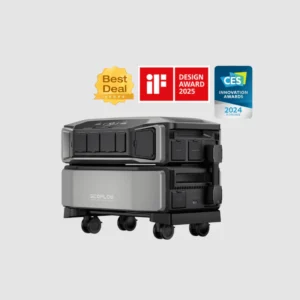
| EcoFlow Whole Home Backup | 8–90 kWh (multi-inverter) | 7.2–21.6 kW | Yes | 0 ms online UPS transfer time |
| Complete Solar Kit – Sol-Ark 60K Inverter | 61.44 kWh | 78,000 W Max | Yes | High-performance battery |
| Bluetti Home Battery Backup | 2,048 Wh – 14,880 Wh | 2,400 W – 10,000 W | Yes | More affordable |
| Jackery Essential Home Backup | 1070 Wh – 10 kWh | 14,400W surge | Yes | Simple, flexible backup power |
| Complete Solar Kit – EG4 FlexBoss21 Inverter | 28-32 kWh | 15.84kW | Yes | Sustainable energy solutions |
Numbers shift as manufacturers roll out new firmware and hardware revisions, so always confirm current specs directly with the brand before buying, but this gives you a solid frame of reference for comparing a whole home battery backup quote you might be getting from a local installer.



What Does a Whole Home Battery Backup System Cost?
There’s no single sticker price here, and anyone who tells you otherwise is oversimplifying. Whole home battery backup pricing depends on your home’s square footage, your target runtime, local labor rates, and whether you’re adding solar at the same time.
As a rough industry benchmark, battery storage alone tends to run somewhere around $1,000+ per kWh before incentives, and since whole-home setups often need 30 kWh or more, you’re realistically looking at a five-figure investment before rebates and tax credits are applied.
It sounds steep until you frame it the way a financial advisor might: it’s not just an expense; it’s a hedge against spoiled groceries, ruined basements from a dead sump pump, missed remote workdays, and, in some regions, a legitimate bump in home resale value.
Most Popular
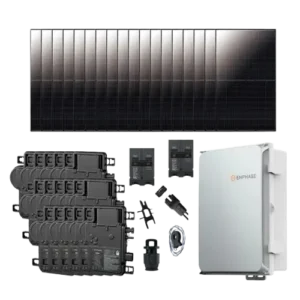
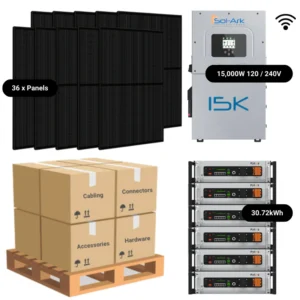
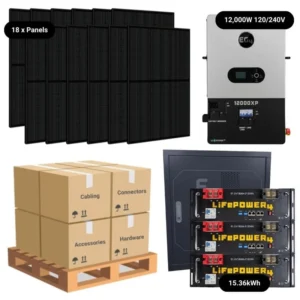
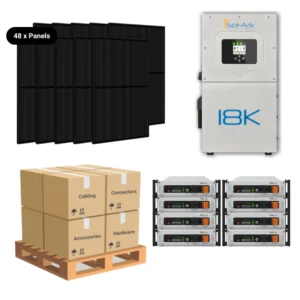
15.8kW
$21,489.00
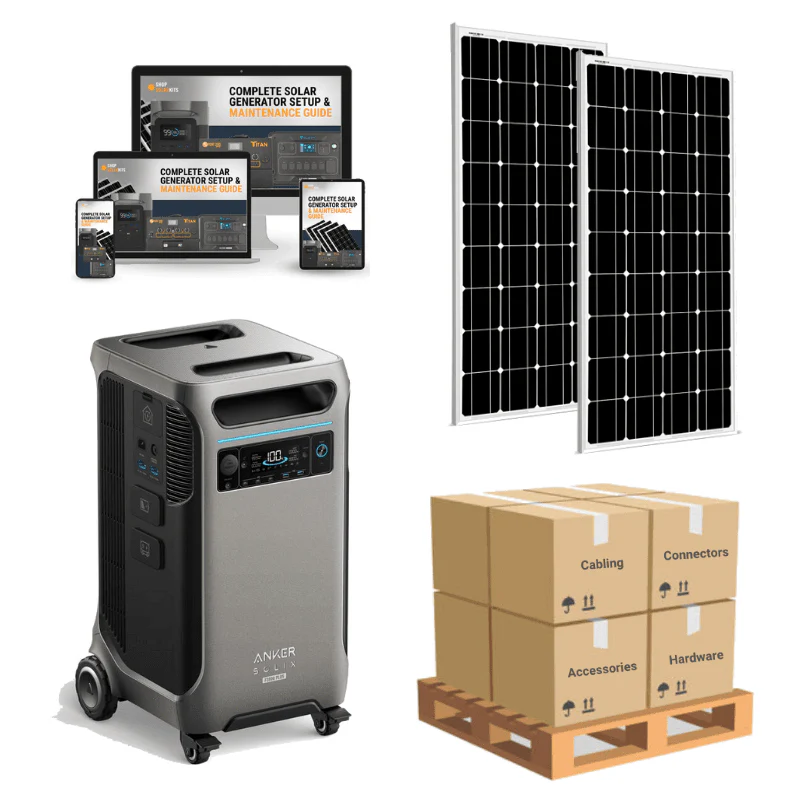
- Total Solar Wattage: 15,840W
- Total Battery Capacity: 30.72 – 32.2kWh
- System Voltage: 48VDC
- Inverter Rated Power: 12,000W Continuous (Battery Only) / 15,000W (with PV)
- Solar Input Capacity: Up to 19,500W Max Solar Input
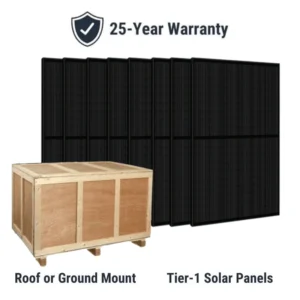
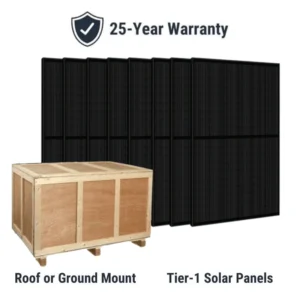
- Solar Panel Warranty: 25-Years
Most Popular
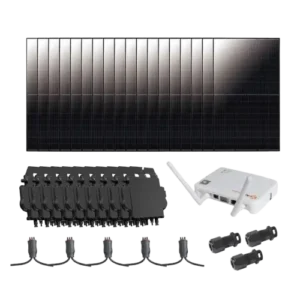
7.92kW
$15,689.00
- Total Solar Wattage: 7,920W
- Total Battery Capacity: 20.48 – 32.2kWh
- System Voltage: 48VDC
- Inverter Rated Power: 12,000W Continuous (Battery Only) / 15,000W (with PV)
- Solar Input Capacity: Up to 19,500W Max Solar Input
- Solar Panel Warranty: 25 Years
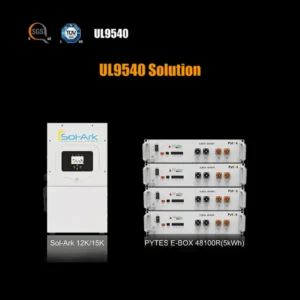
Most Popular
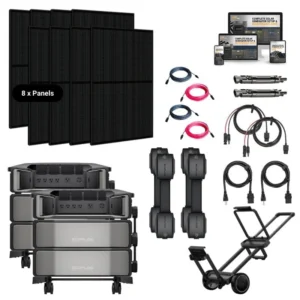
3.2kW
$5,989.00
- Total Solar Wattage: 3,200W
- Total Battery Capacity: 10kWh
- System Voltage: 48VDC
- Inverter Rated Power: 6,000W (120/240V Split Phase)
- Battery Warranty: 10-year manufacturer’s defect warranty
Is a Whole Home Battery Backup Worth It for Your Household?
Here’s the honest answer: it depends on your situation, not on marketing hype. A whole home battery backup makes the most sense if you:
- Live somewhere with frequent, multi-hour, or multi-day outages
- Works from home and can’t afford dead internet or a dark office
- Have a family member relying on medical equipment that needs constant power
- Already have (or plan to install) solar and want to actually use that stored energy at night or during outages
- Want full energy independence rather than picking and choosing which rooms stay lit
If you rarely lose power and mostly want peace of mind for the occasional storm, a smaller partial backup system might be the smarter financial call. There’s nothing wrong with starting small and scaling up your whole house battery backup over time as your budget and needs evolve.
Complete Off-Grid Solar System Package Supplier
| Name | Price Range | Discount |
|---|---|---|
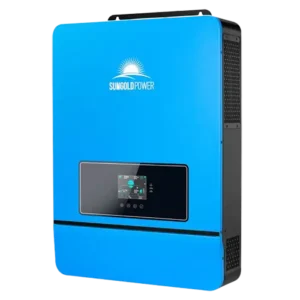
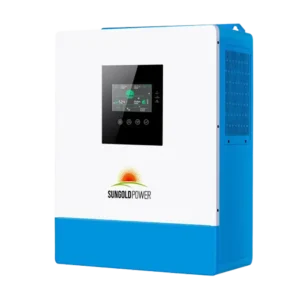
| Sun Gold Power | $5,774 – $31,853.00 | 👉 Get Special Offers |
| Rich Solar | $7,999 – $21,599.99 | 👉 Get Special Offers |
| ShopSolarKits | $2,539 – $149,989.99 | 👉 Get Special Offers |
Installation: What to Expect When Going Whole-Home
Unlike a portable power station you can set up yourself in an afternoon, a proper whole home battery backup installation involves a licensed electrician, a permit, and typically a home energy assessment.
Expect a site visit to evaluate your panel capacity, a discussion about whether you need a panel upgrade, and a few days of on-site work to mount the battery units, wire the transfer switch, and integrate everything with your existing (or new) solar array. Most reputable installers will also walk you through utility interconnection paperwork if you’re planning to participate in net metering or time-of-use rate optimization.
Common Mistakes People Make When Sizing a Whole Home Battery Backup
I’ve seen this pattern over and over: someone gets excited, buys the flashiest whole home battery backup system on the market, and then discovers it can’t start their air conditioner because they underestimated surge wattage. A few things to double-check before you commit:
- Don’t forget appliances that cycle on and off, like well pumps and refrigerators; they draw surge power every time they kick back on.
- Don’t assume solar alone guarantees indefinite runtime; cloudy weeks happen, and your whole house battery backup still needs a grid-charging fallback.
- Don’t skip the load calculation just because a salesperson says, “This size covers most homes.” Your home isn’t “most homes.”
- Don’t ignore expandability if there’s any chance you’ll add an EV or major appliance in the next few years.
Whole Home Battery Backup and Long-Term Energy Independence
Beyond outage protection, a whole home battery backup quietly reshapes your relationship with the grid. Instead of being a passive consumer paying whatever peak rates your utility charges, you become an active participant, storing cheap or solar-generated power and using it strategically. Over a decade, that shift can meaningfully offset the upfront cost, turning what looks like a big purchase into a long-term financial and resilience play rather than just an emergency gadget gathering dust in the garage.
Conclusion
A whole home battery backup isn’t just a fancier version of the flashlight-and-candles routine; it’s a genuine shift in how your house handles a grid failure. Whether you go with a modular system like Anker SOLIX, a UPS-style setup from EcoFlow, or a scalable option like EG4, the fundamentals stay the same: size it honestly, prioritize expandability, and pair it with solar if you can. Do that, and the next time the grid goes down, you’ll be the one with the porch light on.
FAQs About Whole Home Battery Backup
It depends entirely on capacity and how much you're using. A system in the 20–30 kWh range might cover a typical home for roughly a day of normal use, while larger, expandable whole home battery backup setups paired with solar can extend that indefinitely as long as there's sunlight to recharge the batteries.
Yes, in most cases. Many whole home battery backup systems are designed to be solar-ready from the factory, and even ones that weren't originally paired with panels can often be retrofitted, though it's worth confirming compatibility with your specific inverter and battery brand first.
They solve the same problem differently. A battery backup is silent, fume-free, and low-maintenance, but limited by stored capacity unless recharged. A generator can run indefinitely on fuel but is noisy and needs regular upkeep. Many homeowners now run both together for maximum resilience.
Costs vary widely based on capacity, labor, and location, but whole-home setups generally run into five figures before incentives, since they require significantly more storage than a partial backup system. Getting a home energy assessment is the best way to get an accurate quote.
Most homes need somewhere between 20 kWh and 90 kWh of usable capacity to run everything, including HVAC and major appliances, though the exact number depends on your square footage, appliance list, and how long you want to ride out an outage without recharging.
You Might Also Like