


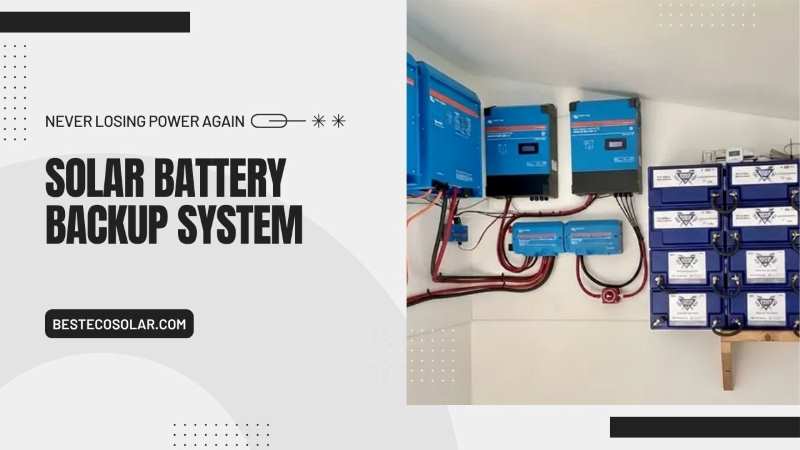
Solar Battery Backup System: The Complete 2026 Guide to Never Losing Power Again
This guide walks through everything — how a solar battery backup system actually works, what it costs in 2026, which brands lead the pack, and how to size one for your home without overpaying. Let’s dig in.
What Is a Solar Battery Backup System, Exactly?
A solar battery backup system is a setup that pairs solar panels with a rechargeable battery bank so your home can store extra solar power and use it later — especially when the grid goes down. Instead of your panels’ extra daytime energy getting shipped off to the utility company for pennies, it gets stashed in a battery for you to use at 9 p.m. when the sun’s clocked out for the day.
Think of it like a squirrel storing acorns for winter. Solar panels are your income; the battery is your savings account. Without one, every dollar (or watt) you don’t spend immediately just disappears.
How Does a Solar Battery Backup System Work?
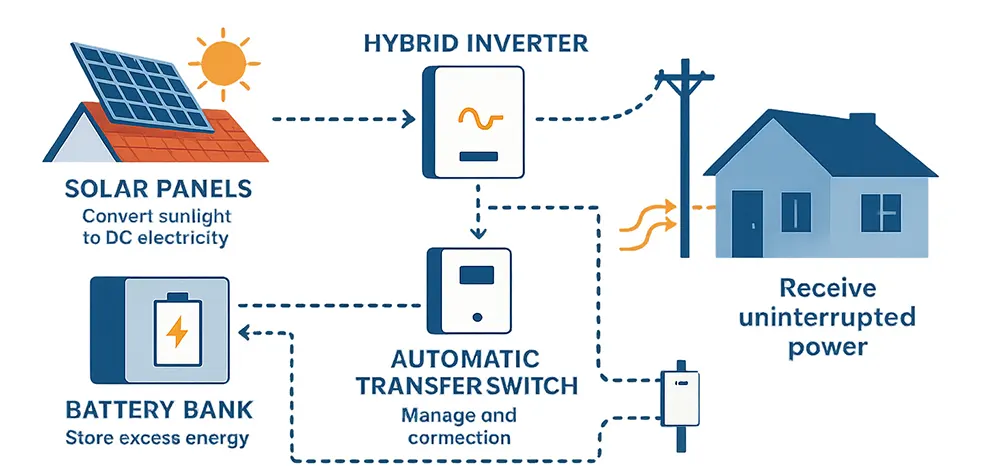
Here’s the basic flow, and it’s honestly simpler than most installers make it sound:
- Solar panels generate DC electricity during daylight hours.
- A hybrid inverter (or charge controller, for off-grid setups) converts and routes that power.
- Your home’s immediate needs get powered first.
- Anything left over charges the battery.
- At night, or when the grid fails, the battery takes over automatically.
An automatic transfer switch is the unsung hero here — it detects a grid outage in milliseconds and flips your home over to battery power, often faster than your Wi-Fi router even notices anything happened. You won’t be sitting there flipping switches by candlelight; the whole solar backup battery system handles it on its own.
Why Everyone’s Suddenly Talking About Solar Battery Backup Systems
A few things collided at once in 2025 and 2026:
- Net metering got less generous. States like California slashed compensation for excess solar sent to the grid by roughly 75% under NEM 3.0, so storing your own power now makes more financial sense than selling it cheap.
- The federal tax credit changed. The 30% Section 25D credit for homeowner-owned battery systems ended December 31, 2025. If you’re pricing a system in 2026, budget the full sticker price and look at state or utility incentives instead.
- Extreme weather keeps knocking out the grid. Wildfires, ice storms, and heatwaves have made blackouts less of a rare inconvenience and more of an annual guarantee in a lot of regions.
Grid-Tied vs. Off-Grid Solar Battery Backup Systems
This is where a lot of people get confused, so let’s clear it up.
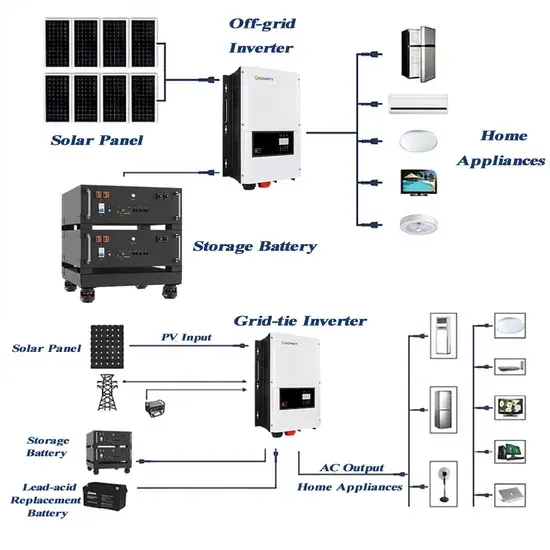
A grid-tied solar battery backup system stays connected to the utility. It uses the grid as a backup-to-the-backup and can still draw power if your batteries run dry. This is the most common residential setup by a wide margin.
An off-grid solar battery system runs completely independently — no utility connection, no electric bill, no net metering. Everything comes from your panels and your battery bank. These are built for cabins, ranches, and anywhere the power company simply doesn’t reach.
There’s also a hybrid category some installers call grid-tied with battery backup, which is really just a grid-tied system smart enough to island itself during an outage. That’s what most homeowners actually want.
Key Components of a Solar Battery Backup System
Every reliable solar backup battery system, whether it’s a whole-home setup or a small cabin kit, needs these core pieces:
- Solar Panels
Your energy source. Monocrystalline panels dominate the residential market in 2026 thanks to higher efficiency per square foot. - Battery Bank
Almost always lithium iron phosphate (LiFePO₄/LFP) these days — safer chemistry, longer cycle life, and it doesn’t degrade nearly as fast as older lead-acid options. - Hybrid Inverter or Charge Controller
Converts DC to usable AC power and manages the charge/discharge cycle. - Automatic Transfer Switch (ATS)
The component that makes the whole thing “automatic” instead of something you manage manually during a blackout. - Monitoring App
Nearly every modern solar battery backup system ships with an app so you can watch charge levels, usage, and outage history from your phone.
How Much Battery Backup Do You Actually Need?
This is the question that trips people up the most. Sizing your solar battery backup system wrong means either overpaying for capacity you’ll never touch or running out of juice halfway through a storm.
| Backup Level | Capacity Range | What It Covers | Typical Runtime |
|---|---|---|---|
| Essential backup | 10–15 kWh | Fridge, lights, Wi-Fi, heating controls | 7–12 hours |
| Partial home backup | 15–25 kWh | Adds coffee maker, office gear, some outlets | 12–20 hours |
| Whole-home backup | 27–54 kWh (multi-unit) | HVAC, well pump, dryer, full household load | 1–3+ days |
A good rule of thumb: multiply your home’s average daily kWh usage by the number of outage days you want covered, then add a buffer for cloudy days when your panels aren’t fully recharging the bank.
Popular Solar Battery Backup System Options in 2026
- Tesla Powerwall 3
Still the most popular home battery on the market by a wide margin. It packs 13.5 kWh of usable storage with an integrated hybrid inverter and 11.5 kW of continuous output — enough to start a well pump or central AC without flinching. Installed pricing runs roughly $13,000–$16,500 for a single unit in 2026, and stacking multiple units brings the per-unit cost down noticeably. - Rich Solar
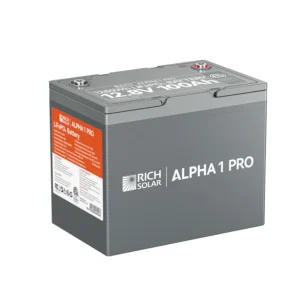
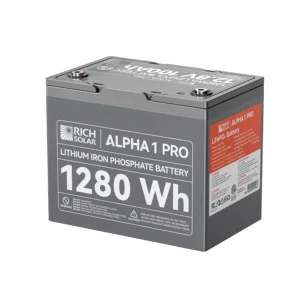
Stay in full command with real-time Bluetooth monitoring via the app. Track key metrics like SOC, voltage, current, temperature, and remaining capacity. Easily turn power on/off. - Sun Gold Power
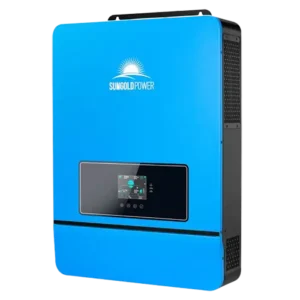
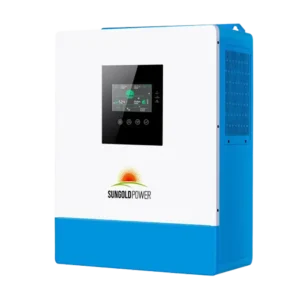
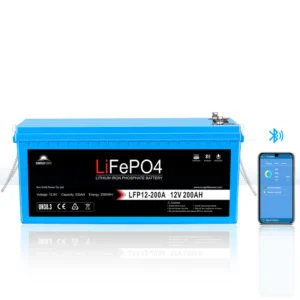
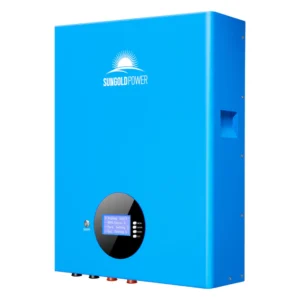
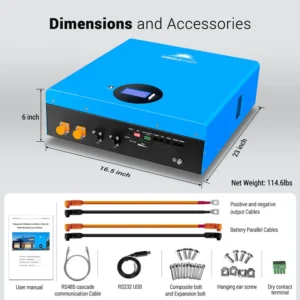
The SUNGOLDPOWER LiFePO₄ Lithium Iron battery delivers more power at half the weight, with a 400% longer lifespan than traditional lead-acid batteries—all with zero maintenance. Built with a smart Battery Management System (BMS) and capable of 4,000+ deep cycles, it’s your reliable, long-term energy solution. Available in a range of capacities from 100Ah to 200Ah and voltages of 12V, 24V, and 48V, these batteries are perfect for a wide variety of applications, including home energy storage, commercial solar systems, RVs, work vans, boats, and more. Look through the options below to find your perfect energy storage solution. - Off-Grid LFP Battery Banks
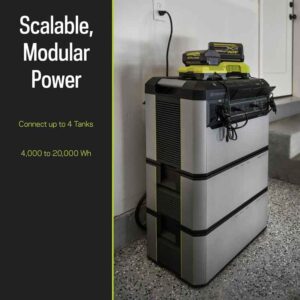
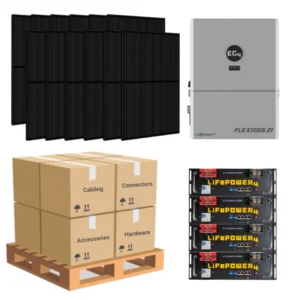
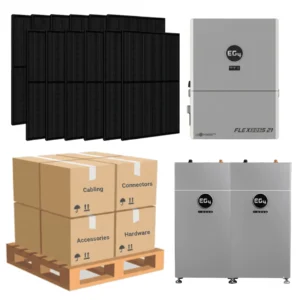
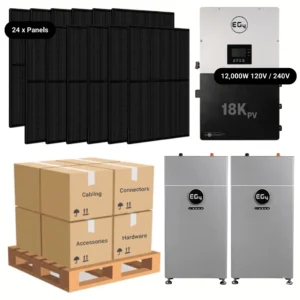
Brands building dedicated off-grid kits — pre-wired, weatherproof battery enclosures — are increasingly popular for remote cabins, telecom sites, and properties with zero utility access.
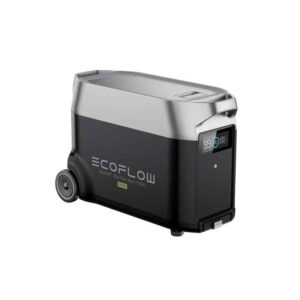
-
Battery, Power Station, smart devices
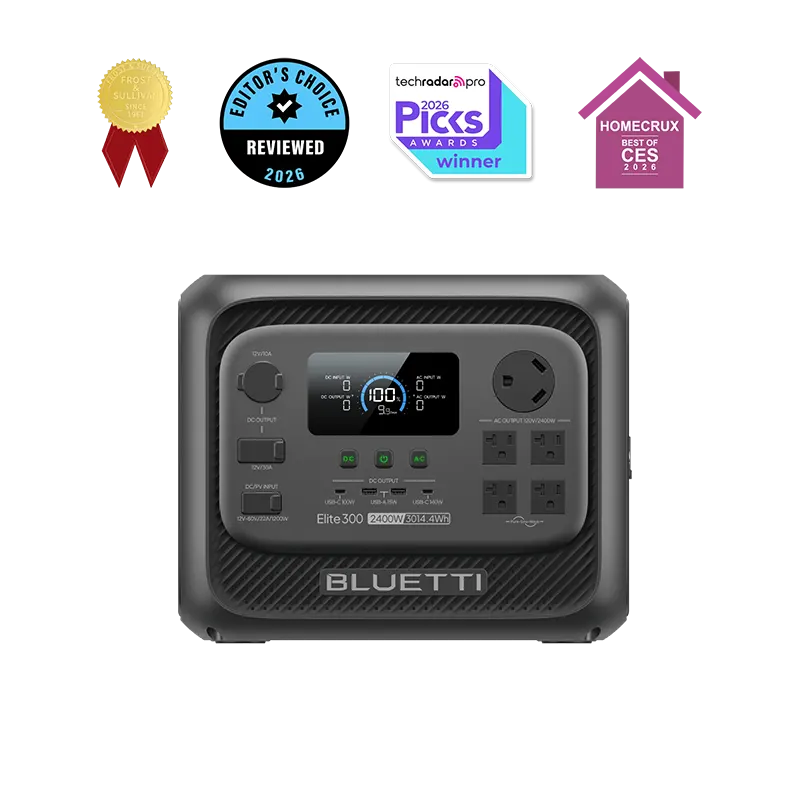
Original price was: $1,999.95.$1,599.95Current price is: $1,599.95. Check Availability -

-
Battery, Power Station, smart devices
Original price was: $2,599.00.$2,099.00Current price is: $2,099.00. Buy Now -
Battery, Power Station, smart devices
Original price was: $2,799.00.$1,599.00Current price is: $1,599.00. Buy Now
Solar Battery Backup System Cost Breakdown for 2026
Since the federal battery tax credit expired at the end of 2025, most homeowners are now working with undiscounted numbers. Here’s roughly where things land:
- Battery unit only: $8,200–$10,500
- Gateway/transfer switch hardware: $900–$1,200
- Installation labour: $1,500–$2,500
- Permitting and inspection: $200–$500
- Panel upgrade (if needed): $1,500–$3,500
- Total installed cost per unit: roughly $12,000–$16,500
Cost per kWh generally works out to $850–$1,220, which lines up with NREL’s residential storage benchmarks. Adding a second or third battery to an existing installation is usually cheaper per unit, since the gateway, permitting, and most labour costs are already covered by the first one.
State and Utility Incentives Worth Chasing
Even without the federal credit, several programmes can meaningfully lower your solar battery backup system cost:
- California’s SGIP pays roughly $200/kWh for general residential customers and up to $1,000/kWh for equity resiliency households in high fire-risk zones.
- New Jersey’s Storage Incentive Program offers per-kWh rebates for qualifying installations.
- Vermont utilities have run battery leasing programmes with grid-services payback for participants.
- Local utility demand-response programmes in several states pay homeowners to let the utility tap their battery during peak demand — sometimes worth a few hundred dollars a year.
Check with your state energy office and your utility directly, since programme availability shifts often and online databases go stale fast.
DIY Solar Battery Backup Kits vs. Professional Installation
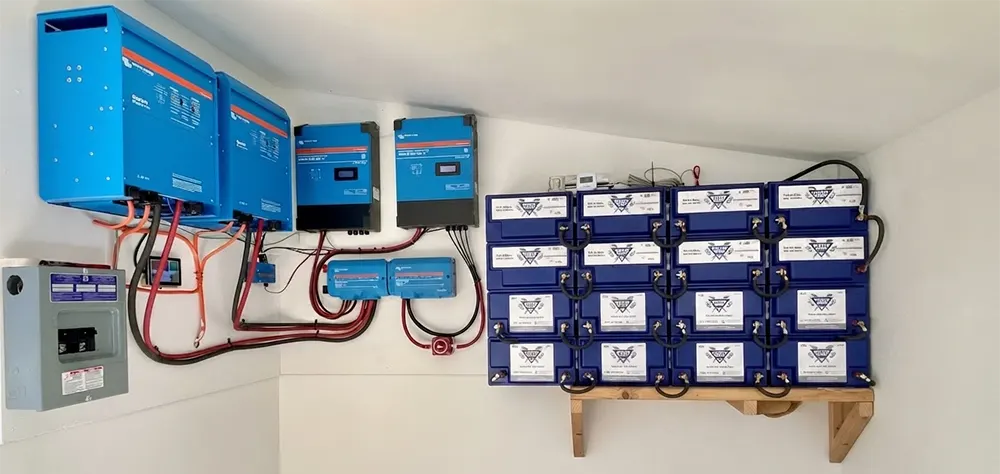
Can you install a solar backup battery system yourself? Sometimes, yes — especially smaller off-grid kits designed for cabins or sheds. Pre-wired kits with a weatherproof enclosure, inverter, and LiFePO₄ bank can be assembled by a reasonably handy homeowner in a weekend.
But for whole-home, grid-interactive setups, professional installation isn’t optional in most jurisdictions — you’re dealing with your main electrical panel, code compliance, and utility interconnection agreements. It’s the difference between assembling furniture and rewiring your house; one mistake in the second scenario isn’t just annoying; it’s dangerous.
Complete Off-Grid Solar System Package Supplier
| Name | Price Range | Discount |
|---|---|---|
| Sun Gold Power | $5,774 – $31,853.00 | 👉 Get Special Offers |
| Rich Solar | $7,999 – $21,599.99 | 👉 Get Special Offers |
| ShopSolarKits | $2,539 – $149,989.99 | 👉 Get Special Offers |
Safety Standards to Look For
Not all batteries are built the same, so check for these certifications before buying:
- UL 9540 — the overarching safety standard for energy storage systems.
- UL 9540A — specifically evaluates fire propagation risk, increasingly required by local fire codes.
- IP67-rated enclosures — important for outdoor-installed battery backup systems exposed to moisture and dust.
Look for automatic disconnect switches and surge protection too — cheap corners cut here are the ones that bite you later.
Common Mistakes When Sizing a Solar Battery Backup System
- Assuming “backup” means the whole house. Unless you’ve explicitly wired for whole-home backup, you’re likely only covering critical circuits.
- Ignoring the power-vs-energy distinction. A battery with big kWh capacity but low continuous power output (kW) still can’t start your air conditioner.
- Skipping the “what if it’s cloudy for three days” scenario. Solar recharge assumptions fall apart fast without sunshine.
- Forgetting commissioning tests. Ask your installer what functional backup test they run, and repeat it yourself every few months.
- Believing outdated tax credit info. A lot of online guides still subtract 30% federal credits that no longer apply to homeowner batteries in 2026 — don’t let a quote lean on savings that aren’t real anymore.
Solar Battery Backup System vs. Traditional Generator
It’s a fair question — why not just buy a gas generator? A few honest differences:
- Noise and fumes: Batteries are silent and produce zero emissions; generators are loud and need ventilation.
- Maintenance: No oil changes, no fuel stabiliser, no starting-up monthly rituals.
- Response time: Batteries switch over in milliseconds; generators typically take 10–30 seconds and need manual starting if they’re not automatic standby units.
- Fuel dependency: A generator’s only as good as the gas in your tank, which can be a real problem during a widespread disaster when gas stations lose power too. A solar battery backup system just needs sunlight, which — last I checked — nobody’s rationing.
That said, generators are cheaper upfront and can run indefinitely with enough fuel, so some homeowners pair both for true redundancy.
Maintenance and Lifespan
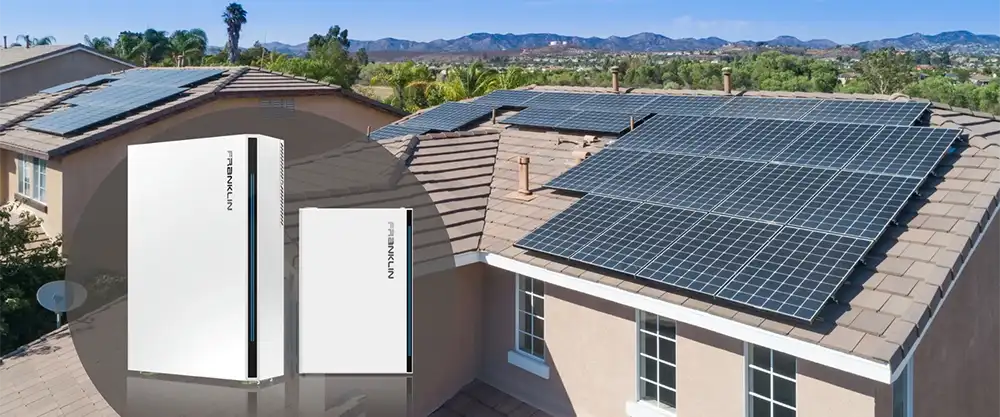
Modern lithium battery backup systems are refreshingly low-maintenance. Most LFP batteries are rated for 6,000+ cycles at 95% depth of discharge, and manufacturers commonly back that with 10-year warranties guaranteeing around 70% capacity retention. Realistically, that means your solar battery backup system should still be doing useful work well into its second decade with essentially no hands-on upkeep beyond the occasional monitoring check and keeping vents clear of dust or debris.
Is a Solar Battery Backup System Worth It in 2026?
Here’s the honest answer: it depends on your risk tolerance and your electricity rates. If you live somewhere with frequent outages, high electricity prices, or weak net metering compensation, the math tends to work in your favour over the system’s lifespan — even without the federal credit. If you rarely lose power and your utility rates are low, the payback period stretches out, and it becomes more of a resilience purchase than a pure financial one.
Either way, think of it less as buying a product and more as buying peace of mind. You’re not just avoiding a dark house — you’re protecting the fridge full of groceries, the medical equipment that needs power, and the ability to work from home when everyone else’s Wi-Fi is down.
Final Thoughts
A solar battery backup system isn’t just a trendy upgrade — it’s quickly becoming standard equipment for anyone serious about energy independence. Between shrinking net metering payouts, an expired federal credit that means every dollar counts, and a grid that seems to fail a little more often each year, storing your own power just makes sense.
Whether you go with a whole-home Tesla Powerwall 3 setup or a scrappy off-grid kit for a cabin, the fundamentals stay the same: know your load, size your battery honestly, and don’t skip the safety certifications. Do that, and the next blackout becomes a non-event instead of a scramble for flashlights.
FAQs About Solar Battery Backup System
It depends entirely on capacity and load. A 10–15 kWh essential backup system typically covers 7–12 hours of critical loads like a fridge and Wi-Fi, while a 27+ kWh whole-home setup can stretch across multiple days, especially if solar panels are recharging it during daylight.
No — you can install a battery that charges from the grid alone. But pairing it with solar panels means the battery recharges for free during outages that last more than a day, instead of draining and staying empty.
The 30% Section 25D credit for homeowner-purchased batteries expired December 31, 2025. Some state programs, like California's SGIP, and select utility incentives are still active, so it's worth checking local options before assuming you'll pay full price.
A grid-tied system stays connected to the utility and uses the battery mainly during outages or for peak savings, while an off-grid system runs entirely independent of the grid with no electric bill and no net metering — built for locations with no utility access at all.
It depends on the battery's capacity and your local sunlight hours, but as a rough guide, a 13.5 kWh battery typically needs about 4–6 kW of solar panel capacity to reliably recharge in a single sunny day.
You Might Also Like