
BLUETTI Elite 300 vs EcoFlow Delta 2 Max: The Ultimate 2026 Portable Power Station Showdown
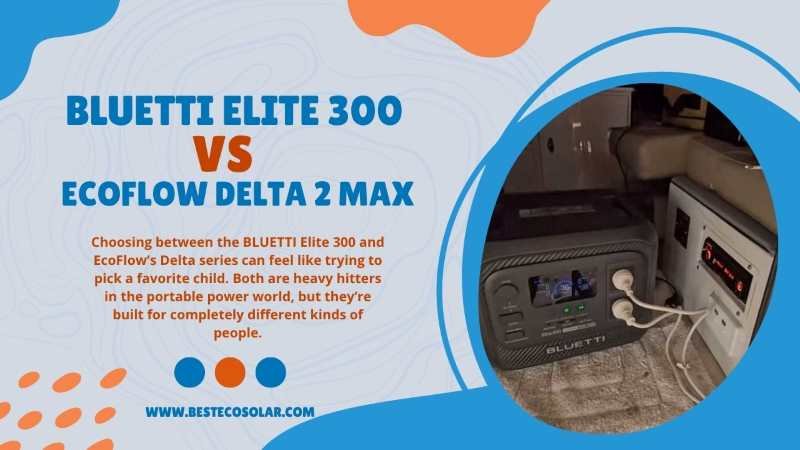
Choosing between the BLUETTI Elite 300 and EcoFlow’s Delta series can feel like trying to pick a favorite child. Both are heavy hitters in the portable power world, but they’re built for completely different kinds of people.
BLUETTI Elite 300 vs EcoFlow Delta 2 Max – In this deep dive, we’re going to cut through the marketing fluff and get to the nitty-gritty. We’re not just looking at numbers on a page; we’re looking at how these power stations actually hold up when the lights go out, when you’re miles from the nearest outlet, or when you just want to run a coffee maker at 6 AM without firing up a noisy gas generator. By the end of this, you’ll know exactly which one deserves a spot in your garage, your RV, or your emergency kit.
A Quick Brand Breakdown: The Tortoise and the Hare
Before we zoom in on the specific models, it helps to understand the two companies behind the names. Think of BLUETTI as the tortoise and EcoFlow as the hare. Both get to the finish line, but they take very different paths.
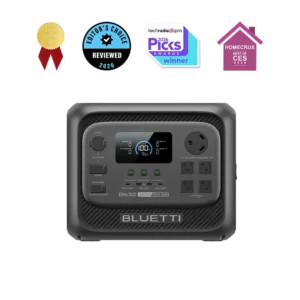
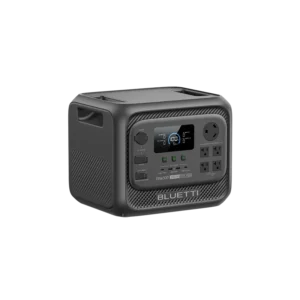
1. BLUETTI: The Battle-Tested Tank
BLUETTI came onto the scene in 2019, and from day one, their philosophy was clear: Build it like a tank. They were early adopters of LiFePO4 (Lithium Iron Phosphate) battery chemistry, which is basically the superhero of the battery world—it’s safer, lasts longer (often rated for 3,500+ charge cycles), and is more stable than the older NMC batteries some competitors still use.
If you need a power station that’s going to weather a storm—literally and figuratively—BLUETTI usually has your back. They’re not always the flashiest, but they’re the workhorses that keep humming along when others quit.
2. EcoFlow: The Speed Demon with a Smart Brain
EcoFlow, on the other hand, is like that friend who always has the latest tech. Founded in 2017, they made a name for themselves with X-Stream charging technology. While other power stations take half the day to top off, EcoFlow units can go from zero to 80% in under an hour.
They also lean hard into smart home integration and sleek, modern design. Their app is arguably the best in the business, giving you a detailed, real-time dashboard of your power usage. If you’re a gadget nerd who values speed and connectivity, EcoFlow is usually calling your name.
3. Key Highlights
| BLUETTI Elite 300 | EcoFlow Delta 2 Max |
|---|---|
| Large battery capacity | Ultra-fast charging |
| LFP (LiFePO4) battery chemistry | Strong app ecosystem |
| Expandable options | Expandable battery system |
| Built for heavy-duty usage | Modern design |
| Think of it as a diesel truck—not flashy, but incredibly dependable. | This one feels more like a sports car—fast, sleek, and tech-packed. |
The Contenders: BLUETTI Elite 300 vs EcoFlow Delta 2 Max
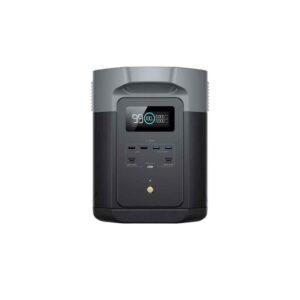
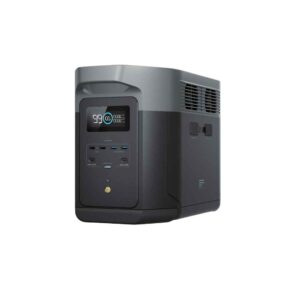
For this showdown, we’re placing the BLUETTI Elite 300 (3,014Wh) head-to-head with the EcoFlow Delta 2 Max (2,048Wh). Why? Because, despite the capacity difference, these two models compete directly on price point and feature set in the current 2026 market.
1. BLUETTI Elite 300: The New Kid on the Block with a Big Punch
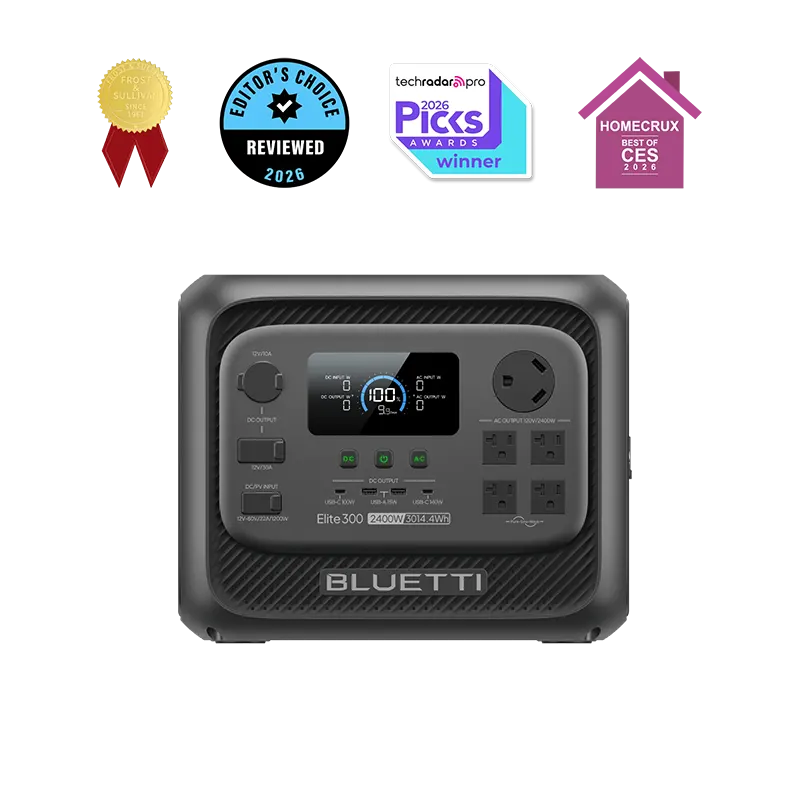
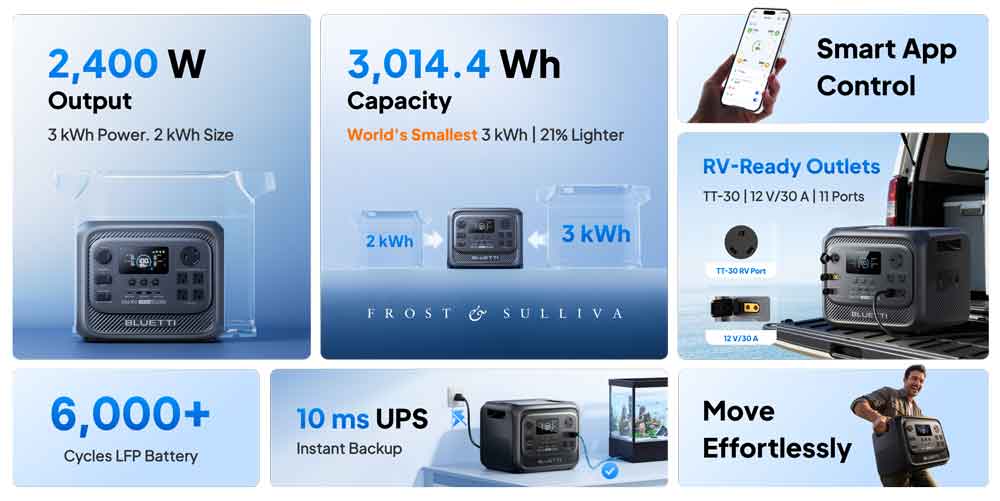
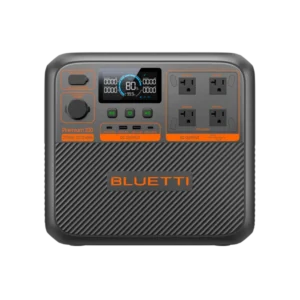
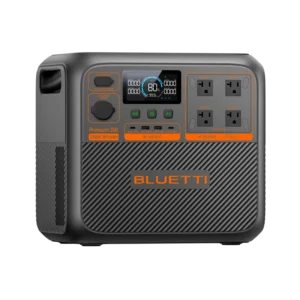
The Elite 300 is BLUETTI’s latest marvel, and it’s turning heads for a reason. Certified as the world’s smallest 3kWh portable power station, this thing is an engineering flex. It’s like BLUETTI crammed a full-sized home battery backup into a box the size of a milk crate.
With dimensions of roughly 366mm × 305mm × 297.5mm, it’s almost deceptively compact for the 3,014.4Wh of juice it carries inside. Don’t let the small stature fool you; this little beast can output 2,400W continuously and surge up to a whopping 4,800W in “Power Lifting Mode”—enough to get a stubborn fridge compressor or power tool started without breaking a sweat.
2. EcoFlow Delta 2 Max: The Expandable All-Star
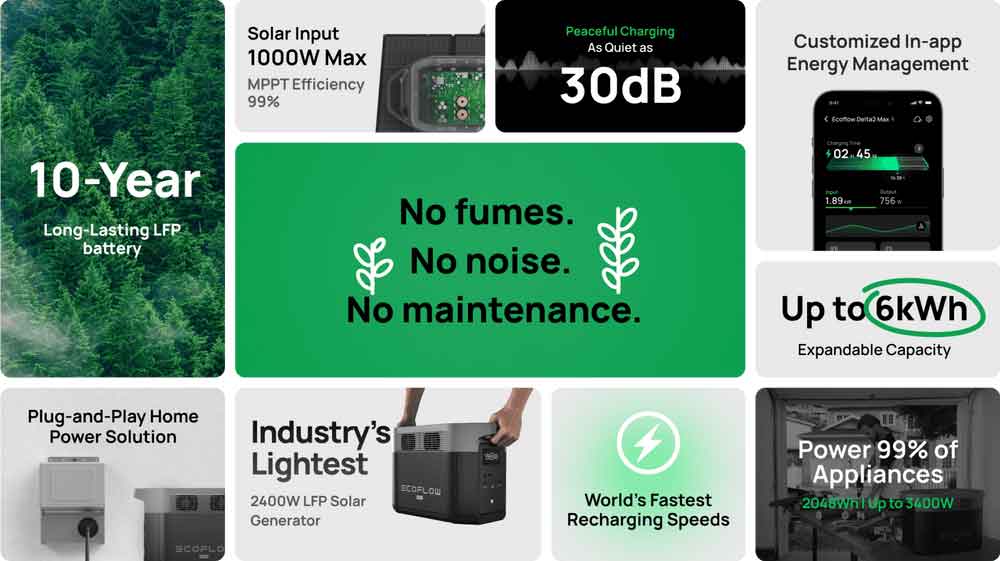
The Delta 2 Max is the Swiss Army knife of the EcoFlow lineup. While its base capacity is “just” 2,048Wh, it’s designed to grow with you. You can strap on up to two extra batteries, pushing the total system capacity to 6,144Wh—that’s a serious amount of power for an off-grid cabin or a long RV trip.
It’s also a workhorse in the output department, delivering 2,400W of pure sine wave power. But here’s the kicker: its X-Boost mode can handle appliances up to 3,100W, making it surprisingly capable of taming high-wattage devices that would trip the breaker on lesser units.
Head-to-Head: Specs That Actually Matter (Not Just Marketing Fluff)
It’s easy to get lost in a sea of volts and watts. To keep it real, let’s look at the core specs side-by-side so you can see where each unit shines and where it stumbles.
| Features | BLUETTI Elite 300 | EcoFlow Delta 2 Max |
|---|---|---|
| Battery Capacity | 3,014.4 Wh | 2,048 Wh (Expandable to 6,144 Wh) |
| Battery Chemistry | LiFePO₄ (3,500+ cycles to 80%) | LiFePO₄ (3,000+ cycles to 80%) |
| AC Output (Continuous) | 2,400W (4,800W Surge) | 2,400W (4,800W Surge; X-Boost to 3,100W) |
| AC Outlets | 2 x NEMA 5-20R, 1 x NEMA TT-30R (RV Port) | 4 x NEMA 5-20R |
| Solar Input (Max) | 1,200W | 1,000W |
| AC Charging Speed | 2,300W Max (1.6 hrs to full) | X-Stream (1.8 hrs to full) |
| Weight | 58 lbs (26.3 kg) | 50 lbs (22.7 kg) |
| Dimensions (L×W×H) | 14.4″ × 12.0″ × 11.7″ | 19.6″ × 9.5″ × 12.0″ |
| UPS Function | Yes (10ms switchover) | Yes (30ms switchover) |
| Warranty | 4 years | 2 years (Optional extension) |
| Launch Price (US) | $1,099 (Promotional) | ~$1,099 (MSRP) |
👉 Get BLUETTI Elite 300 Special Offers From Bluetti
The Price Tag Tango: Is the Elite 300 Stealing the Show?
Money talks, right? And in the portable power world, the price tag often whispers (or screams) the loudest.
1. BLUETTI’s Aggressive Play for Your Wallet
Here’s where things get really interesting. As part of its official launch, BLUETTI has put the Elite 300 on a fire sale. The official US launch offer is running from March 8 through May 31, 2026, with a debut price of just $1,099. That’s a staggering 50% off the planned retail price, slashing a cool $1,100 off the top.
And if you happen to catch a deal code, you can stack another 8% on top of that. For a 3kWh power station that’s brand new to the market, this is essentially a “shut up and take my money” kind of deal.
2. EcoFlow’s Premium Positioning
EcoFlow, on the other hand, typically positions itself as a premium brand. The Delta 2 Max usually retails around the $1,899 mark (give or take, depending on the retailer and any ongoing promotions). Now, don’t get it twisted: you are getting a fantastic, expandable power station with top-tier software.
But if you’re just looking for raw, non-expandable capacity at the lowest possible price per watt-hour, the Elite 300 is currently running circles around the Delta 2 Max in terms of value. The BLUETTI gives you nearly 1,000Wh more capacity for almost half the price at the time of writing. It’s like walking into a car dealership and being offered a larger SUV for the price of a compact sedan.
Feature Face-Off: Where the Rubber Meets the Road
Numbers are one thing, but features are what you actually live with. This is where the “vibe” of each power station starts to emerge.
1. AC Output and the “Appliance Gauntlet”
Both units are rated for 2,400W continuous power, which is the sweet spot for most household essentials. You can run a full-size refrigerator, a microwave, power tools, and even a small space heater (though not all at once!). The surge capacity of 4,800W is crucial for motors—things like fridges and saws that need a big jolt of power to start up.
- EcoFlow’s X-Boost Edge: EcoFlow’s X-Boost technology is a clever bit of software wizardry. It allows the Delta 2 Max to technically power devices up to 3,100W by slightly adjusting the voltage and current. This means you can run a hefty kettle or a resistive heater that might be just over the 2,400W threshold.
- BLUETTI’s Power Lifting: BLUETTI has a similar trick up its sleeve with Power Lifting Mode, which handles up to 4,800W of resistive loads. For 99% of users, both features do the same thing: they keep the lights on when you push the limits.
2. The Port Situation: RV Owners, Pay Attention!
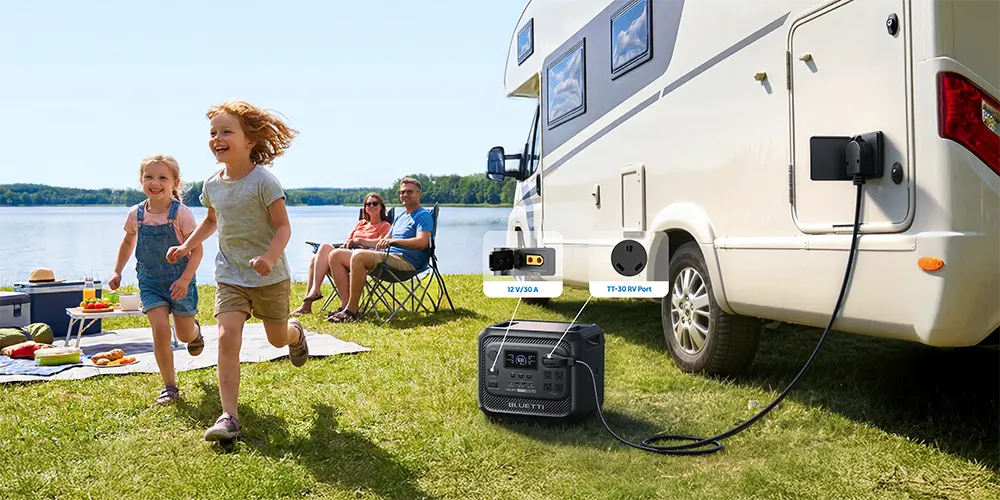
This is a HUGE differentiator that often gets overlooked. The BLUETTI Elite 300 comes with a dedicated NEMA TT-30R RV port. If you own an RV or a travel trailer, you just smiled. That single port means you can plug your entire RV’s 30-amp shore power cable directly into the power station without any janky adapters. It’s a clean, simple, and safe way to power your RV’s AC unit, microwave, and internal outlets.
The EcoFlow Delta 2 Max has four standard AC outlets (NEMA 5-20R) compared to BLUETTI’s three (two standard + one RV port). While EcoFlow gives you more individual plugs for your garage gadgets, BLUETTI gives you the one plug that matters most to a very specific (and large) community of travellers. If you’re a weekend warrior in a camper van, BLUETTI just made a very compelling argument.
3. Solar and Recharge Speed: The Battle of the Plugs
Remember our “Tortoise and the Hare” analogy? It comes into full view here.
- EcoFlow’s X-Stream Charging: This is EcoFlow’s superpower. Plug the Delta 2 Max into a standard wall outlet, and its fans will spin up to cool the 1,800W AC input, filling that 2,048Wh battery from empty to full in just over an hour. It’s wild. If you’re a van-lifer who stops at a friend’s house for dinner, you can leave with a full battery by the time you finish dessert.
- BLUETTI’s Balanced Approach: The Elite 300 is no slouch, accepting a max AC input of 2,300W, which charges the larger 3,014Wh battery in about 1.6 hours. That’s fast. But more importantly, BLUETTI tends to prioritise battery health over sheer speed. Their charging curves are a bit gentler, which contributes to that longer overall lifespan.
On the solar front, the Elite 300 edges out the Delta 2 Max with a 1,200W maximum solar input versus EcoFlow’s 1,000W. That means in peak sun, the BLUETTI can actually drink up energy faster from your panels, which is a nice win for off-grid users.
Portability vs. Expandability: The Ultimate Fork in the Road
This is the section where you probably figure out which one you’re buying.
1. The “Milk Crate” vs. The “Stretch Limo”
The BLUETTI Elite 300 is all about density. It’s the world’s smallest 3kWh power station. That means you get a massive amount of power in a footprint that doesn’t hog your entire trunk. At 58 lbs (26.3 kg), it’s not exactly a feather, but it has handles and is much easier to heave into a vehicle than a massive 100+ lb generator.
It’s the perfect “grab and go” solution for a weekend trip or a quick storm prep. You get all the power, none of the sprawl.
The EcoFlow Delta 2 Max is all about expansion. Out of the box, it’s actually lighter (50 lbs) than the BLUETTI and has a smaller capacity. It’s the more portable option if 2,048Wh is all you ever need. However, the moment you decide you need more juice, you’re looking at purchasing additional $1,000+ battery modules that double the weight and footprint of your setup.
It’s a brilliant system if you want to build a semi-permanent power solution in a cabin or a large RV, but it’s less ideal if you just want one box that does it all and fits under the bed in your van.
2. Design & Build Quality
- BLUETTI Elite 300
- Rugged and industrial design
- Solid build, slightly bulkier
- Built for long-term durability
- EcoFlow Delta 2 Max
- Sleeker and more modern
- Compact and polished
- Feels more consumer-friendly
3. Battery Capacity Comparison
Let’s talk raw power.
| Feature | BLUETTI Elite 300 | EcoFlow Delta 2 Max |
|---|---|---|
| Base Capacity | ~3072Wh | ~2048Wh |
| Expandable | Yes | Yes |
| Max Expansion | Higher potential | Up to ~6kWh |
What does this mean?
BLUETTI gives you more power upfront, while EcoFlow lets you scale more flexibly.
App and Smart Features: Who Has the Better Brain?
We live in the future, and our batteries should have apps. Both brands deliver, but they have different flavours.
EcoFlow’s App: It’s slick, it’s responsive, and it’s packed with data. The EcoFlow app is widely considered the industry gold standard. You get granular control over input/output, Wi-Fi and Bluetooth connectivity, and even over-the-air firmware updates that can add new features to your power station months after you buy it.
If you love tinkering and looking at energy graphs, you’ll love EcoFlow.
BLUETTI’s App: It’s reliable and functional, but it’s more of a utility tool than a playground. The BLUETTI app handles the basics well: remote wake-up, sleep mode scheduling, and time-of-use settings to help you save on electricity bills if you’re using it as a home backup during peak rate hours.
It’s not as flashy, but it gets the job done without any fuss. Think of it like the difference between a high-tech car dashboard with animated displays (EcoFlow) and a rugged, easy-to-read digital watch (BLUETTI). Both tell the time accurately.
Real-World Scenarios: Which One Saves the Day?
Let’s put these power stations in a few common situations to see how they’d actually perform.
1. Scenario 1: The Emergency Home Backup
- The Need: You live in an area with occasional power outages. You need to keep the fridge cold, the Wi-Fi running, and maybe power a few lights for 12-24 hours.
- BLUETTI Elite 300: With 3,014Wh, you can run a standard refrigerator (approx 1kWh/day) for nearly 60 hours! That’s almost three days of food preservation. Plus, the 10ms UPS switchover is faster than EcoFlow’s 30ms, meaning your computer and router won’t even blink when the grid goes down.
- Winner: BLUETTI (for pure endurance).
2. Scenario 2: The RV or Van Life Adventure
- The Need: You’re on the road. You need to power lights, a diesel heater, charge laptops, and occasionally run the microwave. Space is limited.
- BLUETTI Elite 300: The TT-30R RV port is a game-changer. The compact size means it slides into a low-profile storage compartment easily. Winner: BLUETTI (if you have an RV).
- EcoFlow Delta 2 Max: If you have a smaller van and just need 2,048Wh (or plan to expand to a full off-grid system later), the lighter base weight and fast charge speed are massive benefits.
- Winner: EcoFlow (for van lifers with flexible charging).
3. Scenario 3: The Budget-Conscious Prepper
- The Need: You want the absolute most watt-hours for your dollar. You don’t care about apps or expansion; you just want a reliable battery.
- BLUETTI Elite 300: At the $1,099 launch price, you’re paying roughly $0.36 per Wh. That is an insane deal for LiFePO4 in 2026.
- EcoFlow Delta 2 Max: At its $1,899 MSRP (for 2,048Wh), you’re paying about $0.93 per Wh.
- Winner: BLUETTI (by a landslide)
👉 Get BLUETTI Elite 300 Special Offers From Bluetti
The Verdict BLUETTI Elite 300 vs EcoFlow Delta 2 Max: It’s Not About “Better,” It’s About “Better for You”
So, which is it? BLUETTI Elite 300 or EcoFlow Delta 2 Max?
Here’s the no-BS summary:
Choose the BLUETTI Elite 300 if:
- You want the best value on the market right now (especially with that launch deal).
- You are an RV owner and need that TT-30R port.
- You prioritise battery lifespan and physical durability.
- You want a compact, high-capacity all-in-one solution.
- You’re a “set it and forget it” kind of user.
Choose the EcoFlow Delta 2 Max if:
- You need expandable capacity over time (building a solar shed or cabin).
- You crave fast AC charging (getting to 80% in under an hour is a real convenience).
- You love having a top-tier app with detailed analytics and control.
- You plan to power high-wattage resistive loads frequently (thanks to X-Boost).
If I were to put it in a nutshell, BLUETTI is the investment in long-term reliability and capacity, while EcoFlow is the investment in immediate speed and smart flexibility.
Conclusion
BLUETTI Elite 300 vs EcoFlow Delta 2 Max – Let’s bring this back to earth. You’re standing in the aisle (metaphorically, or maybe you’re actually at a trade show right now) trying to decide between the BLUETTI Elite 300 and the EcoFlow Delta 2 Max. It’s a good problem to have—these are two of the finest pieces of portable energy technology you can buy in 2026.
The BLUETTI Elite 300 feels like a generational leap in energy density. It’s a 3kWh powerhouse that fits where a 2kWh battery used to go. And with that aggressive launch pricing, it’s arguably the most compelling power station on the market today for anyone who just needs raw, reliable power. It’s the perfect companion for a weekend in the woods or a week of uncertainty during hurricane season.
The EcoFlow Delta 2 Max is the savvy choice for the forward-thinker. It’s the building block of a much larger system. If you dream of a fully electric camper van or a solar-powered workshop, the expandability and charging speed of the EcoFlow ecosystem are hard to beat.
In the end, there’s no “loser” in this comparison. Just different priorities. Know your own needs, and the choice becomes crystal clear. Stay safe out there, and keep the lights on!
FAQs About Bluetti Elite 300
It depends. BLUETTI offers more capacity and durability, while EcoFlow focuses on speed and smart features.
EcoFlow Delta 2 Max charges significantly faster—often reaching 80% in about an hour.
BLUETTI is better for serious solar setups due to higher input capacity.
Yes, but BLUETTI is generally better for long-term home backup due to higher capacity.
BLUETTI typically lasts longer thanks to more charge cycles and a focus on longevity.
Yes, but with a caveat. The Elite 300 has a dedicated TT-30R port that can deliver 30 amps at 120V, which is the standard for RV shore power. It can start most 13,500 BTU RV air conditioners using the 4,800W Power Lifting Mode surge. However, the 2,400W continuous rating means it will drain the 3,014Wh battery fairly quickly (roughly 1-2 hours of runtime depending on the AC unit's duty cycle). It’s perfect for cooling down the RV before bed, but not for running AC all night long.
Absolutely not. Battery expansion modules are brand-specific and use proprietary connectors and communication protocols. You cannot mix and match EcoFlow extra batteries with a BLUETTI power station. You are locked into the ecosystem of the brand you choose.
Both are fanless under light loads (like charging a laptop or running a small fan). However, when charging at full speed or outputting heavy loads, both will engage internal cooling fans. Anecdotally, BLUETTI units tend to have a slightly lower-pitched fan noise, while EcoFlow units (especially during X-Stream charging) can sound a bit louder and higher-pitched, but it’s not a massive difference in a real-world setting.
Both use LiFePO4 batteries, which are the gold standard for longevity. The BLUETTI Elite 300 is rated for over 3,500 charge cycles before dropping to 80% of its original capacity. The EcoFlow Delta 2 Max is rated for about 3,000 cycles to 80%. If you fully charged and drained the unit every single day, the BLUETTI would last nearly 10 years. In typical, occasional use, you're looking at a power station that will likely outlive the device you're using to read this article.
Yes! Both the BLUETTI Elite 300 and EcoFlow Delta 2 Max support 12V/24V DC input via the "cigarette lighter" port (or direct connection to a battery). However, this is a slow trickle charge (typically around 100-120W). It will take many hours (sometimes days) to fully charge a 3,000Wh battery from a car port. It's a great way to keep the battery topped off on a long drive, but not a primary charging method. For fast charging on the road, you'd want to look into a dedicated DC-DC charger or the solar input option.
You Might Also Like