


Deep Dive Review: Testing the SunGoldPower 48V 100Ah Battery Rack Mount LiFePO4 Battery
SunGoldPower 48V 100Ah Battery – Imagine powering your home setup with a battery that packs a serious punch without breaking the bank. That’s where the SunGold Power SG48100P comes in—a 48V 100Ah rack mount LiFePO4 battery built for off-grid life or backup power. You get reliable energy storage that handles daily demands, and I’ll walk you through every test I ran to prove it.

Introducing the SG48100P Model
This battery shines in rack mount systems for solar or inverter setups. It uses lithium iron phosphate chemistry, known for safety and long life. With 100 amps of continuous output and charge ratings, it delivers steady power for heavy loads. Rated at 5,120 watt-hours, it’s perfect for homes or RVs needing quiet, clean energy.
Initial Impressions and Testing Setup
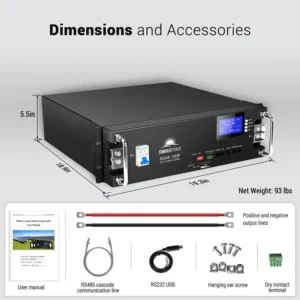
Right out of the box, this unit feels solid at 100 pounds. It fits standard 19-inch racks, with dimensions of about 17.3 inches wide, 3.5 inches tall, and 13 inches deep. I paired it with an 8,000-watt SunGold Power 48V inverter to push its limits.
Normally, you’d want two batteries for full inverter power, since 100 amps at 48 volts gives around 4,800 watts. But I used just one to see how it holds up under stress.
Physical Inspection and Connectivity Features
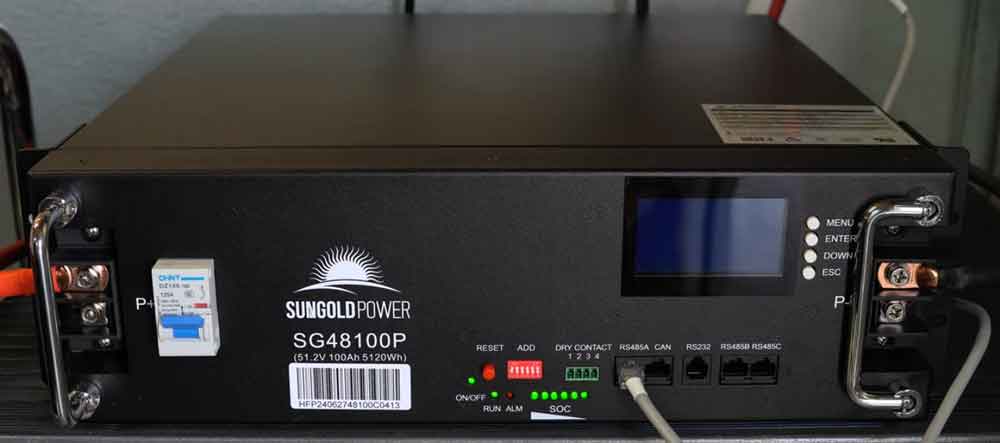
The SG48100P looks pro and ready for action. Its black metal case resists dust and bumps in a garage or server room.
1. Rack Mount Design and Terminals
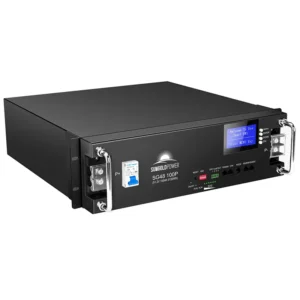
Retractable handles make sliding it into racks easy. Positive terminals sit on the left, negatives on the right—like most batteries. A 125-amp output breaker lets you cut power fast for safety. This setup keeps things simple during installs or maintenance.
2. BMS Communication and Integration Capabilities
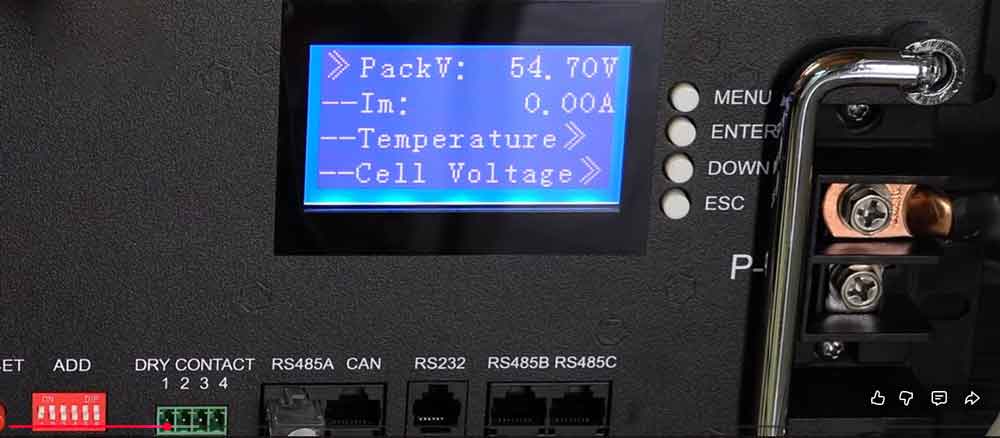
An address button and DIP switches help set it as unit one in a stack. This works great if you add more batteries later. RS-485 ports connect to your inverter, so it tracks voltage, temp, and charge levels. Cascade ports link multiple units in a chain. Dry contacts on the front panel trigger alarms or switches in smart systems. All this makes it plug-and-play for bigger setups.
3. Onboard Diagnostics and Status Display
Hit the enter key twice to open the menu. Arrow buttons let you check battery stats, settings, and BMS info. SOC lights glow solid when full—no current flow means it’s topped off. Analogue readings show voltage at 51.2 volts and zero amps in or out. This display helps you spot issues before they grow.
Comprehensive Capacity and Load Testing
Testing real-world performance tells the full story. I drained it fully and cranked the amps to check the claims. The results surprised me in good ways.
1. Capacity Test Methodology: Drawing Down the Battery
I hooked up an EV charger to a 120-volt outlet via the inverter. A watt meter tracked total energy used. The inverter sips 43 to 45 watts idle, so I noted that extra pull. No solar or AC input—just pure battery drain. The EV capped draw at 1,433 watts to avoid tripping circuits, pulling about 30 amps steady.
2. Capacity Test Results Analysis
After three hours, it shut down at 4,540 watt-hours logged. Add the inverter’s 45-watt draw times three hours—that’s 135 watt-hours more. Total usable energy hits 4,675 watt-hours, or 9% of the 5,120 rated. The inverter cut off early, likely saving some juice in reserve. If I tweaked settings, you’d squeeze closer to full capacity. This shows solid real-life output for daily use.
3. Extreme Continuous Load Test (100 Amp Output Verification)
To hit max, I ramped up the EV charger draw. It peaked at 104 amps, just over the 100-amp rating. I ran it for 24 minutes straight—no heat buildup or drops. Temps stayed cool, and output held firm. This proves it can surge past specs without drama. For an 8KW inverter, two units would cover peaks easily.
In-Depth BMS Protection Verification
Safety matters most in batteries—fires or failures ruin setups. I cracked it open to check the brains: the battery management system.
1. Disassembly and Internal Inspection
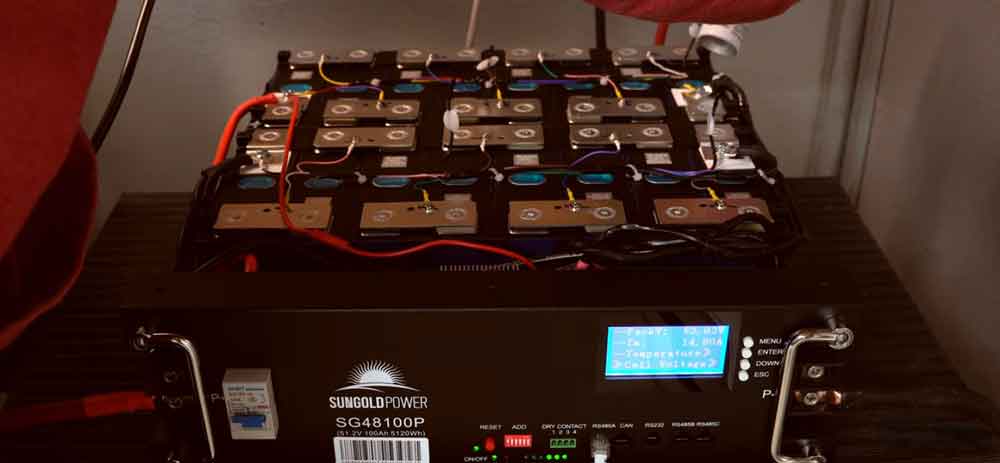
Unscrewing the case took time, plus peeling back foam covers. Inside, 16 cells sit neatly, each with a QR code for tracking. Bus bars are welded in place, not bolted—stronger against vibes. The assembly looks clean, no loose wires. Off-gassing vents on top stay clear for emergencies. Four temp sensors guard against extremes.
2. Verifying Low-Temperature Cut-Off Protection
Menu temps read in Celsius from four probes. I charged at 14 amps via AC, then hit a probe with liquid nitrogen. Current dropped to zero fast—cut-off worked. It warmed with my hand, and the charge resumed at 14 amps. I tried another probe; same instant stop. This protects cells from cold damage in winter.
3. Verifying High-Temperature Cut-Off Protection
Switch to discharge mode at 11 amps with a heat gun. Probe two climbed to 61.9°C before tripping. BMS logged over-temp protection, halting output. Cooled down, and it kicked back on smoothly. High and low guards both fire reliably. You can trust this in hot garages or freezing sheds.
Post-Test Insights and Market Position
After weeks of use, this battery earned my nod. It fits budgets while packing pro features.
1. Advanced BMS Configuration Access
I asked SunGold why capacity topped at 91%. Their BMS holds back to protect cells. A PC host app connects via cable to tweak the cut-off voltage. Lower it for deeper drains if you dare. This gives control for custom needs.

2. Pricing Structure and Black Friday Deals
Single units run $1,990 now. Buy a pair for an 8KW setup, and it’s $1,180 each. Facebook group members snag codes for $200 off—under $1,000 total. Black Friday drops make it a steal. Compared to pricier brands, this wins on value.
3. Comparing Features: Standard vs. Self-Heating Model
The base model cuts off in cold but won’t charge below freezing. Self-heating version adds $130 and warms cells internally. Same 100Ah specs, plus UL certs. Pick self-heat for sub-zero spots like northern states.
4. Certifications and Real-World Durability
UL 1973 and 9540A stamps mean it meets tough safety standards—rare in cheap batteries. I’ve run it for 10-12 weeks with zero glitches. A rodent chewed my solar wires, spiking 400 volts. The battery faulted safely, no damage. Protections saved the day.
Conclusion: Final Verdict on the SunGoldPower 48V 100Ah Battery
SunGoldPower 48V 100Ah Battery – The SunGoldPower SG48100P nails what you need in a 48V 100Ah rack mount LiFePO4 battery. It delivered 91% usable capacity, held 104 amps steady, and proved temp cut-offs work. With UL certs and easy tweaks, it’s safe and flexible.
This unit beats expectations for solar backups or off-grid power. Grab one—or two—for your setup, especially with those deals. Check SunGold’s site or group for the best price. Your energy system will thank you.
FAQs About SunGoldPower 48V 100Ah Battery
- What is the typical capacity of a 48V server rack battery?
Usually, most customers choose 4–6 pieces as the typical capacity. 48V server rack battery supports max 32 units in parallel capacity of 163.84kwh, suitable for residential and commercial applications and other energy storage systems for increasing the self-consumption ratio. - What are the advantages of using 48V server rack batteries?
The advantages of using 48V server rack batteries include:- Efficiency: Higher voltage systems reduce current, minimising losses in the wiring.
- Compact Design: Allows for more efficient space utilisation in server racks.
- Scalability: Easily expandable to meet increasing power needs.
- Longer Lifespan: Lithium technology provides an extended cycle life compared to traditional lead-acid batteries.
- Safety: Built-in BMS enhances safety by preventing overcharging and overheating.

You Might Also Like