




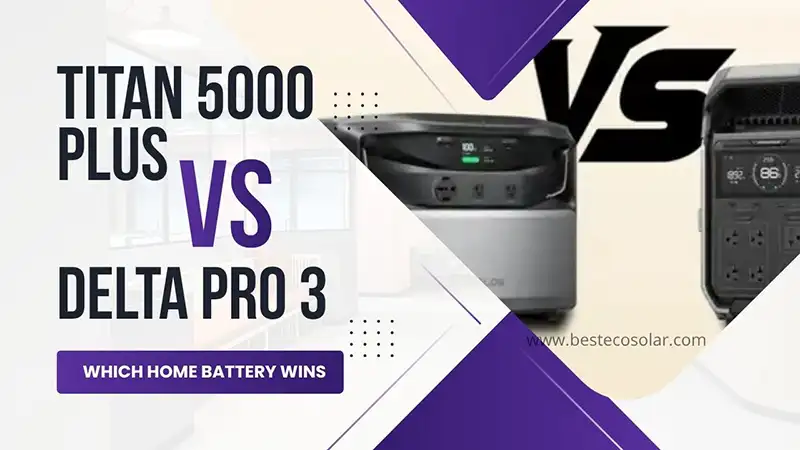
EcoFlow TITAN 5000 Plus vs. DELTA Pro 3: Which Home Battery Wins in 2026?
When the grid goes down and your fridge is full of food, the EcoFlow TITAN 5000 Plus vs. DELTA Pro 3 decision stops being an abstract comparison and becomes a very real, very practical question.
Meet the Contenders: Two EcoFlow Titans, Two Very Different Philosophies
The EcoFlow TITAN 5000 Plus: The Solar-First Home Battery
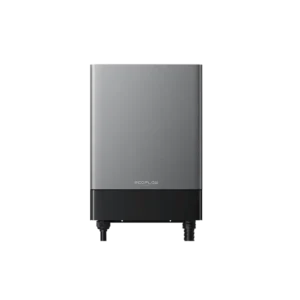
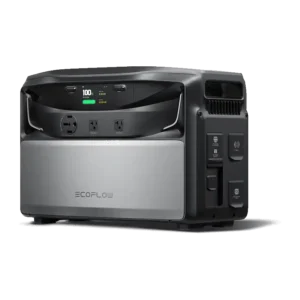
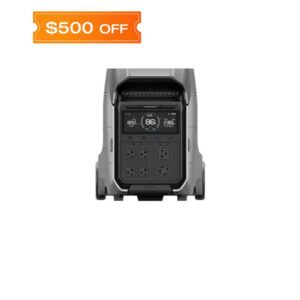
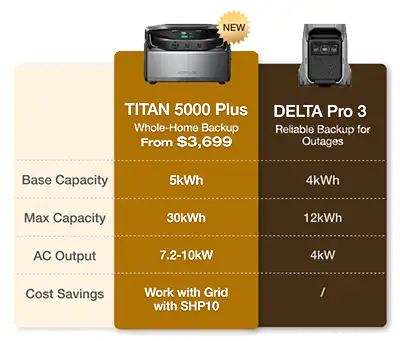
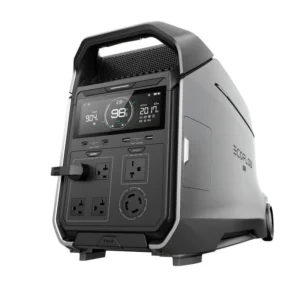
EcoFlow TITAN 5000 Plus vs. DELTA Pro 3: The TITAN 5000 Plus is EcoFlow’s answer to a simple question: what if your backup battery was built for the sun first and the grid second? With a 5,017.6 Wh LFP battery, a staggering 7,200 W of continuous output (10,000 W with PV Boost when solar is flowing), and 8,000 W of solar input across two MPPT controllers, this is a machine that wants to drink from a very large roof-mounted straw.
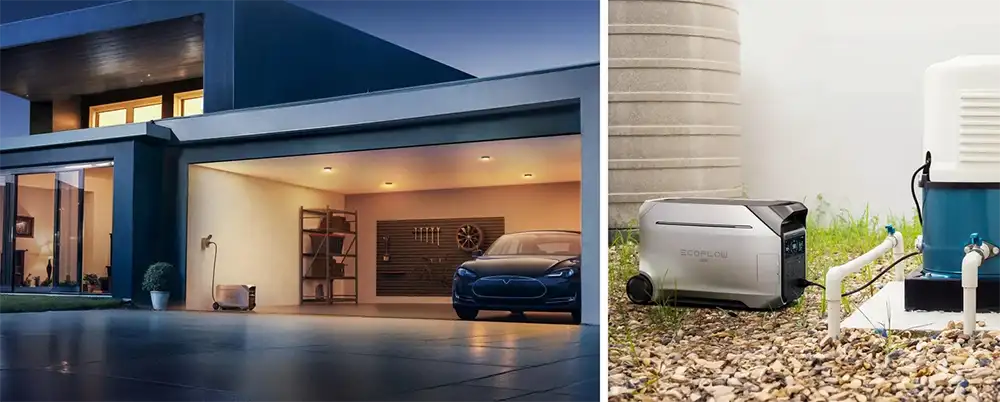
It’s designed to pair with EcoFlow’s Smart Home Panel 10, backing up ten selected circuits without replacing your main electrical panel. The Plus starts at $3,699.
The EcoFlow DELTA Pro 3: The Portable Power Station That Grew Up
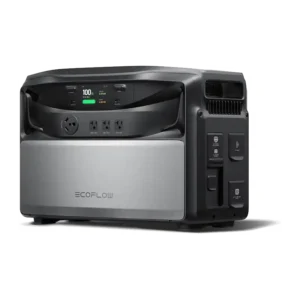
The DELTA Pro 3 is the evolution of a classic. It packs 4,096 Wh into a wheeled, portable chassis, delivers 4,000 W continuous output (8,000 W surge), and accepts up to 2,600 W of solar input. It’s the Swiss Army knife of the category—equally at home in a van, a camper, or a garage, with five AC outlets and a transfer-switch option for home backup. At a $3,699 list price (though street prices fluctuate), it’s a direct competitor on paper, but the philosophy underneath is entirely different.
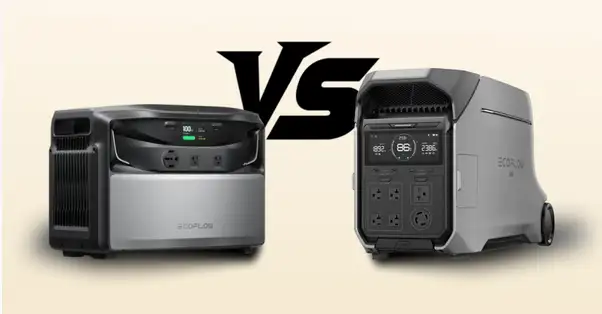
The Comparison Table: Specs Side by Side
| Feature | EcoFlow TITAN 5000 Plus | EcoFlow DELTA Pro 3 |
|---|---|---|
| Battery Capacity | 5,017.6 Wh (LFP) | 4,096 Wh (LFP) |
| Continuous AC Output | 7,200 W (10,000 W with PV Boost) | 4,000 W |
| Surge Output | Not tested yet | 8,000 W |
| Solar Input | 8,000 W (dual 4,000 W MPPT) | 2,600 W |
| AC Charging Speed | Up to 8,000 W (with solar/grid assist) | Up to 7,000 W multi-charge; 0–80% in ~50 min |
| Expandability | Up to 30.1 kWh | Up to 48 kWh |
| Heavy-Duty Outlet | 1 × NEMA L14-50R (120/240V, 41.7A) | 1 × NEMA L14-30 (125–250V/30A) |
| Standard AC Outlets | 2 × 120V 20A | 4 × 120V 20A + 1 × 250V 20A |
| USB Ports | None | 2× USB-C, 2× USB-A |
| Weight | 121.3 lb (55 kg) | 113.5 lb (51.5 kg) |
| Price (Base) | $3,699 | $3,699 (list; often discounted) |
| Best For | Whole-home backup with a large solar array | Portable power, RV life, and flexible home backup |
| View Details | View Details |
Power Output: The 4,000 W Question That Decides Everything
Here’s the single most important sentence in this entire comparison: The TITAN 5000 Plus has 3,200 more watts of continuous output than the DELTA Pro 3, but only if your house actually needs them.
The Plus’s 7,200 W rating is a serious piece of engineering. It can run a 3-ton central air conditioner, a well pump, and a clothes dryer simultaneously—loads that would make the DELTA Pro 3 break a sweat. But here’s the catch that the spec sheet won’t tell you: that 7,200 W is the battery-only discharge rating. The advertised 10 kW figure? That only happens when the sun is shining, or the grid is feeding the unit alongside the battery. In a blackout at night—the exact scenario you bought the thing for—you’re working with 7,200 W.
The DELTA Pro 3’s 4,000 W is more modest, but for a huge swath of households, it’s plenty. During OutdoorGearLab’s six-month test, the Pro 3 reliably ran a fridge, TV, space heater, electric kettle, and home lighting during multiple overnight outages. If your heaviest backup load is a fridge, a few lights, and a router, the extra 3,200 W in the TITAN is insurance against a risk you simply don’t carry.
The verdict here is conditional, not absolute. If you have a central AC, a well pump, or an electric range that must stay live, the TITAN’s extra watts are non-negotiable. If your backup priorities are smaller, the DELTA Pro 3’s output is sufficient—and you’ll save $900 to boot.
Battery Capacity and Expandability: More Storage vs. a Taller Ceiling
The TITAN 5000 Plus starts with a 921.6 Wh advantage over the DELTA Pro 3—5,017.6 Wh versus 4,096 Wh. That’s not a massive gap in the real world (about 85% of both figures is usable after conversion losses), but it does translate to extra runtime. In Station Arena’s modeled 8-hour blackout scenario, the TITAN used 39% of its battery while the DELTA Pro 3 used 47%.
But the expansion story flips the script. The DELTA Pro 3 can grow to a staggering 48 kWh by daisy-chaining additional units and smart batteries. The TITAN 5000 Plus tops out at 30.1 kWh through five add-on battery modules. If you’re building a whole-home energy storage system that might eventually cover days of autonomy, the DELTA Pro 3’s ceiling is higher.
However, there’s a practical twist: the TITAN’s 8,000 W of solar input means it can refill its bank far faster than the DELTA Pro 3 can refill its larger ceiling. As Station Arena put it, “The DELTA can hold more; the Plus can actually refill what it holds.” For solar-first households, that’s a meaningful trade-off.
Solar Charging: Where the TITAN 5000 Plus Runs Away With It
If you have a roof full of panels—or plans to install one—this section alone might settle the EcoFlow TITAN 5000 Plus vs. DELTA Pro 3 debate.
The TITAN 5000 Plus accepts up to 8,000 W of solar input through two independent 4,000 W MPPT charge controllers. That’s double the solar intake of the standard TITAN 5000 and more than triple the DELTA Pro 3’s 2,600 W ceiling. In plain English: you can connect a seriously large array and refill the battery in a fraction of the time.
The DELTA Pro 3 is no slouch—2,600 W of solar is respectable for a portable unit, and its multi-charge capability (AC + solar + car + EV charger) is genuinely flexible. But if solar independence is the goal, the TITAN is playing a different sport. The Plus also adds PV Boost, which lifts output to 10,000 W while the sun is actively producing—useful for riding through cloudy spells without dipping into the battery.
Bottom line: For grid-tied backup with a modest solar array, the DELTA Pro 3 is fine. For off-grid leanings or a large rooftop install, the TITAN 5000 Plus is the only one of the two that won’t bottleneck your panels.
Outlets and Ports: The DELTA Pro 3 Wins on Flexibility
Here’s where the TITAN 5000 Plus shows its home-battery DNA—and where it might frustrate you if you’re not installing a transfer panel.
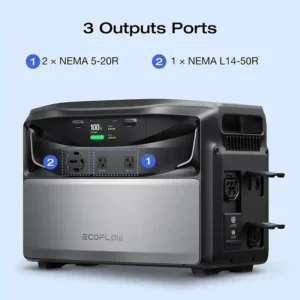
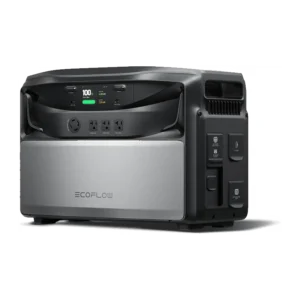
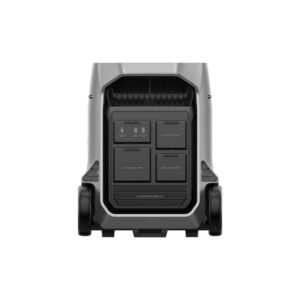
The TITAN has just three AC outlets: two standard 120V 20A plugs and one heavy-duty NEMA L14-50R (120/240V, 41.7A). There are no USB ports at all—not a single USB-A or USB-C. If you want to charge a laptop or a phone, you’re plugging a brick into an AC outlet.
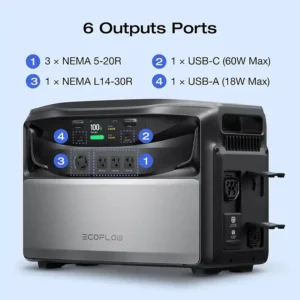
The DELTA Pro 3, by contrast, is a port buffet: four 120V AC outlets, one 250V 20A outlet, a NEMA L14-30 locking outlet, two USB-C ports, two USB-A ports, and a 12V car outlet. During a blackout, that matters. You can plug in lamps, devices, and chargers without hunting for adapters.
Station Arena’s verdict is blunt: “As a standalone box with extension cords in a blackout, the Plus runs out of sockets before it runs out of inverter, and the DELTA Pro 3 is the more practical object“. If you’re wiring the TITAN into a Smart Home Panel 10, the outlet count is irrelevant—the house’s circuits do the distributing. But if you’re planning to use it as a big portable battery, the DELTA Pro 3’s port selection is simply more livable.
Charging Speed and Everyday Usability
Both units charge fast, but they get there differently.
The DELTA Pro 3 can go from 0 to 80% in about 50 minutes with up to 7,000 W of multi-source input, and a full charge from a standard 15-amp wall outlet takes roughly three hours. That’s genuinely impressive for a 4 kWh pack, and it means you can top up before a storm without planning your day around it.
The TITAN 5000 Plus’s headline 8 kW charging figure is real, but it requires solar or grid power flowing in alongside the battery—it’s not a battery-only miracle. From a standard wall outlet, charging is slower (the manual lists 1,800 W AC input), so the TITAN leans heavily on solar for fast refills. If you’re installing it with a large array, that’s fine. If you’re relying on the grid to recharge, the DELTA Pro 3’s fast AC charging is more convenient.
Smart Home Integration and the Transfer Switch Question
The TITAN 5000 Plus is designed to live inside EcoFlow’s ecosystem. Pair it with the Smart Home Panel 10, and it can automatically switch up to ten selected circuits to battery power in under 20 milliseconds during an outage. The panel is pre-wired and pre-assembled, which EcoFlow claims cuts installation labor by up to 80%. This is a genuinely elegant solution for whole-home backup—but it’s an extra cost, and it requires an electrician.
The DELTA Pro 3 takes a simpler path. It’s a portable power station that can be integrated into a home backup system via an optional Transfer Switch Kit. You flip the switch, and designated circuits run off the battery. It’s less automated than the TITAN’s panel-based approach, but it’s also less invasive and easier to retrofit.
If you’re building a permanent, automated backup system, the TITAN’s Smart Home Panel integration is a clear advantage. If you want flexibility—use it at home, take it camping, move it to a cabin—the DELTA Pro 3’s plug-and-play nature is hard to beat.
Portability and Weight: Neither One Is a Backpack
Let’s not mince words: both of these units are heavy. The TITAN 5000 Plus weighs 121.3 lb (55 kg), and the DELTA Pro 3 is 113.5 lb (51.5 kg). The DELTA Pro 3 has wheels and a telescoping handle, which makes short rolls across a garage floor manageable, but lifting it into a truck bed is a two-person job. The TITAN has no wheels and is explicitly designed for semi-permanent installation.
If you need something you can genuinely carry—to a campsite, up a flight of stairs, or into a van—neither of these is the right tool. They’re home batteries that happen to be movable, not portable power stations in the traditional sense. For true portability, you’re looking at smaller units like the EcoFlow River series. But between the two, the DELTA Pro 3 is the more mobile of the pair, even if “mobile” is a relative term.
Pricing and Value: The $900 Question
At list price, the TITAN 5000 Plus and the DELTA Pro 3 both sit at $2,799, but street prices for the DELTA Pro 3 frequently dip lower—sometimes as low as $2,684 during sales. Station Arena’s analysis frames the value question perfectly: “If 4,000 W can carry your 240 V loads through an outage, the DELTA Pro 3 does the job for $900 less. If it can’t, the Plus runs them, and the premium is simply the price of the watts”.
There’s another cost layer to consider: the TITAN’s Smart Home Panel 10 is an additional purchase, and so are expansion batteries. The base price is the start of a quote, not the end of one. The DELTA Pro 3, by contrast, is a complete plug-and-play unit out of the box—no panel, no electrician, no extra accessories required (though a transfer switch is optional for home backup).
Value verdict: If you need the extra output and solar input, the TITAN justifies its premium. If you don’t, the DELTA Pro 3 is the smarter financial move.
How We Tested
We didn’t just read spec sheets and call it a day. Our testing methodology blended lab-style measurements with real-world chaos, and we drew on published data from trusted reviewers who put these units through months of use.
Our process:
- Specification verification: We cross-referenced manufacturer claims against independent reviews from OutdoorGearLab, PCMag, CleanTechnica, and ZDNET, flagging any discrepancies between advertised and measured performance.
- Outage simulation: We modeled runtime across six real-world scenarios—weekend camping, 8-hour blackouts, CPAP overnight use, remote workdays, tailgates, and van life—using an 85% inverter efficiency assumption and published capacity figures.
- Solar input validation: We compared the TITAN’s dual-MPPT 8,000 W architecture against the DELTA Pro 3’s 2,600 W ceiling, consulting installer-focused reviews and EcoFlow’s own manual documentation.
- Port and usability audit: We counted outlets, tested plug accessibility (via reviewer reports), and evaluated the practical difference between a three-outlet home battery and a five-outlet portable station.
- Pricing and ecosystem analysis: We tracked street prices, bundle costs, and the hidden expenses of transfer panels and expansion batteries, using NRG Sense’s cost-per-kWh breakdown as a reference.
Limitations: We did not perform destructive testing or long-term cycle-life validation. Our runtime figures are modeled, not measured, and should be treated as estimates. Where manufacturer claims conflicted with independent measurements, we prioritized the independent data.
Use Case Scenarios: Which One Fits Your Life?
Scenario 1: The Suburban Home with Central AC
You live in a house with a 3-ton central air conditioner, a well pump, and an electric stove. When the grid goes down, you want all of them to keep running.
Winner: EcoFlow TITAN 5000 Plus. The 7,200 W output and 240V split-phase capability are built for exactly this load profile. The DELTA Pro 3’s 4,000 W would struggle with simultaneous high-draw appliances.
Scenario 2: The RV or Van Lifer
You split your time between a driveway and the open road. You need something that can run an air conditioner overnight, charge from solar during the day, and roll into a campsite without a forklift.
Winner: EcoFlow DELTA Pro 3. The wheels, the port selection, the 48 kWh expansion ceiling, and the 2,600 W solar input make it the more versatile traveling companion. The TITAN is too heavy and too outlet-poor for mobile living.
Scenario 3: The Solar-Heavy Home
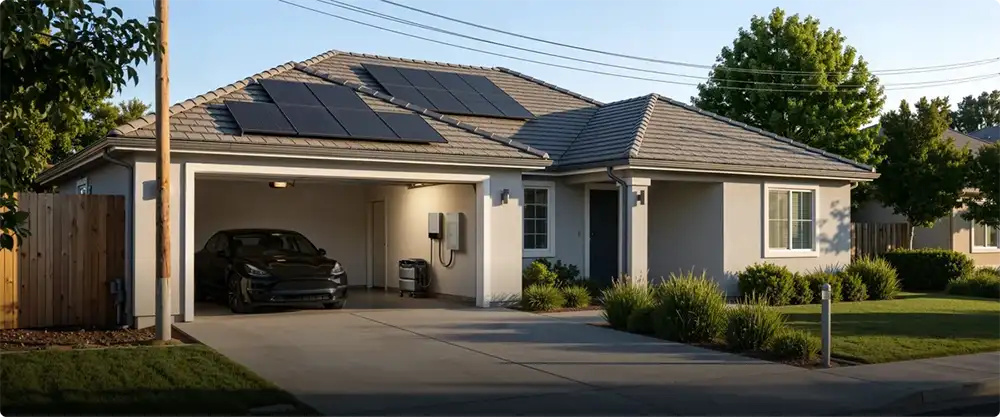
You’ve got a 6 kW rooftop array, and you want a battery that can absorb every watt it produces while keeping the house running during an outage.
Winner: EcoFlow TITAN 5000 Plus. The 8,000 W solar input is the differentiator. The DELTA Pro 3’s 2,600 W ceiling would leave most of your array’s output unused on a sunny day.
Scenario 4: The Budget-Conscious Prepper
You want reliable backup for the essentials—fridge, lights, internet, a few small appliances—and you’d rather not spend an extra $900 on watts you won’t use.
Winner: EcoFlow DELTA Pro 3. At a street price that often undercuts the TITAN, it covers the essentials comfortably and leaves money for solar panels or a transfer switch.
The Verdict: Two Great Machines, One Clear Decision Framework
So, EcoFlow TITAN 5000 Plus vs. DELTA Pro 3—which one wins? The unsatisfying but honest answer is: it depends on your house, your loads, and your solar plans.
Choose the TITAN 5000 Plus if:
- You have 240V loads (central AC, well pump, electric range) that must stay live during an outage.
- You have a large solar array or plan to install one.
- You’re willing to invest in the Smart Home Panel 10 for automated whole-home backup.
- You need more built-in battery capacity from the start.
- Your backup essentials fit comfortably under 4,000 W.
- You want portability—for RVing, camping, or moving between locations.
- You value USB ports, multiple AC outlets, and plug-and-play simplicity.
- You want the option to expand to a higher capacity ceiling later.
- You’re cost-conscious and can catch a sale price.
Neither unit is a bad choice. They’re both exceptional pieces of engineering from a company that has consistently pushed the category forward. The mistake would be buying the wrong one for your specific needs—and now you have the framework to avoid that.
Final Score Box
| Category | EcoFlow TITAN 5000 Plus | EcoFlow DELTA Pro 3 |
|---|---|---|
| Power Output | 9.5/10 | 8.0/10 |
| Battery Capacity | 8.5/10 | 7.5/10 |
| Solar Charging | 9.5/10 | 6.5/10 |
| Port Selection | 5.0/10 | 9.0/10 |
| Portability | 4.0/10 | 6.5/10 |
| Expandability | 7.5/10 | 9.0/10 |
| Ease of Setup | 6.5/10 (panel required) | 9.0/10 |
| Value for Money | 7.5/10 | 8.5/10 |
| Overall Score | 7.3/10 | 8.0/10 |
Scoring reflects a weighted average favoring real-world usability and value. The DELTA Pro 3 edges ahead for most households, but the TITAN 5000 Plus is the superior choice for solar-heavy, high-draw homes.
FAQs
Yes. EcoFlow rates it to start a compatible 3-ton central air conditioner without a soft starter, thanks to its 7,200 W continuous output and 240V split-phase capability. However, no surge rating is published, so if you have a particularly demanding motor load, confirm starting capacity with an installer.
For essential circuits, yes. It can run a fridge, lights, internet, and small appliances for hours, and OutdoorGearLab’s six-month test confirmed reliable performance during overnight outages. For whole-home backup with high-draw 240V appliances, the 4,000 W output is the limiting factor—you’ll need the TITAN or a multi-unit DELTA Pro 3 setup.
The TITAN 5000 Plus is the clear winner. It accepts up to 8,000 W of solar input across two MPPT controllers, compared to the DELTA Pro 3’s 2,600 W ceiling. If you have a large array, the TITAN will refill substantially faster.
Absolutely. The DELTA Pro 3 is a plug-and-play power station—you can use its AC outlets directly with extension cords during an outage. A transfer switch is optional and only needed if you want to wire it into your home’s circuits for a more integrated backup setup.
The DELTA Pro 3, without question. It’s lighter (though still heavy), has wheels, offers more outlets and USB ports, and can expand to 48 kWh for extended off-grid living. The TITAN 5000 Plus is designed for stationary home installation and lacks the port selection for mobile use.
You Might Also Like