


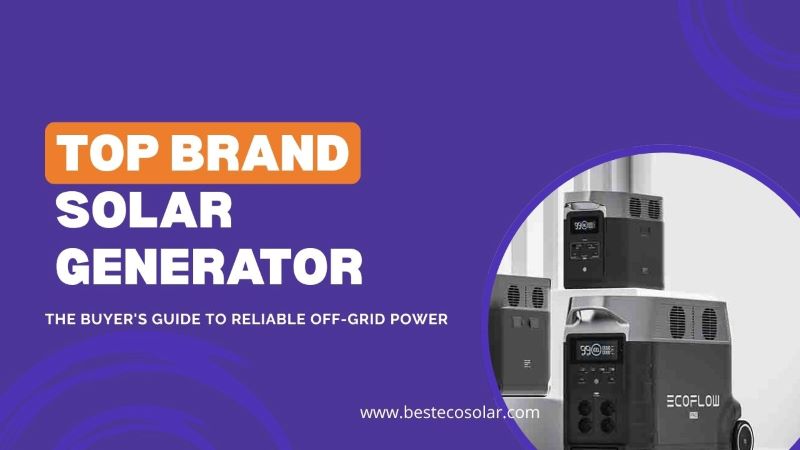
Top Brand Solar Generator: The Buyer’s Guide to Reliable Off-Grid Power
Have you ever been halfway through a camping trip when your phone dies? Or worse, sat in the dark during a blackout, wondering how long your fridge will keep your food cold? Yeah, me too. That sinking feeling of being powerless. If you’re hunting for a top brand solar generator that won’t leave you hanging, 2026 is the best year yet to make the leap.
Think of a solar generator like a Swiss Army knife for electricity. Instead of relying on noisy gas guzzlers that smell like a lawnmower and demand constant refueling, you get a silent, clean energy box that drinks sunshine. But here’s the kicker—not all solar generators are created equal.
Some are overpriced paperweights. Others? Absolute beasts that’ll keep your entire house humming during a storm. So how do you separate the heroes from the hype? Grab a coffee, and let’s walk through everything you need to know.
What Exactly Is a Solar Generator?
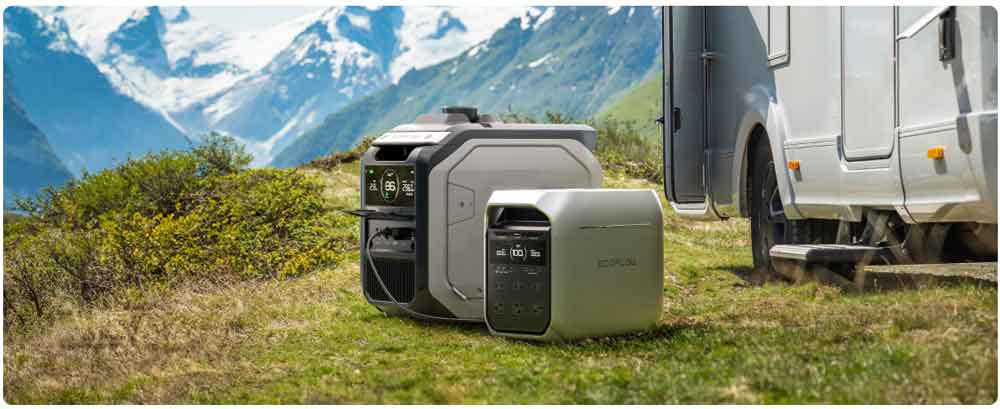
Before we dive into the brands, let’s clear up the confusion. A solar generator isn’t technically a “generator” in the traditional sense. It doesn’t burn fuel or spin a turbine. Instead, it’s essentially a giant rechargeable battery, usually a portable power station—paired with solar panels that feed it energy from the sun.
Picture it like this: a traditional gas generator is a hungry monster that roars and belches smoke. A top brand solar generator, on the other hand, is more like a quiet butler. It stores energy silently, waits patiently, and delivers clean power exactly when you need it. No fumes. No noise. No trips to the gas station at midnight.
How Solar Generators Work
Here’s the simple version. Solar panels soak up sunlight and convert it into DC electricity. That juice flows into the power station’s battery, where it’s stored until you need it. When you plug in your devices, an inverter converts that stored DC power into AC power, the same stuff coming out of your wall outlets at home.
The best part? Once you buy the setup, the fuel is free. Forever. The sun doesn’t send you a bill. And modern top brand solar generator units are incredibly efficient, with some panels hitting over 24% efficiency ratings. That means even on partly cloudy days, you’re still pulling in usable power.
Why Everyone’s Talking About Them
Let’s be real—climate change isn’t a future problem anymore. It’s a Tuesday problem. Power outages are getting more frequent, longer, and more unpredictable. Meanwhile, outdoor adventures, van life, and remote work are exploding in popularity. People need power that moves with them.
That’s where a top-rated solar generator shines. Whether you’re working from a campervan in the Rockies or keeping your medical devices running during a hurricane, these units offer independence. And thanks to massive leaps in lithium battery technology, especially LiFePO4 chemistry, today’s solar generators last thousands of charge cycles, charge faster than ever, and weigh less than their predecessors.
The Top Brand Solar Generator Landscape
Alright, let’s talk about the heavy hitters. The market is crowded with knockoffs and fly-by-night brands, but a handful of companies have earned their stripes through rigorous testing, innovation, and real-world reliability. When you’re investing in a top brand solar generator, these are the names that keep showing up on every expert’s shortlist.
1. Jackery – The Household Name
If solar generators had a mainstream celebrity, Jackery would be it. They’ve been around the block, and they’ve built a reputation for making user-friendly, reliable power stations that just work. You don’t need an engineering degree to operate a Jackery. You press a button, plug in your stuff, and you’re golden.
1. Jackery Explorer 2000 Plus
The Jackery Explorer 2000 Plus is the brand’s flagship, and it’s a monster. We’re talking 2,160 watt-hours of capacity and the ability to expand up to a jaw-dropping 12,000Wh with extra battery packs. That’s not just a portable power station—that’s a whole-home backup system in disguise.
In lab testing, it hit 100% charge from a wall outlet in under two hours—about twice as fast as many competitors. Pair it with six of Jackery’s SolarSaga 200 panels, and you can recharge from the sun in roughly two hours under ideal conditions.
At 61.5 pounds, it’s lighter than you’d expect for this much capacity, and the three-year warranty (extendable to five if you buy direct) shows Jackery stands behind its gear.
If you want the best solar generator brand that balances raw power with relative portability, this is your huckleberry.
2. Jackery Explorer 1000 V2
Not everyone needs to power a small village. For weekend warriors and casual campers, the Jackery Explorer 1000 V2 hits a sweet spot. It’s lighter, more affordable, and still packs enough punch to run a mini-fridge, charge laptops, and keep your lights on for days.
Outdoor Life rated it as one of the easiest units to use in 2026, and honestly? Sometimes simple is better. You don’t want to fumble through an app when you’re freezing in a tent.
2. EcoFlow – The Speed Demon
If Jackery is the reliable family sedan, EcoFlow is the sports car. This brand has made a name for itself by absolutely demolishing charging speed records. When other brands take six or eight hours to fill up, EcoFlow units often do it in under 90 minutes.
1. EcoFlow Delta 2
The EcoFlow Delta 2 is the people’s champion. With a 1,024Wh capacity, 1,800W output, and a recharge time of just 75 minutes from a wall outlet, it’s the top brand solar generator for folks who hate waiting. In rigorous testing, it delivered 88% of its stated capacity under heavy loads and 83% after three months in storage. That’s rock-solid consistency.


At about 27 pounds, it’s genuinely portable. The app is intuitive, the display is crystal clear, and at roughly $0.61 per usable watt-hour, it’s one of the better values on the market. The only downside? It’s not water-resistant, so don’t leave it out in the rain.
2. EcoFlow Delta 3 Ultra Plus
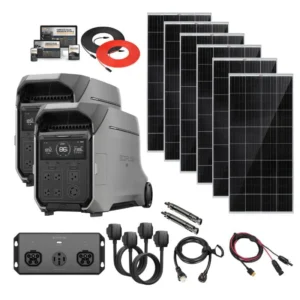
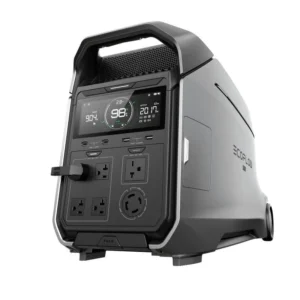
Need more? The EcoFlow Delta 3 Ultra Plus is basically the Delta 2 on steroids. With 3,072Wh of base capacity expandable up to 11kWh, 3,600W of continuous output, and a surge capacity of 7,200W, this thing can start an air conditioner without breaking a sweat. It even has a 30A RV plug and telescoping wheels for easier transport.
What do I love most? The Storm Guard Mode. It monitors weather forecasts and automatically charges the unit if a severe storm is approaching. That’s the kind of smart feature that turns a good high-capacity solar generator into a great one.
3. Bluetti – The Build Quality King
Bluetti doesn’t always get the same mainstream buzz as Jackery, but among serious users? It’s a cult favorite. And for good reason. These units are built like tanks, packed with ports, and backed by some of the most durable batteries in the business.
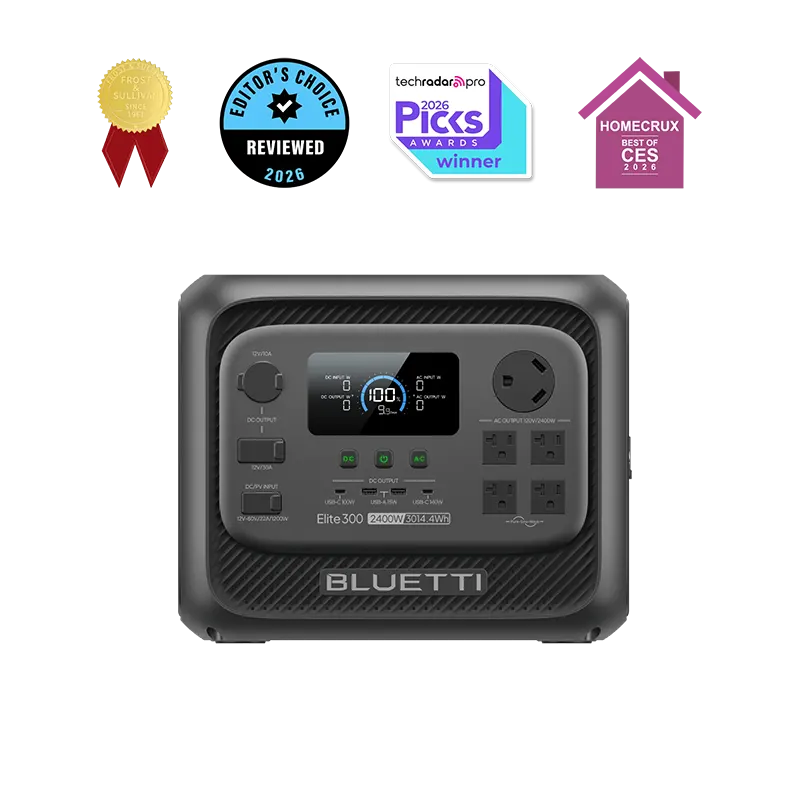
1. Bluetti Elite 200 V2
PopSci named the Bluetti Elite 200 V2 the best overall solar generator of 2026, and it’s easy to see why. With 2,073Wh of capacity, 2,600W output, and a surge capacity of 3,900W, it handles pretty much anything a normal household can throw at it. The LiFePO4 battery is rated for over 6,000 cycles—that’s years of daily use before you notice any degradation.
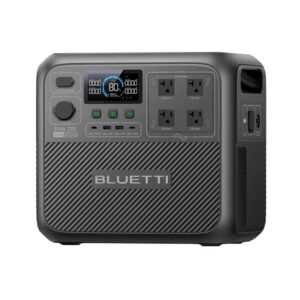
At 53.4 pounds, it’s not featherlight, but the compact, boxy design makes it perfect for tucking into storage spaces or building into van conversions. The app is genuinely good (a rarity in this industry), and the 1,000W solar input means you can pair it with a serious panel array. If you want one top brand solar generator that does it all, start here.
2. Bluetti Apex 300
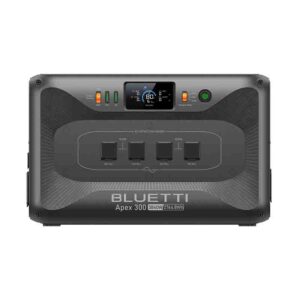
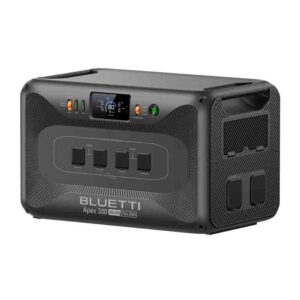
For the off-grid dreamers, the Bluetti Apex 300 is in a league of its own. With a base capacity of 5,529Wh expandable to a mind-bending 58kWh, and solar input expandable to 30,000W with the SolarX 4K accessory, this isn’t just a generator—it’s a personal power plant.
Yes, it’s heavy. Yes, it’s expensive. But if you’re building a remote cabin or running a serious off-grid operation, nothing else comes close.
4. Anker – The Dark Horse
Anker made its name selling phone chargers, but don’t let that fool you. Their solar generators are legitimate contenders, especially when it comes to solar panel integration.
1. Anker SOLIX C1000 Gen 2
The Anker SOLIX C1000 Gen 2 is a compact powerhouse. At just 24.9 pounds, it delivers 1,024Wh and 2,000W output. But where it really shines is solar charging. Anker’s 100W portable panels include a built-in sundial to help you angle them perfectly for maximum sun exposure—a small touch that makes a huge difference in real-world efficiency.
Outdoor Life named it the best solar generator for solar charging specifically, noting that Anker’s panels outperform many competitors in sustained testing. If your primary goal is off-grid solar charging, this is the best portable solar generator to beat.
5. Goal Zero – The Reliable Veteran
Goal Zero has been in the solar game longer than almost anyone. Their Yeti 700 earned Outdoor Life’s “Most Reliable” award in 2026, and the brand continues to prioritize durability and safety over flashy specs. You won’t get the fastest charging times, but you’ll get a unit that works in extreme conditions and doesn’t quit when you need it most.
Head-to-Head Comparison Table
Choosing a top brand solar generator can feel overwhelming, so here’s a quick side-by-side to help you visualize your options:
| Feature | Jackery Explorer 2000 Plus | EcoFlow Delta 2 | Bluetti Elite 200 V2 | Anker SOLIX C1000 Gen 2 | Goal Zero Yeti 700 |
|---|---|---|---|---|---|
| Capacity | 2,160Wh (expandable to 12kWh) | 1,024Wh | 2,073Wh | 1,024Wh | 677Wh |
| Max Output | 3,600W | 1,800W | 2,600W | 2,000W | 700W |
| Surge Capacity | 4,600W | 2,700W | 3,900W | 2,400W | 1,000W |
| Wall Charge Time | ~2 hours | 1 hour 15 min | ~90 min | 47 minutes | ~2.5 hours |
| Solar Input | 1,400W | 500W | 1,000W | 600W | 300W |
| Weight | 61.5 lbs | 27 lbs | 53.4 lbs | 24.9 lbs | 35 lbs |
| Battery Type | LiFePO4 | LiFePO4 | LiFePO4 | LiFePO4 | Li-ion NMC |
| Best For | Home backup, large loads | All-around use, fast charging | Balance of power/portability | Solar charging, compact needs | Reliability, durability |
| Approx. Price | $899 | $449 | $799 | $599 | $700 |
| More Details | More Details | More Details | More Details | More Details |
See how each top brand solar generator carves out its own niche? There’s no single “best” option—only the best one for your specific needs.
What to Look for in a Top Brand Solar Generator
Now that you know the players, let’s talk about how to judge them. Because specs on paper don’t always tell the whole story. I’ve learned this the hard way—trusting a flashy Amazon listing only to end up with a unit that couldn’t run a coffee maker without crying for mercy.
1. Battery Chemistry Matters
Here’s a rule of thumb: if it’s not LiFePO4, think twice. Lithium iron phosphate batteries are safer, more stable, and last way longer than traditional lithium-ion. We’re talking 3,000 to 6,000+ charge cycles versus 500 to 800. That’s the difference between a generator that lasts two years and one that lasts a decade.
Every top brand solar generator on our list uses LiFePO4 except the Goal Zero Yeti 700, which still uses NMC chemistry. It’s not a dealbreaker, but it’s something to weigh if longevity matters to you.
2. Capacity and Output
Capacity is measured in watt-hours (Wh)—think of it as the size of your fuel tank. Output is measured in watts (W)—that’s how much power it can deliver at once. A 1,000Wh battery can theoretically run a 100W device for 10 hours. In reality, expect about 80-90% of that due to inverter losses.
But here’s where people mess up: they buy a generator with huge capacity but low output. You might have 2,000Wh, but if the inverter only handles 500W, you can’t run a microwave. Always check both numbers. A true top-rated solar generator balances both.
3. Charging Speed
Time is money, and waiting eight hours for a full charge is painful. EcoFlow dominates here, but even Jackery and Bluetti have gotten incredibly fast. Look for units that can hit 80% charge in under two hours. Some, like the Anker SOLIX C1000, can do it in under 50 minutes.
4. Port Selection
This sounds boring until you’re in the field with the wrong cables. At a minimum, you want AC outlets, USB-A, USB-C, and a 12V car port. More premium models add wireless charging pads, 30A RV plugs, and even 240V split-phase output. The more ports, the more versatile your emergency solar generator becomes.
5. Weight and Portability
A 60-pound generator is portable in the same way a grand piano is portable—technically yes, practically no. If you’re car camping or using it for home backup, weight matters less. If you’re hiking or moving it frequently, look for units under 30 pounds. Wheels and telescoping handles help, too.
Real-World Scenarios
Let’s get practical. How do these actually fit into your life?
1. Camping and Van Life
Imagine pulling into a secluded campsite with no hookups. Your partner wants to blend morning smoothies. Your kid needs a tablet charged for the drive tomorrow. You want to keep the cooler running so your beer doesn’t get warm. A mid-sized camping solar generator like the EcoFlow Delta 2 or Bluetti AC180 handles this effortlessly.
For van lifers, the Bluetti Elite 200 V2 is a dream. Its compact shape slides into tight spaces, and the 2,600W output means you can run an induction cooktop without draining the battery in ten minutes.
2. Home Backup During Outages
When the grid goes down, a top brand solar generator isn’t just convenient—it can be lifesaving. The Jackery Explorer 2000 Plus, paired with a transfer switch, can keep your refrigerator, lights, and medical devices running for days. Add solar panels, and you’ve got indefinite power as long as the sun shines.
During a recent windstorm that knocked out power for two days, I kept my fridge, laptop, and lights going without a hitch. My neighbors with gas generators? They had to wake up every four hours to refuel. I slept like a baby.

3. Off-Grid Living
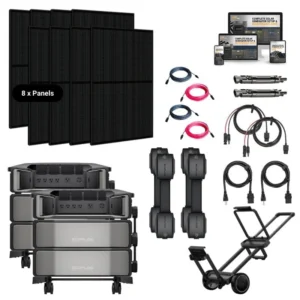
If you’re building a remote cabin or going full homestead, you need scalability. The Bluetti Apex 300 and EcoFlow Delta 3 Ultra Plus can expand with additional batteries and massive solar arrays. These aren’t just generators—they’re the foundation of a self-sufficient energy system.
The Price Question
Let’s address the elephant in the room: these aren’t cheap. A quality top brand solar generator will set you back anywhere from $400 to $3,500. But here’s the thing—it’s an investment, not an expense.
Think about it. A gas generator might cost $500 upfront, but you’ll spend hundreds per year on fuel, maintenance, and repairs. A solar generator? After the initial purchase, operating costs are essentially zero. Over five years, you’ll likely save money. Plus, you can’t put a price on silent, fume-free operation during a crisis.
Budget picks like the Oupes Mega 1 or Grecell T-1000 offer solid performance for under $400. But if you can stretch your budget, the premium brands deliver better efficiency, longer lifespans, and superior customer support.
Common Mistakes to Avoid
I’ve made these mistakes. Learn from my pain.
- First, don’t underestimate your power needs. People buy a 300Wh unit thinking it’ll run their fridge. It won’t. Do the math. Add up the watts of everything you want to run, then double it for a safety margin.
- Second, don’t ignore solar input limits. A generator might accept 1,000W of solar panels, but if you only buy a 100W panel, you’ll be waiting forever to recharge. Match your panels to your unit’s capacity.
- Third, don’t cheap out on no-name brands. I’ve tested off-brand units that claimed 2,000Wh but delivered 60% of that. A top brand solar generator costs more upfront because it actually works as advertised.
- Fourth, don’t forget about temperature. Lithium batteries hate extreme cold. If you live somewhere frigid, look into the Bluetti Pioneer Na—the first sodium-ion solar generator that works at temperatures as low as -13°F.
Conclusion
So here’s the bottom line: we are living in the golden age of portable solar power. Whether you’re prepping for emergencies, chasing van life dreams, or just want a reliable backup for storm season, there’s a top brand solar generator out there with your name on it.
Jackery brings user-friendly reliability. EcoFlow brings blistering speed. Bluetti brings tank-like durability. Anker brings solar optimization. Goal Zero brings proven resilience. The “best” choice depends on your budget, your power needs, and how you plan to use it.
My advice? Don’t overthink it. Start with what you need to power, work backward to the capacity and output required, and buy from a brand that stands behind its products. The sun isn’t going anywhere. Your access to reliable power shouldn’t depend on the grid.
FAQs About Solar Generator
Most modern LiFePO4 solar generators are rated for 3,000 to 6,000+ charge cycles. That translates to roughly 8 to 15 years of regular use before the battery degrades to 80% capacity. Premium brands like Bluetti and Jackery back this up with warranties ranging from 2 to 5 years.
It depends on the size. Compact units (under 1,500Wh) can handle lights, phones, and small appliances. But expandable models like the Jackery Explorer 2000 Plus or Bluetti Apex 300—especially when paired with extra battery packs—can absolutely power an entire home, including refrigerators, medical devices, and even air conditioners, especially during short outages.
Most top brand solar generators work best with their own branded panels because the connectors and voltage are optimized. However, many units accept third-party panels as long as the voltage and connector type match. Always check the maximum solar input voltage before mixing and matching.
Absolutely—unlike gas generators, solar generators produce zero emissions and run silently. You can safely use them inside your home, tent, RV, or garage without any risk of carbon monoxide poisoning. Just ensure they have proper ventilation for heat dissipation.
A portable power station is just the battery and inverter unit. A solar generator is that same unit bundled with solar panels for recharging. So technically, any power station can become a solar generator if you add compatible panels. When shopping, look for bundles if you want the complete off-grid setup right out of the box.
You Might Also Like