
Complete Grid-Tied Solar Kit: The Honest, No-Fluff Buyer’s Guide for 2026
So you’re thinking about going solar, and every ad on your feed keeps flashing the same phrase: “complete grid-tied solar kit.” But what does that actually mean? Is it really as simple as “buy a box, bolt it to your roof, and watch your bill vanish”? Not quite — but it’s a lot closer to that than most people assume.
What Exactly Is a Complete Grid-Tied Solar Kit?
Think of your home’s electrical panel as a bathtub. The utility grid is the main faucet. A complete grid-tied solar kit is like adding a second faucet that fills the tub with free water (sunlight) whenever the sun’s out — and when it’s not, the original faucet just picks up the slack automatically. No manual switching. No babysitting. That’s the whole magic trick behind a grid-tied solar kit.
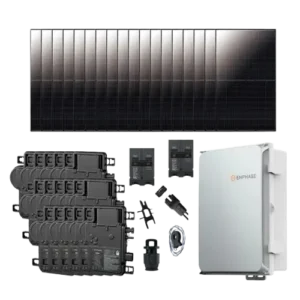
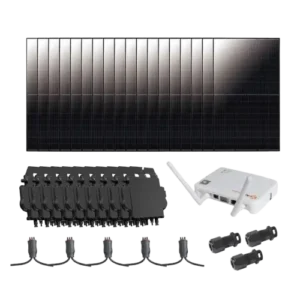
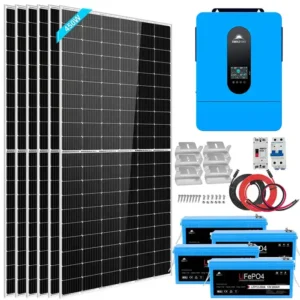
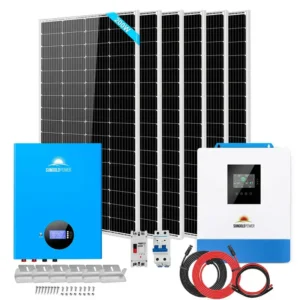
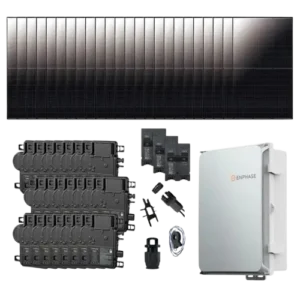
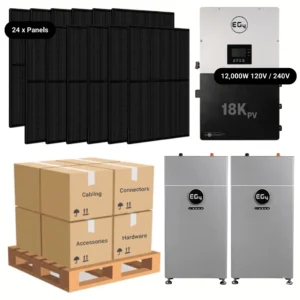
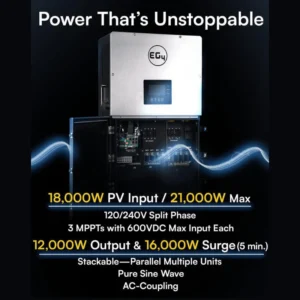
Technically speaking, a complete grid-tied solar kit is a bundled solar package — panels, an inverter (string or micro), racking, wiring, breakers, and monitoring — engineered to tie directly into your utility’s electrical grid rather than an isolated battery bank. Your grid-tied solar system pulls double duty: it powers your home during the day and pushes any surplus electricity back onto the grid, often earning you credit through net metering.
Why “Complete” Actually Matters in a Grid-Tied Solar Kit
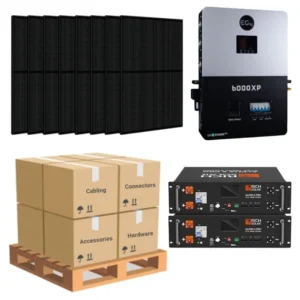
Here’s a pet peeve of mine: companies that sell “solar kits” that are really just a pallet of panels with a note that says “inverter sold separately”. A genuinely complete grid-tied solar kit should include:
- Solar panels (usually 350W–450W+ monocrystalline modules)
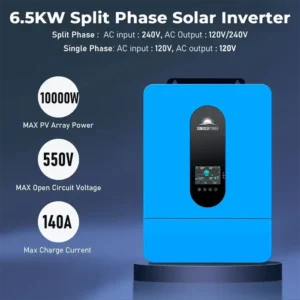
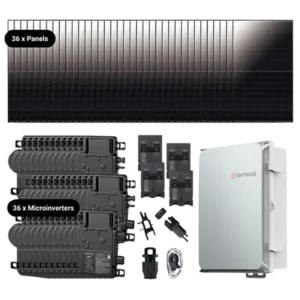
- A grid-tie inverter or a set of microinverters
- Roof or ground mounting hardware and rails
- DC and AC disconnects for code compliance
- Wiring, connectors, breakers, and combiner boxes
- A monitoring app or gateway
- Wiring diagrams and installation documentation
If any of those pieces are missing, you’re not buying a complete grid-tied solar kit — you’re buying a shopping list with extra steps.
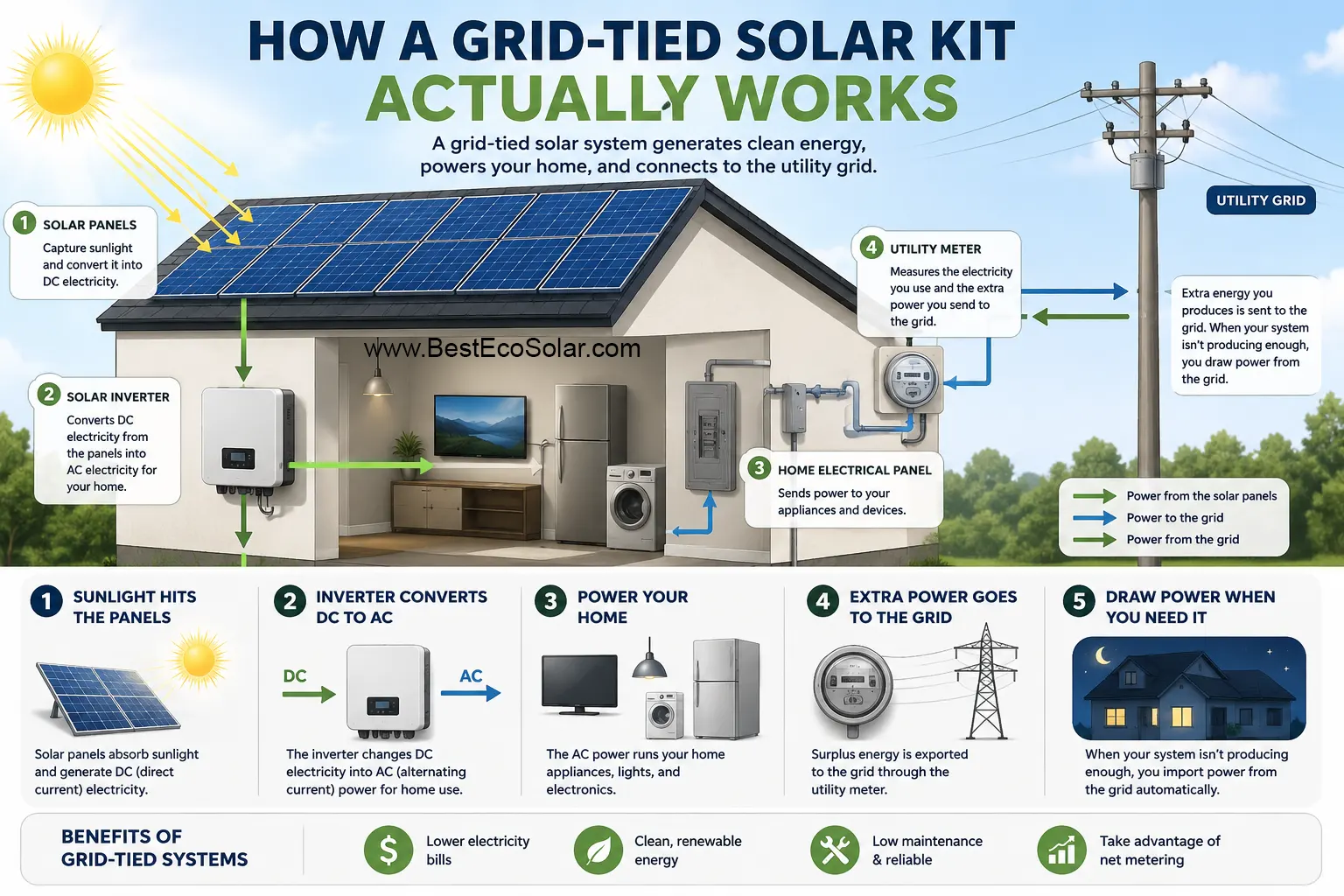
How a Grid-Tied Solar Kit Actually Works (No Engineering Degree Required)
Let’s break the process into three simple stages, because honestly, this is the part that trips people up the most.
- Stage 1: Production
Your solar panels soak up sunlight and generate direct current (DC) electricity. Simple enough — it’s basically the same physics that powers a calculator, just scaled up. - Stage 2: Conversion
Your home doesn’t run on DC. It runs on alternating current (AC). That’s where the inverter in your grid-tied solar kit earns its keep, flipping DC into usable AC power in real time. - Stage 3: Consumption and Export
Your home eats first. Whatever power is left over gets shipped out to the grid, and depending on your utility’s net metering policy, that surplus often shows up as a credit on your next bill. At night, when your panels are asleep, you simply draw power from the grid like you always have. It’s a two-way relationship, not a one-night stand.
Grid-Tied vs. Off-Grid vs. Hybrid: Which Kit Do You Actually Need?
I get asked this constantly, so let’s settle it with a straightforward table.
| Feature | Grid-Tied Solar Kit | Off-Grid Solar Kit | Hybrid Solar Kit |
|---|---|---|---|
| Connects to utility grid | Yes | No | Yes |
| Includes battery storage | No (optional add-on) | Yes, required. | Yes |
| Upfront cost | Lowest | Highest | Moderate–High |
| Works during a power outage | No (shuts down automatically) | Yes | Yes, with battery reserve |
| Best for | Homeowners wanting to cut bills fast | Cabins, remote land, no grid access | Homes wanting bill savings + backup power |
| Payback period | Fastest | Slowest | Moderate |
If your main goal is slashing your electric bill without spending a fortune, a complete grid-tied solar kit wins every time. If blackouts are your nightmare scenario, you’ll want to look at hybrid or add battery storage later.
Why Grid-Tied Solar Kits Don’t Work During a Power Outage (And Why That’s Intentional)
This surprises a lot of first-time buyers. A standard grid-tied solar kit shuts itself off the moment the grid goes down, even if the sun is blazing at noon. It’s not a design flaw — it’s a safety requirement called anti-islanding, and it exists so your system doesn’t backfeed electricity into lines that utility crews think are dead. If you want blackout protection, you’ll need to pair your grid-tied solar kit with battery storage or a hybrid inverter down the road.
Sizing Your Complete Grid-Tied Solar Kit: How Big Is Big Enough?
Sizing isn’t guesswork — it’s math, but friendly math. You’re basically answering one question: how many kilowatt-hours does my home chew through each month, and how much sunlight does my roof actually get?
A rough rule of thumb: most U.S. households land somewhere between a 5kW and 10kW grid-tied kit, though larger homes with pools, EVs, or electric heat can easily need 12kW-plus. Bigger isn’t automatically better, either — an oversized grid-tied solar system just means you’re feeding the grid credits that many utilities compensate at a lower rate than retail electricity. Right-sizing is the name of the game.
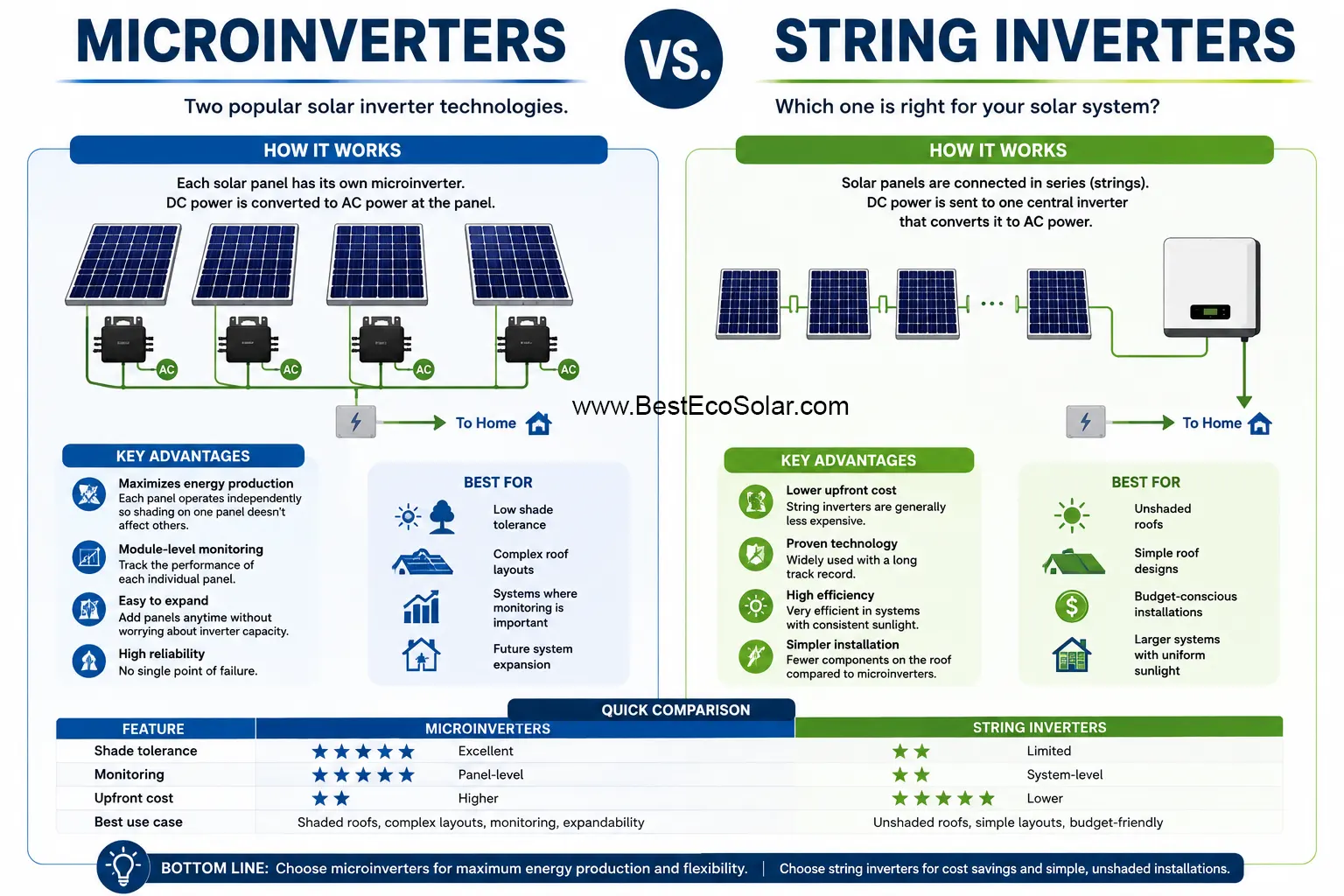
Microinverters vs. String Inverters: The Debate Every Grid-Tied Kit Buyer Faces
This is where a lot of buyer confusion pops up, so let’s untangle it.
Microinverter-Based Grid-Tied Kits
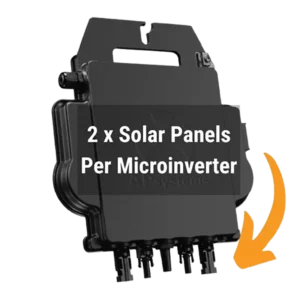
Each panel gets its own tiny inverter. If one panel is shaded by a chimney or a stubborn tree branch, the rest keep humming along at full output. Great for complex or partially shaded roofs.
String Inverter-Based Grid-Tied Kits
One central inverter handles the whole array. It’s typically cheaper upfront, but if part of the string underperforms (shade, dirt, a lazy panel), the whole string’s output can dip. Great for simple, unshaded roofs where budget matters more than granular optimisation.
Neither is objectively “better”—it depends on your roof’s personality, honestly.
What’s Changed for 2026: The Federal Tax Credit Reality Check
If you’ve been putting off your grid-tied solar kit purchase hoping for a federal rebate, here’s the update you need to hear straight: the 30% residential federal solar tax credit (Section 25D) officially expired for systems placed in service after December 31, 2025, following the One Big Beautiful Bill Act. So a homeowner-owned grid-tied solar kit installed in 2026 doesn’t come with that federal 30% credit anymore — no phase-down, no grace period.
That said, don’t let that scare you off. Third-party owned systems (leases and power purchase agreements) can still tap into commercial clean energy credits under Section 48E through 2027, and plenty of states still run their own solar incentive and net metering programmes. The smart move is checking your state’s current program before assuming solar isn’t worth it — because for most homeowners, it still is, just with different math than a year ago.
DIY Installation vs. Professional Install: Be Honest With Yourself
Plenty of complete grid-tied solar kits are marketed as “DIY-friendly”, and for smaller residential systems with microinverters, that’s often fair. You can typically handle panel mounting and racking yourself with basic tools and a weekend of patience.
But here’s the non-negotiable part: the final utility interconnection and grid-tie commissioning should be handled by a licensed electrician. It’s not about skill — it’s about code compliance, permitting, and not accidentally voiding your warranty or your homeowner’s insurance.
Complete Grid-Tied Solar Kit System Package Supplier
| Name | Price Range | Discount |
|---|---|---|
| Sun Gold Power | $5,774 – $31,853.00 | 👉 Get Special Offers |
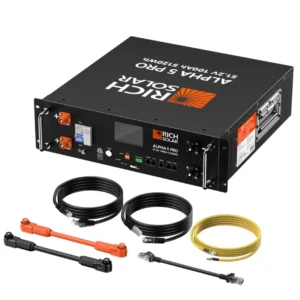
| Rich Solar | $7,999 – $21,599.99 | 👉 Get Special Offers |
| ShopSolarKits | $2,539 – $149,989.99 | 👉 Get Special Offers |
Permitting: The Unsexy Step Nobody Talks About Enough
Every complete grid-tied solar kit eventually has to pass through your local permitting office and your utility’s interconnection application. Skip this step, and you could end up with a system that technically works but isn’t legally allowed to feed the grid. Good kit suppliers include electrical line diagrams, load calculations, and site plans specifically to make this part painless. If a supplier can’t hand you that documentation, that’s a red flag worth noticing.
Warranty and Long-Term Support: The Detail That Separates Good Kits From Great Ones
A grid-tied solar kit isn’t a one-and-done purchase — it’s a 25-year relationship. Panels typically carry 25-year performance warranties. Inverters vary more, anywhere from 10 to 25 years depending on brand and type. Before you buy, ask yourself: if a microinverter fails in year 14, does the company still exist, and will they actually help you? That single question separates a legitimate complete grid-tied solar kit supplier from a fly-by-night reseller.
Monitoring: Why “Set It and Forget It” Still Needs a Check-In
Modern grid-tied solar kits come bundled with a monitoring app that tracks production panel-by-panel. Think of it like a fitness tracker for your roof — you don’t need to obsess over it daily, but glancing at it monthly can catch a failing panel or a wiring issue before it quietly costs you hundreds of dollars in lost production.
Common Mistakes People Make When Buying a Grid-Tied Solar Kit
- Oversizing the system based on a sales rep’s upsell instead of actual usage data
- Ignoring roof shading patterns and assuming a string inverter will perform fine
- Skipping the permitting and interconnection paperwork
- Assuming every “kit” includes racking, wiring, and breakers (many don’t)
- Forgetting that grid-tied systems don’t provide backup power during outages
Is a Complete Grid-Tied Solar Kit Worth It in 2026?
Even with the federal credit gone for homeowner-owned systems, the answer for most people is still yes — just with a different payback timeline than a couple of years ago. Electricity rates keep climbing nationally, and a well-sized grid-tied solar kit is still one of the few home investments that pays you back instead of just costing you. It’s less “quick jackpot” and more “long, steady snowball” at this point, but the snowball still rolls downhill in your favour.
| Complete Grid-Tied Supplier |
 |
Conclusion
A complete grid-tied solar kit isn’t complicated once you strip away the marketing noise — it’s panels, an inverter, mounting hardware, and the wiring to tie it all into your utility grid so you can offset your electric bill without buying a battery bank. The 2026 tax credit landscape has shifted, sure, but the fundamentals of why grid-tied solar makes sense haven’t changed one bit.
Do your homework on sizing, pick a supplier that hands you real documentation (not just a pallet of panels), and get your permitting sorted early. Do that, and your roof stops being dead weight and starts pulling its own economic weight for the next quarter-century.
FAQs About Grid-Tied Solar Kit
In many areas, yes — for the panel mounting and wiring portions. However, the utility interconnection and final grid-tie commissioning almost always need to be signed off by a licensed electrician to meet code and utility requirements.
No, not by default. Standard grid-tied solar kits automatically shut down during outages for safety reasons (anti-islanding). You'd need to add battery storage or choose a hybrid system for outage backup.
Costs vary widely by system size and inverter type, but residential kits commonly range from roughly $8,000 for a small array up to $30,000+ for larger whole-home systems, before any state incentives.
Yes, most modern grid-tied solar kits — especially microinverter-based ones — are designed to be battery-ready, meaning you can expand into a hybrid setup down the road without replacing your whole system.
Not the federal 30% residential credit — that expired for homeowner-owned systems installed after December 31, 2025. Leased or PPA-financed systems may still access commercial credits indirectly, and many states still offer their own solar incentives.
You Might Also Like