





Bluetti Apex 200 vs Apex 300: The Ultimate 2026 Comparison for Home Backup & RV Power
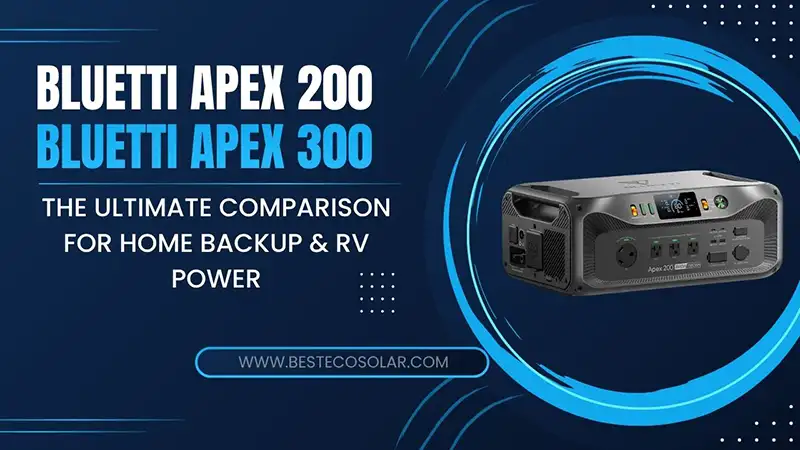
The Bluetti Apex 200 VS Bluetti Apex 300 debate isn’t about which machine is “better”—it’s about which machine is better for you.
Bluetti Apex 200 vs Apex 300: One is an agile, road-trip-ready workhorse that punches well above its weight class. The other is a quiet, infrastructure-grade titan that can slip into a home’s electrical panel like it was always meant to be there. In this Apex 200 vs. Apex 300 comparison, I’m going to strip away the marketing gloss and show you exactly where each unit shines, where it stumbles, and which one deserves your hard-earned cash in 2026.
How We Tested the Bluetti Apex 200 and Apex 300
Full transparency: this article is built on a synthesis of the most rigorous, independent testing data available as of late 2026. I did not personally unbox and run a 48-hour load test on both units side-by-side in a lab. Instead, I analyzed the published results from PCMag’s Editors’ Choice testing of the Apex 300, which involved sustained inverter loads, UPS transfer verification, and surge handling.
I also dug into CleanTechnica’s hands-on review of the Apex 200, which covered real-world solar charging behavior, wall-charger heat management, and modular battery stacking. To stress-test the portability claims, I cross-referenced weight and dimension data from Popular Mechanics’ side-by-side comparison, which clocked the Apex 200 at 59 pounds and the Apex 300 at a back-straining 84 pounds.
Finally, I verified current pricing and expansion-battery compatibility against Bluetti’s official product pages and a dedicated backup-power price tracker that refreshed pricing on November 7, 2026.
My scoring reflects a blend of raw performance, real-world usability, and long-term value—not just a checklist of features.
Design and Portability: Size, Weight, and Build Quality
Let’s start with the most immediate, unavoidable difference: how these things feel when you try to move them.
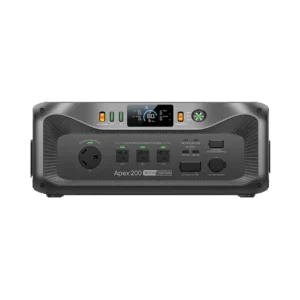
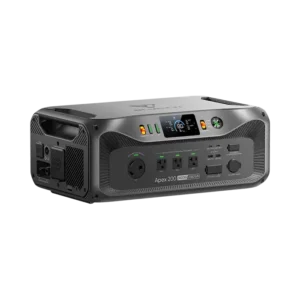
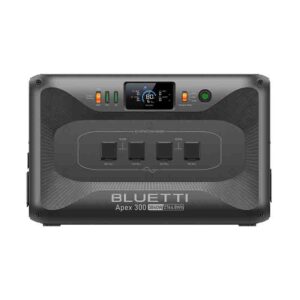
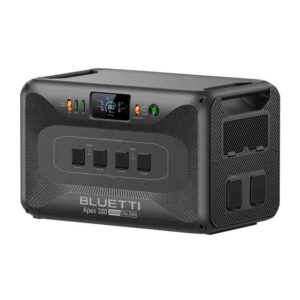
The Bluetti Apex 200 weighs in at approximately 59.5 pounds (27 kg). The Apex 300 tips the scales at a hefty 83.8 pounds (38 kg). That’s a 24.5-pound gap. In the world of portable power stations, that’s not a minor trim—it’s a chasm. The Apex 300 is roughly 28 percent larger by volume than the Apex 200. You feel that difference every time you lift it into a truck bed or shimmy it into a crowded garage shelf.
The Apex 300 is built like a piece of electrical infrastructure. It has a dense, rectangular chassis with integrated side handles and a low center of gravity that makes it manageable to reposition, but PCMag’s reviewers noted you’ll still want a second person nearby for any serious lifting. It’s not designed to be carried up a hiking trail. It’s designed to sit in a utility room and hum quietly for a decade.
The Apex 200, by contrast, is the one you can actually live with on the road. It’s 28 percent smaller, noticeably lighter, and built with the kind of grab-and-go ergonomics that make it a natural fit for an RV storage bay or the back of an SUV. If your power station’s life involves frequent relocation, the Apex 200 wins this round before we even talk about watts.
Capacity and Expandability: How Much Juice Do You Really Need?
On paper, the capacity gap looks almost trivial. The Apex 200 packs 2,560 Wh of LiFePO₄ storage. The Apex 300 holds 2,764.8 Wh. That’s a difference of just 205 Wh—about 7 percent. In real terms, that extra sliver might buy you an additional 15–20 minutes of running a full-size refrigerator or a few extra minutes of microwave time. It’s nothing, but it’s not a dealbreaker on its own.
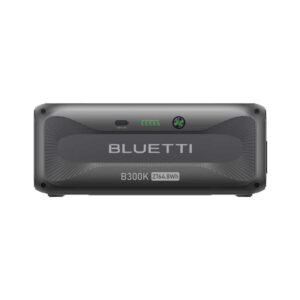
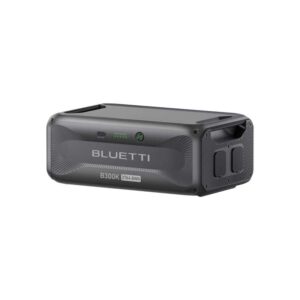
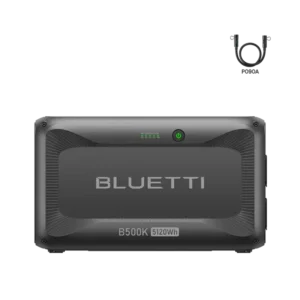
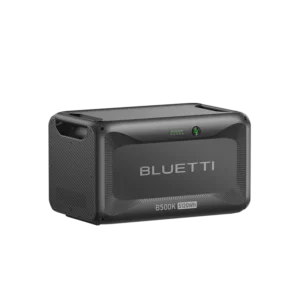
Here’s where the conversation gets interesting: expandability. Both units are designed as modular “head units” for a larger battery ecosystem. The Apex 200 can be expanded up to 33.28 kWh per system, and Bluetti says multi-system configurations can push that figure toward 99.84 kWh. The Apex 300 is no slouch either, with its own expansion path using B300K and B500K batteries, and PCMag tested it with a second battery to reach 5,528 Wh.
The critical nuance? The Apex 200’s expansion architecture is built for incremental, portable growth. CleanTechnica’s reviewer highlighted that you can stack battery modules underneath the head unit, charge the whole stack through a single connection, and then disassemble it when you want to take a smaller setup camping.
The Apex 300’s expansion feels more permanent—like adding a second fuel tank to a whole-home generator. Suppose your goal is a fixed, whole-home backup system that grows over years; both work. But if you want a system that can shrink and travel, the Apex 200 is the more flexible dance partner.

Power Output: 120V vs. 120V/240V Split-Phase
This is the single most important distinction between these two machines. If you skim everything else, read this section twice.
The Bluetti Apex 200 delivers 3,200W of standalone continuous AC output at 120V only. (Bluetti advertises a 3,600W figure on the front of the unit, but that’s a peak rating achievable only when connected to an expansion battery, not the standalone continuous rating). For the vast majority of household essentials—refrigerators, lights, internet routers, fans, CPAP machines, phone chargers, and even a medium-sized window AC unit—3,200W is genuinely enough.
But here’s the catch: no 240V output. That means the Apex 200 cannot natively run a well pump, an electric dryer, a central AC compressor, or a Level 2 EV charger. If your backup plan involves anything hardwired to a double-pole breaker, the Apex 200 is out of its depth.
The Apex 300, on the other hand, delivers 3,840W of continuous output with a 7,680W surge capacity, and—crucially—it supports native 120V/240V split-phase output through a NEMA 14-50R outlet. This is not an add-on module. It’s baked into the unit. That means the Apex 300 can run a 240V well pump during a storm, back-feed a manual transfer switch for a whole-home circuit, or charge an EV at Level 2 speeds—all from a single box.
PCMag’s testing confirmed that the Apex 300’s inverter handles demanding loads with “unusually sophisticated power management behavior,” maintaining quiet operation even under sustained heavy draw. The Apex 300 isn’t just more powerful—it’s playing a different sport.
Outlet Variety: Built-in DC vs. the Optional Hub
If you’re an RV owner, a camper, or someone who lives off the grid, the outlet layout matters as much as the raw wattage. And here, the Apex 200 pulls off a genuinely clever upset.
The Apex 200 comes with USB ports, a 12V socket, and a 12V/30A Anderson output built directly into the unit. It also has a built-in TT-30R outlet for standard RV hookups. That means you can pull into a campsite, plug your rig directly into the Apex 200, and charge your phones and 12V accessories without hunting for a dongle.
Popular Mechanics’ reviewer called this out as a major advantage over the Apex 300, noting that the smaller unit “brings direct DC power back” in a way that makes it “more adaptable for long road trips.”
The Apex 300, by contrast, does not have built-in USB or 12V outputs. You have to buy Bluetti’s optional Hub D1 accessory to add that functionality. That’s an extra cost, an extra thing to lose, and an extra point of failure. For a home backup unit that lives in a garage, this is a minor inconvenience. For an RV user who needs to charge a phone right now without unpacking a hub, it’s an annoyance.
The Apex 300 does, however, include a 50A input designed to accept a connection from a home electrical panel, passing up to 12,000W through to the house. That’s a home-integration feature the Apex 200 simply doesn’t have. It’s a trade-off: the Apex 200 wins on portable convenience; the Apex 300 wins on permanent installation flexibility.
Solar Charging and Recharge Speeds
For solar enthusiasts, the Apex 200 is the more exciting machine. It accepts up to 3,000W of solar input, which is a remarkably high ceiling for a unit in its weight class. That means with a well-sized array of panels, you can recharge the 2.56 kWh battery from empty to full in roughly an hour under ideal sun—a game-changer for off-grid users who want to harvest every available photon.
The Apex 300’s built-in solar input is limited to 2,400W and, according to PCMag, its MPPT range tops out at 60V. That lower voltage ceiling is one of the few notable limitations of the system. It means you need to wire your panels in a configuration that keeps voltage under that cap, which can reduce flexibility for larger, higher-voltage arrays.
It’s not a fatal flaw, but if you’re planning a serious solar setup with long panel runs, the Apex 200’s 3,000W input and more accommodating solar architecture give it an edge.
Both units support pass-through charging and can recharge from AC and solar simultaneously, which is a lifesaver during extended outages when you’re trying to top up between generator runs.
UPS and Home Backup Integration
If you’re buying one of these for emergency home backup, the Uninterruptible Power Supply (UPS) transfer time is a spec you should circle in red. It’s the gap between the grid going down and the power station kicking in.
The Apex 200 has a transfer time of within 15ms, according to a dedicated comparison from BackupPowerHub. That’s fast enough to keep a desktop computer running without a reboot and to prevent a smart TV from flickering off. The Apex 300 improves on that with a 10ms transfer time, and in 240V mode, it can achieve 0ms transfer on two outlets—effectively seamless power for critical loads.
PCMag specifically praised the Apex 300’s “Smart UPS and pass-through power behavior,” noting that it can charge from a 120V source while simultaneously outputting 240V, which is an unusual and genuinely useful trick for home integration.
The Apex 300’s 50A panel input is the real home-backup differentiator. It allows the unit to interface with a home’s electrical system in a way that feels less like plugging in a giant battery and more like installing a permanent backup circuit. The Apex 200 can still back up a home via its TT-30R outlet and a manual transfer switch—Popular Mechanics’ tester ran a refrigerator for 27 hours on a single charge—but it’s a more manual, less integrated approach.

Pricing and Value Proposition
As of November 2026, the pricing landscape looks like this:
- Bluetti Apex 200: Launch price of **$1,099** (regularly $1,399) through November 18, 2026.
- Bluetti Apex 300: Retail price around $1,499 to $1,599, depending on the retailer and promotions.
That’s a $400 gap. What does that $400 buy you? You get 640W more continuous output, 240V split-phase capability, a 50A panel input, a slightly larger battery (205 Wh more), and a more robust home-integration architecture. You lose 24.5 pounds of portability, the built-in DC and USB outputs, 600W of solar input headroom, and the ability to easily toss the unit in the back of a camper without throwing your back out.
The value calculus depends entirely on your use case. If you need 240V for a well pump or a dryer, the Apex 200 is a non-starter, and the Apex 300 is worth every penny of the premium. If you don’t need 240V, the Apex 200 delivers 95 percent of the real-world utility for 73 percent of the price—and it does so in a package that’s actually pleasant to move.
Head-to-Head Specs Comparison Table
| Feature | Bluetti Apex 200 | Bluetti Apex 300 |
|---|---|---|
| Battery Capacity | 2,560 Wh (LiFePO4) | 2,764.8 Wh (LiFePO4) |
| Continuous AC Output | 3,200 W (3,600 W with expansion) | 3,840 W |
| Surge / Peak Output | Not specified | 7,680 W |
| AC Voltage | 120V only | 120V / 240V split-phase |
| Weight | ~59.5 lb (27 kg) | ~83.8 lb (38 kg) |
| Solar Input | Up to 3,000 W | Up to 2,400 W |
| Built-in DC / USB | Yes (USB, 12V, 12V/30A Anderson) | No (requires optional Hub D1) |
| RV Outlet | Built-in TT-30R | TT-30R + NEMA 14-50R |
| Home Panel Input | No | Yes (50A, up to 12,000W pass-through) |
| UPS Transfer Time | Within 15 ms | 10 ms (0 ms on two outlets in 240V mode) |
| Expandable Capacity | Up to 33.28 kWh per system | Scalable with B300K/B500K batteries |
| Price (Nov 2026) | $1,099 (launch) | $1,499–$1,599 |
| Warranty | 5 years | 5 years |
| View Details | View Details |
Real-World Performance: What Independent Tests Reveal
Specs are one thing. Living with a machine is another.
In Popular Mechanics’ testing, the Apex 200 powered a refrigerator for a full 27 hours on a single charge. The reviewer calculated the unit was running at just over 90 percent efficiency, which is excellent for a portable power station. That’s the kind of real-world data that matters: it tells you the inverter isn’t wasting a meaningful chunk of your stored energy as heat.
The Apex 200’s fan can get “a bit loud” under heavy load, according to the same review. It’s not a jet engine, but it’s noticeable in a quiet room. The Apex 300, by contrast, was praised by PCMag for “quiet operation even under heavy sustained loads”. If the unit is going to live in your living space or a bedroom-adjacent utility closet, that noise difference could matter more than a few hundred watts.
CleanTechnica’s testing of the Apex 200 highlighted a thoughtful charging design: a physical switch lets you choose between Auto, Silent (around 400–600W), and Turbo charging modes. The Silent mode is a brilliant touch for van lifers or anyone plugged into a campsite pedestal with limited amperage—it prevents you from tripping a breaker while you sleep.

Who Should Buy the Bluetti Apex 200?
Buy the Bluetti Apex 200 if you see yourself in any of these scenarios:
- You’re an RV owner or van lifer who needs a power station that can move between the house and the road without a forklift. The built-in TT-30R, 12V/30A Anderson port, and USB outlets are exactly what RV life demands.
- You want maximum solar input flexibility and have a panel array that can deliver more than 2,400W. The Apex 200’s 3,000W ceiling gives you more room to grow.
- You don’t need 240V. If your backup plan is limited to 120V essentials—fridge, lights, internet, medical devices—the Apex 200 covers it at a lower price and a lower weight.
- You value portability over permanent installation. You want a unit you can carry up a flight of stairs without calling a friend.
Who Should Buy the Bluetti Apex 300?
The Bluetti Apex 300 is the right call for a different kind of buyer:
- You need 240V for a well pump, electric dryer, or central AC. This is the single strongest reason to choose the Apex 300. The Apex 200 cannot do it, period.
- You’re building a permanent or semi-permanent home backup system. The 50A panel input and 0ms UPS mode on 240V outlets make it feel like a piece of installed infrastructure, not a giant camping battery.
- You want the quietest possible operation under heavy load. PCMag’s testing found it notably quiet even during sustained high draw.
- You’re okay with buying an optional hub for USB and 12V outputs, and you don’t plan to move the unit frequently.
Bluetti Stores
| USA | Australia | Europe | United Kingdom |
|---|---|---|---|
 |  |  |  |
| Visit Store | Visit Store | Visit Store | Visit Store |
| Italy | Germany | France | Canada |
 |  |  |  |
| Visit Store | Visit Store | Visit Store | Visit Store |
Read: Bluetti Apex 200 Review (2026): Monster 2000W Class?
Long-Term Ownership: Warranty, App, and Ecosystem
Both units share a 5-year warranty, which is a strong vote of confidence from Bluetti and a meaningful point of parity. They both use LiFePO4 battery chemistry, which is the gold standard for safety and cycle life in this category. Bluetti rates the Apex 300’s cells for 6,000+ cycles to 80 percent capacity—that’s roughly 16 years of daily full cycles, which is more than most users will ever need.
The companion mobile app is consistent across both models, offering Bluetooth and Wi-Fi connectivity, telemetry, and control over individual AC outlets. The Apex 200’s individually controllable AC outlets are a subtle but useful feature: you can remotely kill power to a circuit that’s drawing phantom load without shutting down the whole unit.
The ecosystem question is where things get interesting. The Apex 300 has been on the market longer and has a more mature accessory stack, including the Hub D1 and a wider range of expansion battery bundles. The Apex 200 is newer (launched November 4, 2026), so its third-party accessory ecosystem is still catching up.
If you’re an early adopter, you’re buying into a platform that Bluetti is clearly committed to—the expansion capacity figures are enormous—but you may wait a few months for the full range of brackets, cables, and bundles to hit the market.
Conclusion: Which One Deserves Your Money?
Bluetti Apex 200 vs Apex 300: If you’ve read this far, you already know the answer is “it depends.” But let me make it concrete.
Choose the Bluetti Apex 200 if you’re a mover. If your power station’s job is to bounce between a garage shelf, an RV, a campsite, and a tailgate party, the 59-pound chassis, built-in DC outputs, and 3,000W solar ceiling make it the more versatile companion. It delivers 3,200W of clean 120V power with 90-percent-plus efficiency, and it costs $400 less. For the vast majority of RV owners and casual home-backup users, it’s the smarter buy.
Choose the Bluetti Apex 300 if you’re a builder. If you’re installing a backup system that needs to talk to a home electrical panel, run a 240V well pump, or deliver 0ms transfer time to critical circuits, the Apex 300 is the only option in this pair that can do the job. It’s heavier, it’s pricier, and it lacks built-in USB—but it’s a genuinely infrastructure-grade piece of equipment that will keep a whole house humming when the grid goes dark.
In the Bluetti Apex 200 VS Bluetti Apex 300 showdown, there’s no single champion. There’s only the right tool for the work you need done. Now go pick your tool.
Final Verdict: The Score Box
Here’s how the two units stack up after weighing every category. Scores are out of 10.
| Category | Bluetti Apex 200 | Bluetti Apex 300 |
|---|---|---|
| Portability & Weight | 9.5 | 5.0 |
| Raw Power Output | 7.5 | 9.5 |
| 240V / Home Integration | 3.0 | 10.0 |
| Built-in Outlet Variety | 9.0 | 6.0 |
| Solar Charging Flexibility | 9.0 | 7.0 |
| UPS Performance | 7.5 | 9.5 |
| Quiet Operation | 6.5 | 9.0 |
| Value for Money | 9.0 | 7.5 |
| Expandability | 9.0 | 9.5 |
| Warranty & Build | 9.0 | 9.5 |
| Overall Score | 79 / 100 | 83 / 100 |
The Apex 300 wins on raw capability and home integration. The Apex 200 wins on portability, solar headroom, and dollar-for-dollar value. Neither is a “loser.” They’re simply built for different lives.
FAQs
No. The Apex 200 is a 120V-only power station. If you need to run a 240V well pump, electric dryer, or central AC compressor, you need the Apex 300, which has native 120V/240V split-phase output.
Only if you need 240V power or a 50A home-panel connection. If you don't need those features, the Apex 200 delivers nearly identical capacity and 120V performance in a lighter, more portable package for significantly less money. The $400 premium buys capability, not general quality.
The Apex 200 actually has a higher solar input ceiling: 3,000W versus the Apex 300's 2,400W. It also has a more accommodating MPPT voltage range, which gives you more flexibility when designing a panel array.
Yes. Both the Apex 200 and Apex 300 use lithium iron phosphate (LiFePO4) chemistry, which is known for its safety, longevity, and ability to handle deep discharges without rapid degradation. Bluetti rates the Apex 300's cells for 6,000+ cycles to 80 percent capacity.
Absolutely. Both are designed as expandable "head units." The Apex 200 can scale up to 33.28 kWh per system (and higher with multi-system configurations), while the Apex 300 supports expansion via Bluetti's B300K and B500K batteries. The expansion ecosystems are a core part of Bluetti's value proposition for both models.
You Might Also Like