
EcoFlow DELTA 3800 Gen4 Portable Power Station: Specs, Price & Honest Verdict (2026)
It’s brand new, so there’s a lot of noise out there. Some of it is marketing gloss, and some of it is genuinely useful. I dug through EcoFlow’s own spec pages and the first wave of coverage so you don’t have to. By the end of this guide, you’ll know what this unit does well, where it falls short, and whether it deserves a spot in your garage.
What Is the EcoFlow DELTA 3800 Gen4 Portable Power Station?
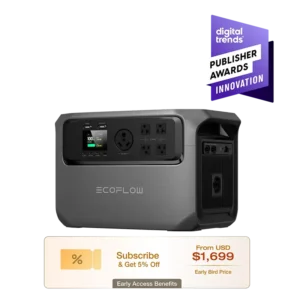
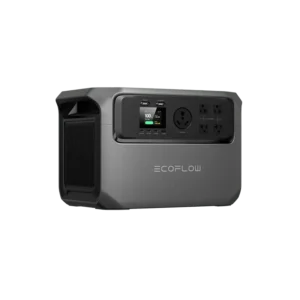
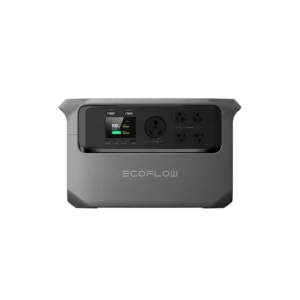
The EcoFlow DELTA 3800 Gen4 Power Station is a big home backup battery that you can still carry. It launched in early November 2026 alongside a smaller sibling, the DELTA 3000 Gen4. Both models put out 3,600 watts and sit in chassis that EcoFlow says are smaller and lighter than its DELTA 3 Ultra line.
Think of it as the middle child between a camping battery and a whole-home system. It’s too big for a weekend tent trip, honestly. But it’s far more flexible than a bolted-to-the-wall installation. You roll it out when the grid fails, plug in your essentials, and let it work.
The “3800” in the name nods to its capacity, which is just over 3.7 kWh. That number matters because it sets the ceiling on everything else: how long your fridge stays cold, how many hours your router keeps blinking, and how many phone charges you’ll squeeze out of a bad night.

EcoFlow DELTA 3800 Gen4 Specs at a Glance
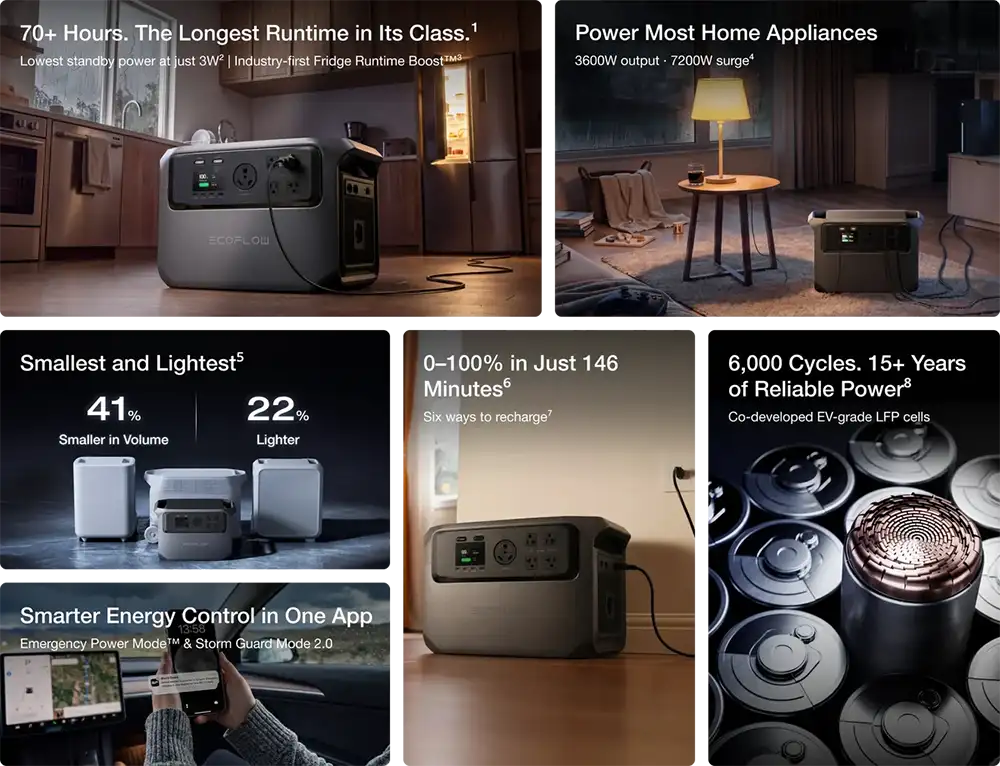
Before we dig in, here’s the quick version. The unit holds 3,763 Wh of lithium iron phosphate (LFP) capacity, delivers 3,600 W continuous and 7,200 W surge from its 120 V outlets, weighs 67.5 pounds, and accepts up to 2,000 W of solar across two inputs. It’s expandable to roughly 12 kWh with add-on batteries.
Those are the headline numbers. Let’s unpack the ones that really change how you’d use it.
Battery Capacity and LFP Chemistry
LFP chemistry is the quiet hero here. It’s the same family of batteries that big-name brands have pushed toward because it tolerates heat well and lasts far longer than older lithium-ion blends. EcoFlow rates this model for 6,000 cycles to 70% capacity. Charge it every single day, and that’s more than sixteen years of service
Of course, that’s a lab rating. Real life involves heat, neglect, and the occasional drained-to-zero mistake. Still, a battery rated that high gives you a big cushion.
3,600W Output and 7,200W Surge Power
Think of continuous output as a marathon pace and surge as a sprint. Your fridge compressor needs a quick burst to start and then settles down. With 3,600 W continuous and 7,200 W surge, EcoFlow says it can handle a 1,500-watt space heater and a refrigerator at the same time with room to spare.
That’s the sweet spot for a 3,600 W portable power station: well-drivers, circular saws, a window AC unit, and kitchen appliances are all on the table. Whole-house central air? Not this one. You’d want something bigger for that.
How We Evaluated the DELTA 3800 Gen4
Let’s be upfront, because trust is the whole game. This unit was still on pre-order as I wrote this, and I haven’t had it on my bench. So this isn’t a hands-on lab test. Here’s what I did instead:
- Compared EcoFlow’s official US product page against the specs reported by independent outlets
- Cross-checked capacity, weight, and pricing across multiple retailers and regional announcements
- Ran my own back-of-the-napkin math on idle drain and real-world runtime
- Flagged every number that comes from EcoFlow’s own testing rather than third-party measurement
Whenever a figure below is a manufacturer claim, I’ll say so. Once independent lab results land, treat those as the final word.
Fridge Runtime Boost: Is 70+ Hours Realistic?
Here’s the feature EcoFlow is shouting about. The company says the unit can power a refrigerator for up to 70 hours, which it describes as 17 hours (32.6%) longer than the industry average for 3–4kWh stations.
That sounds fantastic. So what’s the catch? There are a few, and they’re worth knowing.
The figures come from EcoFlow’s own tests using an empty 654-liter Samsung fridge, and the company admits that food load, room temperature, and door openings all shift the result. A packed fridge in a hot kitchen with kids opening the door every ten minutes will land lower. Possibly a lot lower.
The mode also supports only one compressor-based appliance at a time, and EcoFlow advises against running other AC loads alongside it. So it’s a specialist tool, like a marathon runner who only runs in one lane. Great at its job, but not a multitasker.
Even with those caveats, this is a smart portable power station for a fridge. Most families fear spoiled groceries more than a dark living room, and this feature speaks directly to that fear.
Low Idle Draw and Emergency Power Mode
Why 14 Watts Matters
Every inverter burns a little juice just staying awake. It’s like leaving a car idling in the driveway. Over a long outage, that waste adds up fast.
EcoFlow rates both Gen4 models at 14 watts with the AC outlets on and nothing plugged in, and 3 watts in standby. Do the math: 14W over 24 hours equals 336 Wh, which is under 9% of this unit’s 3,763 Wh battery? Not nothing, but a real improvement over older designs.
That 3-watt standby figure underpins EcoFlow’s claim that a fully charged DELTA 3800 Gen4 can sit for about 52 days before draining itself. If yours lives in a closet waiting for a storm, that matters. You won’t open the closet in October and find a dead brick.
The Emergency Power Mode “Last Gasp” Reserve
I love this idea. Remember driving on fumes with your gas light on? A feature called Emergency Power Mode holds back a small reserve for charging phones after the display hits zero percent. You switch it on from the unit or the EcoFlow app.
EcoFlow says the reserve can give an iPhone 17 nearly a full extra charge. That’s the difference between texting your family at hour 60 and sitting in silence. Small feature, big peace of mind.
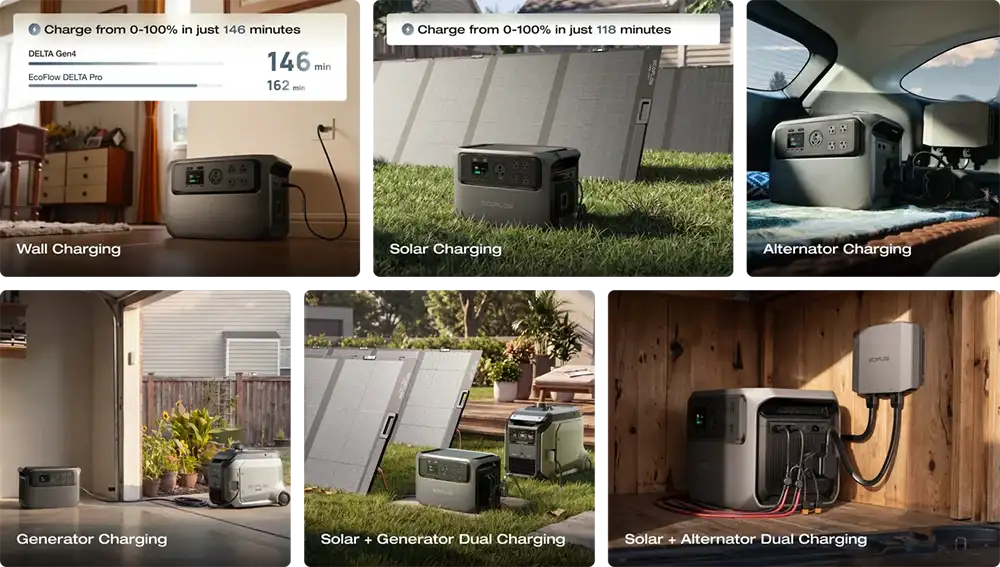
Solar Charging: A 2,000W Portable Solar Generator
Here’s where the EcoFlow DELTA 3800 Gen4 really separates from its little sibling. Most 3kWh-class stations cap solar input around 1,000W. The DELTA 3800 Gen4 takes up to 2,000W across two inputs, while the DELTA 3000 Gen4 has a single 1,000W input.
Why should you care? Because solar charging speed decides whether you recover during the day or slowly lose ground. With a big enough array, a sunny afternoon can refill a large chunk of the battery. In a multi-day outage, that’s the line between “inconvenient” and “survivable.”
Pair it with panels, and you’ve got a proper portable solar generator. Just remember that 2,000W is a ceiling, not a promise. Clouds, panel angle, and season all take their cut.
Fast AC Charging and Smart Scheduling
Waiting on a battery is miserable. EcoFlow says the unit refills from a wall outlet in under 2.5 hours. Regional listings vary slightly; Japanese coverage cites about 2.8 hours for the 3800 Gen4. Either way, you’re looking at a same-afternoon refill.
The EcoFlow app also lets you set charging speed and timing, including a TOU mode that charges during cheaper overnight electricity hours. If your utility uses time-of-use rates, that’s quietly useful. The unit tops up while you sleep and costs you less.
Expandable to 12kWh: A Home Backup Power Station That Grows
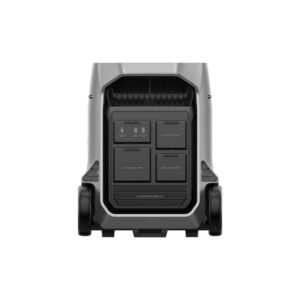
This is the reason to pay more. The DELTA 3800 Gen4 includes an expansion port for up to two extra batteries, including the DELTA Pro 3 Smart Extra Battery, for about 12 kWh total. Its smaller sibling lists no battery port.
Think of it like buying a house with a foundation poured for a second floor. You may never build up. But if your needs grow, you won’t start over.
Honestly, though, ask yourself a blunt question: will you actually expand? If you’re certain you won’t, skip the premium. If you suspect you’ll want more runtime next year, buying now saves you from a rebuy.
Ports and Outlets
You get a solid mix. The spec sheet lists five AC outlets (one rated 30A), three USB-C ports up to 140W, and one USB-A. That’s plenty for laptops, tools, and a few appliances at once.
One thing to note: the 12V car socket isn’t listed here, which matters if you do a lot of RV or vehicle camping. Check the full spec sheet before you buy if that’s your world.
EcoFlow DELTA 3800 Gen4 vs DELTA 3000 Gen4 vs DELTA Pro
Comparisons make decisions easier. Here’s how the key models stack up based on the figures I could verify.
| Feature | DELTA 3800 Gen4 | DELTA 3000 Gen4 | Original DELTA Pro |
|---|---|---|---|
| Capacity | 3,763 Wh LFP | 3,072 Wh LFP | ~3,600 Wh |
| Continuous output | 3,600W | 3,600W | 3,600W |
| Surge output | 7,200W | 7,200W | Check the spec sheet. |
| Weight | 67.5 lb | 57.3 lb | ~99 lb |
| Solar input | 2,000W (two inputs) | 1,000W (one input) | ~1,600W |
| Fridge runtime (EcoFlow test) | 70+ hours | Up to 58 hours | Not comparable |
| Expansion | Up to ~12 kWh | None listed | Yes |
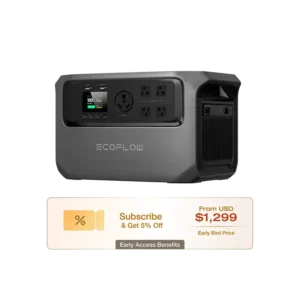
| Early-bird price | $1,699 | $1,299 | Varies by retailer |
| View Details | View Details | View Details |
Sources for the table: EcoFlow’s published specs as reported by Popular Science and retailer listings. Pro figures are approximate.
The takeaway? One comparison guide frames it as four extra hours of runtime versus a system that can grow. If your outages typically end within a day, the cheaper 3000 Gen4 is probably plenty. If you’ve survived a two-day blackout, the 3800 earns its premium.


Price and Availability
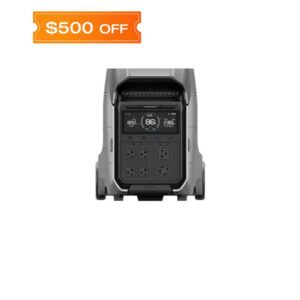
Pricing is where timing matters. EcoFlow lists the DELTA 3800 Gen4 at $2,199 with early-bird pricing of $1,699 running through December 7. That’s a $500 discount, or about 23% off. Retailers like 9to5Toys have also tracked launch deals starting at $1,699 for the power station alone.
On shipping, EcoFlow showed the 3800 Gen4 shipping in late November and the 3000 Gen4 in early December. Prices and stock shift quickly around Black Friday, so check EcoFlow’s US page for today’s figure before you buy.
Is the early-bird deal worth it? At $1,699 for 3.7 kWh with a path to 12 kWh, I’d say it’s competitive. For context, rivals like Anker’s SOLIX F3000 and Jackery’s Explorer 3000 v2 compete in the same 3 kWh, 3,600 W class. The field is crowded, so compare final checkout prices.
Who Should Buy the EcoFlow DELTA 3800 Gen4?
Buy It If You…
- Want serious home backup power without installing a whole-home system
- Live where outages stretch past a day and fridge runtime matters most
- Plan to add solar panels beyond 1,000 W
- Might expand later and want room to grow
- Hate hauling 99-pound units around
Skip It If You…
- Need more than 3,600W at once (look at larger systems)
- Want built-in wheels or a 12V car socket on the unit
- Only camp for weekends (a smaller, cheaper unit makes more sense)
- Won’t use expansion or dual solar and would be happy with the 3000 Gen4
Pros and Cons
Pros
- Strong 3,763Wh capacity in a much lighter body than the DELTA Pro
- 3,600W output with 7,200W surge handles most household essentials
- 2,000W solar input is class-leading for this size
- Low idle draw and a clever Emergency Power Mode
- Expandable to roughly 12kWh
- Long cycle-life rating from LFP chemistry
Cons
- Fridge runtime claims come from EcoFlow’s own testing
- Fridge Runtime Boost supports just one compressor appliance
- 67.5 pounds is still a two-hand job
- No built-in wheels or 12V socket noted
- Independent lab testing isn’t out yet
EcoFlow Stores
| United Kingdom | Italy | France | Spain | Germany | Canada | Australia | Europe |
 |  |  |  |  |  |  |  |
| Visit Here | Visit Here | Visit Here | Visit Here | Visit Here | Visit Here | Visit Here | Visit Here |
Conclusion
So, what’s the verdict on the EcoFlow DELTA 3800 Gen4 portable power station? It’s a thoughtful upgrade rather than a flashy gimmick. It carries more energy than the old DELTA Pro, weighs roughly 30 pounds less, charges faster, and takes twice the solar. Add a low idle draw and a last-gasp phone reserve, and you’ve got a machine designed around real blackouts, not spec-sheet bragging.
Does it have blind spots? Sure. The headline runtime numbers are EcoFlow’s own, and the single-appliance limit on Fridge Runtime Boost is real. But at the early-bird price, it offers a lot of flexibility for the money. If you want a home backup power station that can grow with you, this is the one to put on your shortlist. If your needs are smaller, the DELTA 3000 Gen4 will save you $400.
Either way, wait for independent testing if you’re the cautious type. And grab the deal before December 7 if you’re not.
Research-Based Score Box
| Category | Score |
|---|---|
| Capacity & Runtime | 9.0 / 10 |
| Power Output | 9.0 / 10 |
| Solar Charging | 9.5 / 10 |
| Portability | 7.5 / 10 |
| Expandability | 9.5 / 10 |
| Features & Smarts | 9.0 / 10 |
| Value for Money | 8.5 / 10 |
| Overall | 8.9 / 10 |
FAQs
EcoFlow rates it for more than 70 hours using Fridge Runtime Boost, tested on an empty 654-liter fridge. Real-world results will vary based on food load, room temperature, and door openings, so expect somewhat less in a busy kitchen.
Yes. It has an expansion port that accepts up to two extra batteries, including the DELTA Pro 3 Smart Extra Battery, bringing the total to around 12kWh. The smaller DELTA 3000 Gen4 doesn’t list a battery port.
Up to 2,000W across two inputs. That’s double the single 1,000W input on the DELTA 3000 Gen4, which means faster daytime recovery with a large enough array.
Both deliver 3,600W continuous and 7,200W surge. The 3800 adds 691Wh of capacity, a second solar input, expansion capability, and longer fridge runtime, in exchange for roughly 10 extra pounds and a higher price.
For anyone who wants flexible home backup with room to expand, yes, the early-bird price looks competitive. If you won’t use expansion or dual solar inputs, the cheaper 3000 Gen4 likely does the job.
You Might Also Like