


Hybrid Solar Packages: How to Pick the Right Kit for Your Home in 2026
If you’ve been shopping for hybrid solar packages and feel buried under specs, acronyms, and “limited-time” banners, you’re in the right place. I’ll walk you through what’s inside, what changed with the federal tax credit, what they cost, and which size fits which home.
What Are Hybrid Solar Packages, Really?
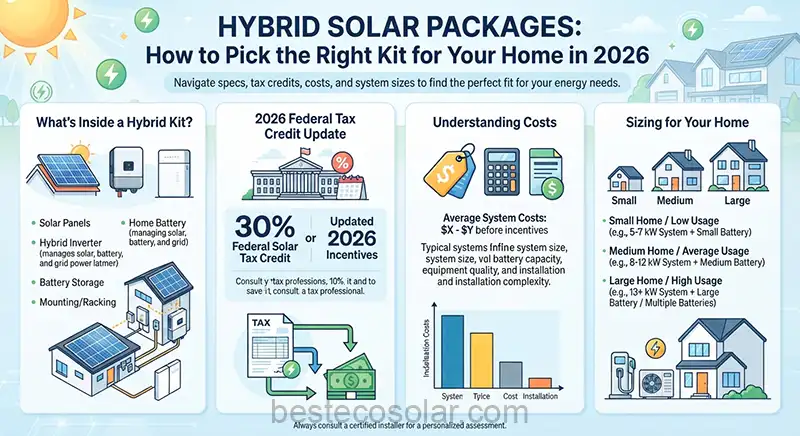
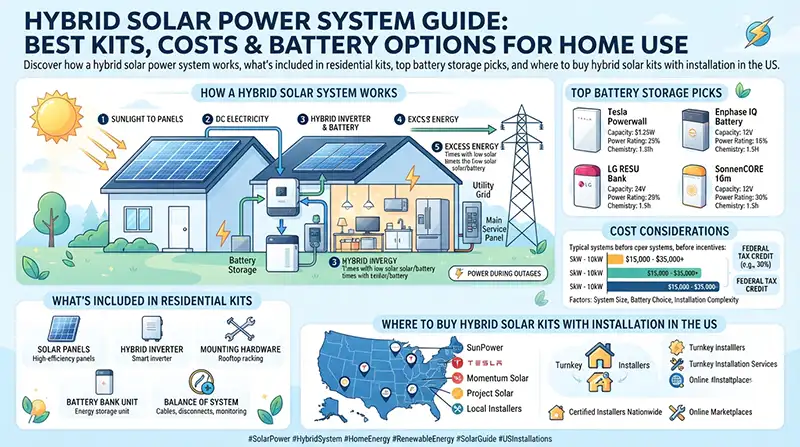
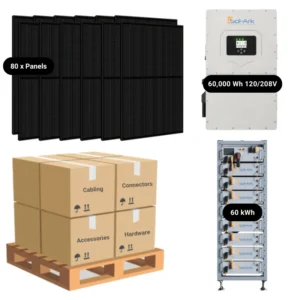
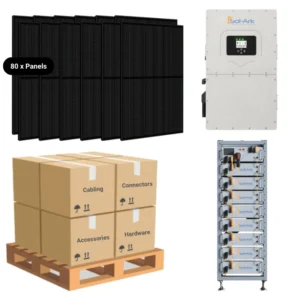
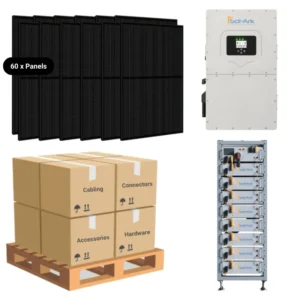
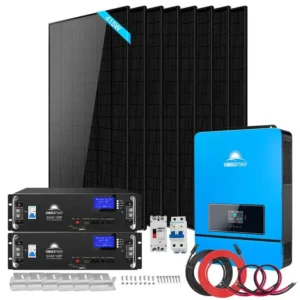
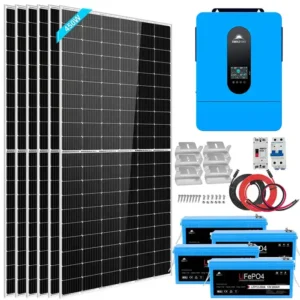
Hybrid solar packages are bundled kits that pair solar panels with a hybrid inverter and a battery bank, plus the cables, connectors, and breakers that tie it all together. Instead of hunting down twenty parts from six sellers, you buy one box (well, a few pallets) and get a system designed to work as a unit. Think of it like buying a meal kit instead of wandering the grocery store with a recipe and a prayer.
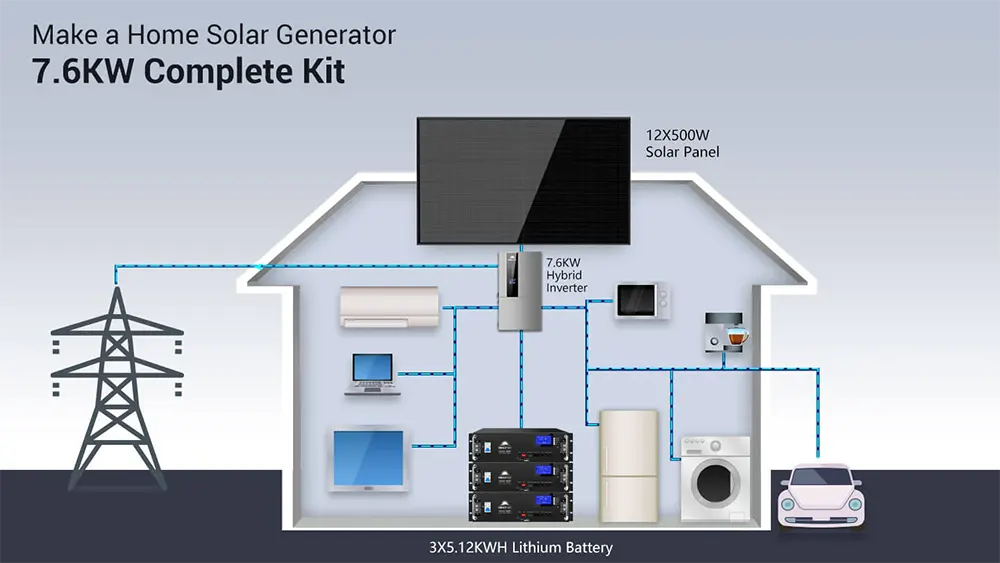
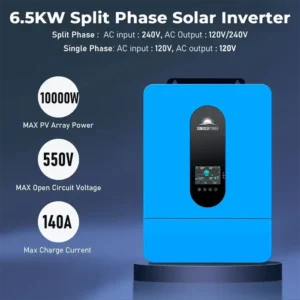
The magic word is “hybrid.” A hybrid inverter manages solar, battery, and grid power in one brain. It sends sunshine to your house first, tops off the battery with the extra, and only pulls from the grid when both run short. When the grid drops, it flips to battery power so fast most appliances never notice. That’s the difference between hybrid solar packages and a plain grid-tied kit that simply shuts off during an outage.
The Core Parts Inside Hybrid Solar Packages
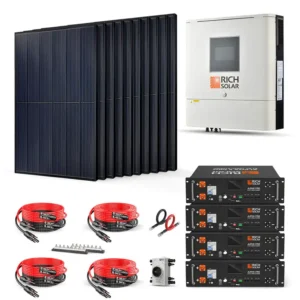
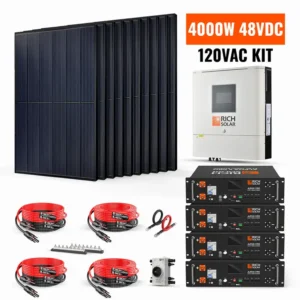
Every one of the hybrid solar packages I looked at shares the same skeleton. You get panels (usually 400W-class monocrystalline modules), an all-in-one hybrid inverter, a lithium battery bank, and the balance-of-system hardware: disconnects, wire, MC4 connectors, and monitoring gear. Some hybrid solar kit packages also add a rack-mounted battery cabinet or a generator input. Always check the “what’s included” list.
A kit missing mounting rails or a battery isn’t a package; it’s a shopping list.
Why Hybrid Solar Packages Make More Sense After the 25D Credit Ended
Here’s the news you can’t skip. The 30% federal Residential Clean Energy Credit, Section 25D, expired on December 31, 2025, so homeowners who buy and install a system in 2026 can’t claim it. That’s the single biggest shift in solar math in years. A typical $30,000 install used to come with about $9,000 in tax savings; now it doesn’t.
So why would anyone still want hybrid solar packages? Because the value story moved. Without a credit padding the purchase, you want a system that earns its keep every day: lower bills, backup power, and protection from rate hikes. Hybrid solar packages do all three.
Some states still offer their own incentives (at least eight offer direct income tax credits), and third-party-owned systems can still tap the commercial 48E credit, with the savings passed to you through lease or PPA pricing. Don’t assume a rebate exists, though. Check your address before you count on one.
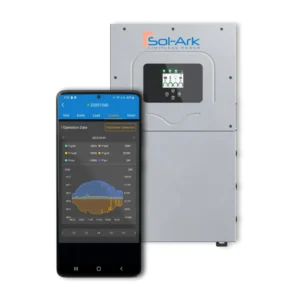
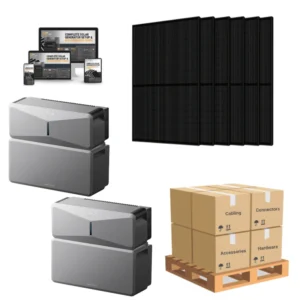
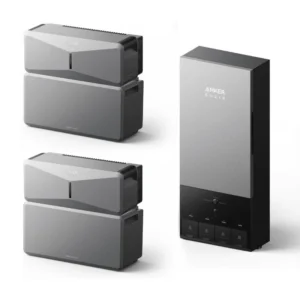
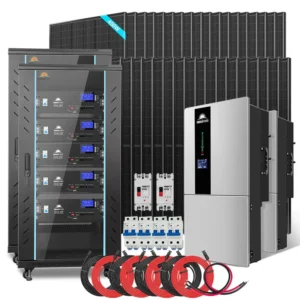
How We Tested These Hybrid Solar Packages
Let me be straight with you. We didn’t bolt a dozen systems to a roof and wait for a blizzard. Instead, we scored hybrid solar packages the way a careful buyer would, on paper and against real listings. Here’s what we did:
- Spec-sheet audit: We compared inverter ratings, maximum solar input, battery capacity, and cycle life across current retailer listings for kits from roughly 5 kW to 19 kW.
- Inclusion check: We counted what actually ships in the box, from mounting hardware to schematics, and flagged kits that leave out essentials.
- Warranty review: We read the fine print on panel performance warranties and inverter coverage, since those show how much a brand trusts its own hardware.
- Price-per-capability math: We divided price by both solar watts and battery kilowatt-hours, because a cheap kit with a tiny battery isn’t a bargain.
- Support and documentation: We looked at whether sellers offer wiring diagrams, phone or chat help, and clear compatibility notes.
Every score in the box at the end comes from that process. If you have hands-on data from your own install, treat these numbers as a starting point, not gospel.
Sizes and Styles: Which Hybrid Solar Packages Fit Which Home?
Not every house needs a monster. Right-sizing is where most buyers either overspend or end up disappointed, so let’s split hybrid solar packages into three tiers.
1. Small Hybrid Solar Packages for Cabins and Tiny Homes (3 to 5 kW)
If you’re powering a cabin, workshop, or small apartment-sized home, a compact tier of hybrid solar packages is plenty. One example from a European retailer pairs a 5 kW hybrid inverter with a 16 kWh lithium battery and 20 panels for around €6,550 on sale. That’s a lot of storage for the money, and the battery’s rated for more than 8,000 charge cycles. Small hybrid solar packages like this shine when your daily use is modest, and you want evenings covered.
2. Mid-Size Hybrid Solar Power Packages for Average Homes (8 to 10 kW)
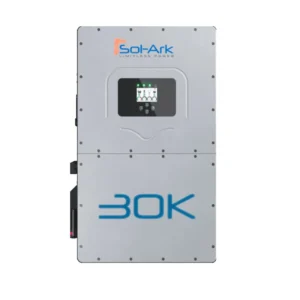
Most households land here. A mid-size hybrid solar power package typically bundles 20 to 24 panels with a 10 to 15 kW class inverter and 20 kWh or so of battery. One U.S. retailer’s “Plus” tier, for example, lists a 9.6 kW array with a Sol-Ark 15K inverter and a 20.4 kWh lithium bank. That’s enough to run a fridge, lights, internet, a few outlets, and a well pump through an overnight outage. These hybrid solar packages offer the best balance of price and resilience for the average home.
3. Large Hybrid Solar Kit Packages for Whole-Home Backup (14 to 19 kW)
Got an electric range, heat pump, EV charger, and a thirsty central AC? Step up. Large hybrid solar kit packages push 14.4 kW to roughly 19 kW of panels with 28 to 40 kWh battery banks, and the biggest tiers use dual or high-capacity inverters. One retailer lists a 48-panel, 19.68 kW kit with a 28.6 to 40.96 kWh battery bank and an 18K hybrid inverter. These hybrid solar packages let you run most of a house, not just the essentials.
Comparison Table: Hybrid Solar Packages at a Glance
| Package Tier | Typical Solar Array | Inverter Class | Battery Bank | Best For | Starting Price Signal |
|---|---|---|---|---|---|
| Compact | 4 to 10 kW | 5 kW hybrid | About 15 to 16 kWh | Cabins, small homes, backup basics | Around €6,550 (sale listing) |
| 9.6 kW | 15K hybrid | About 20 kWh | Average home, essential-load backup | The mid-five-figure USD range varies by seller | |
| Large | 14.4 to 19.7 kW | 15K to 18K hybrid | 28 to 41 kWh | Whole-home backup, EVs, heat pumps | Check seller; quotes vary widely. |
| Canadian 10 kW class | Varies | Sol-Ark 15K and 8K | SOK 48V 100Ah batteries | Net metering plus backup | From about $17,800 (retailer listing) |
Prices move fast, and the figures above come from retailer listings that change without notice. Use the table to compare tiers, not to budget to the dollar.
How to Size Hybrid Solar Packages for Your House
Sizing sounds scary, but it’s really two questions: how much energy do you use, and how much do you want to keep running when the grid dies?
1. Start With Your Bill, Not the Panel Count
Grab twelve months of utility bills and find your average daily kilowatt-hours. A home using 30 kWh a day needs a very different kit from one using 12. Match the array to that number, then add a cushion for winter, when days are short and panels underperform. Oversizing the array slightly is smart with most hybrid solar packages, because a good hybrid inverter can handle extra DC input and still deliver strong yield.
2. Match the Battery to Your Critical Loads
Now list the things you can’t live without: fridge, freezer, internet, medical gear, well pump, and lights. Add up their watts and the hours you want them running. That tells you the battery size. Battery capacity is the gas tank; the inverter rating is how fast you can pour it. Many buyers pick hybrid solar packages with big inverters and tiny batteries, then wonder why the lights die at 2 a.m.
Hybrid Solar Packages With Battery Storage: What to Look For
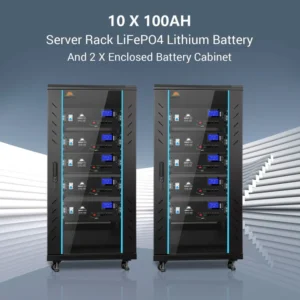
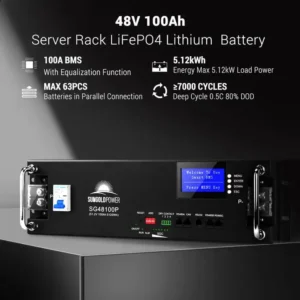
The battery is the heart of hybrid solar packages with battery storage, and it’s where quality shows up. Look for lithium iron phosphate (LiFePO₄) chemistry. It’s safer, more stable, and lasts thousands of cycles. That 8,000-cycle figure you’ll see in better listings means roughly twenty years of daily use on paper, which is longer than most roofs outlast their shingles.
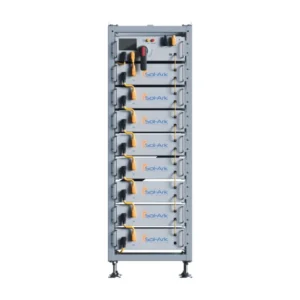
Also check usable capacity, not just the label. A battery marketed at 16 kWh might deliver 15.27 kWh usable. Rack-mounted server-style batteries are popular in hybrid solar kit packages because you can add modules later. If you think you’ll grow, choose a kit that lets you expand the bank without swapping the inverter.
Is a hybrid kit really better than the alternatives? Depends on your goal. Here’s how I see it.
Grid-tied kits are the cheapest and simplest. They cut your bill but go dark in an outage, which surprises plenty of new owners. Off-grid systems give you total independence, but you need enough panels and battery to survive the worst week of the year, plus usually a generator.
Hybrid solar packages sit in the middle: you stay connected for net metering and cheap backup, and you keep the lights on when the grid fails. Many all-in-one hybrid inverters, like the Sol-Ark units bundled in several kits, can run fully on-grid, fully off-grid, or a blend of both. That flexibility is why hybrid solar packages keep winning over single-purpose kits.
How Much Do Hybrid Solar Packages Cost in 2026?
Solar hardware prices sit near historic lows, but without the federal credit, the sticker price is the price. Retail hybrid solar packages range from a few thousand dollars for small kits to well into five figures for large ones. A Canadian retailer, for instance, lists a Sol-Ark 15K and 8K kit with SOK batteries from about $17,800, while a 5 kW micro-inverter grid-tied kit starts around $7,400. That gap shows what a battery and hybrid inverter add.
Remember, the kit price isn’t the project price. Permits, disconnects, a licensed electrician’s time, inspection fees, and sometimes a panel upgrade can add thousands. When you compare hybrid solar packages, ask what’s excluded as carefully as what’s included.
Ways to Lower the Bill
Check state incentives first. Some states pay performance rebates or offer tax credits, and programs like Massachusetts’ SMART reward adding a battery. Look for net metering rules from your utility, too. Finally, ask whether a lease or PPA makes sense, since third-party owners can still claim the commercial credit and pass part of it along. Run the numbers both ways before you sign anything.
Complete Hybrid Solar System Package Supplier
| Name | Price Range | Discount |
|---|---|---|
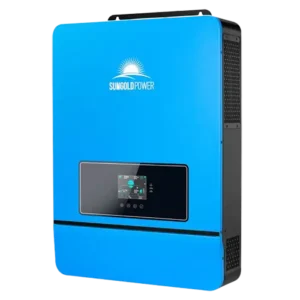
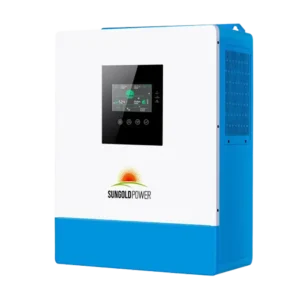
| Sun Gold Power | $5,774 – $31,853.00 | 👉 Get Special Offers |
| Rich Solar | $7,999 – $21,599.99 | 👉 Get Special Offers |
| ShopSolarKits | $2,539 – $149,989.99 | 👉 Get Special Offers |
DIY Hybrid Solar Packages vs. Installer-Led Systems
Can you install hybrid solar packages yourself? Many kits are designed for that, with MC4 plug-and-play panel connections, schematics, and phone support. Retailers pitch them as an easy path to a serious system. But “easy” isn’t “permit-free.” High-voltage DC, a 240V panel tie-in, and local code all demand respect.
Here’s my take. If you’re handy and your jurisdiction allows owner-installers, DIY hybrid solar packages can save a big chunk of labor. Hire a licensed electrician for the final grid connection either way. It’s the one step where a mistake can hurt someone or void your insurance. Think of it like doing your own kitchen demo but leaving the gas line to a pro.
Most Popular
Complete Off-Grid Solar Kit RS-H6548 | 8000W PV Input 48V 120VAC Output + 6560(16x410) Watt Solar PV
$10,999.99 $12,699.99
- 6560W Solar Array
- 48V Off-Grid Power System
- 15.36kWh LiFePO₄ Battery Bank
- 6500W Hybrid Inverter
- Complete Off-Grid Solar Kit
- Versatile Applications
Most Popular
4000 Watt Solar | 48V 6500W/120V Hybrid Inverter | All-in-One Kit
$9,999.99
- 4000W Solar Array
- 48V DC System
- 5.12kWh All-in-One Energy Storage
- Complete Solar Power Kit
- Expandable System
- Versatile Applications
Most Popular
Complete Off-Grid Solar Kit | 30 x MEGA 410 | 13,000W 120/240V Output | 48VDC
$20,999.99
- 12.3kW Solar Array
- 20.48kWh LiFePO₄ Battery Bank
- 13,000W Hybrid Inverter System
- Complete System Kit
- 1 x Free Battery Rack
- Versatile Applications
Common Mistakes to Avoid When Buying Hybrid Solar Packages
I’ve seen the same missteps repeat, so let me save you some pain.
- Buying on panel wattage alone. The inverter and battery decide how useful your hybrid solar packages are during an outage.
- Ignoring surge loads. Well pumps and AC compressors spike hard on startup. Check the inverter’s surge rating.
- Skipping the compatibility check. If a kit ships without panels, you’re responsible for matching voltage and string design.
- Counting on a tax credit that no longer exists. Don’t subtract 25D from a 2026 homeowner-owned purchase.
- Forgetting your utility. Some utilities limit system size or require specific interconnection steps.
- Chasing the lowest price. Hybrid solar packages with thin warranties get expensive fast.
Our Verdict: Who Should Buy Hybrid Solar Packages?
Buy hybrid solar packages if you want bill savings and genuine backup in one system, if you live in a storm-prone or outage-prone area, or if your utility offers net metering you’d like to keep. Skip them if you only want to shave your bill and never worry about blackouts; a grid-tied kit costs less. And if you’re fully off-grid by choice, a purpose-built off-grid system may suit you better.
For most homeowners, the mid-size tier is the sweet spot. It covers essential loads, keeps cost in check, and leaves room to add batteries later. Among all the hybrid solar packages we reviewed, the best ones had clear documentation, solid warranties, and an inverter that handled solar, battery, grid, and generator inputs without drama.
Conclusion
Hybrid solar packages give you a three-legged stool: sun, grid, and battery working together so you’re never left in the dark. With the 25D credit gone for 2026 homeowner purchases, the smartest move is to choose hybrid solar packages that deliver daily savings and real backup, then layer on state incentives where you can.
Size by your actual usage, pick a LiFePO4 battery you can expand, read the “what’s included” list like a contract, and budget for installation. Do that, and hybrid solar packages will pay you back in lower bills and a lot less stress the next time the grid blinks.
FAQs About Hybrid Solar Packages
Most average homes do well with a 9 to 10 kW array, a 15K-class hybrid inverter, and roughly 20 kWh of battery storage. If you run an EV charger or electric heating, look at the 14 kW and larger tier. Always size from your bills.
Yes, that's their main advantage. The hybrid inverter switches to battery and solar power when the grid fails, so your essential circuits stay on. Plain grid-tied kits shut down for safety, which is why hybrid solar packages cost more.
Not as a homeowner who buys the system. Section 25D expired on December 31, 2025. Third-party-owned systems can still use the commercial 48E credit, and some states offer their own incentives, so check your local rules.
They can be, if you're experienced and your local rules allow it. Many kits ship with schematics and plug-and-play connectors. Still, have a licensed electrician handle the final grid tie-in and inspection.
Quality LiFePO4 batteries are often rated for 6,000 to 8,000 or more cycles, which can mean 15 to 20 years of daily use. Check the warranty terms and depth-of-discharge limits listed by the manufacturer.
You Might Also Like