


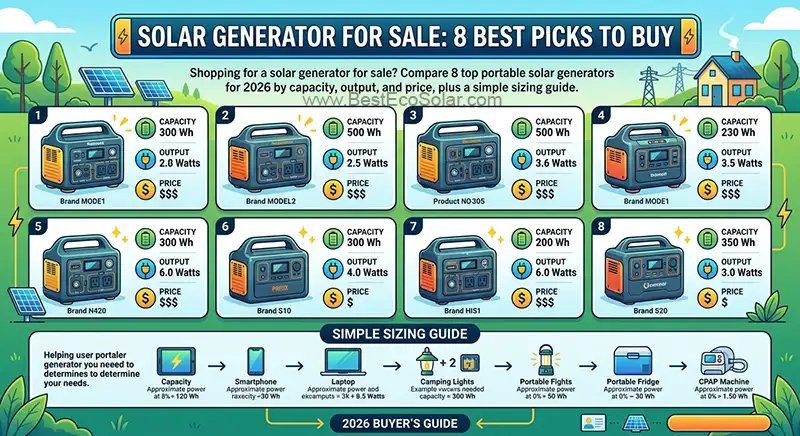
Solar Generator for Sale: Best Portable Power Stations to Buy in 2026
You type “solar generator for sale” into a search bar and, boom, hundreds of near-identical boxes. Same orange trim, same “up to 3,000W” bragging, wildly different price tags. Sound familiar?
What Is a Solar Generator, Really?
A solar generator doesn’t burn anything. No engine, no fuel, no pull cord, no roar. It’s a battery that you fill up with sunlight (or a wall outlet, in a pinch) and then empty into your devices. The name is a bit of a fib, honestly. A better label would be “sun-fed battery box.”Catchy? Not exactly. Accurate? Totally.
Solar Generator vs. Portable Power Station
These two terms get swapped constantly, and it trips up a lot of buyers. A portable power station is the battery-and-inverter box on its own. A solar generator is that same box plus solar panels, sold together as a kit. Even the reference books draw this line: a unit that can’t take solar input is just a portable power station.
Why do you care? Because a power station listed at $899 and a solar generator kit listed at $1,299 may contain the exact same box. The $400 difference is the panels. Always check what’s in the carton before you compare prices on any portable solar generator for sale.

How the Three Parts Work Together
Picture a rain barrel under a gutter. The solar panels are the roof and gutter, catching what falls from the sky. The battery is the barrel, holding it all. The inverter is the tap, converting that stored energy into the 120-volt AC your toaster and laptop charger expect. Mighty Generators’ explainer breaks the system down the same way: panel, battery, and inverter, with a battery management system watching over the cells.
Nothing is lossless, though. The inverter wastes a slice of the energy as heat, so a 1,000Wh battery never hands you a full 1,000Wh at the outlet. Plan on roughly 85 percent usable, and your runtime math will land much closer to real life.


Solar Generators for Sale: What to Check Before You Buy
Two numbers decide almost everything: watt-hours (how much energy is stored) and watts (how fast it can be delivered). Get those right, and the rest is seasoning. Get them wrong, and you’ll own a very expensive paperweight on the first night of an outage.
Battery Capacity (Watt-Hours): Your Fuel Tank
Watt-hours tell you how long the unit lasts. A 1,000 Wh battery can feed a 100-watt load for about ten hours and a 500-watt load for about two. Simple division, no calculus required.
To keep your bearings, here’s a rough ladder. Around 300Wh keeps phones, a laptop, and a router alive. About 1,000 Wh adds a CPAP overnight or a small camp fridge. Roughly 2,000 Wh will carry a full-size refrigerator for most of a day. Past 3,000 Wh, you’re in home-backup territory.
AC Output and Surge Watts: Your Engine Size
If watt-hours are the gas tank, watts are the engine. A huge tank doesn’t help when the engine can’t turn over the load. A buyer who grabs a big battery with a 2,000W inverter and then tries to run a 240V central air unit will be staring at an error light. Motors, like the compressor in your fridge, also gulp extra power for a split second at startup, so check the surge rating as well as the running number.
Practical benchmarks: a fridge runs around 150W, a CPAP around 50W, a microwave around 1,000W, and a space heater around 1,500W. That last one is a battery killer, so skip it if you can.
Solar Input and Recharge Speed
Here’s where a lot of people get burned. A battery that takes two days to refill is a short-term solution at best. Look for the maximum solar input in watts: some budget stations accept only a few hundred, while premium units like the Anker SOLIX F3800 take up to 2,400W and the EcoFlow DELTA Pro Ultra up to 5,600W.
A handy rule of thumb: one 400W panel, four good sun hours, and real-world losses add up to about 1,000 to 1,200Wh a day. That’s a day of fridge power, give or take. Want faster? Add panels, as long as the generator’s input rating allows it.
LiFePO₄ vs. Older Lithium Batteries
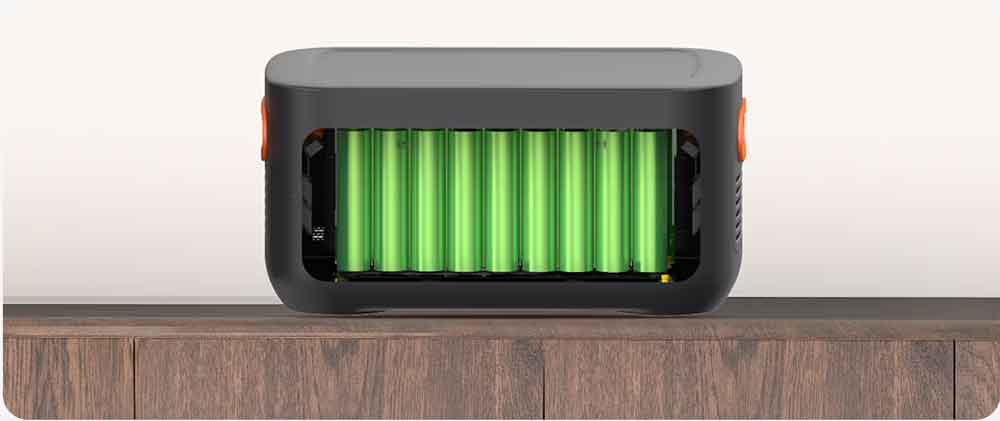
Almost every serious portable solar generator for sale in 2026 uses lithium iron phosphate (LiFePO₄) cells. They’re stable, run cooler, and are commonly rated for 3,000 to 4,000 charge cycles. Do the math: charge it once a day, and that’s eight to ten years before you’d notice real wear. Older lithium-ion packs often topped out at a few hundred cycles, which is why a bargain unit with an unlabeled battery should make you suspicious.
Colder climates have a new option, too. Some 2026 roundups now flag sodium-ion models, such as the Bluetti Pioneer Na, as the pick for extreme cold, since lithium batteries hate freezing temperatures.
Portability, Ports, and Smart Features
Weight matters more than the spec sheet suggests. The Jackery Explorer 1000 v2 weighs about 24 pounds, the Bluetti AC180P about 35, and the Anker SOLIX C2000 Gen 2 about 42. Anything past 40 pounds is a two-handed haul, and wheels start to look attractive. Check ports, too. You want USB-C with real wattage, at least two AC outlets, and an app so you can watch the battery from the couch.
How Much Does a Solar Generator Cost in 2026?
Prices range from around $700 for a capable starter to more than $4,000 for whole-home gear. But sticker price is a poor guide, so try price per watt-hour instead. In the 2026 retail listings we reviewed, the Bluetti AC180P (about $699 for 1,152Wh) works out to roughly 61 cents per watt-hour.
The Jackery Explorer 2000 v2 (about $899 for 2,042 Wh, panels sold separately) lands near 44 cents. The Anker SOLIX F3800 (about $4,098 for 3,840Wh) costs about $1.07, while the EcoFlow DELTA Pro Ultra bundle with one battery and a 400W panel (about $4,599 for 6,144Wh) comes to about 75 cents.
Watch the fine print. Those figures are snapshots, and a bundle with panels costs more than a bare power station. Prices swing hard during sale events, so treat every number here as a starting point and confirm the live price before you click “buy.”
Best Solar Generators for Sale in 2026: Side-by-Side Comparison
Eight units, one table. I sorted them from smallest to biggest, so find the row that matches the loads you listed earlier and read across. Specs come from manufacturer figures as repeated in the retailer and review listings linked in the name column, so confirm anything critical on the maker’s own page before you pay.
| Model | Capacity (Wh) | AC output (W) | Standout spec | Best for |
|---|---|---|---|---|
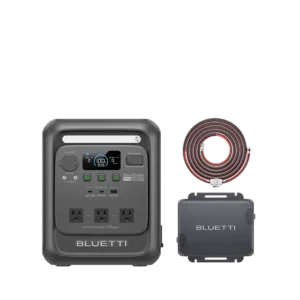
| Bluetti Elite 30 V2 | 288 | 600 | 200W max solar input | Phones, laptops, day trips |
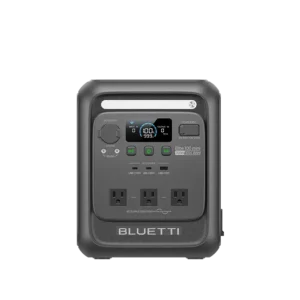
| Bluetti Elite 100 V2 | 1,024 | 1,800 | 1,000W max solar input | Most buyers |
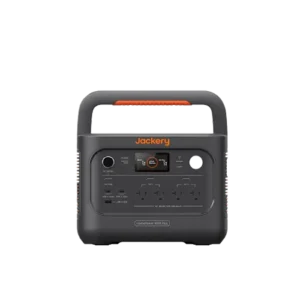
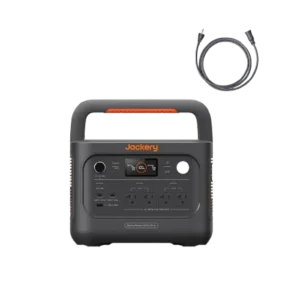
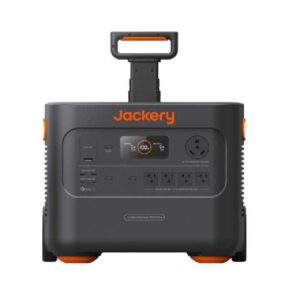
| Jackery Explorer 1000 v2 | 1,070 | 1,500 | 23.8 lb, 4,000+ cycles | Camping, weekend RV |
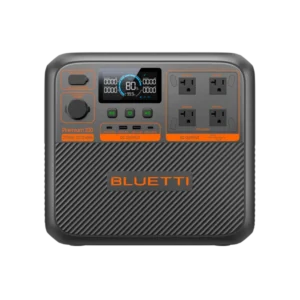
| Bluetti AC180P | 1,152 | 1,800 | 500W solar input, about 35 lb | Budget backup |
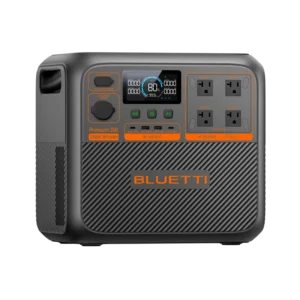
| Anker SOLIX C2000 Gen 2 | 2,048 | 2,400 | 800W alternator charging | RV and boondocking |
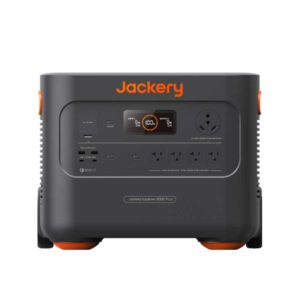
| Jackery Explorer 2000 Plus | 2,042 | 3,000 | Expands to 12 kWh | Best overall |
| Anker SOLIX F3800 | 3,840 | 6,000 | 120V/240V split-phase, 2,400W solar | Whole-home backup |
| EcoFlow DELTA Pro Ultra | 6,144 | 7,200 | 5,600W solar input, about 90kWh expandable | Premium expandable |
Best Budget Solar Generator: Bluetti AC180P
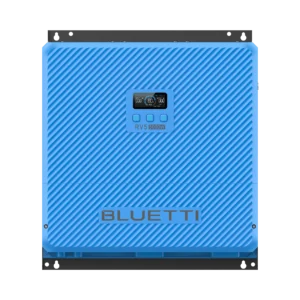
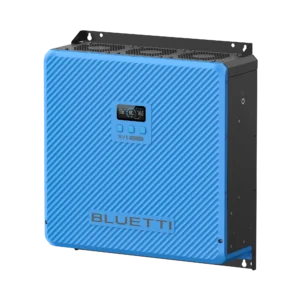
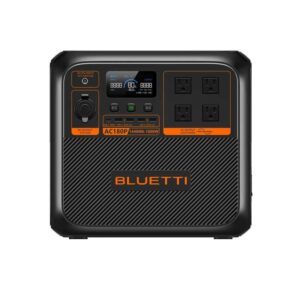
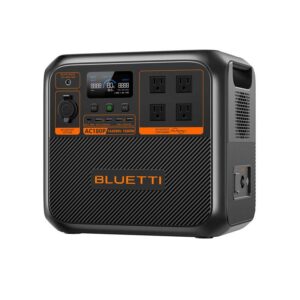
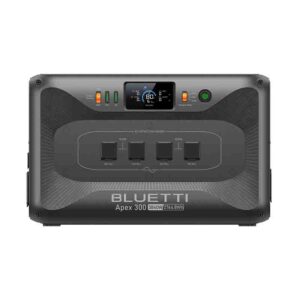
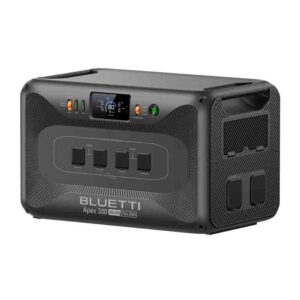
If you want a solar generator for sale that won’t wreck your bank account, start here. At roughly $699, the AC180P packs 1,152Wh and 1,800W of output into a body you can carry one-handed. A 500W solar input means a decent sunny-day refill, and it reaches about 80 percent from a wall outlet in under two hours. It’s the sensible choice for short outages, camping weekends, and “just in case” closets. The trade-off? It’s a single unit, so you can’t bolt on extra batteries later.

Best Compact Portable Solar Generator: Bluetti Elite 30 V2
Small but mighty is the whole pitch. With 288 Wh and 600 W of output, the Elite 30 V2 is built for laptops, lights, a router, and a steamer if you’re feeling fancy. Think of it as a power bank that grew up. It accepts up to 200W of solar, so a single folding panel does the job on a day trip. Don’t expect it to run a refrigerator, though. Treat it as a charger for your gadgets, not a lifeboat for your kitchen.
Best Value Mid-Size: Bluetti Elite 100 V2
This one is the “most people should buy this” pick in one 2026 roundup, and the logic holds up on paper. You get 1,024 Wh, 1,800 W of AC output, and an unusually high 1,000 W solar input, which means it can refill fast if you own enough panels. That’s a rare combination at this size. For a family that wants a router, lights, phone charging, and a fridge on short rotation, it’s a very sensible middle path.
Best Lightweight Solar Generator for Camping: Jackery Explorer 1000 v2
Campers notice weight first, and this unit clocks in at nearly 24 pounds. It offers 1,070Wh, 1,500W of continuous power with a 3,000W surge, and a battery rated for more than 4,000 cycles. Pair it with a couple of foldable panels, and you’ve got a camp kitchen, lights, and a portable fridge handled. It won’t run an air conditioner, but it wasn’t built to.
Best Solar Generator for RV and Boondocking: Anker SOLIX C2000 Gen 2
RV life punishes weak batteries. The C2000 Gen 2 offers 2,048Wh and 2,400W of output, and its headline party trick is 800W alternator charging, so the drive between campsites tops up the battery for free. One 2026 RV review pairs it with a 400W folding panel and reports a solar refill in four to five peak sun hours with fan noise under 30dB. At about 42 pounds, it isn’t light, but it’s quiet enough to sleep next to.
Best Overall Solar Generator for Sale: Jackery Explorer 2000 Plus
If I had to pick one for the widest range of buyers, it’s this. You get 2,042 Wh, a 3,000 W inverter with a 6,000 W surge, and a battery rated for 4,000 cycles. It carries a fridge, tools, and a coffee maker. It expands to 12 kWh when your needs grow, and it’s light enough to throw in a truck for a weekend and still serious enough to handle a storm. Listed around $899 for the power station alone, so add panels to the budget.
Best Solar Generator for Whole-Home Backup: Anker SOLIX F3800
This is where we stop talking about camping. The F3800 delivers 6,000W of 120V/240V split-phase power from a 3,840Wh base, which is the spec you need to wake up a well pump or central air. Expand it to 26.9kWh (or up to 53.8kWh with two units), and you’ve got days of backup. Its 2,400W solar input recharges fast. The price, around $4,098 for the base unit, is steep, but you’re replacing a gas generator and a fuel stockpile.
Best Premium Expandable Solar Generator: EcoFlow DELTA Pro Ultra
The DELTA Pro Ultra is the one you buy when you’re building a small power plant. One battery holds 6,144Wh, the inverter pushes 7,200W of split-phase power, and the system scales to roughly 90kWh. Solar input tops out at 5,600W. The listing we reviewed bundles one battery and a 400W panel for about $4,599. Overkill for a campsite, perfect for a homeowner who wants silent, fume-free backup that grows with the house.

How We Tested and Scored These Solar Generators
Straight talk first: a spreadsheet isn’t a workbench, and you deserve to know what sits behind our scores. This ranking is a desk-based evaluation. We haven’t lab-tested every unit ourselves, and we won’t pretend otherwise. What we did do is build a repeatable method so the picks are comparable, then cross-check the results against independent 2026 reviews.
- Verify the specs. We compared capacity, AC output, solar input, weight, and cycle life across manufacturer figures as repeated in retailer and review listings from 2026.
- Model the runtime. We assumed 85 percent of rated capacity is usable at the outlet, then divided by a 250W load. That’s a refrigerator, router, lights, and phone charging running together, the same everyday bundle most sizing guides use.
- Model the solar refill. We assumed a 400W panel, four peak sun hours, and roughly 75 percent system efficiency, which lands near 1,200Wh a day.
- Score on a weighted rubric. Capacity (25 percent), AC output and surge (20), solar input (15), portability (15), price per watt-hour (15), and battery life or expandability (10). Each factor gets a score out of 10.
- Sanity-check against reviewers. If our order of finish clashed badly with what independent testers found, we went back and re-read the specs.
Here’s what step two looks like in practice:
| Model | Usable energy (Wh, at 85%) | Estimated runtime at a 250W load |
|---|---|---|
| Bluetti Elite 30 V2 | 245 | about 1 hour |
| Bluetti Elite 100 V2 | 870 | about 3.5 hours |
| Jackery Explorer 1000 V2 | 910 | about 3.6 hours |
| Bluetti AC180P | 979 | about 3.9 hours |
| Jackery Explorer 2000 Plus | 1,736 | about 6.9 hours |
| Anker SOLIX C2000 Gen 2 | 1,741 | about 7 hours |
| Anker SOLIX F3800 | 3,264 | about 13 hours |
| EcoFlow DELTA Pro Ultra | 5,222 | about 21 hours |
Those are calculated estimates, not stopwatch readings. Real runtimes shift with temperature, inverter idle draw, and how hard your fridge compressor cycles, so use them as a ruler, not a promise.
What Size Solar Generator Do You Need?
Here’s the question every buyer asks, and the answer lives in your own house. Write down what you must keep running, add the watts, then estimate how many hours you need each item.
| What you need to power | Typical draw | Capacity to aim for |
|---|---|---|
| Phones, laptop, router | 100W | 300 to 500Wh |
| Camping with a small fridge | 200 to 600W | about 1,000Wh |
| Fridge, lights, router, CPAP overnight | 250 to 400W | about 2,000Wh |
| Fridge plus window AC or power tools | 1,200 to 1,500W | 2,000Wh and a 3,000W inverter |
| Well pump, central AC, whole-home circuits | 6,000W split-phase | 3,800Wh or more |
A full-size refrigerator typically uses about 1,200 to 1,500Wh over 24 hours. Add a 400W panel and a sunny day, and you’re close to self-sufficient on that single load. Rule of thumb: buy about 25 percent more capacity than your math says. Future you will say thanks.

Solar Generator vs. Gas Generator: Which Should You Buy?
Picture a blackout. With gas, you’re hauling fuel, running the machine outside, and listening to it grumble all night. Carbon monoxide from portable gas generators is a genuine killer, which is why you never run one indoors. A solar power station sits in your kitchen and makes no exhaust at all.
Gas has one real edge: refueling takes two minutes, while solar waits on the sun. In a week-long outage with plenty of fuel, gas can win on raw runtime. That’s why a lot of preppers keep both. If you want quiet, safe, indoor power and you can live with a slower recharge, solar is the better everyday tool.
How to Keep Your Solar Generator in Good Shape
Batteries like routine. Keep the unit out of extreme heat and freezing cold, leave the vents clear, and use the cables it shipped with. If you’re storing it for months, don’t leave it at 0 or 100 percent; many makers suggest a partial charge and a top-off every few months.
Update firmware through the app when prompts appear. And test it before the storm, not during it. Plug in your fridge for an hour on a calm Saturday, and you’ll know exactly what you own.
Conclusion: Which Solar Generator for Sale Should You Buy?
Here’s the short version. Start with your loads, not the brand. Add up the watts you can’t live without, estimate the hours, and pick capacity and output to match, with a little cushion. If you want one solar generator that does a bit of everything, the Jackery Explorer 2000 Plus is the safest bet.

On a tight budget, the Bluetti AC180P gets you real backup power for roughly $700. For the road, the Anker SOLIX C2000 Gen 2 and Jackery Explorer 1000 v2 shine, and if you’re protecting a whole house, the Anker SOLIX F3800 or EcoFlow DELTA Pro Ultra are the serious tools. Check live prices, confirm the seller is authorized, and remember that Black Friday is on the horizon. Got a storm headed your way instead? Buy now, test it this weekend, and sleep easy.
Final Score Box: Our Test Results for the Best Overall Pick
Jackery Explorer 2000 Plus: 8.0 out of 10
| Factor | Weight | Score (out of 10) | Why |
|---|---|---|---|
| Battery capacity | 25% | 8 | 2,042Wh runs a fridge-plus-essentials load for about 7 hours |
| AC output and surge | 20% | 9 | 3,000W continuous, 6,000W surge |
| Solar input | 15% | 7 | Pairs with the maker’s panels; check the max input rating before buying |
| Portability | 15% | 6 | Movable, but not a casual one-hand carry |
| Price per watt-hour | 15% | 9 | About 44 cents per Wh for the base unit |
| Battery life and expandability | 10% | 9 | 4,000-cycle rating, expands to 12kWh |
FAQs About Hybrid Solar Packages
Expect roughly $700 for a capable 1,000Wh-class starter, about $900 for a 2,000Wh power station without panels, and $4,000 or more for whole-home systems. Bundles that include panels cost extra, so compare per-watt-hour pricing rather than sticker price.
Yes. A typical fridge draws around 150W while running and uses roughly 1,200 to 1,500Wh per day. A 2,000Wh unit covers most of a day, and a 400W panel on a sunny afternoon can bring you close to continuous operation. Make sure the inverter's surge rating can handle the compressor start.
Generally yes, because there's no combustion, no exhaust and no carbon monoxide. Still, give it ventilation space, keep it dry, and follow the manual. Gas generators are the ones that must always stay outdoors.
Most current models use LiFePO4 batteries rated for about 3,000 to 4,000 full cycles. Used daily, that is close to a decade before noticeable capacity loss. Used only for emergencies, it can last far longer, though calendar aging eventually applies.
It will, just slowly. Panels still produce some power under cloud cover, but output can fall to a fraction of the sunny-day number. That's why a wall-outlet charge before a storm, plus extra panel wattage, is smart insurance.
You Might Also Like