


Solar Kits for Home vs RV: The Ultimate Guide to Choosing the Right Power System
Solar Kits for Home vs RV: The differences between solar kits for home and for RV aren’t just about size—they run deep, touching everything from voltage and mounting to how you live your daily life. I’ve spent years geeking out over solar setups, helping friends avoid expensive mismatches, and I can tell you that plugging a residential panel into an RV is like trying to power a bicycle with a jet engine. It might roll, but you’ll probably end up with a smoking mess.
Understanding the Heart of Two Very Different Worlds
1. What Exactly Is a Home Solar Kit?
Solar Kits for Home vs RV – A residential solar kit is built to anchor a stationary life. Think of it as a giant, permanent power plant bolted to your roof or mounted on a ground rack in your backyard. These kits almost always tie into the utility grid, letting you feed excess energy back for credits and pull from the grid when the sun clocks out.
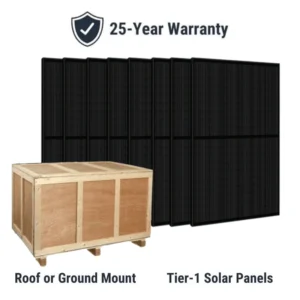
They use large, high-wattage panels—often 400W to 550W each—designed to withstand decades of rain, snow, and searing heat without budging. The goal? Replace a big chunk of your monthly electricity consumption and add serious value to your property.
When I talk about a home solar kit, I’m picturing pallets of panels that require a structural engineer’s nod, a professional electrician’s hands, and a permitting process that feels like you’re applying to launch a rocket. It’s a long-term relationship, not a summer fling.
The system voltage typically runs at 120/240V AC split-phase, hooking directly into your main breaker panel. You’ll see massive central inverters or microinverters under each panel, battery banks that tower like refrigerators, and a level of complexity that expects you to stay put for 25 years.

2. And What Makes an RV Solar Kit Different?
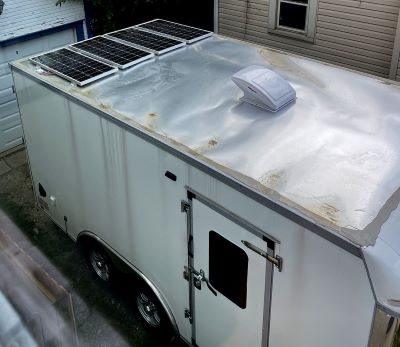
Now flip the coin. An RV solar kit is freedom distilled into a portable, lightweight package. It lives on the curved roof of a moving vehicle, rattling down highways, baking in desert boondocking spots, and coping with the constant vibration of a diesel engine.
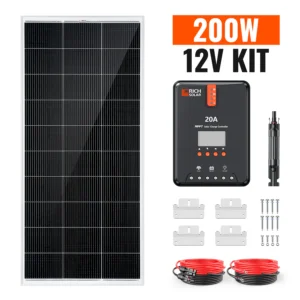
These kits aren’t trying to power an entire house—they’re designed to keep your 12V DC appliances humming: lights, water pump, fridge, phone chargers, maybe a CPAP machine. The panels are smaller (100W to 200W each), often flexible or semi-flexible to hug aerodynamic curves, and the whole system revolves around a deep-cycle battery bank that acts as your silent, fumeless generator.
Here’s where the differences between solar kits for home and for RV really start to glare. An RV setup uses a DC-to-DC architecture almost exclusively. Your panels feed a charge controller, which gently nurses your batteries, and then you pull 12V DC straight from the battery or run an inverter just for a few AC outlets.
There’s no grid tie-in, no net metering, and zero alignment with utility regulations. It’s a standalone island that asks, “Can you handle a bumpy road and still charge my batteries by noon?”
The Core Differences That’ll Make or Break Your Setup
1. Power Output and Energy Needs: The Elephant vs. The Gazelle
Let’s get real numbers on the table. The average U.S. household guzzles around 30 kWh of electricity per day. A complete home solar kit with battery backup often sizes between 5 kW and 15 kW of solar array, generating enough juice to run air conditioners, electric ovens, and laundry machines without flinching. In contrast, a typical RV consumes somewhere between 2 kWh and 5 kWh daily, unless you’re running a rooftop AC unit off-grid, which is a whole different beast.
The home solar kit vs RV solar kit wattage mismatch becomes obvious fast. A single residential panel pumping out 450W would physically dominate the roof of a camper van and leave no room for vents or skylights. RV panels, on the other hand, cluster in small, carefully placed arrays that total maybe 400W to 800W for a modest setup, and 1200W to 2400W for a decked-out rig.
I’ve seen RVers try to use high-voltage residential panels with a cheap PWM controller—spoiler: the controller fried, and the batteries never recovered. Your power appetite dictates the plate you should fill, and these two plates are sized for completely different hunger levels.
2. Voltage Systems and Battery Chemistry: 12V Nomadic Soul vs. 48V Homebody Heart
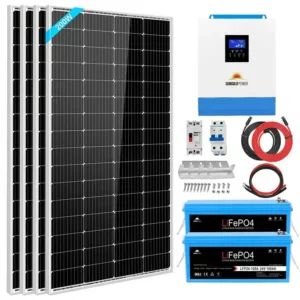
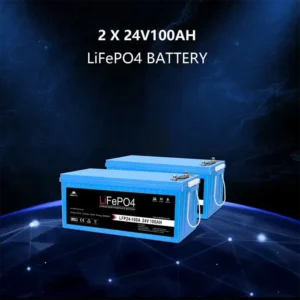
Perhaps the most technical (and overlooked) of the differences between solar kits for home and for RV lies in voltage. Almost all RV and camper solar kits operate on a 12V or 24V DC nominal system. Your batteries—usually lithium iron phosphate (LiFePO4) deep-cycle batteries wired in parallel or series—feed the entire RV’s native 12V wiring. The alternator, shore power converter, and solar charge controller all speak the same low-voltage language.
Home systems, particularly modern residential solar kits, are shifting dramatically toward 48V battery banks and high-voltage string inverters. A 48V architecture is more efficient for handling the massive surge currents of a whole-house inverter, and it pairs beautifully with 400V+ DC string voltages coming down from the roof.
When you bring a 48V home battery into an RV, you’re instantly adding weight, incompatible charging profiles, and a safety headache. I love LiFePO4 for both worlds, but the battery management system (BMS) communication in a residential setup expects to talk to a hybrid inverter, not a tiny RV charge controller.
It’s like trying to pair a smartphone with a 1980s cordless phone—both are communication devices, but the language barrier is total.
3. Portability, Weight, and Mounting: Set in Stone vs. Hitched to Adventure
A residential solar kit mounts with heavy aluminum rails, flashed and sealed to a sloped, immovable roof. Panels weigh 40-60 pounds apiece and demand a structural roof load calculation.
You don’t move them. Ever. Meanwhile, an RV solar panel kit is either permanently bonded with high-strength adhesive tape or bolted on lightweight tilting brackets, often designed to be removable. Many RVers even carry portable fold-out panels (the classic “suitcase” style) that they deploy on the ground, chasing the sun while the rig stays in the shade.
This weight factor is a big piece of the puzzle. Home panels are glass-covered, framed in thick aluminum, and built like tanks to survive hail the size of golf balls. RV panels, especially the flexible ones, trade that heft for a few millimeters of plastic and a thin aluminum back-sheet.
They’re vulnerable to scratches and heat buildup, but at 4 to 6 pounds each, they won’t blow your vehicle’s payload budget. I’ve talked to full-timers who obsess over every ounce, and they’ll take a 10% efficiency hit just to keep the roof lightweight enough to carry extra water or a kayak.

4. Installation Complexity: DIY Weekend vs. Permit Parade
Installing a solar kit for the home is rarely a solo endeavor. It involves climbing on your roof with safety gear, wiring through an attic, pulling permits, scheduling an inspection, and coordinating with your utility for interconnection.
One wrong DC connection can arc-fault and ignite a roof fire, which is why many jurisdictions require a licensed electrician. It’s serious business, and the payoff—lower bills and energy independence—comes with a bureaucratic price tag.
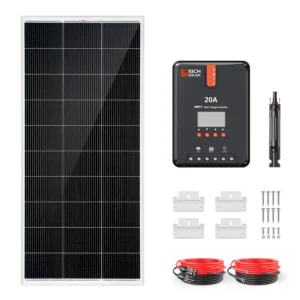
In contrast, a solar kit for an RV is something you can easily tackle with basic hand tools and a healthy dose of YouTube courage. I’ve personally helped a friend mount a 200W kit on her travel trailer in an afternoon. We ran the cables through a fridge vent, connected a charge controller to the battery terminals, and watched the meter spring to life.
No permit, no inspection. The simplicity stems from the low-voltage, off-grid nature of the system. You aren’t interacting with the grid, so regulatory fingers stay out of your pie. That said, you still need to respect wire gauges, fuse everything within inches of the battery positive, and ensure the roof won’t leak—common-sense stuff that prevents a midnight meltdown.
5. Inverter Types and AC Power Quality: Pure Sine Waves vs. Modified Confusion
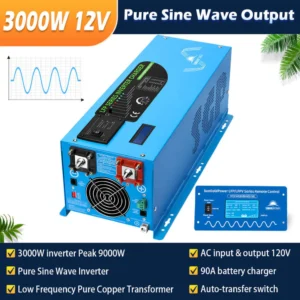
This is where conversations get lively. Almost every modern residential solar kit uses a pure sine wave inverter, because modern appliances like variable-speed heat pumps and induction cooktops can’t stomach anything less. The inverter strings together multiple panels and pushes clean, utility-grade AC through your home.
You’ll see hybrid inverters that manage grid, solar, and battery simultaneously, keeping your lights on during a blackout seamlessly.
On the RV side, you still need a pure sine wave if you’re running a microwave, medical device, or an electric blanket, but the inverter size is much smaller—typically 1000W to 3000W, compared to a home’s 6000W to 12000W beast. Some budget RV kits include modified sine wave inverters that can make electronics buzz and run hotter.
If you’re comparing Solar Kits for Home vs RV, don’t underestimate the inverter. Using a home hybrid inverter in an RV would be like mounting a commercial pizza oven in a kitchenette; you’d run out of battery capacity before you even preheat.
6. Durability and Weather Resistance: Decades on a Roof vs. Years on the Road
A stationary residential solar kit faces seasonal cycles: snow loading, wind uplift, rain, and prolonged UV. Panel manufacturers test them to endure 1-inch hail at 50 mph and wind loads above 2400 Pascals. They’re certified to still produce at least 80% of their rated power after 25 years. It’s a “set it and forget it” investment, minus occasional cleaning.
RV panels, especially the flexible ones, have a shorter lifespan—often 5 to 10 years—because constant vibration, debris from the road, and wild temperature swings between desert days and freezing nights cause micro-cracks in the cells. Rigid RV panels last longer, but they’re still getting hammered by wind while driving.
I always tell RVers to check their panel mounts every few months and use a tilting mount to improve airflow, because heat buildup can cook a panel and slash its output. The physical abuse an RV kit endures daily is orders of magnitude higher, and that’s by design. Resilience here means pliability, not just brute strength.
7. Scalability: Start Small and Grow, or Go Big Right Away?
With a home solar kit, scaling up later isn’t trivial. You might need to upgrade your inverter, your service panel, and even your net metering agreement. Many people overbuild from the start to avoid the headache, which makes sense because the roof real estate is plentiful and the system is permanent.
An off-grid solar system for a home can be modular if you use microinverters or string optimizers that allow panel-by-panel expansion, but you still have to match voltage and string length limits.
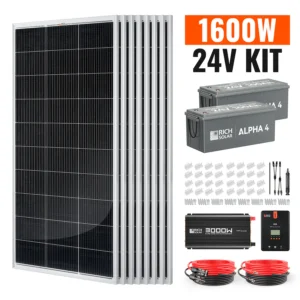
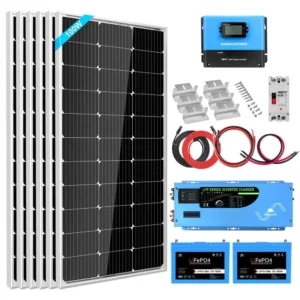
RV systems, however, are naturally modular. You can start with a single 100W panel and a basic PWM controller, then add another panel next year, swap to an MPPT controller, and stack more lithium batteries without re-engineering the entire system. That’s because most RV components talk 12V and can be paralleled with minimal fuss.
The only real ceiling is your roof space and your battery’s charging capacity, which you’ll check with a multimeter and a cold drink in hand. It’s addictive—I’ve seen van-lifers turn a tiny 200W setup into an 800W powerhouse over three summers.
8. Cost and Budget: Paying for Permanence or Paying for Freedom
Let’s talk money. A typical residential solar kit, before incentives, might set you back $8,000 to $25,000 for equipment alone, with installation adding another chunk. But you’re buying a 25-year asset that can eliminate a $200 monthly electric bill. The investment logic is clear: break-even in 7–12 years, then pure profit and environmental warm-fuzzies.
An RV solar kit costs far less upfront—$300 to $3,000 for a capable system—but it doesn’t offset a utility bill; it unlocks the ability to camp without hookups and skip generator fuel. The ROI is measured in quiet mornings, pristine air, and the satisfaction of making your own power anywhere.
I’ve seen full-timers save thousands annually on campground fees because they can boondock indefinitely. You’ll need to decide whether you’re investing in real estate value or in lifestyle expansion. Neither is better, but mixing the two budgets usually leads to tears.
Top Complete Solar Kit Supplier
| Name | Price Range | Details |
|---|---|---|
| SunGoldPower | $5,774 – $31,853.00 | 👉 Get Special Offers |
| Rich Solar | $7,999 – $25,99.99 | 👉 Get Special Offers |
| ShopSolarKits | $2,539 – $149,989.99 | 👉 Get Special Offers |
9. Maintenance and Monitoring: Digital Dashboards vs. a Quick Glance
Residential systems come with slick apps that show you per-panel production, historical data, and real-time consumption graphs. You’ll get alerts if an inverter goes offline, and many companies offer maintenance plans. All you really need to do is spray off the panels a few times a year and trim any shading trees.
RV monitoring is more hands-on. Many charge controllers have a tiny screen, and you might add a Bluetooth module to check your battery state of charge from bed. But road grime, bird droppings, and the occasional low-hanging branch require more frequent cleanings.
Plus, you’ll routinely tighten connections because vibration loosens terminals. It’s a more intimate relationship—you’ll learn your system’s personality, like how the voltage drops when the fridge compressor kicks on.
10. Table Comparison: Solar Kits for Home vs RV at a Glance
| Feature | Home Solar Kit | RV Solar Kit |
|---|---|---|
| Typical System Voltage | 120/240V AC (48V DC battery) | 12V or 24V DC |
| Panel Size & Weight | 40-60 lbs, 65”x40” rigid | 4-20 lbs, often flexible or smaller rigid |
| Mounting | Permanent roof/ground mount, structural rails | Adhesive, bracket, or portable suitcase |
| Power Output Range | 3 kW – 15 kW+ | 100W – 3000W |
| Inverter Type | Grid-tied pure sine wave (6-12 kW) | Small pure sine or modified (1-3 kW) |
| Battery Chemistry | Lithium-ion or LiFePO4 (high voltage) | LiFePO4 deep-cycle, 12V nominal |
| Installation | Professional, permits required | DIY, no permits in most areas |
| Grid Interaction | Net metering, utility approval | Fully off-grid, no grid connection |
| Durability | 25+ years, hail-resistant | 5–15 years, vibration and impact-focused |
| Scalability | Complex, needs an inverter/panel match | Highly modular, add panels/batteries easily |
| Cost (Equipment Only) | $5,000 – $20,000+ | $300 – $4,000 |
| Portability | None, permanently fixed | Built-in mobility; portable options available |
| Maintenance | Minimal, remote monitoring | Frequent visual checks, cleaning, and tightening |
| View Products | View Products |
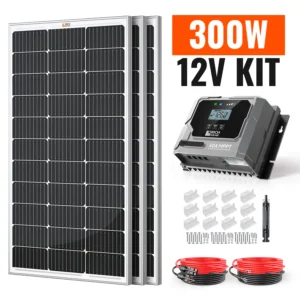
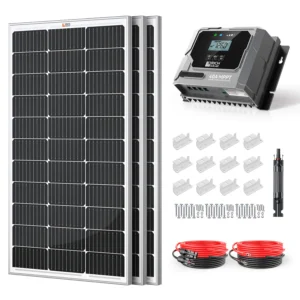
How Lifestyle Dictates the Kit You Choose
1. When a Home Solar Kit Is the Obvious Winner
You’re in a house you plan to own for a decade or more. Your electricity bills make you cringe every summer. You have an unshaded south-facing roof or a sunny backyard. In this scenario, a complete home solar kit with battery backup makes tremendous sense.
You’ll ride out power outages with ease, shrink your carbon footprint, and watch your meter spin backward (figuratively, with net metering). The sheer capacity and long-term reliability of a residential system align perfectly with a rooted, predictable life.
2. When an RV Solar Kit Is Your Ticket to Freedom
You live on wheels, weekends, or full-time. You want to wake up to a forest view without the rumble of a generator. A portable RV solar panel kit for camping lets you chase 70-degree weather, work remotely from Bureau of Land Management land, and never beg for a 50-amp pedestal.
It’s lightweight, modular, and as adventurous as you are. The ability to pivot your panels toward the sun or stash a foldable array in your pass-through storage gives you energy sovereignty that no stationary array can offer.
The Hidden Trap: Can You Use a Home Solar Panel on an RV?
I get this question all the time. Technically, yes, you can bolt a large 350W residential panel onto an RV roof. But should you? Not unless you’ve carefully addressed the voltage mismatch. Residential panels often have a high open-circuit voltage (Voc) that can fry 12V charge controllers unless you use an MPPT unit rated for 150V+ input.
The weight can also overload your roof’s dynamic weight rating, and the sheer width blocks vents. It’s a classic square-peg-round-hole situation. Some skoolie and bus conversions can handle it because of the massive roof, but for most travel trailers, it’s overkill that brings more risk than reward.
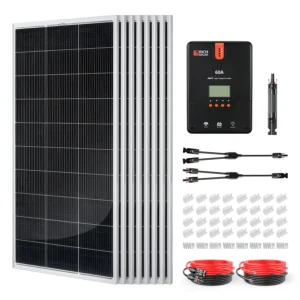
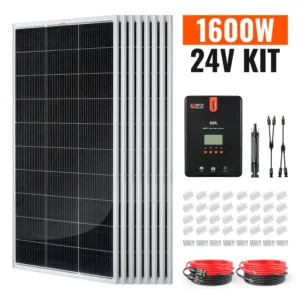
The differences between solar kits for home and for RV exist precisely to stop you from brute-forcing a solution that leaves you stranded.
Conclusion of Solar Kits for Home vs RV
Picking between Solar Kits for Home vs RV isn’t about which one is “better.” It’s about which one faithfully serves your daily rhythm. One anchors you to a place, showering your life with abundant, long-term energy and financial returns. The other unshackles you, turning every patch of sunlight into a quiet, free power source.
By now, you know that voltage, weight, installation, and sheer lifestyle fit are the real deciders—not just the panel’s wattage. I hope this breakdown has cleared the fog and nudged you toward the setup that’ll make you smile every time the sun rises. Whatever you choose, you’re stepping into a cleaner, more self-reliant way of living, and that’s something worth turning on for.
FAQs About Solar Kit
Absolutely. Most RV kits are modular. You can add panels in parallel as long as your charge controller can handle the increased current, and you can stack batteries with identical chemistry. Just remember to verify your wire gauge and fuse ratings when you expand.
Generally no. Since RV solar systems are low-voltage, off-grid, and not connected to any utility, they fall outside typical building permits. However, if you alter the vehicle’s electrical system in a way that affects roadworthiness, a safety inspection might be wise.
A residential inverter expects a stable grid reference or a specific high-voltage battery, and it’s designed for split-phase 240V output. RVs run 12V or 24V DC and need a much smaller, mobile-friendly inverter. Using a home inverter would likely result in error codes or dangerous overheating.
Rigid RV panels can last 10–15 years with proper care; flexible ones often last 5–8 years because of heat and flex stress. Home panels routinely surpass 25 years. The mobile environment accelerates wear, so treat your RV panels as a mid-term investment you’ll refresh once or twice during your travels.
Not exactly. A solar generator is a self-contained power station that integrates a battery, inverter, and charge controller into one box. An RV solar kit usually permanently mounts panels on the roof and hardwires everything into the RV’s electrical system. You can pair a solar generator with portable panels as a simpler, removable alternative.
You Might Also Like