



EcoFlow DELTA 3000 Gen4 vs Bluetti Apex 200 (2026): Which Power Station Wins?
This is the exact moment people shop for a big portable battery, and in late 2026 two newcomers keep landing in the same shopping cart: the DELTA 3000 Gen4 vs Bluetti Apex 200 debate is everywhere.
DELTA 3000 Gen4 vs Bluetti Apex 200: Both launched within days of each other in early November. Both sit in the roughly 2.5 to 3 kWh class. Both use long-life LiFePO₄ cells. And yet they’re built around very different ideas. One is a compact, powerful, all-in-one box. The other is a starter kit that wants to grow with you. So which one deserves your money?
Quick Verdict: DELTA 3000 Gen4 vs Bluetti Apex 200
Short on time? Here’s the honest summary. If your plan for a long outage includes a generator or the grid coming back within a day, the EcoFlow DELTA 3000 Gen4 gives you more energy, more continuous power, and a much higher surge rating for a $200 premium.
If you’d rather start small and keep adding batteries over the years, or you plan to hook up a serious solar array, the Bluetti Apex 200 is the smarter long-term bet.
That’s the whole story in two sentences. The rest of this guide explains why, with numbers, trade-offs, and a few opinions along the way.
Meet the Contenders
Before we compare, let’s get properly acquainted. Think of these two as different kinds of vehicles: one is a sleek hatchback that does everything out of the box; the other is a pickup with a hitch ready for a trailer.
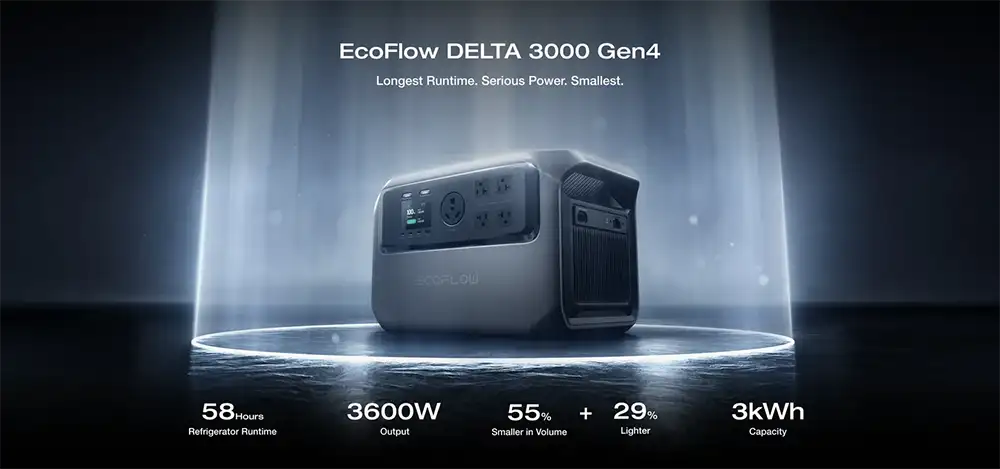
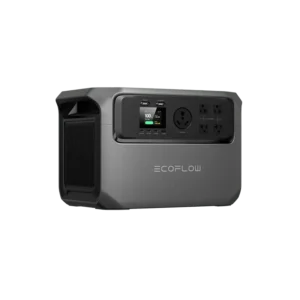
EcoFlow DELTA 3000 Gen4 at a Glance
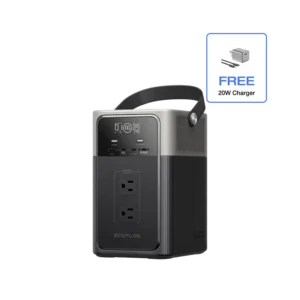
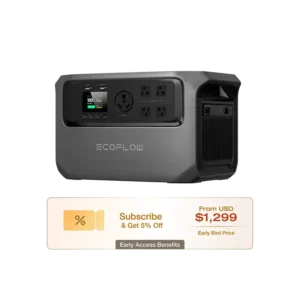
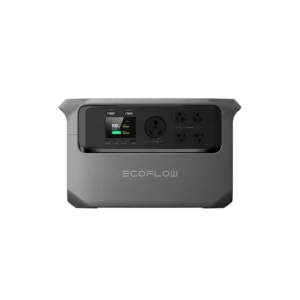
The EcoFlow DELTA 3000 Gen4 packs a 3,072Wh LFP battery into a case that weighs about 26 kg (roughly 57 lb) and measures about 47.7 × 28.9 × 28.2 cm. EcoFlow says that’s around half the volume of its older DELTA 3 Ultra. In the US, it’s rated for 3,600W continuous output with a 7,200W surge, and it takes up to 1,000W of solar through a single input.
It also adds a few thoughtful touches: a 3W standby draw, a fridge-focused runtime mode, a reserve that keeps phone charging alive after the battery hits zero, and time-of-use charging through the app.
The catch? There’s no expansion port in the published specs. The 3,072Wh you buy is the 3,072Wh you keep.
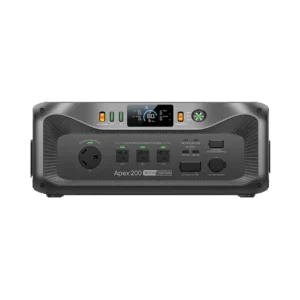
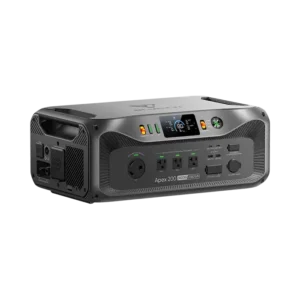
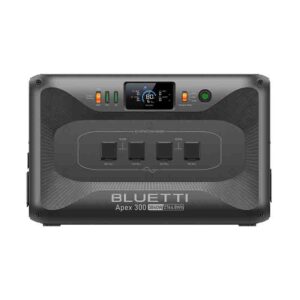
Bluetti Apex 200 at a Glance
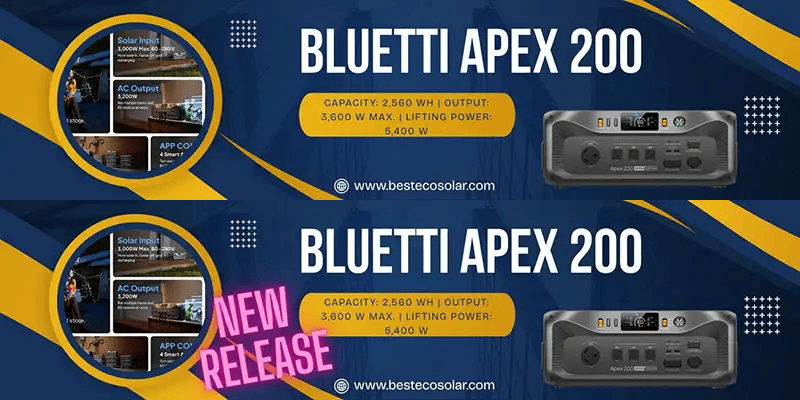
The Bluetti Apex 200 starts at 2,560Wh, with 3,200W of AC output on its own (Bluetti says that rises to 3,600W once an expansion battery is connected). Its calling card is flexibility: up to 3,000W of solar input split across a 2,000W MC4 input and a 1,000W XT60 input, a 12V/30 A Anderson port for RV gear, four smart outlets for load management, and support for up to six expansion batteries. Bluetti quotes a maximum system capacity of 33.28 kWh when you stack six B500K batteries.
It launched in the US in early November at $1,099, and early Black Friday pricing dipped as low as $1,044 at some retailers.
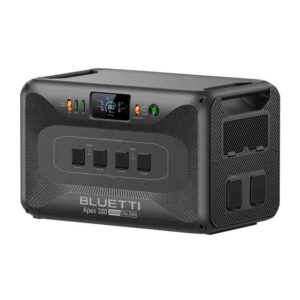
DELTA 3000 Gen4 vs Bluetti Apex 200 Specs Comparison Table
Numbers first, opinions after. This table pulls together the manufacturer-published figures reported at launch. Specs and prices shift, so double-check the product pages before you buy.
| Feature | EcoFlow DELTA 3000 Gen4 | Bluetti Apex 200 |
|---|---|---|
| Rated capacity | 3,072 Wh | 2,560 Wh |
| Battery chemistry | LiFePO₄ (LFP) | LiFePO₄ (LFP) |
| Continuous AC output | 3,600W | 3,200W (3,600W with a battery connected) |
| Surge output | 7,200W | Up to 4,800W for 10 seconds |
| Max solar input | 1,000W (one port) | 3,000W (2,000W MC4 + 1,000W XT60) |
| Expandable? | No battery port listed | Up to 6 batteries (33.28kWh with six B500K) |
| 12V output | Not listed | 12V/30A Anderson plus a socket |
| Weight | About 26 kg | Check the maker’s current spec sheet |
| Cycle life | 6,000 cycles to 70% | 6,000 cycles to 70% |
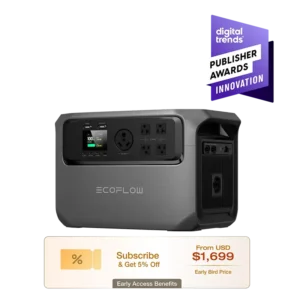
| Typical US price (late Nov 2026) | $1,299 (list $1,699) | $1,099 (promos near $1,044) |
| View Details | View Details |
Notice how the two split the categories? EcoFlow wins on raw energy, surge, and output. Bluetti wins on solar, expansion, and connectors. Neither is a runaway champion, and that’s what makes this comparison interesting.
How We Tested (and What We Compared)
Let’s be upfront about our process, because trust matters more than hype. Both of these products only reached US buyers in November 2026, and the DELTA 3000 Gen4 was still taking pre-orders in some markets as we put this guide together. So this article is a structured comparison rather than a lab teardown, and here’s exactly what we did.
We lined up the manufacturers’ published specifications side by side and checked every figure against at least two sources, including launch coverage from Electrek and 9to5Toys, an independent review of the DELTA Gen4 line at Digital Trends, and regional press releases.
We converted capacity claims into usable-energy estimates using the roughly 85% real-world efficiency most LFP stations deliver once inverter losses are counted. We calculated cost per watt-hour at current street prices. Finally, we mapped each unit to five real scenarios: a two-day blackout, an RV weekend, a camping trip, a home office UPS, and a solar-heavy off-grid cabin.
Battery Capacity and Real-World Runtime
Capacity is the headline number, but it isn’t the whole story. Let’s unpack what those figures mean when the lights actually go out.
Usable Energy vs. the Number on the Box
Every power station loses some energy to heat and inverter conversion. A good rule of thumb is that you’ll get about 85% of the rated figure at the wall socket. By that math, the Bluetti Apex 200 delivers roughly 2,176Wh of usable energy, while the EcoFlow DELTA 3000 Gen4 delivers roughly 2,611Wh. That’s about 435Wh of extra juice on the EcoFlow side, which is enough to run a 100W laptop setup for an additional four hours or so.
Is that a big deal? For a single night, probably not. For day two of an outage, it can be the difference between food staying cold and food going in the bin.
Fridge Runtime and Standby Drain
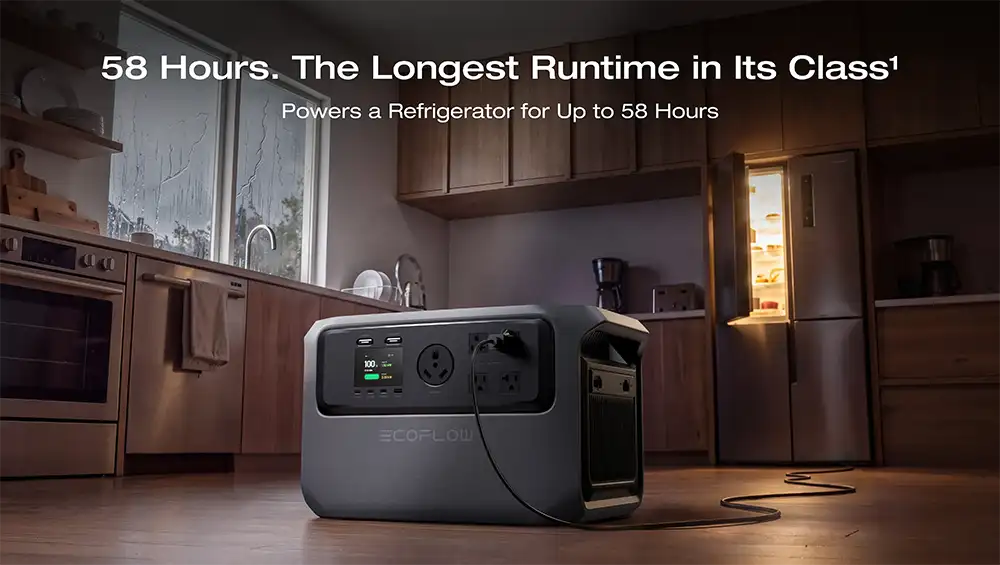
EcoFlow leans hard on efficiency. The DELTA 3000 Gen4 idles at around 3W and offers a refrigerator-focused mode that the company says stretches a modern fridge to as long as 58 hours on a full charge. Treat that figure as a best-case lab claim, since EcoFlow’s own Japanese testing note says it was measured with an empty 654L fridge. Still, low idle draw matters. Think of it like a car that sips fuel at a stoplight instead of guzzling it.
The Apex 200 is no slouch, but the published coverage focuses less on standby numbers. If you plan to leave the unit on all week as a quiet UPS, check the idle-draw spec before ordering.
AC Output and Surge Power: Which One Handles Heavy Appliances?
Capacity tells you how long you can run something. Output tells you what you can run at all. Mix them up, and you’ll end up with a lot of battery and a tripped inverter.
Continuous Output Compared
The DELTA 3000 Gen4 supports 3,600W continuous in the US. The Apex 200 offers 3,200W alone and 3,600W once a battery is attached. In practice, that 400W gap rarely matters. A 1,500W space heater, a 1,000W microwave, and a fridge together land around 3,000W, so both machines handle that trio without sweating.
Surge Rating for Motors
Here’s where the gap opens wide. Motors, well pumps, compressors, and some air conditioners gulp far more power for a split second when they start. EcoFlow lists a 7,200W surge for the DELTA 3000 Gen4. Bluetti lists up to 4,800W for 10 seconds on the Apex 200, with a lower sustained surge figure of roughly 3,360 to 3,840W for two minutes.
If your home backup plan involves a sump pump, a deep freezer, or a small AC unit, that extra headroom is genuinely reassuring. It’s like having a bigger engine for merging onto the highway, even if you cruise at the same speed afterward.
Solar Charging: Apex 200 vs DELTA 3000 Gen4 for Off-Grid Use
This is the Bluetti Apex 200’s moment to shine. With up to 3,000 W of solar input, it can refill a 2.5 kWh battery in a few strong sun hours if you have enough panels. The two-port design (2,000W through MC4 plus 1,000W through XT60) also makes it easier to mix panel strings.
The DELTA 3000 Gen4 tops out at 1,000W through one port, with an input window of 11 to 60V. That’s perfectly fine for a few portable panels, and a 1,000W array can still add something like 3 to 4kWh on a sunny day. But if you dream of a roof array or a permanent cabin setup, you’ll hit that ceiling quickly.
So ask yourself: is solar a bonus, or the whole plan? If it’s the whole plan, this section decides the contest for the Bluetti.
Expandability: Is the Bluetti Apex 200 Better for Long-Term Home Backup?
The best expandable portable power station is the one you don’t outgrow. That’s Bluetti’s pitch with the Apex 200, and it’s a strong one. Start with 2,560Wh today, add a B300K or B500K next year when the budget allows, and keep stacking until you reach a whole-home-ish system. Bluetti’s own figure for six B500K batteries is 33.28kWh.
One caveat: expansion costs real money. A B300K-based pairing already pushes the total above $2,100, so you pay for the flexibility in stages rather than getting it free.
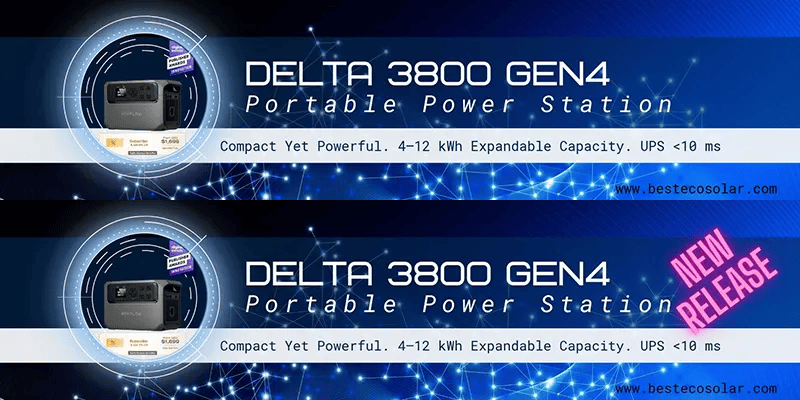
The EcoFlow DELTA 3000 Gen4 doesn’t offer that path in its published specs. It’s a complete product, not a platform. For many households, that’s a feature, not a flaw, because you buy once and stop thinking about it. EcoFlow’s pricier DELTA 3800 Gen4 is the sibling to look at if you want expansion within the same family, since it’s listed with a 3,763Wh battery and room for add-on packs.

Portability, Size, and Weight
A 26 kg (about 57 lb) unit is heavy; no way around it. But EcoFlow clearly worked hard here: the DELTA 3000 Gen4 is dramatically smaller than the DELTA 3 Ultra it replaces, and that compact footprint slides into a closet or truck bed far more easily than the typical 3kWh brick.
The Apex 200 is a modular design, so its weight depends on whether you’re carrying just the main unit or a stack with batteries. Verify the main unit’s current published weight and dimensions before you buy, particularly if you’ll be hauling it up stairs. Modular stacks are easier to lift in pieces, which can actually be a plus for anyone who can’t hoist 26 kg in one go.
Ports, 12V Output, and RV Friendliness
RV owners, listen up. The Apex 200 includes a 12V/30A Anderson port plus a 12V socket, which means you can feed trailer gear directly instead of routing everything through the inverter. That saves a little efficiency and a lot of fiddling.
The DELTA 3000 Gen4’s published specs don’t list a comparable 12V output, so 12V gear goes through AC adapters. It works, just less elegantly. Bluetti’s four smart outlets are another quiet win for households that want to prioritize circuits during an outage, so the heater doesn’t starve the fridge.
Price and Value: Which Is the Better Buy?
At $1,299 for the DELTA 3000 Gen4 (against a $1,699 list price) and $1,099 for the Apex 200, the EcoFlow costs $200 more and adds 512Wh. That works out to roughly 42 cents per watt-hour for EcoFlow versus 43 cents for Bluetti at current pricing. Basically a tie on cost per Wh.
But cost per Wh ignores what you do afterward. Spend another $1,100 on an Apex 200 expansion battery and you’re at 5,325Wh for around $2,200, which is capacity the DELTA 3000 Gen4 simply can’t reach. Meanwhile, the EcoFlow’s higher surge rating and larger single battery arguably make it better value for people who never plan to expand.
Prices swing during Black Friday and Cyber Monday week, so check live listings before pulling the trigger.
Who Should Buy the DELTA 3000 Gen4?
Pick the EcoFlow if you recognize yourself here:
- You want the most energy in one box and have no plans to expand.
- Your outage plan ends with a generator or the grid returning.
- You run motors, a sump pump, or a compressor and want that 7,200W surge cushion.
- Closet space and carrying weight matter to you.
- You like app-based features such as time-of-use charging.
Who Should Buy the Bluetti Apex 200?
Pick the Bluetti if this sounds more like you:
- You want to start at a lower price and grow your system for years.
- You own, or plan to buy, a big solar array.
- You have an RV and want direct 12V/30A output.
- You live somewhere cold, since Bluetti rates the Apex family for low-temperature operation down to about −4°F.
- You like the idea of prioritizing circuits with smart outlets.
Final Verdict: DELTA 3000 Gen4 vs Bluetti Apex 200
So, where do we land? There’s no universal winner, and anyone who tells you otherwise is selling something. The EcoFlow DELTA 3000 Gen4 is the better self-contained machine: more capacity, more continuous power, and a far bigger surge budget in a smaller package. The Bluetti Apex 200 is the better platform: cheaper to enter, friendlier to big solar, kinder to RV gear, and able to scale far beyond 3kWh.
In the DELTA 3000 Gen4 vs Bluetti Apex 200 matchup, ask one question: will you need more than 3kWh within the next few years? If yes, buy the Apex 200 and grow into it. If no, spend the extra $200 on the DELTA 3000 Gen4 and enjoy the stronger motor-starting power today. Either way, you’re getting LFP cells rated for around 6,000 cycles, which means this purchase should outlast your next two phones.
Our Score Box
| Category | EcoFlow DELTA 3000 Gen4 | Bluetti Apex 200 |
|---|---|---|
| Capacity and runtime | 9.0 / 10 | 8.0 / 10 |
| AC output and surge | 9.5 / 10 | 8.0 / 10 |
| Solar charging | 7.5 / 10 | 9.5 / 10 |
| Expandability | 5.0 / 10 | 9.5 / 10 |
| Portability and design | 8.5 / 10 | 7.5 / 10 |
| Ports and RV features | 7.0 / 10 | 9.0 / 10 |
| Value for money | 8.5 / 10 | 8.5 / 10 |
| Overall | 8.1 / 10 | 8.6 / 10 |
Bottom line: DELTA 3000 Gen4 for maximum power in one box. Apex 200 for flexibility and long-term growth.
FAQs About EcoFlow DELTA 3000 Gen4 vs Bluetti Apex 200
For a single short outage, the DELTA 3000 Gen4 has the edge thanks to its larger 3,072Wh battery and 7,200W surge rating. For multi-day outages where you want to add batteries and big solar, the Bluetti Apex 200 is the better long-term home backup choice.
Yes. A typical modern refrigerator draws a few hundred watts while the compressor runs and cycles on and off, so a 2,560Wh Apex 200 can usually keep one going for well over a day. Your exact runtime depends on the fridge, the room temperature and what else is plugged in.
Based on the published specifications, no. It has a fixed 3,072Wh capacity. If you want expansion in the EcoFlow family, the DELTA 3800 Gen4 is the model to look at.
The Bluetti Apex 200 accepts up to 3,000W of solar input (2,000W through MC4 and 1,000W through XT60), so a well-sized array can refill it in a few peak-sun hours. The DELTA 3000 Gen4 accepts up to 1,000W through a single input, which roughly means several hours more for a full recharge.
Both use LiFePO4 chemistry, which is known for thermal stability and long life, and both are rated for about 6,000 cycles to 70% capacity. As with any large battery, use them in ventilated spaces, keep them away from water and follow the manual's charging guidance.
You Might Also Like