How Do Solar Inverters Work? Your 2026 Guide to the Heart of a Solar System
How do solar inverters work? In short, they are the translator between the raw, wild energy your panels produce and the standard electricity your home and the grid can actually use.
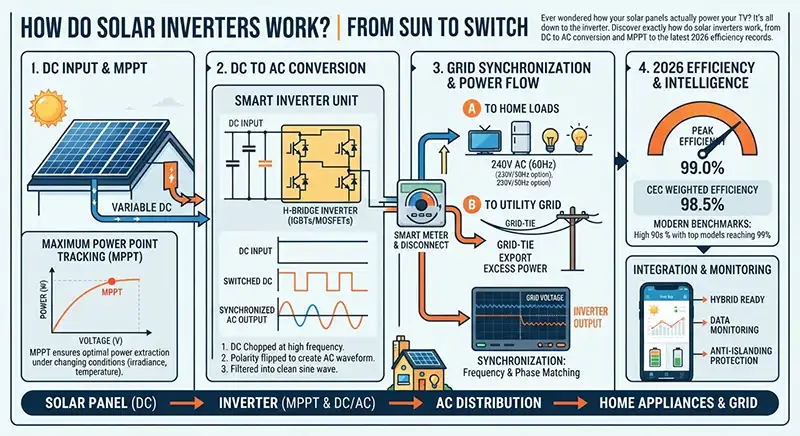
How Do Solar Inverters Work? This isn’t just a simple swap. It’s a high-speed, hyper-intelligent process that involves rapid switching, complex algorithms, and some seriously clever electronics. Let’s pull back the curtain and see what’s really going on inside that box. We’ll break down the DC to AC conversion process, explore why MPPT tracking is a game-changer, and look at the latest tech pushing solar inverter efficiency to astonishing new heights in 2026.
The Big Problem: DC vs. AC Electricity
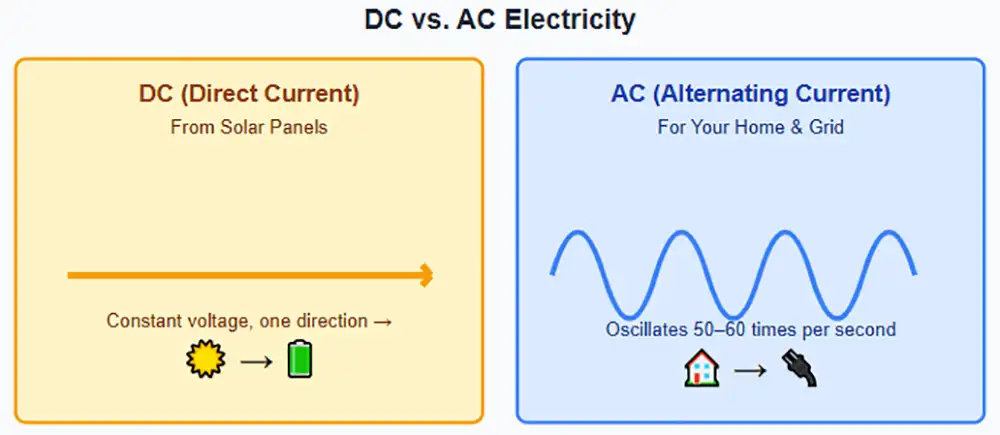
To understand the solar inverter function, you first need to grasp the fundamental mismatch between solar panels and your home. Solar panels work through the photovoltaic effect, knocking electrons loose to create a flow of electricity. This flow is Direct Current (DC)—it’s a one-way street. Think of it like a river flowing steadily in one direction.
Your home, however, runs on alternating current (AC). AC electricity constantly reverses direction, typically 50 or 60 times per second (50Hz or 60Hz). It’s more like the tide coming in and going out. Almost every appliance you own, from your fridge to your phone charger, is designed for AC power. The grid itself also runs on AC.
So, you have DC power being generated on your roof, but an AC-only world waiting to use it. This is the core problem the inverter solves. It is the ultimate energy translator.
The Core Mechanism: How DC Becomes AC
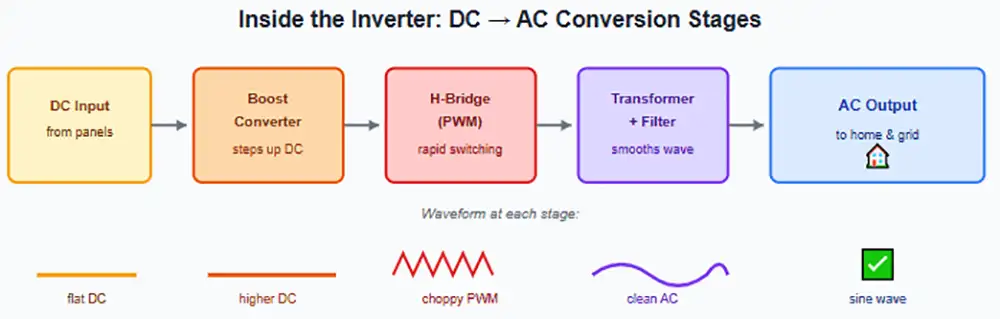
So, how does this translation happen? It’s not a single step but a rapid-fire sequence of electronic events. A standard solar inverter performs this DC to AC conversion in a few key stages.
Stage 1: The Boost Converter
The DC electricity coming from your panels might be at a relatively low or fluctuating voltage. The inverter first sends this DC power through a boost converter. This stage uses inductors and high-speed switches to step up the DC voltage to a higher, more stable level. It’s like compressing a gas to increase its pressure before using it in an engine.
Stage 2: The H-Bridge and PWM Switching
This is where the real magic happens. The high-voltage DC is fed into a circuit called an H-bridge, which is made up of four electronic switches (transistors like MOSFETs or IGBTs). The inverter’s brain turns these switches on and off thousands of times per second in a specific pattern using Pulse Width Modulation (PWM). By rapidly alternating the direction the DC flows through the circuit, it creates a crude, blocky version of an AC wave.
Stage 3: The Transformer and Filtering
This choppy AC wave is then fed through a transformer, which smooths out the voltage to the correct level for your home (e.g., 120V or 230V). Finally, a series of filters cleans up the rough edges of the PWM signal, turning that blocky wave into a smooth, clean sine wave—the perfect AC electricity your devices need.
The Brain of the Inverter: Maximum Power Point Tracking (MPPT)
The conversion process is just half the story. Modern inverters are also incredibly smart, and their most vital intelligence is Maximum Power Point Tracking (MPPT). This is the key to squeezing every possible watt from your panels.
A solar panel doesn’t produce a constant amount of power. Its output fluctuates wildly based on sunlight intensity, temperature, and shading. For any given set of conditions, there is one specific operating voltage where the panel produces its maximum power—the “Maximum Power Point” (MPP).
An MPPT tracking algorithm inside the inverter constantly samples the panel’s voltage and current, many times per second. It then adjusts the electrical load on the panels to keep them operating precisely at that sweet spot. Without MPPT, your system would be stuck at a fixed voltage and would lose significant energy whenever conditions changed—which is constantly. It’s like a sailor constantly adjusting the sails to catch the maximum wind, no matter which way it’s blowing.
What Else Does an Inverter Do? (It’s More Than a Converter)
A modern inverter is a multi-tasking powerhouse. Its solar inverter function goes far beyond simple conversion.
- Grid Synchronization: For your solar power to be sent back to the grid, the inverter must perfectly match the grid’s voltage, frequency, and phase. It’s a delicate dance, and the inverter must constantly monitor the grid to stay in perfect step.
- Anti-Islanding Protection: This is a critical safety feature. If the power grid goes down, your inverter must detect this instantly and shut off. Why? If it kept sending power into the lines, it could create an “island” of live electricity that could seriously injure utility workers trying to fix the outage.
- Monitoring and Communication: Most modern inverters are connected to the internet, feeding you real-time data on your system’s performance and alerting you to any issues.
The Great Inverter Debate: String vs. Micro vs. Hybrid
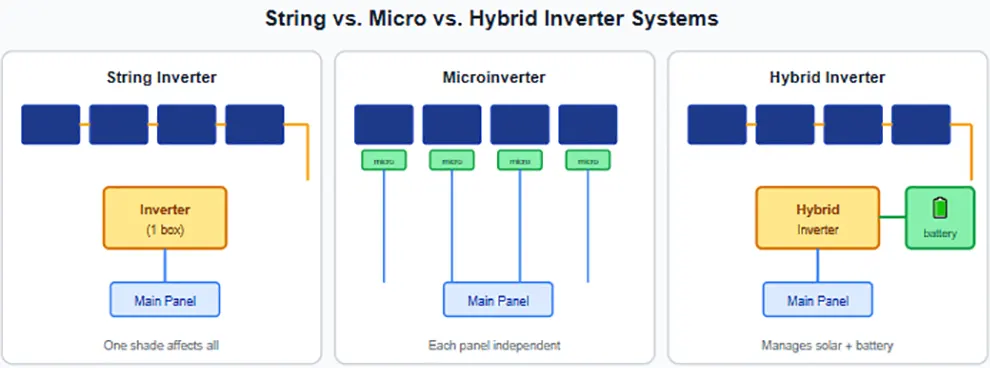
Not all inverters are built the same. The architecture you choose dramatically affects how your system handles shading, expansion, and battery storage. Here’s a look at the main contenders in 2026.
| Feature | String Inverter | Microinverter | Hybrid Inverter |
|---|---|---|---|
| How It Works | One central inverter connects to a whole “string” of panels. | A small inverter is attached to every single panel. | A central inverter that also manages a battery. |
| Best For | Unshaded roofs, budget-conscious projects. | Complex roofs with shading or multiple orientations. | Homes planning to add battery storage now or later. |
| Shading Performance | Poor. One shaded panel can drag down the whole string. | Excellent. Each panel operates independently. | Depends. Usually paired with optimizers for panel-level MPPT. |
| Efficiency | High (97-99% for top models). | High (96-97% typical CEC-weighted). | High (up to 98.78% peak, new SiC models). |
| Warranty | 10–15 years. | 20–25 years. | 10–15 years (inverter), 10+ years (battery). |
| Battery Ready? | No. Requires a separate AC-coupled battery. | Yes, with an AC-coupled battery system. | Yes. Designed for DC-coupled batteries. |
| View Product | View Product | View Product |
A Note on Power Optimizers: You’ll also hear about power optimizers. These aren’t inverters themselves. They are small devices attached to each panel that perform MPPT at the panel level and then send conditioned DC power to a central string inverter. This gives you the shading benefits of microinverters with the cost structure of a string inverter.
The Pursuit of Perfection: 2026’s Solar Inverter Efficiency Records
Solar inverter efficiency is a measure of how much DC power is successfully converted to AC power without being lost as heat. A 98% efficient inverter loses 2% of your solar energy. Over decades, that adds up.
The race for higher efficiency is relentless. In 2026, we are seeing peak efficiencies approach the theoretical limit, thanks to new semiconductor materials.
- Silicon Carbide (SiC): This material is replacing traditional silicon in high-end inverters. It can handle higher voltages and temperatures with fewer losses. Fox ESS recently announced a residential hybrid inverter that achieves a peak PV inverter efficiency of 98.78% using Infineon’s SiC MOSFETs.
- Gallium Nitride (GaN): Another wide-bandgap semiconductor, GaN allows for even higher switching frequencies, enabling more compact and efficient designs. Eggtronic recently developed a GaN-based microinverter with a CEC-weighted efficiency of 96.1%.
- Utility-Scale Giants: At the massive end of the scale, string inverters are hitting staggering numbers. KSTAR has showcased a SiC-based 465 kW inverter with a maximum conversion efficiency of 99.1%.
When you’re shopping, don’t just look at the “peak” efficiency. Look for the CEC-weighted efficiency (or European weighted efficiency), which gives a more realistic average across different power levels and conditions.

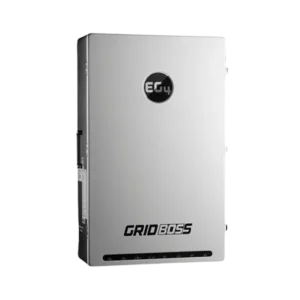
A Peek at the Wiring: What Connects to What
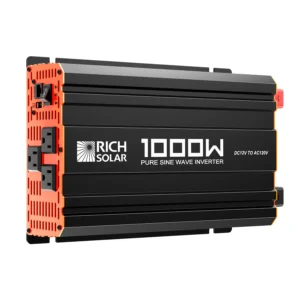
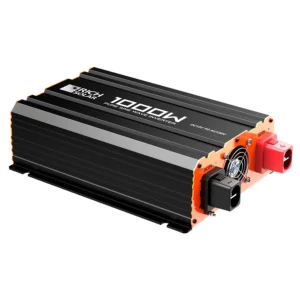
You don’t need to be an electrician, but understanding the basic solar inverter wiring flow helps demystify the system.
- DC Input: Cables from your solar panels (or strings) run into the inverter’s DC input terminals. These are often MC4 connectors designed for high voltage and weatherproofing. There are also DC switches and surge protection devices on this side.
- AC Output: Cables run from the inverter’s AC output terminals to your home’s main electrical panel (breaker box).
- Grid Connection: From the main panel, the AC power either flows into your home’s circuits or, if you’re producing more than you’re using, out to the grid through your utility meter.
- Communication: Ethernet, Wi-Fi, or cellular connections link the inverter to your router and the manufacturer’s monitoring platform.
The Rise of the Hybrid: Your Inverter as an Energy Manager
The biggest trend in residential solar right now is the hybrid inverter. As battery storage becomes more affordable and outages become more common, homeowners want the ability to store their own energy.
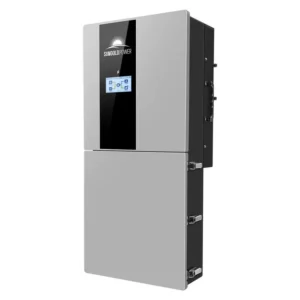
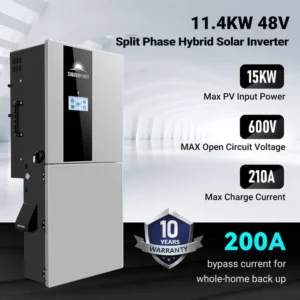
A hybrid inverter is essentially a string inverter with a built-in battery charger and transfer switch. It can simultaneously manage power from your solar panels, your battery, and the grid. It decides, in real time, whether to use solar power to run your home, charge the battery, or export to the grid.
During a blackout, it can disconnect from the grid and use your battery and solar panels to power essential circuits in your home. In 2026, hybrid inverters are the dominant choice for new installations where battery storage is planned or even likely in the future.
Complete Off-grid Solar System Package Supplier
| Name | Price Range | Discount |
|---|---|---|
| Sun Gold Power | $5,774 – $31,853.00 | 👉 Get Special Offers |
| Rich Solar | $7,999 – $21,599.99 | 👉 Get Special Offers |
| ShopSolarKits | $2,539 – $149,989.99 | 👉 Get Special Offers |
Conclusion: The Unsung Hero of Your Solar System
So, how do solar inverters work? They are far more than a simple converter. They are the intelligent, high-speed, safety-conscious heart of your solar installation. They boost, switch, filter, and synchronize power with incredible precision. They track the sun’s fickle energy to squeeze out every last watt, and they manage complex relationships between your panels, your battery, and the grid.
The next time you look at your solar system, don’t just look at the panels. Give a nod to the inverter—the silent, hardworking brain that turns sunlight into a liveable, breathable, binge-watchable reality.
FAQs About How Do Solar Inverters Work
While it’s technically possible to buy one, installing a solar inverter is a complex and dangerous job that involves high-voltage DC and AC wiring. It also almost always requires a permit and a grid connection agreement. It is strongly recommended to use a certified professional to ensure safety, code compliance, and warranty validity.
A typical string inverter lasts 10 to 15 years, while microinverters often come with 20- to 25-year warranties. The inverter is usually the first major component to need replacement in a solar system, so it's a factor to consider in your long-term budget.
If your inverter fails, your solar panels will stop producing usable power for your home. Most modern inverters have monitoring systems that will alert you (or your installer) to a fault. It’s a good idea to check your monitoring app regularly. Replacement or repair is usually straightforward but should be done by a professional.
Yes, if you want to add a battery, you have two main options. You can get a hybrid inverter, which is designed to manage both solar and batteries from the start. Or, if you already have a standard string inverter, you can add a separate AC-coupled battery system, which has its own built-in inverter.
A pure sine wave inverter produces a smooth, clean AC wave, identical to grid power. It’s required for sensitive electronics, motors, and grid-tied systems. A modified sine wave (or square wave) inverter is cheaper but produces a choppy wave that can cause buzzing, overheating, or malfunctions in some devices. For home solar, you always want a pure sine wave inverter.
You Might Also Like