

Solar Panel Installation Cost in 2026: What You’ll Actually Pay (No Fluff)
I spent the last few weeks pulling pricing data from installer marketplaces, government energy sources, and real homeowner quotes to answer one question as plainly as possible: what does solar panel installation cost actually look like right now, and how do you know if your quote is fair? Grab a coffee—we’re going deep, but I promise to keep it conversational.
What Is the Average Solar Panel Installation Cost in 2026?
Solar Panel Installation Cost in 2026: Here’s the short version: a typical home solar panel installation costs somewhere between $15,000 and $30,000 before any incentives, with most homeowners landing closer to $20,000–$22,000 for a mid-sized system. That works out to roughly $2.50 to $3.20 per watt installed, depending on your equipment and installer overhead.
Why such a wide range? Think of it like buying a car. A compact sedan and a loaded SUV are both “cars,” but the price tag tells two very different stories. Solar is the same: a bare-bones 6kW system on a simple roof and a 12kW system with battery backup on a steep, shaded roof are both “solar installations,” yet they can differ by tens of thousands of dollars.
Solar Panel Installation Cost Per Watt: The Number That Actually Matters
If you remember one thing from this article, make it this: stop comparing total dollar amounts between quotes and start comparing cost per watt. A $30,000 system isn’t automatically worse than a $20,000 one; it might just be bigger.
How Cost Per Watt Is Calculated
The math is simple: system cost divided by system size in watts equals your price per watt. So an 8,000-watt (8 kW) system quoted at $21,000 comes out to $2.63 per watt. Most solar shoppers should aim for a quote somewhere between $2.00 and $3.50 per watt. Below $2.00, ask hard questions about equipment quality. Above $4.50, you’re probably overpaying unless your roof is unusually complex.
Solar Panel Installation Cost by System Size
System size is the single biggest lever pulling your final bill up or down. Here’s roughly what homeowners are paying across common system sizes this year.
| System Size | Typical Installed Cost | Approx. Cost Per Watt | Homes It Usually Fits |
|---|---|---|---|
| 4kW | $10,000 – $13,500 | $2.60 – $3.40 | Small home, low usage |
| 6kW | $15,500 – $19,500 | $2.60 – $3.25 | Average 3-bed home |
| 8kW | $20,500 – $26,500 | $2.55 – $3.30 | Larger home, EV charging |
| 10kW | $25,000 – $32,500 | $2.50 – $3.25 | High usage, pool/AC-heavy |
| 12kW | $29,000 – $38,000 | $2.45 – $3.15 | Whole-home coverage + backup |
6kW Solar Panel Installation Cost
A 6kW system is the most common residential size in the U.S., and for good reason: it fits the average household’s electricity usage without going overboard. Expect to pay somewhere around $16,000 to $19,500 before incentives.
8kW Solar Panel Installation Cost
Step up to 8kW, and you’re usually looking at a household running central AC, an EV, or both. Costs typically land between $20,500 and $26,500, though larger systems often see a slightly better price per watt since fixed costs (permits, site visits, paperwork) get spread across more panels.
10kW+ Solar Panel Installation Cost
Once you’re pushing 10kW or more, you’re likely covering a big home or planning for whole-home battery backup down the road. These installations commonly run $25,000 to $38,000+, and honestly, this is where shopping multiple quotes matters most, because the dollar swings get large fast.
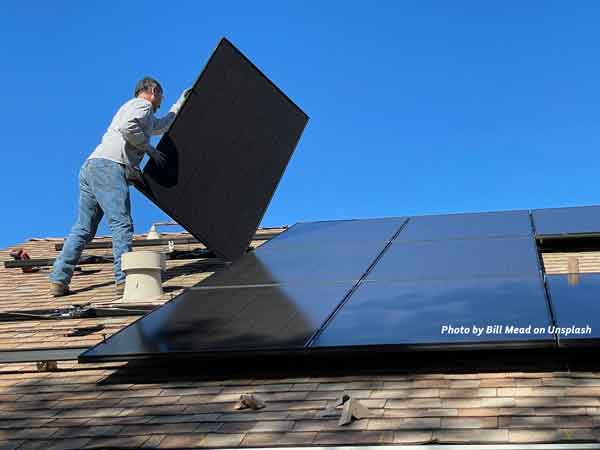
What Affects Solar Panel Installation Cost?
No two roofs are the same, and no two solar quotes should be either. Here’s what actually moves the needle on your final number.
System Size and Electricity Usage
This one’s obvious but worth stating: the more electricity you use, the bigger the system you need, and the higher your total solar panel installation cost climbs. Pull up twelve months of utility bills before you talk to any installer; it’s the single most useful number you can hand them.
Roof Type, Pitch, and Shading
A simple, south-facing asphalt roof with zero shade is an installer’s dream: fast to mount, easy to wire, and with minimal surprises. A steep metal roof, a roof cut up by dormers, or one shaded by mature trees? That adds labor hours, specialty mounting hardware, and sometimes tree-trimming costs. It’s like the difference between parallel parking on an empty street versus squeezing into a spot between two SUVs; both get the job done, but one takes a lot more finesse.
How Many Solar Panels Power Does It Take to Power a House?
Equipment Quality (Panels, Inverters, Racking)
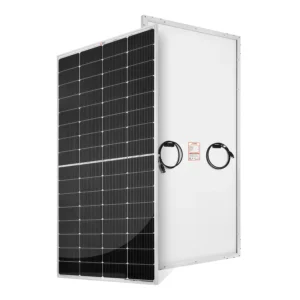
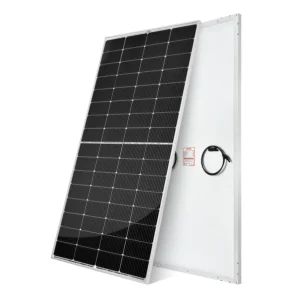
Not all solar panels are created equal. Premium monocrystalline panels with high efficiency ratings and 25-year warranties cost more upfront than budget polycrystalline options, but they typically produce more power per square foot and degrade more slowly. Your inverter choice (string inverter vs. microinverters) also swings price; microinverters cost more but handle partial shading far better.
Labor and Local Permitting Fees
Solar panels themselves are actually a fairly small slice of the pie; soft costs like labor, permitting, inspection fees, and installer overhead often make up more than half your total bill. Permitting fees alone vary wildly by city, and some jurisdictions are simply slower and pricier to work with than others.
Battery Storage Add-Ons
Adding a home battery for backup power is increasingly common, but it’s not cheap; expect to add $8,000 to $15,000+ depending on capacity. If backup power during outages matters to you, factor this into your solar panel installation cost estimate from the start rather than bolting it on later, since retrofitting can cost more than installing it alongside your panels.
Solar Panel Installation Cost by State
Where you live changes your solar panel installation cost more than most homeowners expect. Labor rates, permitting complexity, sun exposure, and state-level incentives all shift the math. States with strong solar markets (like California, Texas, and Arizona) tend to have more installer competition, which can actually push prices down slightly compared to states with fewer solar companies to choose from.
Meanwhile, states with higher labor costs or stricter permitting, like parts of the Northeast, often see higher per-watt pricing even before accounting for local rebates.
National Averages
- Average cost per watt: $2.80 to $2.88 before incentives.
- Typical 7 kW system: Around $19,950 total.
- Price range: $15,000 to $31,000 for standard residential setups.
Cheapest vs. Most Expensive States
- Lowest cost states: Arizona ($2.30/W), Nevada, New Mexico, and Texas ($2.35/W) feature the most competitive pricing.
- Highest cost states: Massachusetts ($3.60/W), Rhode Island, Connecticut, New York ($3.33/W), and Hawaii ($3.40/W) record the highest per-watt averages
Residential vs Commercial Solar Panel Installation Cost
Most of this guide focuses on residential solar panel installation cost, but it’s worth a quick detour if you’re weighing a home system against a business one. Commercial solar installation costs typically run lower per watt, often $1.00 to $2.50, simply because larger systems spread fixed costs (design, permitting, site visits) across far more panels.
Total commercial project costs are much higher in absolute dollars, frequently $125,000 to $500,000+, but the per-watt efficiency is better. If you’re a small business owner comparing notes with a neighbor’s home solar panel installation cost, don’t be surprised that your commercial quote looks cheaper per watt even though the total invoice is larger.
The Federal Solar Tax Credit Is Gone. Now what?
Here’s the part a lot of outdated articles still get wrong, so let’s be direct about it: the 30% federal residential solar tax credit (Section 25D) officially expired on December 31, 2025, under the One Big Beautiful Bill Act. If your system wasn’t placed in service by that date, there’s no federal credit to subtract from your solar panel installation cost anymore—the rate dropped to 0% for homeowner-owned systems starting in 2026, with no phase-down period.
That’s a real shift. For years, homeowners could mentally knock 30% off any quote. That shortcut doesn’t work anymore for cash or loan purchases. The one exception: third-party owned systems, like solar leases and power purchase agreements (PPAs), where the company that owns the system can still claim a commercial credit (Section 48E) and may pass some of that savings on to you through lower monthly rates.
State and Local Incentives Still on the Table
Don’t let the federal news scare you off entirely. Many states still offer their own rebates, property tax exemptions, and SREC (solar renewable energy credit) markets that can meaningfully offset your solar panel installation cost. Some utilities also offer battery storage rebates. It’s worth asking every installer you talk to exactly which state and local programs you currently qualify for. This changes constantly, so treat any number you find online as a starting point, not gospel.
Available State and Local Incentives
- State Tax Credits: States like New York, Massachusetts, New Mexico, and Hawaii provide state-level income tax credits that function similarly to past federal credits.
- Upfront Cash Rebates: Programs like New York’s NY-Sun or Oregon’s Solar + Storage rebate offer direct per-watt or flat-amount price reductions.
- Performance Payments & SRECs: Markets like Illinois (Illinois Shines) and Massachusetts (MA SMART) provide ongoing payouts or credits for every kilowatt-hour (kWh) your system generates.
- Property & Sales Tax Exemptions: Many local jurisdictions exempt solar equipment from state sales tax or prevent your property taxes from rising based on the added value of the solar installation.
- Third-Party Leases: Solar leases and Power Purchase Agreements (PPAs) may still indirectly leverage commercial federal credits through 2027, allowing providers to pass savings to homeowners via lower monthly rates.
Solar Panel Installation Cost: Cash vs Loan vs Lease
How you pay changes your effective cost dramatically, and it’s a decision worth slowing down for.
- Cash purchase: Lowest lifetime cost, full ownership, no interest—but the biggest upfront hit.
- Solar loan: Spreads the solar panel installation cost over time, but dealer fees and interest can add nearly 20% to the loan principal, and by the end of a typical 20-year term you may pay noticeably more than the sticker price.
- Lease or PPA: Little to no upfront cost, and you may still capture tax-credit-driven savings indirectly through lower rates—but you don’t own the system, savings are generally smaller, and it can complicate a future home sale.
Solar Panel Installation Cost Comparison Table
| Payment Method | Upfront Cost | Ownership | Long-Term Cost | Best For |
|---|---|---|---|---|
| Cash | Full amount | You own it. | Lowest overall | Homeowners with savings on hand |
| Solar Loan | Low/none | You own it. | Higher (interest + fees) | Spreading cost over time |
| Solar Lease/PPA | Very low | The company owns it. | Moderate, ongoing payments | Wanting savings with zero hassle |
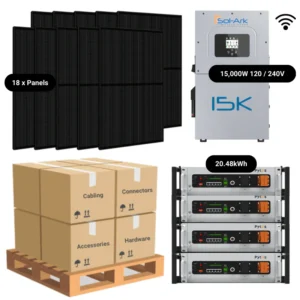
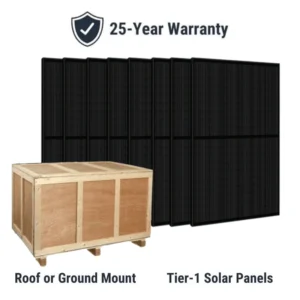
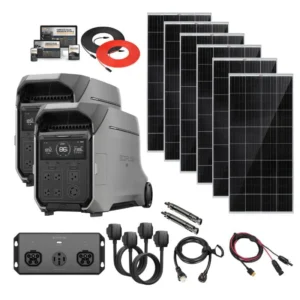
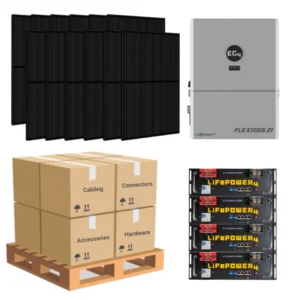
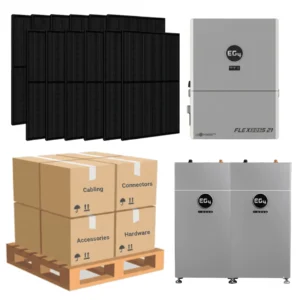
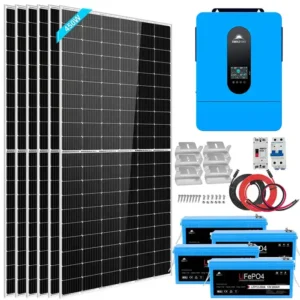
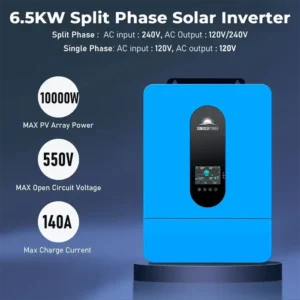
Complete Off-Grid Solar System Package Supplier
| Name | Price Range | Discount |
|---|---|---|
| Sun Gold Power | $5,774 – $31,853.00 | 👉 Get Special Offers |
| Rich Solar | $7,999 – $21,599.99 | 👉 Get Special Offers |
| ShopSolarKits | $2,539 – $149,989.99 | 👉 Get Special Offers |
Is Solar Panel Installation Worth the Cost in 2026?
Even without the federal credit, solar can still pencil out—it just depends more heavily on your local electricity rates than it used to. Ask yourself: what are you currently paying the utility company every single month, guaranteed, for the next 20-plus years? Solar flips that ongoing expense into a fixed, mostly upfront one.
Payback Period and Long-Term Savings
Most homeowners still see a payback period somewhere around 8 to 12 years, followed by close to a decade or more of largely free electricity, assuming the system is sized correctly and maintained. Over 25 years, total savings can range from tens of thousands of dollars up to well over $100,000 in high-electricity-cost states. Solar isn’t a get-rich-quick scheme, but it behaves a lot like prepaying two decades of electricity at today’s rate instead of tomorrow’s, and electricity rates rarely go down.
How to Lower Your Solar Panel Installation Cost
A few practical moves that genuinely move the needle:
- Get three to five quotes, not one. Pricing varies more between installers than most people expect.
- Right-size your system to your actual usage instead of over-buying “just in case.”
- Ask about state, utility, and local rebates before assuming the federal credit was your only option.
- Consider a slightly smaller system now with room to expand later, rather than overbuilding upfront.
- Compare cost per watt, not just total price, across every quote you receive.
Red Flags That Signal an Overpriced Solar Quote
If you see any of these, slow down before signing anything:
- A per-watt price above $4.50 without a genuinely complex roof to justify it
- No roof or shading analysis included in the quote
- Pressure to “sign today” for a discount that supposedly disappears tomorrow
- No projected annual energy production (kWh) number in writing
- Vague answers about panel brand, inverter type, or warranty length
How We Tested and Verified These Solar Panel Installation Costs
We didn’t just pull one number and call it a day. Here’s what went into this guide:
- Cross-referenced pricing data from multiple solar marketplaces and installer networks reporting real, quoted system prices in 2026
- Compared per-watt figures across different system sizes (4kW through 12kW+) to check for consistency
- Verified the current federal tax credit status directly against recent tax-policy coverage, since this is the detail most other guides get outdated on
- Checked state-level incentive language for accuracy rather than assuming programs are unchanged year over year
- Flagged and excluded any pricing sources that looked promotional or unusually skewed toward a single installer’s sales numbers
We treat this page as a living document; solar pricing shifts as incentives, tariffs, and labor markets shift, so we revisit these numbers regularly rather than publishing once and forgetting about it.
Why Some Solar Panel Installation Cost Guides Rank Higher Than Others
I also spent time looking at why the top-ranking pages for “solar panel installation cost” outrank everyone else. A few patterns stood out.
First, the highest-ranking guides use real calculators or interactive tools tied to a homeowner’s actual address, not just a flat national number, which keeps people on the page longer because the content feels personalized rather than generic.
Second, they update constantly; the pages that mention the expired federal tax credit accurately, with a clear date, clearly outrank ones still repeating outdated 30% off math.
Third, they break pricing down by system size and by state instead of giving one vague average, which matches how people actually search; nobody wants “the average,” they want “my number.” This guide borrows that same structure on purpose: current data, size-based breakdowns, and a direct answer instead of a sales pitch.
Conclusion
So, what’s the real answer to “how much does solar panel installation cost?” For most U.S. homeowners in 2026, budget somewhere between $15,000 and $30,000 before incentives, or roughly $2.50 to $3.20 per watt, with the federal tax credit no longer part of the equation for owned systems.
Your actual number depends on your roof, your usage, your equipment choices, and where you live, which is exactly why getting multiple real quotes beats trusting any single “average” you find online, including this one. Use the numbers here as your baseline, ask sharper questions, and you’ll walk into every solar conversation knowing whether the quote in front of you is fair.
FAQs About Solar Panel Installation Cost
Most homeowners pay between $15,000 and $30,000 before incentives, or roughly $2.50 to $3.20 per watt, depending on system size, roof complexity, and location.
No, not for homeowner-owned systems. The 30% residential credit (Section 25D) expired December 31, 2025. Only third-party owned leases and PPAs can still indirectly access a federal credit through the installer.
A 6kW system, the most common residential size, typically runs $15,500 to $19,500 before any state or local incentives.
Not usually. Battery storage is typically a separate add-on costing $8,000 to $15,000 or more, depending on capacity and brand.
Divide the total quote by the system size in watts. If you're paying more than roughly $4.50 per watt without a genuinely complex roof, or the installer hasn't provided a shading analysis and production estimate, treat it as a red flag.
You Might Also Like
About the Author
Reviewed by the BestEcoSolar Research Team—a group focused on tracking real-world solar equipment pricing, installer quotes, and U.S. energy policy changes. Our cost data is cross-checked against multiple installer marketplaces and updated whenever incentive rules or equipment pricing shift, most recently following the December 2025 expiration of the federal residential solar tax credit.
We don’t sell solar installations or accept payment from manufacturers to feature their equipment—our goal is an accurate number, not a lead-gen funnel.
Last updated: September 2026. Pricing reflects national averages and will vary by installer, roof, and location—always confirm current numbers with a licensed local installer before signing a contract.