


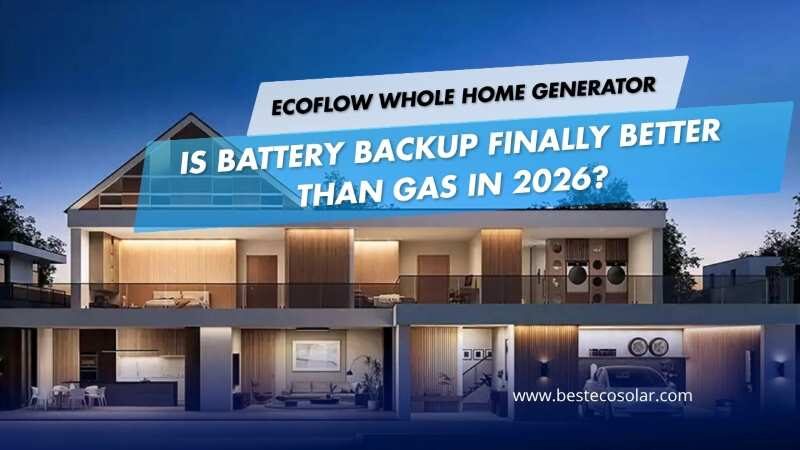
EcoFlow Whole Home Generator: Is Battery Backup Finally Better Than Gas in 2026?
Somewhere down the street, a neighbor’s gas generator roars to life like an angry lawnmower. Your house? Dead silent — and still fully powered. That’s the pitch behind the EcoFlow Whole Home Generator lineup, and honestly, it’s one of those “wait, that actually works?” products that deserves a closer look.
What Is an EcoFlow Whole Home Generator, Really?
EcoFlow Whole Home Generator – Let’s clear up the confusion first, because the name is a little misleading. An EcoFlow whole-home generator isn’t a generator in the traditional sense — there’s no engine, no exhaust pipe, no fuel tank. It’s a massive lithium battery system paired with a smart inverter and, usually, a smart electrical panel that connects directly to your home’s circuit breaker box.
Think of it less like a generator and more like a giant, house-sized power bank that quietly tops itself off from the grid or solar panels, then kicks in the instant your power drops. That handoff happens in under 20 milliseconds — faster than you can blink, and definitely faster than your refrigerator even notices.

Why Homeowners Are Ditching Gas Generators for EcoFlow
So why is everyone suddenly talking about this instead of just buying a Generac as their dad did?
1. No Fumes, No Fuel Runs, No Drama
A whole-home EcoFlow generator doesn’t burn anything. No propane tank to refill mid-hurricane, no trips to the gas station with five red plastic jugs in your trunk, and zero carbon monoxide risk. That alone makes it installable in places a combustion generator simply can’t go — garages, basements, even indoors in some configurations.
2. Quieter Than Your Refrigerator
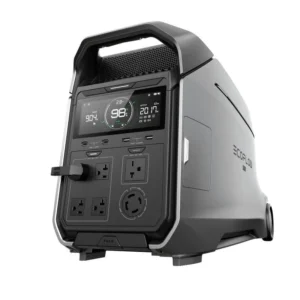
Here’s a fun stat: EcoFlow’s DELTA Pro Ultra X runs at under 30 decibels at half a meter. That’s quieter than a whisper. Compare that to a traditional standby generator, which can hit 65-70 decibels — loud enough to hear from two houses away. If you’ve got neighbours, or you just don’t want to feel like you’re camping next to a diesel truck during a blackout, that difference matters a lot more than spec sheets suggest.
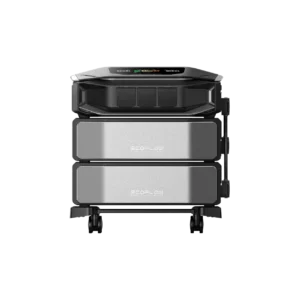

EcoFlow Whole Home Generator Lineup Explained
EcoFlow doesn’t sell just one whole-home unit — there’s a small family of products, and picking the wrong one is an easy (and expensive) mistake.
1. DELTA Pro Ultra: The Original Whole-Home Powerhouse
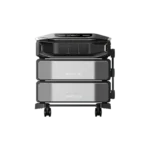
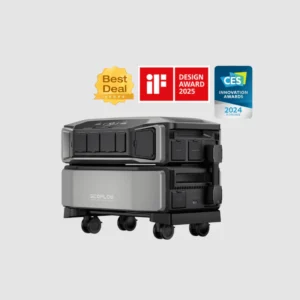
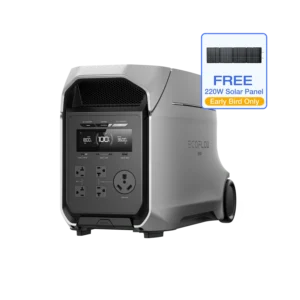
The original DELTA Pro Ultra started this category. Paired with three battery units, it delivers 18kWh of capacity and 7.2kW of continuous output, expandable up to 90kWh with additional batteries. It’s the system that proved a battery-based whole-home generator could genuinely replace fossil-fuel backup for most households.
2. DELTA Pro Ultra X: The 2026 Upgrade
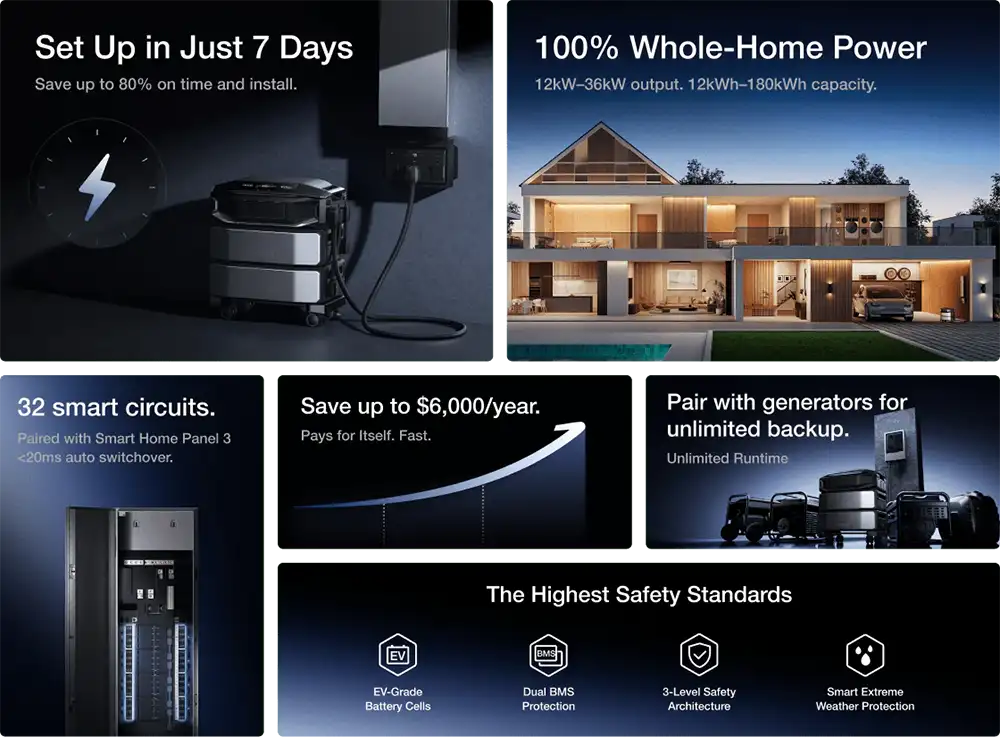
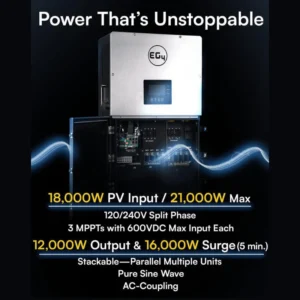
The newer DELTA Pro Ultra X takes things further. A single inverter now pushes 12kW continuously, and with three units running in parallel, the system scales all the way to 36kW output and a jaw-dropping 180kWh of storage. EcoFlow’s own installation claims put this whole home generator system in your walls within about 7 days — a fraction of the multi-week wait typical of a permitted standby generator install.
3. Smart Generator 4000: The Hybrid Backup Option
Not ready to go fully battery-only? The EcoFlow Smart Generator 4000 is a dual-fuel unit (gas or propane) that auto-starts and auto-stops to recharge a DELTA Pro 3 whenever reserves run low. It’s a clever middle ground: mostly silent battery power, with a small combustion backup that only wakes up when it’s genuinely needed.
Smart Whole-Home Backup
 |
 |
 |
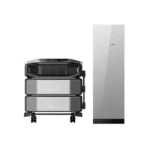 |
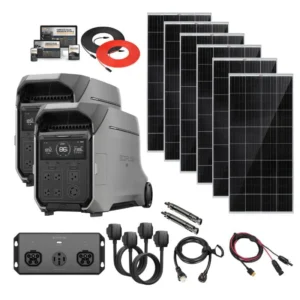
| EcoFlow DELTA Pro Ultra | EcoFlow DELTA Pro Ultra + Smart Home Panel 2 | EcoFlow DELTA Pro Ultra X Inverter + 2 × Smart Extra Battery | EcoFlow DELTA Pro Ultra X Inverter + 2 × Smart Extra Battery + Smart Home Panel 3 |
| 6 kWh Capacity | 7200W AC Output | 120V & 240V | 6 kWh Capacity | 7200W AC Output | 120V & 240V | 12kW Output | 12kWh Capacity | 10kW Solar Input | 12kW Output | 12kWh Capacity | 200A Panel | 32 Controllable Circuits |
| $4,199.00 |
$5,599.00 | $7,999.00 | $10,999.00 |
| Learn More | Learn More | Learn More | Learn More |
Flexible Home Backup
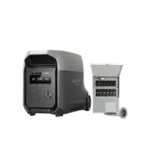 |
DELTA 3 Ultra Plus + Transfer Switch 306A1 -125V 30A | 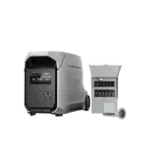 |
DELTA 3 Ultra + Transfer Switch 306A1 -125V 30A |
| 3072 Wh Capacity | 3600 W Output | 125 V 30 A | 3072 Wh Capacity | 3600 W Output | 125 V 30 A | ||
| $1,699.00 | $1,499.00 |
||
| Learn More | Learn More | ||
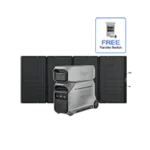 |
DELTA Pro 3 + DELTA Pro 3 Extra Battery + 400W Solar Panel + Transfer Switch | 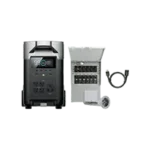 |
DELTA Pro + Transfer Switch |
| 8kWh Capacity | 4000W AC Output | 120V & 240V | 3.6 kWh Capacity | 3600 W AC Output | 120 V | ||
| $5,499.00 |
$2,149.00 |
||
| Learn More | Learn More |

How Much Power Does an EcoFlow Whole Home Generator Actually Deliver?
This is the question that actually matters. On paper, “whole home” sounds absolute, but real-world output depends entirely on which configuration you buy.
- Entry-level bundle (single inverter, 12-18 kWh): Comfortably runs fridges, freezers, lighting, Wi-Fi, a well pump, and a few smaller appliances for days.
- Mid-tier bundle (12 kW output, 18-60 kWh): Can handle a 5-ton AC unit without needing a soft starter, plus most kitchen appliances.
- Maxed-out configuration (36kW, 180 kWh): Genuinely rivals a whole-home combustion generator, capable of running an entire large house — HVAC, well pump, EV charger, and all — simultaneously.
The takeaway? A whole-home EcoFlow generator scales with your budget. You’re not locked into an all-or-nothing purchase like you often are with a traditional standby unit.
EcoFlow Whole Home Generator vs Traditional Standby Generators
Numbers help more than adjectives here, so let’s put them side by side.
| Feature | EcoFlow Whole Home Generator | Traditional Gas Standby Generator |
|---|---|---|
| Fuel source | None — battery, recharged via grid/solar | Natural gas, propane, or diesel |
| Noise level | Under 30 dB (near-silent) | 65-70+ dB (audible from a distance) |
| Switchover speed | Under 20ms (automatic transfer switch) | 10-30 seconds typical |
| Installation time | ~7 days (plug-and-play claim) | Several weeks, permits required |
| Maintenance | Minimal — no oil changes, no tune-ups | Regular oil changes, filter swaps |
| Emissions | Zero | Carbon monoxide, combustion byproducts |
| Runtime limit | Limited by battery capacity + recharge rate | Limited only by fuel supply |
| Typical cost (mid-tier) | ~$7,500-$8,500 | ~$10,000-$14,000 installed |
Notice the one real trade-off: a gas generator can, in theory, run forever as long as fuel keeps arriving. A battery-based whole home generator is capped by its stored capacity — though solar charging closes that gap considerably during extended outages.
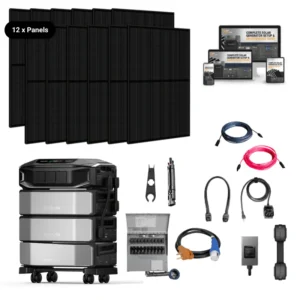
Installation: Is a Whole Home EcoFlow Generator Really a 7-Day Job?
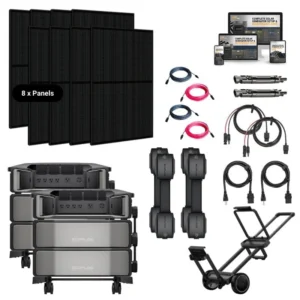
EcoFlow markets a 7-day install window, and compared to the multi-week permitting slog of a combustion standby generator, that’s a legitimate selling point. No underground gas line, no concrete pad, no noise ordinance headaches. Most installs involve mounting the inverter and battery stack (often on an included rolling cart, so it’s technically semi-portable), wiring in the smart panel, and configuring circuit priorities through the EcoFlow app.
That said, “plug and play” still usually means an electrician handles the panel connection. Don’t skip that step to save a few hundred dollars — you’re dealing with your home’s main electrical feed, not a toy.
Smart Home Panel 2 vs Smart Home Panel 3: What’s the Difference?
If you want your whole home EcoFlow generator to actually control which circuits get power during an outage, you need a smart panel.
- Smart Home Panel 2 handles up to 10-12 circuits and gives you basic automated load management — it decides what stays on based on priority settings you configure.
- Smart Home Panel 3 steps things up with AI-driven load balancing across as many as 32 circuits, plus better integration with rooftop solar and utility rate optimisation, so you’re not just surviving an outage but also saving money day-to-day.
If your goal is genuinely powering your whole house — not just the essentials — Panel 3 is worth the extra spend.
Charging Options for Your EcoFlow Whole Home Generator
One underrated strength of this system is flexibility in how it tops itself back up.
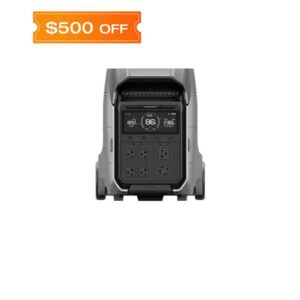
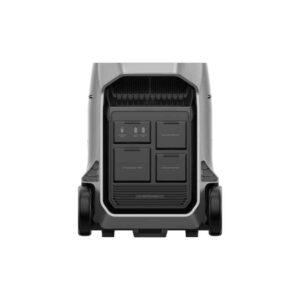
1. Solar Charging
Rooftop or portable solar panels can feed the battery directly, which is a big deal during multi-day outages when the grid itself is down. Depending on configuration, solar input can scale up to 10kW or more per inverter unit.
2. Grid Charging
Under normal conditions, the system trickle-charges (or fast-charges) from your home’s existing utility connection, topping off automatically so it’s always ready.
3. Generator Charging (FlowMaster Rectifier)
For extended outages, you can even recharge the battery using a small portable fuel generator through EcoFlow’s FlowMaster Rectifier accessory — essentially using a little gas power to extend a lot of battery power. It’s a hybrid approach that plays to the strengths of both technologies.
Real Cost of an EcoFlow Whole Home Generator System
Let’s talk numbers honestly, because “whole home generator” pricing varies wildly depending on scale.
A single-inverter bundle with roughly 18k Wh of capacity typically lands in the $7,500-$8,500 range, inclusive of the inverter, battery units, and rolling cart — before installation. Add a smart home panel and professional electrician labour, and you’re realistically looking at $9,000-$11,000 for a functional whole-home setup.
Scale up to a fully maxed configuration with 36 kW output and 180 kWh capacity, and costs climb into the $20,000+ territory — comparable to, or sometimes cheaper than, an equivalently sized combustion standby system once installation and long-term maintenance are factored in.
Compare that to a traditional Generac-style standby generator, which often runs $10,000-$14,000 installed, plus ongoing maintenance costs (oil changes, filters, annual service calls) that a battery system simply doesn’t have.
Who Actually Needs a Whole Home EcoFlow Generator?
Not everyone needs the maxed-out 36kW setup, and honestly, not everyone needs a whole home generator at all. Ask yourself:
- Do you lose power for multiple days at a time, more than once a year?
- Do you run medical equipment, a well pump, or a home office that can’t tolerate downtime?
- Are you already invested in solar, or planning to be?
- Does your neighbourhood restrict generator noise or fuel storage?
If you nodded along to two or more of those, an EcoFlow whole home generator setup is worth serious consideration. If your outages are rare and brief, a smaller portable power station might do the job for a fraction of the cost.
Common Mistakes When Sizing Your EcoFlow Whole Home Generator
I see the same errors pop up again and again when people shop for these systems:
- Underestimating HVAC draw. Central air conditioning, especially without a soft starter, needs serious surge capacity — don’t skimp on inverter output if you plan to run it.
- Ignoring recharge rate. A big battery is only useful if it refills fast enough between outages; check solar and AC charging speeds, not just capacity.
- Skipping the smart panel. Without one, you lose the automatic circuit prioritisation that makes “whole home” backup actually livable.
- Buying a single inverter when you need parallel units. If your home draws more than 7-12kW at peak, you’ll need to scale the system, not just add batteries.
Maintenance: What Does Owning One Actually Look Like?
This is where a whole home EcoFlow generator really separates itself from the gas-powered alternative. There’s no annual service contract, no oil to change, no spark plugs to swap. LFP (lithium iron phosphate) battery chemistry is rated for 3,500 to 4,000+ cycles before capacity noticeably degrades—that’s roughly a decade of typical daily use.
Basically, you set it up, keep the firmware updated through the app, and forget about it until you actually need it.
Is an EcoFlow Whole Home Generator Worth It in 2026?
Here’s my honest take: if you can stomach the upfront cost, a whole home EcoFlow generator is a genuinely smart long-term bet. It’s quieter, cleaner, and requires far less babysitting than a combustion standby unit — like trading a noisy old diesel truck for a Tesla that just quietly does its job.
The one caveat is runtime during extended, multi-week outages without sun or grid access, where a fuel-based system still has an edge. For the vast majority of homeowners dealing with storms, grid instability, or just wanting peace of mind, though, it checks nearly every box.
Final Thoughts
The EcoFlow whole home generator category is still young, but it’s maturing fast — faster than most of the traditional generator industry seems comfortable with. Between near-silent operation, rapid installation, solar compatibility, and genuinely competitive pricing against old-school standby units, it’s easy to see why so many homeowners are making the switch.
If reliable, clean backup power is on your radar for this year, this is a category worth putting real research time into before you buy.
EcoFlow Stores
| United Kingdom | Italy | France | Spain | Germany | Canada | Australia | USA |
|---|---|---|---|---|---|---|---|
 |
 |
 |
 |
 |
 |
 |
 |
| Visit Here | Visit Here | Visit Here | Visit Here | Visit Here | Visit Here | Visit Here | Visit Here |
FAQs About EcoFlow Whole Home Generator
It depends entirely on battery capacity and what you're running. An 18kWh system can typically cover essential circuits — fridge, lighting, Wi-Fi, well pump — for a couple of days. Larger 90-180kWh configurations, especially with solar recharging, can stretch backup power across a week or more.
Technically the hardware is designed to be plug-and-play, but connecting the smart panel to your home's main electrical feed almost always requires a licensed electrician, both for safety and to satisfy local code requirements.
Yes, though it depends on your inverter's output. The higher-end DELTA Pro Ultra X, for example, can run a 5-ton AC unit without a soft starter at 12kW output — smaller single-battery setups may need a soft starter or reduced load elsewhere.
Entry and mid-tier configurations often land close to or slightly below a comparably sized gas standby generator once installation is included, especially when you factor in the maintenance costs a combustion generator racks up over the years. Fully maxed-out battery systems can cost more upfront, though.
Absolutely — solar is one of its biggest advantages. Depending on the model, you can feed in anywhere from a few kilowatts up to 10kW+ per inverter unit, which is especially valuable during extended outages when grid power isn't an option.
You Might Also Like