Small Off-Grid Solar System Kit: The Complete Buyer’s Guide for 2026
So you’re thinking about grabbing a small off-grid solar system kit, huh? Maybe you’ve got a shed that’s begging for lights, a cabin with no utility pole in sight, or you just like the idea of making your own power without a middleman. Whatever brought you here, I’m going to walk you through everything you need to know about a small off-grid solar kit — no jargon overload, no sales pitch, just straight talk.
What Exactly Is a Small Off-Grid Solar System Kit?
Let’s start simple. A small off-grid solar system kit is basically a self-contained power station that doesn’t rely on your utility company at all. It’s “off-grid” because it’s disconnected from the public power grid, and it’s “small” because it’s designed for lighter loads — think a few lights, a fan, a laptop charger, maybe a mini-fridge.
Unlike massive whole-home solar arrays, a compact off-grid solar kit is built to be affordable, portable, and beginner-friendly. You won’t need an electrician’s license to wrap your head around it (though you might want one for the wiring, more on that later).
Why Go Small? The Real Benefits of a Compact Off-Grid Solar Kit
Why not just go big right out of the gate? Good question. Here’s the thing — bigger isn’t always better, especially when you’re just dipping your toes into solar independence.
1. Perfect for Cabins, Sheds, and Tiny Homes
A small off-grid solar kit shines in situations where you don’t need a ton of power. Cabins, garden sheds, chicken coops, tiny homes, and hunting blinds are all perfect candidates. You don’t need a football-field’s worth of panels to run a light bulb and charge a phone.
2. Budget-Friendly Entry Into Solar Independence
Let’s be real: full home solar setups can run into the tens of thousands of dollars. A small off-grid solar system kit, on the other hand, might cost you a few hundred bucks. It’s like test-driving a car before you commit to buying one — you get to experience solar living without draining your savings account.
Key Components of Every Small Off-Grid Solar System Kit
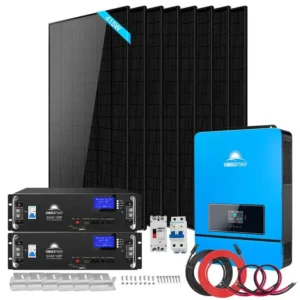
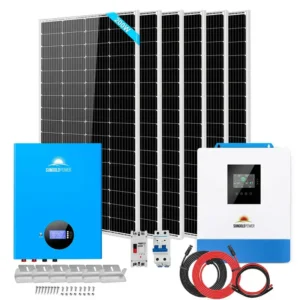
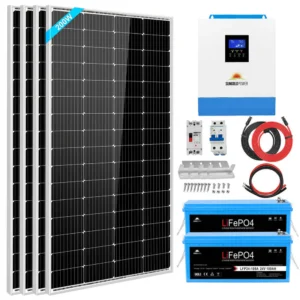
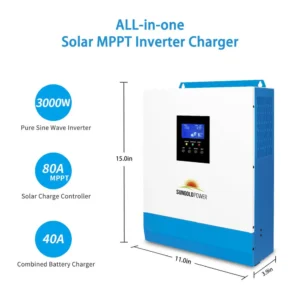
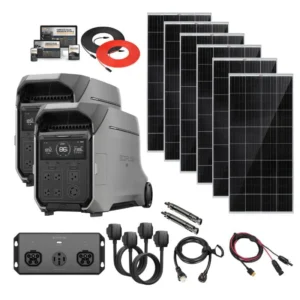
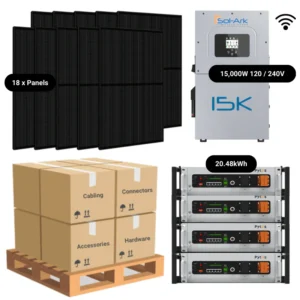
Every off-grid solar power kit, no matter how small, is built from the same core pieces. Once you understand these, the whole system stops feeling like a mystery.
- Solar Panels
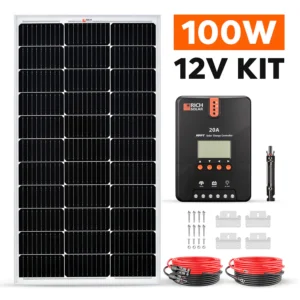
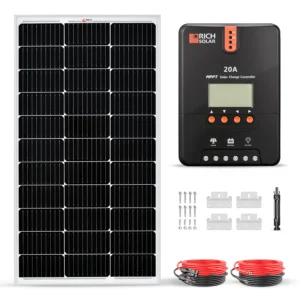
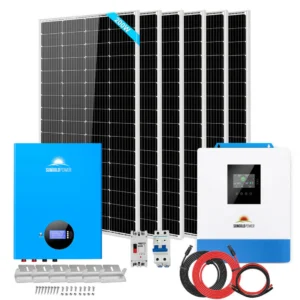
These are the workhorses. They soak up sunlight and convert it into DC electricity. Most small kits come with panels ranging from 100W to 400W. - Charge Controller
This little device is the traffic cop of your system. It regulates how much power flows from your panels into your battery so you don’t overcharge (and fry) your battery bank. - Battery Bank
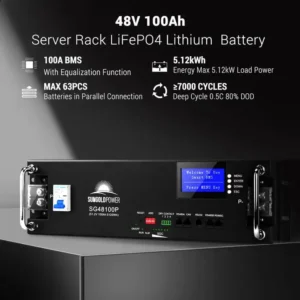
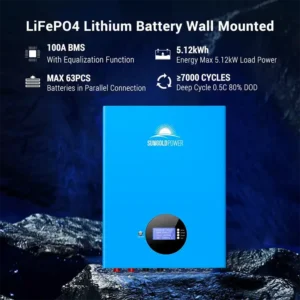
This is where your energy gets stored for later use — like a water tank, except it holds electrons instead of water. Without a battery, you’d only have power when the sun’s actually shining. - Inverter
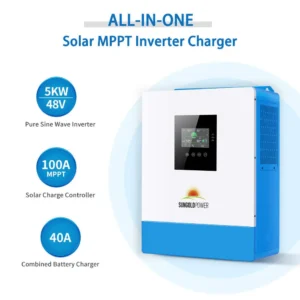
Solar panels and batteries produce DC power, but most household gadgets run on AC power. The inverter converts DC to AC so you can plug in your everyday devices. - Wiring and Mounting Hardware
Cables, connectors, and mounting brackets round out the kit. They’re not glamorous, but skimp on these, and you’ll regret it fast.
How Much Power Does a Small Off-Grid Solar Kit Actually Deliver?
Here’s where people get tripped up. A small off-grid solar system kit isn’t going to run your central air conditioner or an electric oven — and that’s okay, because it’s not designed to.
Realistically, a 100W to 400W kit paired with a modest battery bank can handle:
- LED lighting
- Phone and laptop charging
- A small fan
- A Wi-Fi router
- A mini-fridge (for a few hours a day)
If you’re picturing running a whole house on this setup, you’ll want to size up — but for light, essential loads, it’s more than capable.
Sizing Your Small Off-Grid Solar System Kit: A Simple Formula
Don’t worry, you don’t need to be an engineer for this. Just add up the watt-hours your devices use per day, then match that to your panel wattage and battery capacity.
A rough rule of thumb: multiply your panel wattage by 4-5 (average peak sun hours) to estimate daily watt-hours produced. A 200W panel might give you roughly 800-1000Wh on a sunny day. Compare that number to what your devices actually need, and you’ll know if your small solar kit for off-grid living is properly sized — or if you need to bump it up a notch.
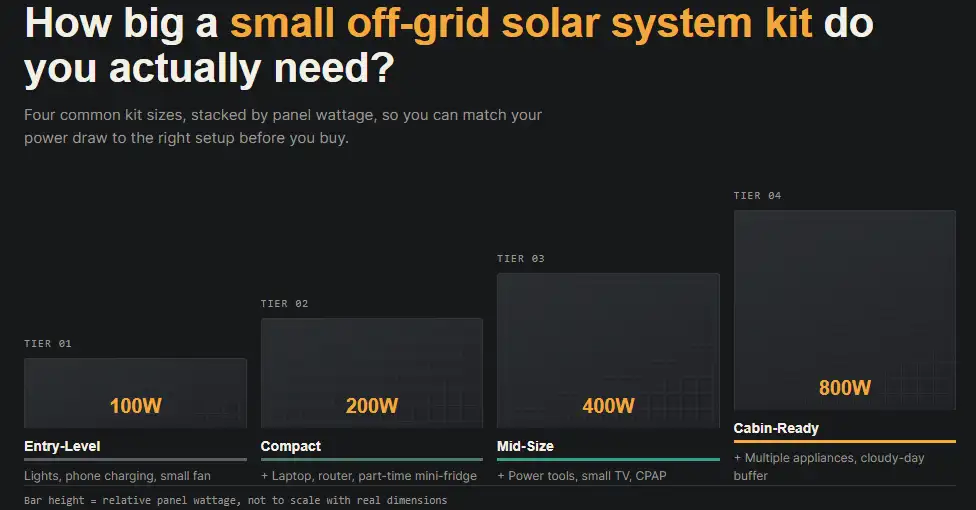
Small Off-Grid Solar System Kit Comparison Table
Here’s a side-by-side look at how different kit sizes stack up, so you can see where your needs might land.
| Kit Size | Panel Wattage | Typical Battery Capacity | What It Can Run | Rough Price Range |
|---|---|---|---|---|
| Entry-Level | 100W | 50-100Ah | Lights, phone charging, small fan | $150-$350 |
| Compact | 200W | 100-200Ah | Above + laptop, Wi-Fi router, mini-fridge (part-time) | $350-$700 |
| Mid-Size | 400W | 200-300Ah | Above + power tools, small TV, CPAP machine | $700-$1,400 |
| Cabin-Ready | 800W | 300-400Ah lithium | Above + multiple appliances, extended cloudy-day backup | $1,400-$2,800 |
This table gives you a ballpark, but always check the specific runtime numbers a manufacturer provides for your exact appliances.
Small Off-Grid Solar System Kit Products
| Model | System Wattage | Battery Type | Key Features | |
|---|---|---|---|---|
| 1200 Watt RV Solar Kit | 1200 Watt Solar Input | Compatible with various deep-cycle battery options | Automatically detects 12V/24V/36V/48V DC system voltages. | RV Solar Kits |
| 800 Watt RV Solar Kit | 800 Watt Solar Input | Compatible with various deep-cycle battery options | Fast and easy installation thanks to 14 pre-drilled holes; compatible with standard Z-brackets, ground mounts, side pole mounts, and tilt mounts. | RV Solar Kits |
| 600 Watt RV Solar Kit | 600 Watt Solar Input | 100AH 12V Lithium batteries | Built with strong, high-transmission “anti-reflective” coated tempered glass and an anodized aluminum frame. | RV Solar Kits |
| 400 Watt RV Solar Kit | 400 Watt Solar Input | 200AH 12V Lithium battery | High-quality components that work seamlessly together. | RV Solar Kits |
| BLUETTI RVSolar 48V System | Up to 3,000W Solar Input | Expandable B4810 48V LiFePO4 (up to 122kWh total!) | 5-in-1 power hub, 30-minute install, IP65-rated batteries, AI diagnostics. The futuristic, luxury option. | Tech enthusiasts and luxury RV owners want maximum power and seamless integration. |
Lithium vs Lead-Acid Batteries in a Small Off-Grid Solar Kit
This is one of those decisions that seems small but makes a big difference down the road. Lead-acid batteries are cheaper upfront, but they’re heavier, need more maintenance, and don’t like being drained below 50%. Lithium batteries (usually LiFePO4) cost more initially but last years longer, weigh less, and let you use nearly all their stored capacity.
If your small off-grid solar system kit is going somewhere you’ll visit occasionally — like a hunting cabin — lithium’s low-maintenance nature is worth the extra cost. If budget is tight and you don’t mind a bit of upkeep, lead-acid still gets the job done.
Where to Install Your Small Off-Grid Solar System Kit
Location matters just as much as the equipment itself. A great small off-grid solar kit in the wrong spot is like putting a fan in a closet — it just won’t do much good.
- RVs and Van Life Setups
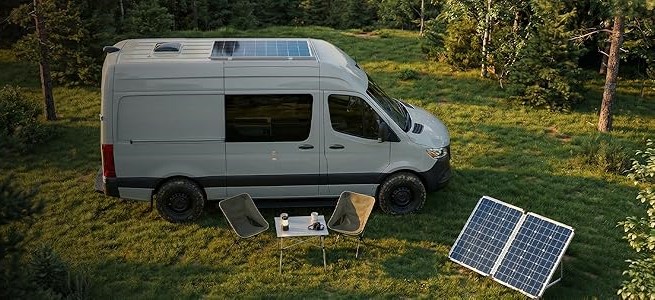
Rooftop panels paired with a compact off-grid solar kit are practically the backbone of modern van life. You get power wherever you park, without hunting for a campground with hookups. - Backyard Sheds and Workshops
Running an extension cord across the yard is a hassle and honestly a bit of a tripping hazard. A small solar kit mounted on the shed roof solves that problem instantly. - Remote Cabins
If you’re far from utility lines, a small off-grid solar system kit might be your only realistic option for electricity — short of running a noisy, gas-guzzling generator 24/7.
Common Mistakes People Make With Off-Grid Solar Kits
I’ve seen these mistakes pop up again and again, so let’s help you dodge them:
- Underestimating power needs. People forget how quickly small loads add up.
- Ignoring shading. Even partial shade on one panel can tank your output.
- Ridiculously undersized battery banks. A great panel setup means nothing if your battery can’t hold the charge.
- Skipping the charge controller upgrade. Cheap PWM controllers are less efficient than MPPT ones, especially as your system grows.
- Forgetting about seasonal sun changes. Winter sun angles and shorter days mean less output — plan accordingly.
Panel Wattage × 4-5 peak sun hours = Approx. daily Watt-hours produced
How to Install a Small Off-Grid Solar System Kit Yourself
Good news: most small off-grid solar kits are designed with DIYers in mind. Here’s the general flow:
- Mount your panels facing true south (in the Northern Hemisphere) at an angle close to your latitude.
- Connect panels to the charge controller.
- Wire the charge controller to your battery bank.
- Connect the inverter to the battery for AC power.
- Test everything before you rely on it for real use.
Most kits include clear instructions, and honestly, if you can assemble flat-pack furniture, you can probably handle this. That said, if you’re not comfortable with electrical work, it’s worth having someone experienced double-check your connections.
Maintenance Tips to Keep Your Small Solar Kit Running for Years
A small off-grid solar system kit isn’t a “set it and forget it” appliance, but it’s low-maintenance compared to a generator. Wipe down your panels every few months to clear dust and debris, check your wiring connections for corrosion, and keep an eye on your battery’s charge cycles. Treat it well, and it’ll return the favor for years.
Small Off-Grid Solar System Kit vs Grid-Tied Solar: What’s the Difference?
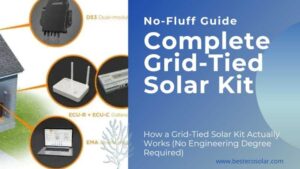
Grid-tied systems stay connected to the public utility grid and often use net metering to sell excess power back. A small off-grid solar system kit does the opposite — it’s fully independent, storing its own power in batteries rather than relying on the grid as a backup.
If you live somewhere with no grid access, or you simply want total energy independence, off-grid is the clear winner. If you’re in a suburb with reliable utility service and just want to lower your bill, grid-tied might make more financial sense.
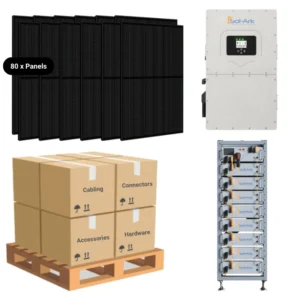
Complete Home Solar System Package Supplier
| Name | Price Range | Discount |
|---|---|---|
| Sun Gold Power | $5,774 – $31,853.00 | 👉 Get Special Offers |
| Rich Solar | $7,999 – $25,999.9 | 👉 Get Special Offers |
| ShopSolarKits | $2,539 – $149,989.99 | 👉 Get Special Offers |
Is a Small Off-Grid Solar System Kit Worth It in 2026?
With solar panel prices continuing to drop and lithium battery technology getting better every year, a small off-grid solar system kit is more accessible than ever. Whether you’re prepping for emergencies, building a tiny home, or just want backup power for outages, the value proposition keeps getting stronger. It’s not a magic bullet for every situation, but for the right use case, it’s one of the smartest small investments you can make in energy.
Final Thoughts
A small off-grid solar system kit isn’t about replacing your entire power bill overnight — it’s about giving you freedom in the spots where the grid doesn’t reach, or simply doesn’t need to. Whether you’re powering a shed, a cabin, or a camper van, the right small solar kit can quietly transform how you think about electricity. Start small, size it right, and you might just find yourself wanting to expand your setup down the road.
FAQs About Small Off-Grid Solar System Kit
With proper care, solar panels themselves can last 20-25 years, while lithium batteries typically last 8-15 years depending on usage. The charge controller and inverter usually need replacing sooner, around the 10-year mark.
A small kit can run an energy-efficient mini-fridge, especially one designed for RVs or off-grid use. A full-size fridge usually needs a larger system with more battery capacity.
It depends on your location and whether the installation is permanent. Many portable or shed-based small solar kits don't require permits, but it's always worth checking local codes before you start.
Starting with a 100W panel, a basic charge controller, and a single deep-cycle battery is usually the most budget-friendly entry point, often under $300.
This depends entirely on your battery capacity. A well-sized system with a healthy battery bank can typically get you through 1-3 cloudy days before you'll need to conserve power or find a backup charging source.
You Might Also Like