

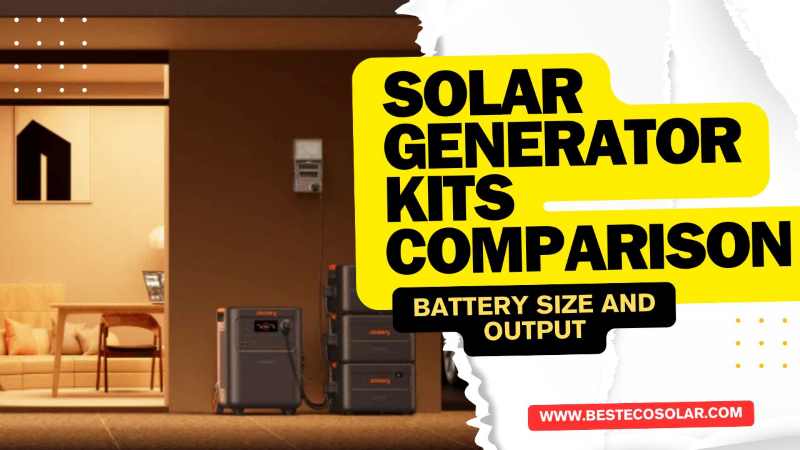
Solar Generator Kits Compared: How Battery Size and Power Output Actually Decide What You Need
So you’re shopping for a solar generator kit, and every single listing throws numbers at you like confetti. 500Wh here, 3600W there, 30,000W solar input over there. It’s a lot, right? Here’s the truth: once you understand just two numbers — battery size (measured in watt-hours, or Wh) and power output (measured in watts, or W) — the rest of the shopping trip gets a whole lot easier.
Why Battery Size and Power Output Are the Only Numbers That Matter
Solar Generator Kits Comparison – Think of a solar generator kit like a water tank hooked up to a garden hose. The tank size is your battery capacity — how much water (energy) you can store before it runs dry. The hose width is your power output — how fast that water can flow out at any given moment.
A huge tank with a skinny hose fills your bucket slowly. A tiny tank with a fat hose empties fast but doesn’t last. Solar generator kits work the exact same way, and most buying mistakes happen because people fixate on one number while ignoring the other.
1. Battery Size (Wh) Tells You How Long You Can Run Things
Watt-hours measure stored energy. A 1,000Wh battery can theoretically run a 100-watt device for 10 hours, or a 1,000-watt device for one hour, minus some loss to inverter inefficiency. Bigger battery capacity means longer runtime between charges — great for overnight camping, multi-day blackouts, or off-grid cabins.
2. Power Output (W) Tells You What You Can Actually Plug In
Continuous output wattage is the ceiling on what your solar generator kit can power at once. A microwave, a space heater, or a well pump draws a lot of watts instantly. If your kit’s output rating is lower than the appliance’s startup draw, it simply won’t turn on — no matter how full the battery is.
This is why a small solar generator kit with high battery capacity can still fail to run a hair dryer.
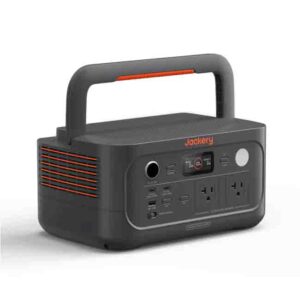
Solar Generator Kits Comparison: Small Solar Generator Kits Under 1,000Wh
These are your grab-and-go units, and they’re honestly kind of perfect for weekend warriors. Compact solar generator kits in this bracket typically run from roughly 300Wh up to just under 1,000Wh, paired with output ratings between 300W and 1,200W.
1. Who Small-Capacity Solar Generator Kits Are Really For
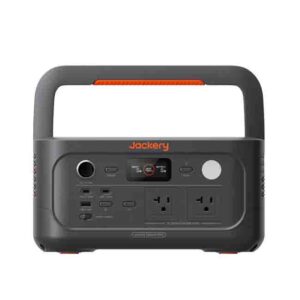
If you’re charging phones, running a CPAP machine overnight, powering a mini-fridge on a road trip, or keeping a laptop alive during a blackout, this tier covers you. The Jackery Explorer 600 v2 kit, for example, pairs a 640Wh battery with a 100W foldable panel — a genuinely solid value pick for light outdoor use.
Units like this trade raw muscle for something just as valuable: they’re light enough that you won’t throw your back out carrying them to the tailgate.
2. The Tradeoff Nobody Mentions
Small solar generator kits recharge fast from the wall, but recharging purely from sunlight can be slow, since they usually accept smaller panels. If solar-only charging matters to you (say, you’re off-grid for a week), pay close attention to the max solar input wattage, not just the battery size.

Mid-Size Solar Generator Kits: 1,000Wh to 2,500Wh Battery Capacity
This is the sweet spot for most households, and honestly, it’s where the bulk of solar generator kit sales happen — for good reason.
1. Real Numbers From This Category
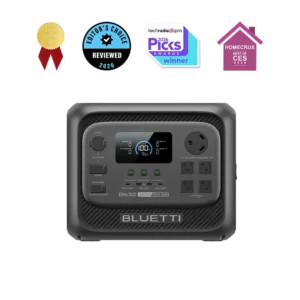
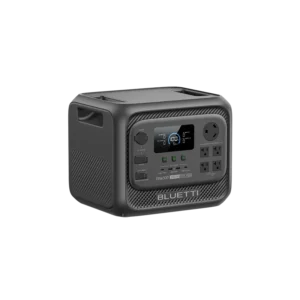
The EcoFlow DELTA 3 Max Plus pairs a 2048Wh LiFePO4 battery with fast charging, edging out several rivals on both capacity and recharge speed. The BLUETTI AC200P L leans into rapid solar recharge, playing nicely with a 200W panel setup. Meanwhile, Jackery Explorer 2000 v2 sits in similar territory, offering flexible outlet configurations that suit RV owners and home-backup shoppers alike.
2. What You Can Actually Run
At 1,500 to 2,200 watts of continuous output, mid-size solar generator kits handle a refrigerator, a window AC unit, several lights, and device charging simultaneously — the core of what most people mean when they say “keep the essentials running” during an outage. Just don’t expect to run a central air conditioner or an electric range off one of these; that’s a different weight class entirely.
Large Solar Generator Kits: 3,000Wh to 4,000Wh Battery Capacity
Now we’re getting into serious backup-power territory, the kind of setup you’d lean on for a multi-day grid outage or a small home office that simply cannot go dark.
1. Standout Models in This Bracket
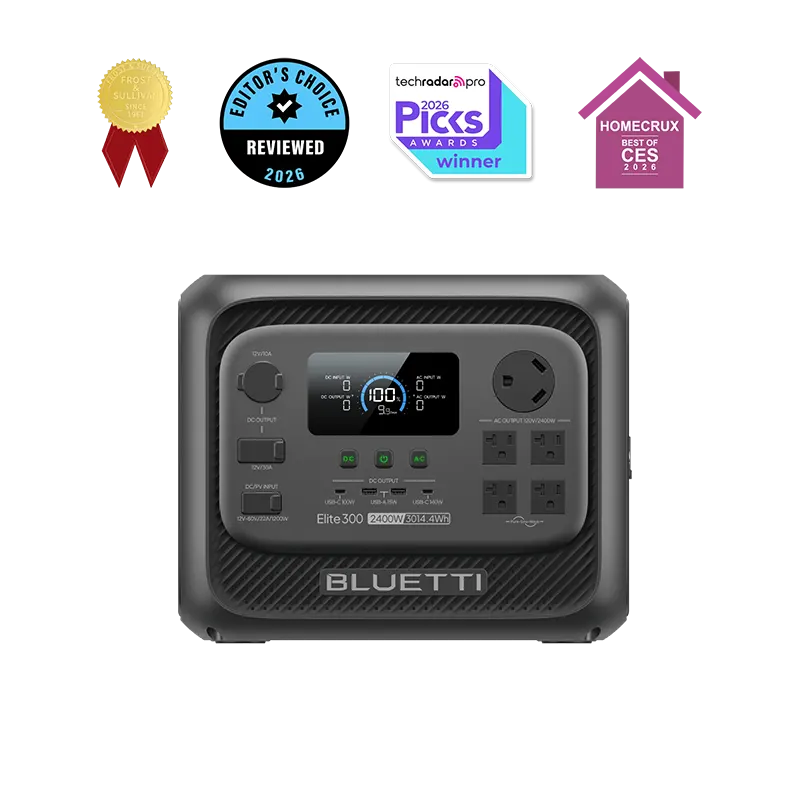
The Jackery HomePower 3600 Plus delivers a 3,600W continuous output paired with a hefty 3,584Wh battery, making it a genuinely strong contender for whole-room backup power. On the BLUETTI side, the Elite 300 impressed testers with a clean, user-friendly interface and sturdy build quality in a mid-to-large frame, while the larger 3,600W-class Bluetti unit in this range brought serious capacity alongside app-based monitoring that actually works.
2. Where Large-Capacity Kits Shine (and Where They Don’t)
A large battery capacity solar generator kit is happiest parked in a garage, closet, or van build — not stuffed into a backpack. Weight climbs to 50-90+ pounds, so portability takes a hit. But in exchange, you get enough headroom to run a fridge, a couple of fans, some lighting, and a laptop all day long without sweating the math.
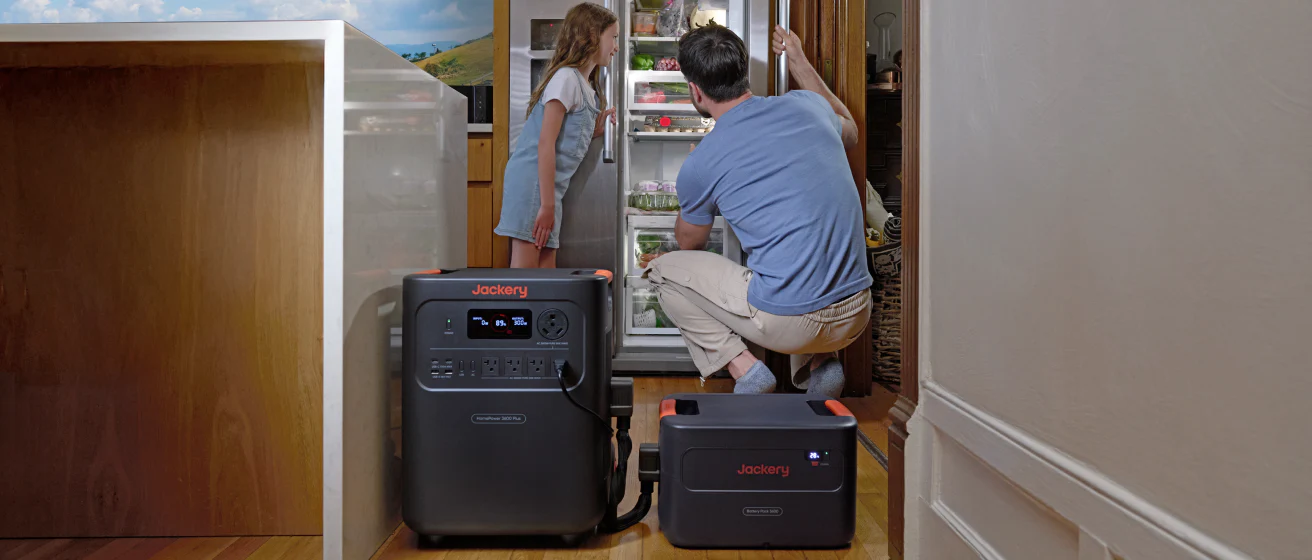
Expandable and Whole-Home Solar Generator Kits: 3,800Wh and Beyond
If you’ve ever wished your solar generator kit could just… grow with you, this category exists specifically for that.
1. Modular Battery Capacity Changes the Game
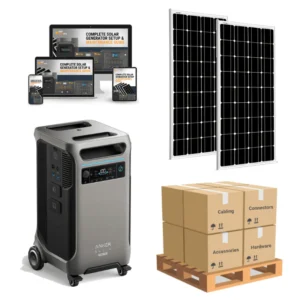
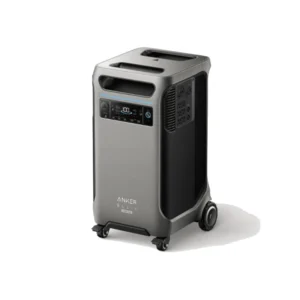
The Anker SOLIX F3800 Plus starts at 3,840Wh but scales to 26.9kWh with add-on batteries, and up to 53.8kWh when you link two full units together. BLUETTI’s Apex 300 takes a similar modular approach, with output wattage that scales alongside storage, plus a solar input system that can be boosted using extra solar-charging modules, pushing total input capacity into the tens of thousands of watts when fully chained.
2. Solar Input Capacity Deserves Its Own Spotlight Here
For whole-home solar generator kits, solar input matters just as much as battery size and output. BLUETTI’s Apex 300 ships with 1,200W of standard dual solar input, and adding a supplemental solar-charging accessory can push that input capacity up to 4,000W on its own — and considerably higher when multiple units are chained. That’s the difference between fully recharging overnight versus waiting three cloudy days for a full battery.
Complete Off-Grid Solar Kits: When You Need Panels, Not Just a Power Station
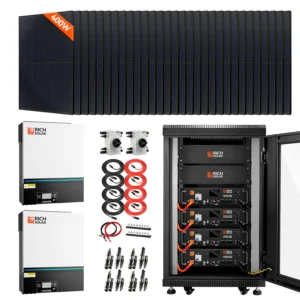
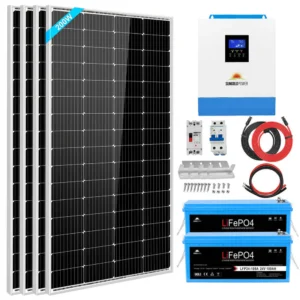
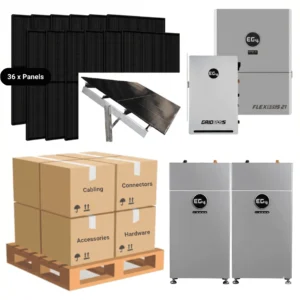
Portable solar generator kits are one thing; a complete off-grid solar kit — panels, lithium battery, charge controller, and inverter working as one system — is a different animal entirely, usually built for cabins, tiny homes, or full-time off-grid living.
1. Sizing an Off-Grid Kit to Your Actual Load
A complete 3kW off-grid solar kit, including panels and a lithium battery bank, generally starts around the mid-four-figure range today, a meaningful drop from where pricing sat just a few years back. Pricing and sizing should never be based on national averages alone, either — solar output can swing 30 to 40 percent depending on where you actually live, so a system sized for Phoenix sunshine will underperform if you install it in Seattle.
2. The Inverter Detail Everyone Skips
Pure sine wave inverters are non-negotiable if you’re running anything with a motor or compressor — think well pumps, refrigerators, or CPAP machines. A modified sine wave inverter might power a lamp just fine but can damage sensitive electronics over time, so check this spec before you check the price tag.
Solar Generator Kits Comparison Table by Battery Size and Output
Here’s the side-by-side breakdown, because sometimes you just want the numbers in one place.
| Solar Generator Kit | Battery Capacity | Continuous Output | Solar Input (Max) | Best For |
|---|---|---|---|---|
| Jackery Explorer 600 v2 | 640Wh | ~500W | 200W | Light camping, quick device charging |
| EcoFlow DELTA 3 Max Plus | 2048Wh | ~3000W | 1000W | Weekend trips, emergency kits |
| BLUETTI AC200P L | ~2,304Wh | 2,400W | 2,400W Turbo Charging | RV backup, home essentials |
| Jackery Explorer 2000 v2 | ~2042 Wh | 2200W | Moderate-high | Home backup, RV power |
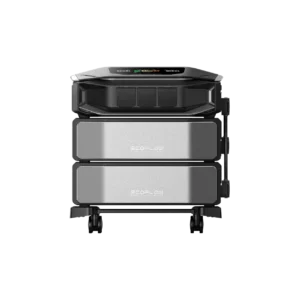
| EcoFlow DELTA Pro 3 | 4096Wh (expandable to 48kWh) | 4000W (8000W surge) | 2600W | Scalable home backup systems |
| Jackery HomePower 3600 Plus | 3,584Wh | 3,600W | High | Multi-day outages, garage/shop backup |
| Anker SOLIX F3800 Plus | 3,840Wh (expandable to 53.8kWh) | High-capacity, whole-home rated | High | Whole-home backup |
| BLUETTI Apex 300 | Scalable, multi-unit | Scalable output | Up to 4,000W (30,000W chained) | Serious off-grid, full off-grid homesteads |
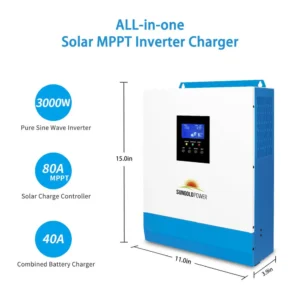
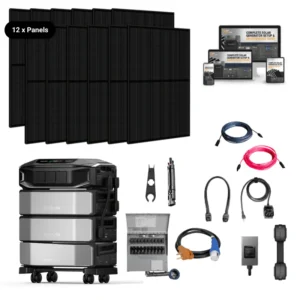
| Complete 3kW Off-Grid Kit | Panel + lithium bank | 3,000W inverter class | Panel-dependent | Cabins, tiny homes, full off-grid living |

How to Actually Choose a Solar Generator Kit Based on Battery Size and Output
Solar Generator Kits Comparison – Ask yourself one question first: are you solving a runtime problem or a power problem? If your devices are small but you need them running for days, prioritize battery capacity over raw output. If you need to run one power-hungry appliance for a short burst, output wattage matters more than a giant battery sitting mostly idle.
1. Matching Wattage to Your Appliances
Add up the running watts of everything you’d realistically use at the same time, then pad that number by roughly 20 to 30 percent for a safety margin and appliance startup surges. That padded number is your minimum output requirement — not the battery size, the output.
2. Matching Battery Size to Your Timeline
Divide your total daily watt-hour usage by the battery’s rated capacity (accounting for usable depth of discharge, since not every watt-hour on the label is actually usable). That tells you how many days a fully charged solar generator kit can realistically carry you before you need sun, a wall outlet, or a generator to top it back up.
Battery Chemistry: The Quiet Factor Behind Long-Term Value
Almost every serious solar generator kit today uses LiFePO4 (lithium iron phosphate) battery cells instead of older lithium-ion chemistry, and that switch matters more than most buyers realize. LiFePO4 packs typically rate for 3,000 to 6,000+ charge cycles before meaningful capacity loss, compared to the 500 to 1,000 cycles you’d get from older lithium-ion setups.
In plain terms, that’s the difference between replacing your solar generator kit’s battery in year three versus still using the original pack a decade later.

Portability vs. Power: The Never-Ending Tug of War
Every solar generator kit lives somewhere on a spectrum between “backpack-friendly” and “basically furniture.” A 14-pound unit with a carry handle is wonderful until you need it to run a space heater all night; a 90-pound unit with wheels is a beast until you need to haul it up three flights of stairs during a storm. Know which side of that spectrum your actual use case sits on before falling for a spec sheet.
Conclusion on Choosing the Right Solar Generator Kit
Solar Generator Kits Comparison – At the end of the day, picking the right solar generator kit isn’t about chasing the biggest number on the box — it’s about matching battery size and power output to how you actually live. A weekend camper doesn’t need a 4,000Wh unit gathering dust in a closet, and a homeowner bracing for hurricane season shouldn’t settle for a 600Wh kit that dies before the storm even peaks.
Map out your appliances, be honest about your runtime needs, keep an eye on solar input capacity if you’ll be charging off-grid, and let those numbers — not marketing copy — make the final call. Do that, and whichever solar generator kit you land on will actually earn its keep when you need it most.
FAQs About Solar Generator Kits
For most households running a fridge, some lights, and device charging, aim for at least 3,000Wh to 3,800Wh of battery capacity, or a smaller kit paired with a solar panel setup that can realistically recharge daily.
Not necessarily. Output and battery capacity are independent specs — you can find compact solar generator kits with surprisingly high surge output but modest battery size, so always check both numbers separately.
Yes, most mid-size kits rated at 1,500W or higher can run a standard refrigerator, though startup surge (often 2-3 times the running wattage) is the number that actually matters here.
Only up to the point your solar generator kit's max solar input allows. Pairing an oversized panel with a kit that only accepts 200W of solar input wastes the panel's extra capacity.
Most reputable LiFePO4-based solar generator kits are rated for 3,000 to 6,000+ full charge cycles, which typically translates to a decade or more of regular use before capacity noticeably degrades.
You Might Also Like