



EcoFlow Delta Pro Ultra Extra Battery: The Real-World Guide to Scaling Your Whole-Home Backup
Ever stared at your power bill during a blackout and thought, “I wish I just had more battery”? That’s exactly the itch the EcoFlow Delta Pro Ultra Extra Battery was built to scratch. If you already own the Delta Pro Ultra inverter, or you’re eyeing one, this single accessory is the difference between “a few hours of backup” and “I genuinely forgot the power was out.” Let’s dig into what this thing actually does, how it stacks up, and whether it deserves a spot in your home energy setup.
What Is the EcoFlow Delta Pro Ultra Extra Battery, Exactly?
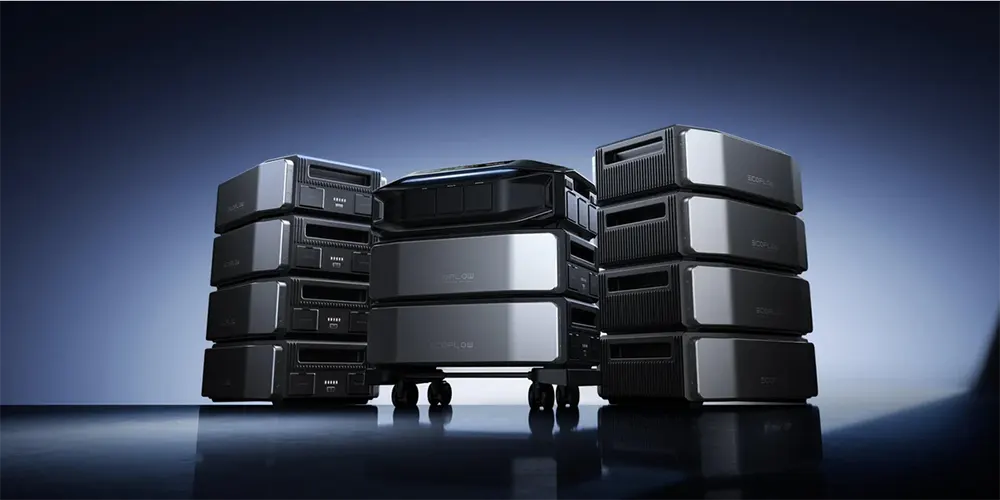
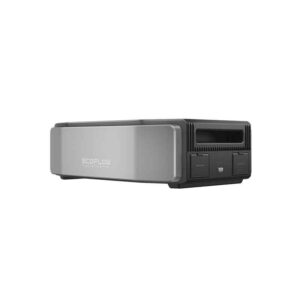
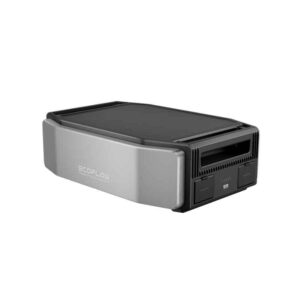
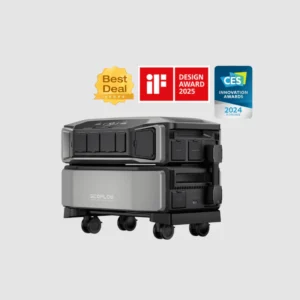
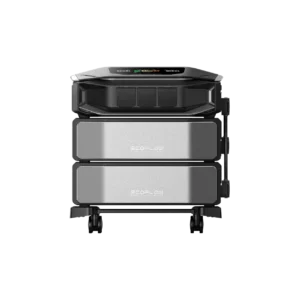
Think of the EcoFlow Delta Pro Ultra Extra Battery as a Lego brick for your home’s power supply. It’s a standalone LiFePO4 battery module rated at 6,144Wh that clicks onto your existing Delta Pro Ultra inverter to add more stored energy without adding more complexity.
It isn’t a power station on its own. It can’t be charged or run independently. It needs the Delta Pro Ultra inverter to function. That’s the trade-off: less flexibility as a solo unit, but a whole lot more capacity when it’s part of the family.
For anyone running BestEcoSolar-style research on home battery backup, this is the accessory that turns a “nice generator replacement” into a legitimate whole-home power system.
Why Even Consider an Extra Battery for Your Delta Pro Ultra?
Here’s the honest truth: the base Delta Pro Ultra setup is already powerful. But power outages don’t RSVP. They don’t tell you if they’ll last two hours or two weeks. A single inverter and battery combo might carry you through dinner and a movie, but a multi-day ice storm? That’s where the extra battery earns its keep.
Adding a Delta Pro Ultra extra battery module means:
- More runtime for essential appliances (fridge, Wi-Fi router, medical devices)
- Less anxiety about “running out” mid-outage
- The ability to scale gradually instead of buying an oversized system upfront
It’s kind of like buying a house with an unfinished basement — you don’t have to finish it all at once, but the option is there when life demands it.
EcoFlow Delta Pro Ultra Extra Battery Specs You Need to Know
Numbers matter here, so let’s get specific.
| Battery Weight | 116.4 lb |
| Battery Dimension | 26 x 18 x 8 in |
| Battery | 6144 Wh LFP Battery |
| UPS Backup | UPS < 20 ms, online UPS 0 ms |
| Voltage | 120/240 Volts |
| Package List | Pro Ultra Battery (×1), Battery Connection Cable |
1. Capacity and Voltage
Each EcoFlow Delta Pro Ultra Extra Battery module delivers 6,144 Wh at 102.4 V in a 32S3P configuration, built from 20 Ah, 3.2 V LiFePO₄ cells. That’s the same battery architecture used in the base unit, so there’s no mismatch or compatibility guesswork when you add one.
-
Battery, Power Station, smart devices
Original price was: $3,299.00.$2,199.00Current price is: $2,199.00. Buy Now
2. Battery Chemistry and Cell Design
This is a LiFePO4 (LFP) pack through and through, using EV-grade full-tab cells. LFP chemistry is prized for thermal stability and long cycle life, which matters a lot when you’re talking about a battery that’s supposed to sit quietly in your garage for years, occasionally getting hammered by a storm.
3. Weight and Dimensions
Expect each module to land around 50 kg (roughly 110 lb). That’s not something you’re casually carrying up a staircase, so factor that into your installation plan — a garage, utility room, or ground-floor closet is the realistic home for these units.
How the Delta Pro Ultra Extra Battery Expands Your System
1. Stacking Up to 90 kWh
Here’s where things get genuinely impressive. A single Delta Pro Ultra Extra Battery bumps your total capacity by 6.144 kWh, and you can keep stacking them. With multiple inverters paired to the Smart Home Panel 2, the full Delta Pro Ultra ecosystem scales all the way up to 90 kWh—that’s cited as over 30 days of essential backup power for a typical household (lights, fridge, router—the essentials, not your hot tub).
Even without going all-in on multiple inverters, a single inverter paired with several extra battery units can comfortably stretch your storage into the 20–30 kWh range, which is plenty for most homes riding out a multi-day outage.
2. Plug-and-Play Installation
You don’t need an electrician crawling through your walls to add one of these. The extra battery connects to the inverter through a simple cable connection — no rewiring, no permits for the battery itself (though whole-home panel installs are a different story). It’s about as close to “snap it in and forget it” as home battery expansion gets.
EcoFlow Delta Pro Ultra Extra Battery vs Base Unit: Comparison Table
| Feature | Delta Pro Ultra Inverter + Base Battery | Delta Pro Ultra Extra Battery (Add-On) |
|---|---|---|
| Function | Full power station (inverter + storage) | Storage only — needs the inverter |
| Capacity | 6,144 Wh | 6,144Wh per module |
| Max Expansion | Scales with additional modules | Up to 5 modules per inverter |
| Standalone Use | Yes | No — inverter-dependent |
| Installation | Plug-and-play | Plug-and-play |
| Ideal For | First-time buyers | Existing owners scaling up |
| Approx. Weight | ~31.7 kg (inverter alone) | ~50 kg per module |
This table makes the relationship pretty clear: you can’t buy an extra battery without already owning (or bundling) the inverter, but once you do, every additional module is a straightforward capacity boost.
Safety Features Packed Into Every Extra Battery
Nobody wants a battery that keeps them up at night — literally or figuratively. EcoFlow built the Delta Pro Ultra extra battery with a dual battery management system (BMS) and a three-level safety architecture. That layered protection watches for overcharging, over-discharging, short circuits, and extreme temperatures.
There’s also built-in weather resilience: the system heats the cells in freezing conditions so charging stays safe, and it can still accept a charge in high heat up to 113°F. If you live somewhere with genuinely brutal winters or scorching summers, that’s not a minor footnote — it’s the difference between a battery that works when you need it and one that quietly underperforms.

Charging Speed and Compatibility
One of the more underrated wins here: the Delta Pro Ultra system supports charging speeds up to 8,800W, meaning you can top up two battery modules in about two hours when using AC, solar, or even a generator as the source. Compare that to older power stations that could take the better part of a day to refill, and you’ll see why this matters for anyone facing back-to-back storm systems.
The extra battery pairs specifically with the Delta Pro Ultra inverter — not the newer Delta Pro Ultra X — so double-check which generation you own before ordering. EcoFlow sells a separate “Smart Extra Battery” designed specifically for the X-series lineup, and while they look similar on a spec sheet, they aren’t interchangeable.
-
Battery, Power Station, smart devices
Original price was: $3,299.00.$2,199.00Current price is: $2,199.00. Buy Now
Real-World Use Cases for the Extra Battery
Whole-Home Backup
If your goal is riding out an extended grid outage, pairing multiple Delta Pro Ultra extra battery units with the Smart Home Panel 2 lets you selectively power circuits — HVAC, well pump, fridge — without overloading the system. It’s essentially a mini power grid for your house, minus the utility bill during the outage.
Off-Grid and RV Applications
Not everyone buying this is bracing for a hurricane. Off-grid cabin owners and serious RV setups use the extra battery to stretch solar-charged capacity across multiple cloudy days. Since the modules are stackable, you can start small and add capacity as your energy habits (or your rig) grow.
Delta Pro Ultra Extra Battery Pros and Cons
1. What we love about
- Massive expandability — stacks up to 5 modules per inverter, and the full system scales toward 90kWh with multiple inverters and the Smart Home Panel 2
- True plug-and-play install — no electrician or rewiring needed to add a module, just a cable connection
- EV-grade LFP cells — long cycle life and strong thermal stability compared to older lithium-ion chemistries
- Robust safety architecture — dual BMS plus a three-level safety system guards against overcharge, short circuits, and extreme temps
- Weather-resilient — built-in heating lets it charge safely in freezing conditions, and it still accepts a charge up to 113°F
Fast recharge — up to 8,800W charging means two modules can top up in about two hours - Matches base unit specs exactly — same 6,144Wh/102.4V architecture as the inverter’s built-in battery, so no mismatch issues
2. What to consider
- Can’t work standalone — it’s inverter-dependent; you need an existing Delta Pro Ultra inverter for it to do anything
- Not compatible with Delta Pro Ultra X — a common buyer mix-up, since the X-series needs its own separate Smart Extra Battery
- Heavy — roughly 50 kg (110 lb) per module, so you need a real installation plan (garage, utility room), not a casual placement
- Pricey per module — mid-to-high $2,000s each, so scaling to serious whole-home capacity adds up fast
- Availability can be spotty — some retailers show it selling out or on backorder given demand
- Diminishing flexibility if you outgrow it — since it locks you into the Ultra ecosystem, later switching to the newer Ultra X line means the extra batteries don’t carry over
Want this formatted as a table instead or added directly into the article as a new section?
EcoFlow Delta Pro Ultra Extra Battery vs Delta Pro Ultra X Extra Battery
It’s worth pausing here because the naming gets confusing fast. The original Delta Pro Ultra extra battery is rated at 6,144Wh and scales to a 90kWh whole-home system.
The newer Delta Pro Ultra X Smart Extra Battery pushes even further, with the X-series scaling up to a jaw-dropping 180kWh across 30 expansion batteries, plus a faster adaptive-start algorithm for handling appliance surges.
If you’re shopping today and haven’t already invested in the original Ultra, it’s worth comparing both lineups before committing — but if you already own a Delta Pro Ultra inverter, the standard extra battery is your only compatible expansion path.

Price and Where to Buy
Pricing on the EcoFlow Delta Pro Ultra extra battery generally lands in the mid-to-high $2,000s per module (regional pricing varies, and EU listings have shown figures around €2,499). It’s not pocket change, but when you compare the cost-per-kWh against a whole-home generator installation — complete with fuel lines, permits, and maintenance — the math starts to look a lot more reasonable.
You’ll find it through EcoFlow’s official store, authorised retailers, and speciality solar resellers, though availability occasionally runs tight given demand.
EcoFlow Stores
| United Kingdom | Italy | France | Spain | Germany | Canada | Australia | USA |
 |
 |
 |
 |
 |
 |
 |
 |
| Shop Here | Shop Here | Shop Here | Shop Here | Shop Here | Shop Here | Shop Here | Shop Here |
Is the EcoFlow Delta Pro Ultra Extra Battery Worth It?
Here’s my honest take: if you already own a Delta Pro Ultra inverter and you’ve felt that nagging “what if the outage lasts longer than expected” worry, yes — it’s worth it. You’re not buying a whole new system, just insurance in module form.
But if you’re starting from zero, you’ll want to weigh the full inverter-plus-battery bundle against your actual backup needs first. Buying an extra battery without the inverter is like buying a spare tire with no car to put it on.
-
Battery, Power Station, smart devices
Original price was: $3,299.00.$2,199.00Current price is: $2,199.00. Buy Now
Tips Before You Buy an Extra Battery
- Confirm your inverter generation (Ultra vs Ultra X) before ordering — they aren’t interchangeable
- Plan your physical space; at ~50 kg per module, these aren’t nightstand accessories
- Think in terms of days of backup, not just watts, when deciding how many modules you need
- Pair with the Smart Home Panel 2 if you want circuit-level control during outages
- Check current promotions — EcoFlow and resellers frequently run seasonal discounts on bundles
Conclusion
The EcoFlow Delta Pro Ultra extra battery isn’t flashy, and it doesn’t need to be. It does one job — adding dependable, expandable capacity to an already capable home backup system — and it does that job well.
Whether you’re padding out whole-home resilience against multi-day outages or just want breathing room for your off-grid setup, this modular approach means you’re never locked into buying more than you need on day one. If reliability during the worst moments is the goal, this extra battery is one of the more sensible upgrades in the current home energy storage market.
FAQs About EcoFlow Delta Pro Ultra Extra Battery
A single inverter typically supports up to five extra battery modules, and multi-inverter setups with the Smart Home Panel 2 can scale the whole system toward 90kWh.
With the system's fast-charging capability of up to 8,800W, two battery modules can charge in around two hours under ideal conditions.
Yes. It includes built-in cold-weather heating for safe charging and can accept charge in high heat up to 113°F, alongside a dual BMS and multi-level safety protections.
No. The extra battery is designed exclusively to pair with the Delta Pro Ultra inverter — it can't charge or discharge independently.
Not directly. The X-series uses its own Smart Extra Battery, which shares a similar capacity rating but isn't the same product line.
You Might Also Like