


What Size RV Solar System Do I Need? A No-Nonsense Guide to Panels, Batteries, and Off-Grid Freedom
So, you’re wondering: What size RV solar system do I need? How many batteries does an RV solar system need? Can an RV solar system run an air conditioner? Are lithium batteries better for RV solar? How long do RV solar batteries last? How many solar panels are needed for a camper? If those questions are buzzing in your head, you’re in the right place. Let’s break it all down in plain English- no engineering degree required.
What Size RV Solar System Do I Need?
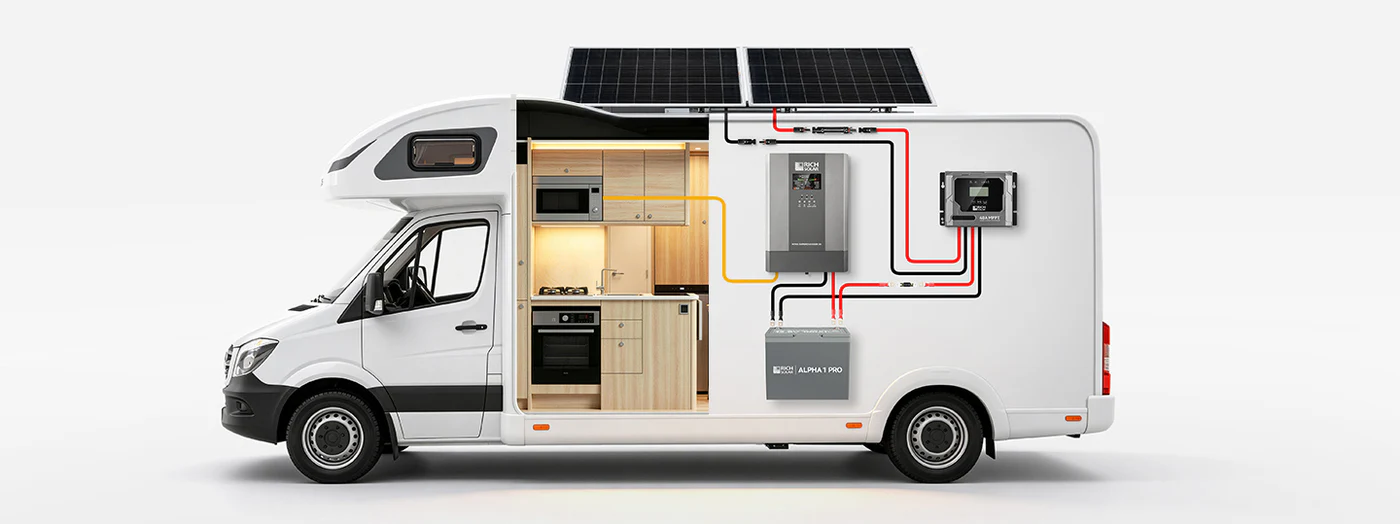
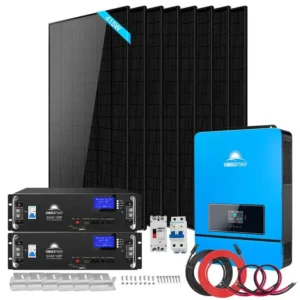
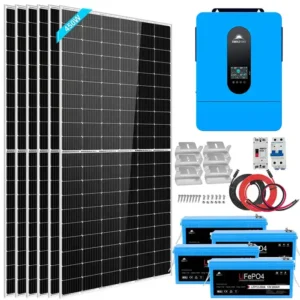
What size RV solar system do you need? The short answer: most RVers land somewhere between 400 and 800 watts of solar, paired with 200 to 400 amp hours (Ah) of battery storage. But “most RVers” isn’t you, so let’s figure out your real number.
Think of your solar system like a kitchen. The panels are the grocery runs — they bring energy home. The batteries are your pantry — they store it. And your appliances? That’s the family eating everything in sight. Size your pantry for a family of two, and a family of six will empty it by Tuesday.
1. Start With Your Energy Habits
The size of your RV solar system depends on how much electricity you use. Do you just want to charge phones and run lights? Or are you planning to power a fridge, TV, and maybe even an air conditioner? Think of it like grocery shopping—you don’t buy a cartful of food if you only need snacks.
- 12V fridge: 40–60 Ah per day
- LED lights: 5–10 Ah per day
- Laptop + phone charging: 10–15 Ah per day
- Water pump, fans, odds and ends: 10–20 Ah per day
- TV for a couple of hours: 5–10 Ah
Add it up. A modest setup might total 80–120 Ah daily. A comfort-loving digital nomad? Easily 200+ Ah.
2. Calculating Daily Power Needs
Most RVers measure energy in watt-hours (Wh). Add up the watts of each device and multiply by the hours you’ll use them. Example:
- LED lights: 10W × 5 hours = 50Wh
- Laptop: 60W × 3 hours = 180Wh
- Fridge: 100W × 24 hours = 2400Wh
Total = 2630Wh per day. That’s your baseline.
3. Matching Solar Panels to Usage
Solar panels produce power depending on size and sunlight. A 200W panel might give you 800–1000Wh per day in good sun. So, for 2630Wh, you’d need around three 200W panels. Always add a buffer—clouds happen!
Here’s a dirty little secret of solar sizing: your usage matters more than any formula. A rough rule of thumb is 1 to 2 watts of solar per amp-hour of daily consumption, adjusted for your climate.
- The Weekend Warrior
Camp a couple of weekends a month, mostly at campgrounds? A 200–400-watt setup with 100–200 Ah of batteries will treat you well. You’re basically topping off a tank that never fully drains. - The Full-Time Boondocker
Living off-grid for weeks at a stretch changes everything. You’ll want 600–1,000+ watts on the roof and 300–600 Ah of lithium in the bay. When the sun is your only gas station, you don’t skimp on the fuel pump.
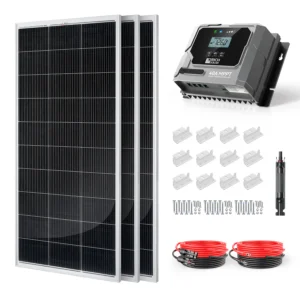
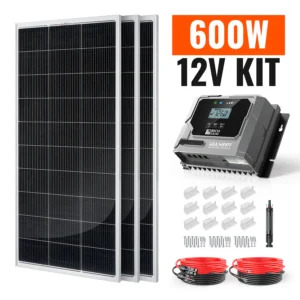
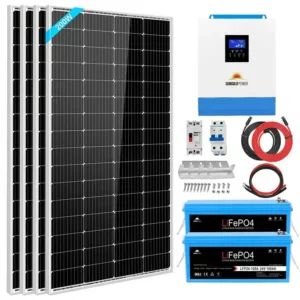
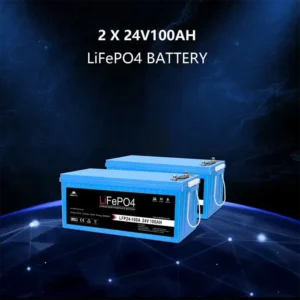
How Many Batteries Does an RV Solar System Need?
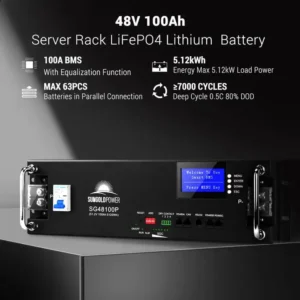
Batteries store the energy your panels collect. Without them, you’d only have power when the sun’s shining. Think of batteries as your RV’s “energy pantry.” How many batteries does an RV solar system need? Plan on enough storage to cover one to two full days of power use — for most folks, that’s two to four 100Ah lithium batteries.
Why two days? Because clouds happen. Rain happens. That beautiful forest campsite with the towering pines blocking your panels? That happens too. Your battery bank is your rainy-day fund, and you want enough saved up to ride out a stormy stretch without eating cold sandwiches in the dark.
1. Do the Battery Math
Take your daily usage from the audit above and multiply it by your desired days of autonomy. Say you burn 100 Ah per day and want two days of cushion:
- With lithium (LiFePO4): You can safely use about 80–100% of rated capacity, so you need roughly 200–250 Ah total — call it two or three 100Ah batteries.
- With lead-acid (AGM or flooded): You should only drain them to 50%, so that same need doubles to 400–500 Ah — four or five heavy batteries doing the job of two lithiums.
See where this is going? Battery type changes battery count dramatically.
2. Lead-Acid vs Lithium
Lead-acid batteries only let you use about 50% of their capacity. Lithium lets you use nearly 100%. That means fewer lithium batteries for the same usable energy.
3. Amp Hours vs. Watt Hours: What’s the Difference?
Quick detour, because this trips everyone up. Amp hours tell you how much current a battery can deliver over time. Watt-hours tell you the total energy — volts multiplied by amp-hours. A 100Ah battery at 12.8 volts holds about 1,280 watt-hours of energy. When you’re comparing batteries or calculating what an appliance really costs you, watt hours are the honest currency. Amp hours can lie to you if the voltages don’t match.
Can an RV Solar System Run an Air Conditioner?
Can an RV solar system run an air conditioner? Yes — but it’s the Mount Everest of RV solar, and most stock setups aren’t equipped for the climb.
Here’s the brutal truth: a standard 13,500 BTU rooftop AC pulls around 1,300–1,800 watts while running, and it can spike to nearly 3,000 watts at startup. That’s your entire solar array’s output — times two or three — being devoured by one appliance.
1. What It Actually Takes to Run AC on Solar
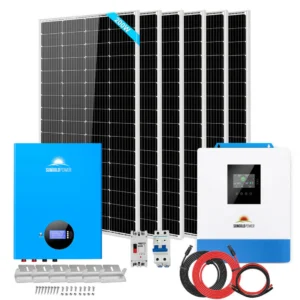
If you’re serious about solar-powered cooling, here’s your shopping list:
- 800–1,200+ watts of solar on the roof (and yes, that’s a lot of panels)
- 400–600 Ah of lithium batteries to handle the sustained draw
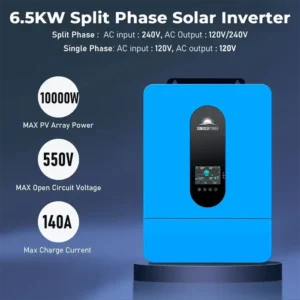
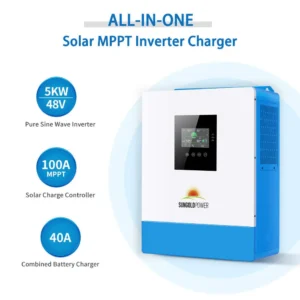
- A 3,000-watt inverter (or a quality 2,000-watt unit with a soft starter)
- A soft-start device on the AC unit itself — this tames that nasty startup surge and is absolutely non-negotiable
Even with all that, expect maybe 4–8 hours of runtime per day depending on sun and heat. Running your AC 24/7 like a house? Not happening without a generator backup.
2. The Smarter Play
Want my honest advice? Chase shade first. Park smart, use vent fans, add reflective window covers, and save the AC for the brutal afternoon hours when your panels are cranking at full power. Solar and AC can absolutely be friends — you just have to introduce them properly.
Are Lithium Batteries Better for RV Solar?
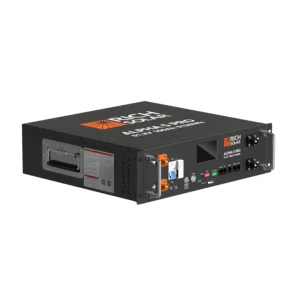
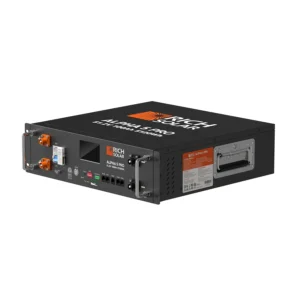
Are lithium batteries better for RV solar? For the vast majority of RVers, yes — lithium (specifically LiFePO4) batteries beat lead-acid in almost every category that matters. They’re the smartphone to lead-acid’s flip phone.
1. Lithium vs. Lead-Acid: The Showdown
Let’s put them head to head:
- Usable capacity: Lithium gives you 80–100% of its rated capacity. Lead-acid? Half. A 100Ah lithium battery is effectively a 200Ah AGM.
- Weight: Lithium weighs about half as much. Your RV’s payload capacity will thank you.
- Charging speed: Lithium gulps down solar power fast and happily. Lead-acid sips slowly and sulks if you don’t fully recharge it.
- Lifespan: Lithium lasts 2,000–5,000 cycles. Lead-acid manages 300–500. That’s not a typo.
Maintenance: Lithium needs none. Flooded lead-acid wants water top-offs and clean terminals.
2. When Lead-Acid Still Makes Sense
Is lithium perfect? No. It costs two to four times more upfront, and it won’t charge below freezing without built-in heaters. If you’re an occasional camper on a tight budget who mostly stays at hookup sites, a couple of AGM batteries will serve you fine. But if you’re boondocking regularly or living in your rig, lithium pays for itself — usually within a few years — and then keeps on paying.
How Long Do RV Solar Batteries Last?
How long do RV solar batteries last? It depends heavily on chemistry: expect 10–15 years from lithium (LiFePO4) and 3–7 years from lead-acid, assuming reasonable care.
1. Lifespan by Battery Type
- LiFePO4 (lithium): 2,000–5,000 charge cycles, translating to a decade or more of real-world use. Many owners will sell their RV before the batteries quit.
- AGM (sealed lead-acid): 400–600 cycles at 50% depth of discharge, or about 4–6 years.
- Flooded lead-acid: 300–500 cycles, roughly 3–5 years, and only if you keep up with maintenance.
Notice a pattern? How deeply you drain a battery is the single biggest factor in how long it lives. Regularly running a lead-acid battery to nearly empty is like redlining your car engine every single day — it’ll work, right up until it doesn’t.
2. How to Make Your Batteries Last Longer
A few habits that add years to your bank:
- Don’t chronically over-discharge. Respect the depth-of-discharge limits for your chemistry.
- Keep them charged in storage. A battery sitting empty for months is a battery dying a slow death.
- Watch the temperature. Extreme heat cooks lead-acid; freezing temps block lithium charging. Insulate or heat your battery bay if you camp in the cold.
- Use a quality charge controller. A good MPPT controller feeds your batteries exactly what they want, no more, no less.
How Many Solar Panels Are Needed for a Camper?
How many solar panels are needed for a camper? Most campers do well with two to five panels — and since modern RV panels typically run 200–400 watts each, that translates to the 400–1,000 watt range we’ve been talking about.
1. Panel Math Made Simple
Here’s the back-of-the-napkin version. Say you use 150 Ah per day (about 1,800 watt-hours). In decent sun, a panel produces roughly 4–5 times its wattage in watt-hours per day — so a 200-watt panel harvests around 800–1,000 Wh daily. Divide your need (1,800 Wh) by what one panel delivers (~900 Wh), and you get two panels.
Then add one more for cloudy days, shade, winter sun angles, and the simple fact that nothing on a roof performs as it does in a lab. Three panels, it is.
2. Roof Space and Real-World Factors
Before you fall in love with a panel count, grab a tape measure. Your roof is prime real estate already crowded with vents, AC units, antennas, and skylights. A few practical tips:
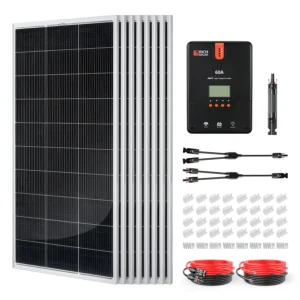
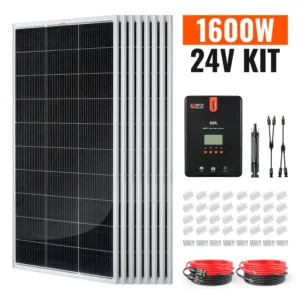
- Map your roof first. Draw it out, mark every obstacle, and see what actually fits.
- Bigger panels, fewer headaches. One 400-watt residential-style panel often beats four 100-watt panels — fewer holes, less wiring, cheaper mounts.
- Shade is a silent killer. Even partial shade on one panel can drag down a whole string. Wire panels in parallel (or use multiple controllers) if rooftop shade is unavoidable.
- Portable panels are a cheat code. A folding 200-watt suitcase panel you can aim at the sun lets you park in the shade and harvest solar. Best of both worlds.
Conclusion: Your Road to Solar Freedom
What Size RV Solar System Do I Need? Sizing an RV solar system isn’t rocket science — it’s really just honest math about how you camp. Figure out your daily power appetite, size your battery bank to cover a day or two of it, bolt on enough panels to refill that bank, and choose lithium if your budget allows. And if you’re dreaming of solar air conditioning, know that it’s possible; just plan for a serious system and a soft starter.
Start a little bigger than you think you need. Trust me on this one — nobody has ever sat around a campfire complaining that their batteries were too full. Build it right, and the sun will quietly pay your power bill for years to come.
FAQs About RV Solar System
If you're comfortable with basic wiring, a drill, and a wiring diagram, a DIY install is absolutely doable — thousands of RVers have done it. The trickiest parts are sealing roof penetrations properly and sizing your wiring and fuses correctly. If you're running a big inverter or a complex system, having a pro at least review your plan is cheap insurance.
Yes, but at a fraction of their rated output — often 10–25% on heavily overcast days. Winter adds shorter days and lower sun angles to the mix. This is exactly why your battery bank should carry you through a day or two of weak harvest.
Only if you want to run standard household (120V AC) appliances like a microwave, coffee maker, TV, or laptop charger. Everything that runs on 12 volts DC — lights, fans, water pump, USB chargers — works straight off the batteries without one.
MPPT controllers are more efficient — often squeezing 20–30% more power from your panels, especially in cold weather or when battery voltage is low. PWM controllers are cheaper but waste potential. For anything beyond a small weekend setup, MPPT is worth every penny.
Please don't. Mixing batteries of different ages, capacities, or chemistries causes the weaker battery to drag down the stronger one, shortening the life of both. Build your bank with matching batteries, and expand it all at once when it's time to grow.
You Might Also Like