

Bluetti AC300 vs Apex 300: Which Power Station Actually Wins in 2026?
Choosing between these two Bluetti beasts isn’t just about picking the bigger number. It’s about understanding what you actually need when the lights go out, when you’re camping off-grid, or when you’re trying to keep that fridge humming during a summer blackout.
What Is the Difference Between Bluetti AC300 and Apex 300?
Bluetti AC300 vs Apex 300 – What is the difference between Bluetti AC300 and Apex 300? At first glance, they look like brothers from the same family—and they are. But under the hood, these two units are built for completely different philosophies of power.
Think of the AC300 as the skeleton key of the Bluetti world. It’s a modular inverter box that needs a battery to even wake up. The Apex 300? It’s the self-sufficient powerhouse that shows up ready to rumble, battery and all, straight out of the box.
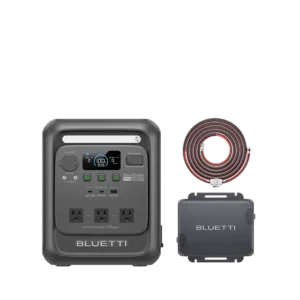
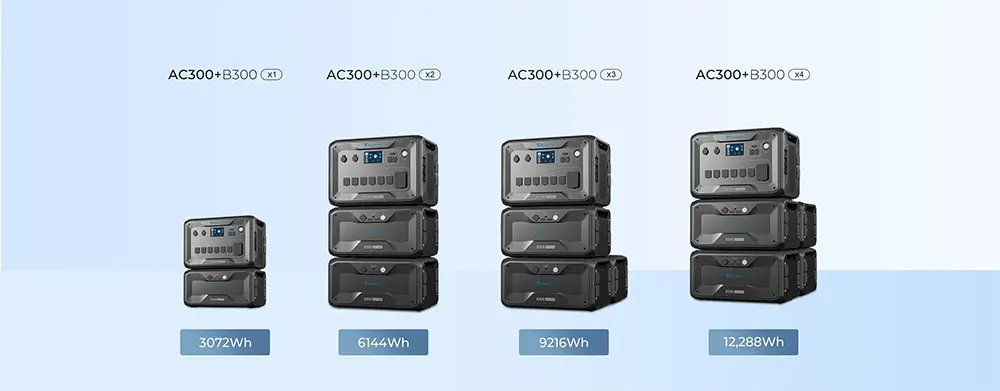
The AC300 is essentially a 3000W inverter module weighing about 48 pounds. Without a B300 battery attached, it’s basically a very expensive paperweight. You can stack up to four B300 batteries (3072Wh each) behind it, maxing out at 12,288Wh. It’s a build-your-own-adventure system.
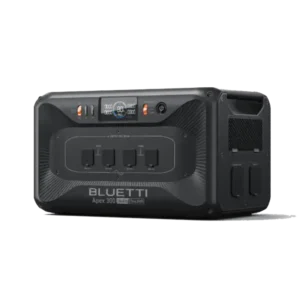
The Apex 300, on the other hand, rolls in with a built-in 2,764Wh battery and a beefier 3,840W inverter. It can also expand—up to a staggering 58kWh with B300K expansion modules—but it doesn’t require them to function. It’s like the difference between buying a car frame and buying a car that actually runs.
Another massive difference? The Apex 300 delivers native 120V/240V split-phase power from a single unit. The AC300 can do 240V too, but only if you buy two AC300 units and bond them together. That’s a serious wallet punch.
Bluetti AC300 vs Apex 300: Does the Bluetti Apex 300 Have a Built-in Battery?
Does the Bluetti Apex 300 have a built-in battery? Yes, and thank goodness for that.
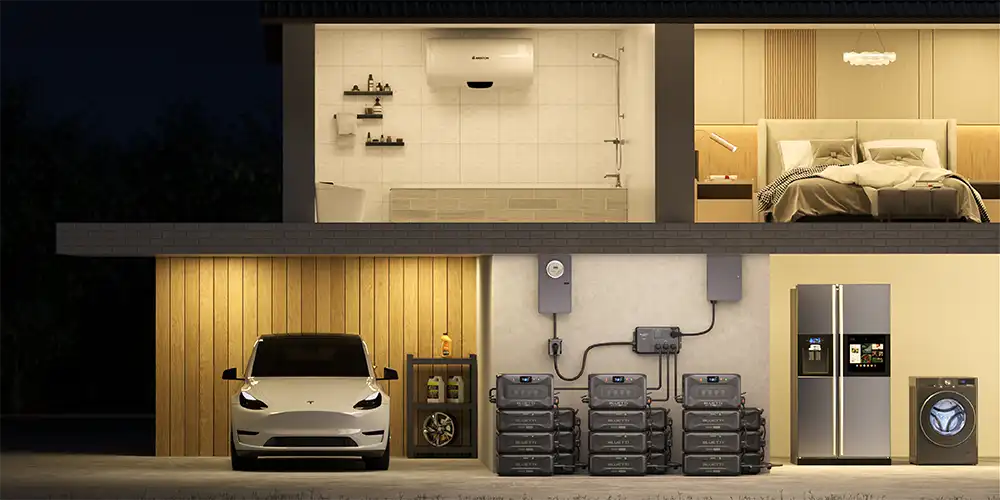
Unlike the AC300, which is basically a power-hungry ghost without its B300 battery companion, the Apex 300 comes packed with a 2.76kWh lithium iron phosphate (LiFePO4) battery right inside the chassis. You can literally unbox it, plug in your fridge, and keep your beer cold during a blackout without buying a single extra battery.
This is actually a huge deal. Bluetti’s older AC-series philosophy forced you into a modular purchase, whether you liked it or not. The Apex 300 breaks that chain. It’s the first high-output Bluetti station that says, “Hey, I’ve got enough juice for most emergencies right here, but if you want more, come get it.”
The built-in battery uses Bluetti’s second-generation Ultracell LiFePO4 cells, rated for 6,000+ charge cycles before hitting 80% capacity. We’re talking about a potential lifespan of 17 years. That’s longer than some relationships.
How Long Does the AC300 Battery Last?
How long does the AC300 battery last? Well, here’s where it gets tricky—the AC300 itself doesn’t have a battery. The battery life depends entirely on how many B300 modules you’ve chained to it.
With one B300 battery (3,072Wh), you’re looking at roughly 3 hours of runtime for an 800W refrigerator, or about 1.7 hours for a 1500W space heater. Not exactly weekend-long off-grid living, right? But slap on four B300 batteries for that full 12,288Wh capacity, and suddenly you’re talking about days of backup power instead of hours.
The B300 batteries use LiFePO4 chemistry with a 3,500+ cycle life to 80% capacity. That’s roughly three times longer than traditional lithium-ion setups. So while the runtime depends on your configuration, the battery lifespan is impressively long.
Here’s the catch, though: the AC300 has a notable idle power consumption. With the AC inverter active but no load attached, it burns through about 37.6 watts per hour just keeping the lights on. That means in 24 hours of standby, you’re losing roughly 900Wh to the inverter’s appetite. It’s like leaving a small fan running constantly—annoying, but manageable if you plan for it.

How many amp-hours is a Bluetti Apex 300?
How many amp-hours is a Bluetti Apex 300? The answer depends on which voltage you’re talking about, because amp hours without voltage is like asking how fast a car goes without mentioning the speed unit.
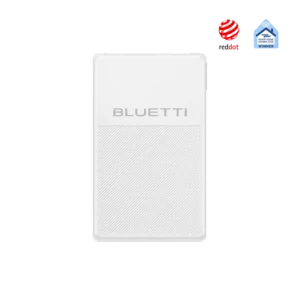
The Apex 300 packs a 2,764Wh battery. At the standard LiFePO4 system voltage of roughly 51.2V, that translates to about 54 amp hours. If you’re thinking in 12V terms (like traditional RV batteries), that would be approximately 230 amp hours.
But here’s the kicker—most people don’t buy the Apex 300 for its base capacity alone. With one B300K expansion battery, you’re looking at about 5,529Wh total, which doubles those amp-hour figures. And if you really go wild with the full 20-battery expansion? You’re sitting on roughly 58kWh, which is essentially a small home battery bank on wheels.
So when someone asks “how many amp hours is the Apex 300?” the honest answer is: it starts at 54Ah (at 51.2V), but it’s built to grow into whatever monster you need.
How Long Will a Bluetti Apex 300 Run a Refrigerator?
Bluetti AC300 vs Apex 300 – How long will a Bluetti Apex 300 run a refrigerator? This is probably the question I get asked most, because let’s face it—when the power goes out, nobody cares about running their TV. They care about the fridge.
With the base unit alone (2,764Wh), a standard 300W refrigerator will run for roughly 16 to 18 hours under normal conditions. That’s a full day and then some. But here’s a pro tip: if you pre-chill your fridge and minimize door openings, you can stretch that to 20+ hours.
Now, if you add one B300K expansion battery for a total of 5,529Wh, testing has shown the Apex 300 can power a full-size kitchen refrigerator for nearly 48 hours on a single charge. That’s two full days of keeping your food safe, your ice frozen, and your sanity intact during a blackout.
The Apex 300’s inverter efficiency plays a huge role here. It delivers roughly 87-89% usable capacity, which is genuinely impressive. Many competing systems waste 20-30% of your stored energy as heat. The Apex 300 keeps that waste minimal—like a thermos that actually works.
Does the Bluetti Apex 300 Have a 30 Amp Outlet?
Does the Bluetti Apex 300 have a 30-amp outlet? Absolutely, and it’s not some afterthought either.
The Apex 300 features a TT-30 RV outlet right on the chassis, delivering that full 30-amp capability that RV owners dream about. It also packs an L14-50 240V connection for heavier home appliances. This is infrastructure-level stuff in a portable box.
Compare that to the AC300, which also has a TT-30 outlet but maxes out at 3000W total output. The Apex 300 pushes 3,840W continuous with surge handling well above 4,000W. So while both have the 30A outlet, the Apex 300 actually has the inverter muscle to back it up when you’re running multiple appliances simultaneously.
If you’re an RV enthusiast, that TT-30 outlet means you can plug in directly without adapters, dongles, or crossed fingers. It’s one of those small details that make a massive difference at 2 AM when you’re trying to get the AC running in your camper.
Does Apex 300 Qualify for Tax Credits?
Does Apex 300 qualify for tax credits? Here’s where things get interesting—and slightly complicated.
The Federal Solar Investment Tax Credit (ITC) currently offers a 30% tax credit for solar energy systems, including battery storage. But there’s a catch: to qualify, the battery must be charged by solar power at least 75% of the time. It’s not a free-for-all where any battery purchase gets you a discount.
The Apex 300 can qualify for tax credits if you purchase it as part of a solar energy system and primarily use solar charging. Bluetti markets it heavily for home backup and solar integration, which puts it in a strong position for eligibility. However, if you’re just buying the unit standalone to charge from your wall outlet, it likely won’t qualify.
My advice? Talk to a tax professional. The IRS doesn’t mess around, and the rules around portable power stations are still somewhat gray. But if you’re pairing the Apex 300 with solar panels and using it as a residential energy storage solution, you’ve got a solid case for that 30% credit.
Bluetti AC300 vs Apex 300: Is Bluetti Apex 300 Good?
Is Bluetti Apex 300 good? Let me put it this way: PCMag gave it their Editors’ Choice award, and those folks don’t hand out praise like candy at a parade.
The Apex 300 is genuinely impressive. It behaves less like a “portable power station” and more like a compact piece of electrical infrastructure. The 3,840W split-phase inverter, the nearly 90% conversion efficiency, the 20ms UPS switching time, and the ability to handle motor startup surges without breaking a sweat—all of it adds up to a system that punches way above its weight class.
At around $1,699 (and often less with discount codes), it’s priced aggressively for what it delivers. The build quality is tank-like, the power management is sophisticated enough to impress electrical engineers, and the expandability means it can grow with your needs.
Is it perfect? No. The lack of built-in USB ports and DC outputs is a controversial choice—you’ll need the Hub D1 accessory for those. And at 84 pounds, it’s not something you’ll casually toss in a backpack. But for home backup, RV living, or workshop power? It’s absolutely good. It’s borderline great.
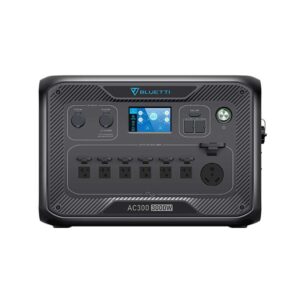
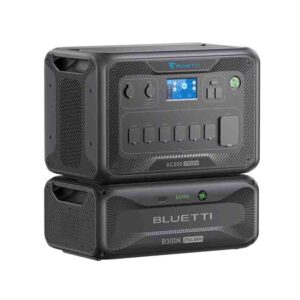
Which Bluetti Is the Best?
Which Bluetti is the best? Ah, the million-dollar question. Or rather, the $1,699 question.
If you want my honest take, the “best” Bluetti depends entirely on your situation. It’s like asking whether a pickup truck or a sports car is better. It depends on what you’re hauling.
1. Choose the AC300 if:
- You already own B300 batteries or want a modular system you can build piece by piece
- You need maximum AC outlet variety (it has 16 ports, including USB, wireless charging, and DC outputs)
- You want a lighter inverter module (48 lbs vs. 84 lbs)
- You’re on a tighter budget for the initial purchase
2. Choose the Apex 300 if:
- You want a complete, ready-to-use system out of the box
- You need native 240V split-phase from a single unit
- You want higher inverter output (3,840W vs. 3,000W)
- You prioritize expandability (up to 58kWh vs. 12,288Wh)
- You want faster charging (80% in 40 minutes vs. 6.5+ hours)
For most people in 2026, the Apex 300 is the better buy. It’s more future-proof, more powerful, and eliminates the “battery not included” frustration. But if you’re already invested in the AC300 ecosystem, there’s no shame in sticking with what works.
Bluetti AC300 vs Apex 300: Comparing the Numbers Side by Side
Let’s get nerdy for a second. Here’s how these two stack up where it matters:
| Feature | Bluetti AC300 | Bluetti Apex 300 |
|---|---|---|
| Built-in Battery | No (requires B300) | Yes (2,764Wh) |
| Max Inverter Output | 3,000W | 3,840W |
| Surge Power | 6,000W | 4,000W+ |
| Base Capacity | 3,072Wh (with 1 B300) | 2,764Wh |
| Max Expandable | 12,288Wh | 58,060Wh |
| Weight | ~48 lbs | ~84 lbs |
| 240V Output | Requires 2 units | Single unit native |
| Charge Time | 6.5-7 hours | 80 minutes to 100% |
| Battery Cycles | 3,500+ | 6,000+ |
| TT-30 Outlet | Yes | Yes |
| USB/DC Ports | Built-in | Requires Hub D1 |
Real-World Performance: What Actually Matters
Specs are fun, but what happens when you actually plug things in? That’s where the Apex 300 starts pulling ahead like a marathon runner in the final mile.
During load testing, the Apex 300 sustained outputs above 3,800W for extended periods without instability. It handled air compressors, miter saws, induction cooktops, and RV air conditioners without the voltage sag that plagues lesser systems. The AC300 is no slouch at 3,000W, but when you’re running a microwave and a fridge simultaneously, that extra 840W of headroom on the Apex 300 is the difference between smooth sailing and tripped breakers.
The Apex 300 also has a “Power Lifting Mode” that can handle pure resistive loads (like kettles and space heaters) up to 7,680W. The AC300 can’t touch those numbers without a second unit in split-phase bonding.
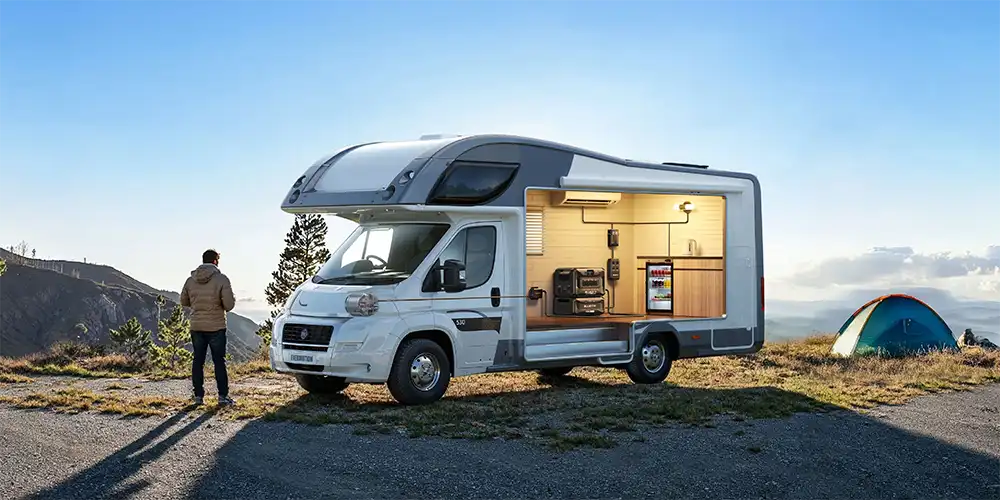
The Portability Paradox
Here’s something nobody talks about enough: the AC300 is lighter, but less portable in practice. Why? Because you need to carry the AC300 plus at least one B300 battery. That’s two separate boxes, two sets of cables, and twice the setup time.
The Apex 300 is heavier at 84 pounds, but it’s one self-contained unit. You wheel it into your garage, plug it in, and you’re done. No cable management, no “did I forget the battery?” moments. Sometimes, one heavy box beats two lighter boxes.
1. Charging Speed: The Tortoise and the Hare
Remember the old fable? The AC300 is the tortoise, and the Apex 300 is the hare—except this hare actually wins.
The AC300+B300 combo takes 6.5 to 7 hours to charge from a wall outlet with a single adapter. The Apex 300? It hits 80% charge in 40 minutes and 100% in 80 minutes. That’s not just faster; it’s a completely different category of convenience.
If you’re using solar, both systems accept up to 2,400W of panel input. But the Apex 300 offers the SolarX 4K adapter, boosting total solar input to a massive 6,400W. For serious solar homesteaders, that’s a game-changer.
2. Battery Chemistry and Longevity
Both systems use LiFePO4 batteries, which are the gold standard for safety and longevity. But the Apex 300’s second-generation Ultracell batteries are rated for 6,000+ cycles compared to the AC300’s B300 modules at 3,500+ cycles.
What does that mean in plain English? If you cycle either system daily, the AC300 battery might last about 9-10 years before hitting 80% capacity. The Apex 300? We’re talking 15-17 years. That’s not just better—it’s generational.
Conclusion of Bluetti AC300 vs Apex 300
So where does all this leave us? If you’re trying to decide between the Bluetti AC300 and the Apex 300, the answer really boils down to one question: do you want to build a system or buy a solution?
The AC300 is a fantastic modular platform if you’re already in the Bluetti ecosystem or you want to start small and expand gradually. It’s lighter, has more built-in ports, and offers solid performance for the money.
But the Apex 300 is the future of Bluetti’s lineup. It’s a complete, ready-to-use power station with a built-in battery, a more powerful inverter, native 240V output, faster charging, and expansion potential that dwarfs the AC300. For home backup, RV living, workshop power, or serious off-grid setups, the Apex 300 is simply the better tool for the job in 2026.
Think of it this way: the AC300 is a really good LEGO set, but the Apex 300 is the finished castle. Both are awesome. It just depends on whether you want to build or play.
FAQs About Bluetti Power Station
Yes, the Bluetti Apex 300 comes with a built-in 2,764Wh lithium iron phosphate (LiFePO4) battery. Unlike the AC300, which requires separate B300 battery modules to function, the Apex 300 is ready to use straight out of the box.
The Bluetti Apex 300 has a 2,764Wh battery capacity. At its standard operating voltage of approximately 51.2V, this equals roughly 54 amp hours. In 12V terms, this would be approximately 230 amp hours.
The base Apex 300 unit (2,764Wh) can power a standard 300W refrigerator for approximately 16-18 hours. With one B300K expansion battery attached (5,529Wh total), testing has shown it can run a full-size refrigerator for nearly 48 hours on a single charge.
Yes, the Bluetti Apex 300 features a TT-30 RV outlet capable of delivering 30 amps. It also includes an L14-50 240V connection for higher-power appliances, making it ideal for RV use and home backup applications.
The Apex 300 may qualify for the 30% Federal Solar Investment Tax Credit (ITC) if purchased as part of a solar energy system and charged primarily by solar power (at least 75% of the time). Standalone purchases used for wall charging typically do not qualify. Consult a tax professional for your specific situation.
You Might Also Like