

The Ultimate Guide to Solar Power RV Generators: Freedom on the Road in 2026
In 2026, the RV world is experiencing a massive shift. More travelers are ditching crowded campgrounds and embracing boondocking—the art of camping off-grid without electrical hookups. And guess what’s fueling this revolution? You got it: the solar power RV generator. These sleek, silent power boxes are replacing noisy, fume-belching gas generators faster than you can say “fill-er-up.” According to industry forecasts, the portable power station market is surging this year, driven by outdoor recreation, grid instability, and a collective desire for clean, quiet energy.
What Exactly Is a Solar Power RV Generator? (And Why Should You Care?)
Solar Power RV Generator – Let’s strip away the jargon. A solar power RV generator isn’t some futuristic gadget from a sci-fi movie. It’s essentially a big, smart battery that stores energy from the sun and doles it out whenever you need juice. Think of it as a thermos for electricity. You fill it up with sunshine during the day, and sip power throughout the night.
Unlike traditional gas generators that burn fuel to create energy on the spot, an RV solar generator captures sunlight through panels, converts it to usable electricity, and stores it in a high-capacity battery.
When you plug in your coffee maker, phone, or even a small air conditioner, you’re drawing from that stored sunshine. No gas stations. No oil changes. No pulling a starter cord until your shoulder screams.
Breaking Down the Anatomy of an RV Solar Generator
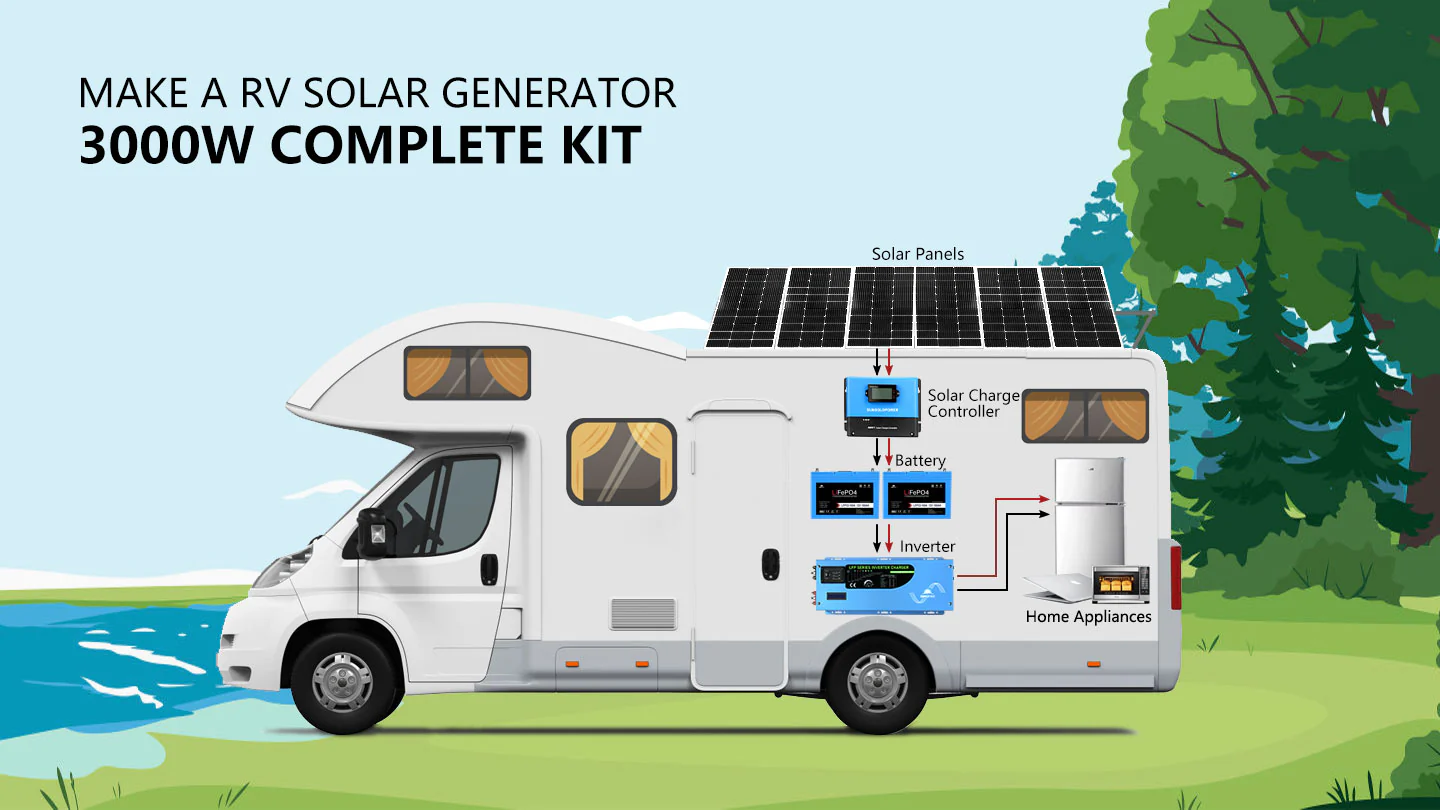
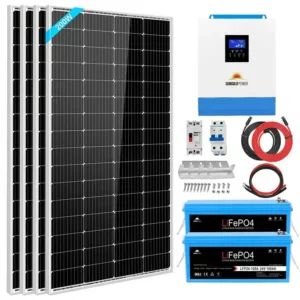
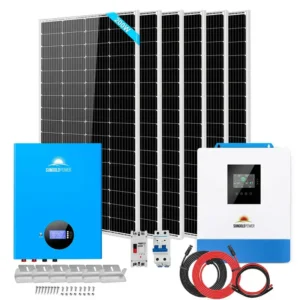
Before you drop serious cash, let’s peek under the hood. A typical solar-powered generator for motorhomes consists of four main parts:
- First, you’ve got the solar panels—these are your energy harvesters. Modern portable panels can hit efficiency ratings above 23%, meaning they squeeze a lot of power from even limited sunlight.
- Second, the charge controller (usually MPPT) acts like a traffic cop. It regulates the flow of electricity from the panels to the battery, maximizing charging speed while protecting your investment.
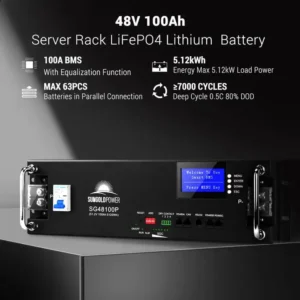
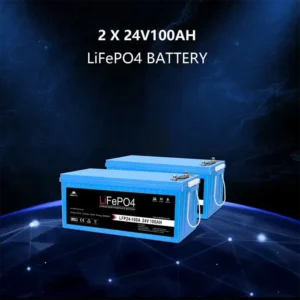
- Third, the battery itself. In 2026, most quality units will use LiFePO4 chemistry. Why does that matter? These lithium iron phosphate batteries can last 3,000 to 6,500 charge cycles before their performance dips. That’s years of weekend trips.
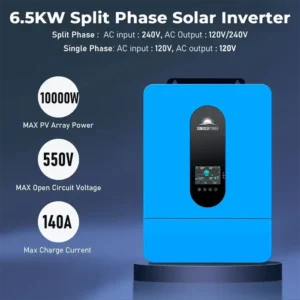
- Finally, the inverter converts stored DC battery power into AC electricity—the same stuff coming out of your wall outlets at home. Without it, you’d be stuck charging only USB devices.
Solar Power RV Generator vs. Gas Generator: The Showdown
Ah, the eternal debate. Should you stick with old faithful—the gas generator—or join the solar revolution? Let me put it this way: comparing a gas generator to a solar power RV generator is like comparing a chainsaw to a Swiss Army knife. Both cut things, but one is loud, messy, and requires constant refueling.
1. The Noise Factor (Or Lack Thereof)
Picture this: It’s 10 PM. Your neighbors in the campground are trying to sleep. You fire up your gas generator to charge your devices. Suddenly, you’re the most hated person in three campsites. Gas generators can hit decibel levels comparable to a lawnmower. Many campgrounds actually restrict their usage hours because of the racket.
A solar generator for RV adventures? It’s whisper-quiet. We’re talking library-level silence. You can run it inside your rig (safely!), at midnight, without a single complaint from the neighbors—or the wildlife.
2. Fuel Costs vs. Free Sunshine
Here’s where the math gets fun. A gas generator might cost less upfront. But then you’re married to the gas pump. Every weekend trip means hauling fuel cans, spilling gas on your hands, and watching your wallet drain away with each refill.
A solar battery generator for RV use runs on—you guessed it—sunshine. The most abundant, free fuel source in the universe. Sure, the initial investment is higher. But once you’ve got your panels and power station, your ongoing fuel cost is exactly zero dollars. Over the lifespan of the unit, that savings adds up to thousands.
How to Choose the Perfect Solar Generator for Your RV Adventures
Walking into the solar generator market without a plan is like grocery shopping hungry—you’ll grab something shiny and regret it later. So how do you pick the right solar power RV generator without getting overwhelmed?
1. Calculating Your Wattage Needs (Without the Headache)
Grab a notepad. No, seriously. List every device you plan to power. Your fridge might pull 100 watts when running, but 600 watts when the compressor kicks on. Your laptop? Maybe 60 watts. Coffee maker? That beauty could demand 1,000 watts.
Add up the running watts of everything you might use simultaneously. Then add the highest surge wattage. That’s your target. Most RVers find that a 2,000Wh to 3,000Wh solar power RV generator hits the sweet spot for weekend trips. Full-timers might want something expandable.
2. Battery Chemistry: LiFePO4 vs. Traditional Lithium-Ion
Remember when I mentioned LiFePO4? Let’s dig deeper. Traditional lithium-ion batteries are lighter and cheaper, but they degrade faster. LiFePO4 (lithium iron phosphate) batteries are the marathon runners of the battery world. They handle heat better, last thousands of cycles, and are significantly safer—meaning less chance of thermal runaway (battery fires). Most top-tier RV solar generators in 2026 use LiFePO4 for good reason.
Top Solar Power RV Generators Dominating the Market in 2026
The market is flooded with options, but a few standouts have earned their stripes through real-world testing. Let me walk you through the heavy hitters.
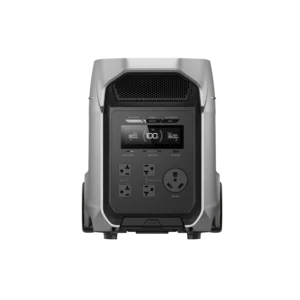
1. Best Overall: EcoFlow Delta 3 Ultra Plus
If the EcoFlow Delta 3 Ultra Plus were a person, it’d be that overachiever who also happens to be charming. With a base capacity of 3,072Wh, expandable up to a whopping 11kWh, and a continuous output of 3,600W (with 7,200W surge), this beast can handle serious RV loads.
It charges from zero to full in under 90 minutes via a wall outlet, and it features a 30A RV plug—meaning you can connect it directly to your rig’s shore power inlet. Plus, the Storm Guard Mode monitors weather and auto-charges if a storm is brewing. That’s not just smart; it’s genius.
2. Best for Frequent Travelers: Anker SOLIX F2000
The Anker SOLIX F2000 is like the SUV of solar generators—rugged, reliable, and surprisingly mobile. With 2,048Wh capacity and 2,400W output, it includes an RV plug and heavy-duty wheels that laugh at muddy campground roads. During testing, it handled rough terrain like a champ, and the built-in telescoping handle means you won’t throw out your back moving it.
The LiFePO4 battery promises up to 3,000 cycles before degradation. For RVers who bounce between sites weekly, this is your workhorse.
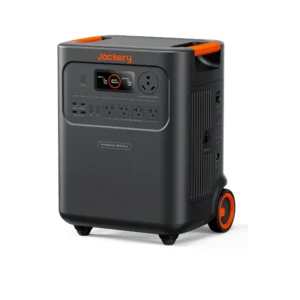
3. Best Budget Pick: Jackery Explorer 2000 Plus
Not everyone wants to remortgage their house for clean energy. Enter the Jackery Explorer 2000 Plus. At around $1,599 (often discounted), it delivers 2,048Wh with the ability to expand capacity.
It charges fast, offers solid 2,400W output, and plays nicely with Jackery’s SolarSaga panels. Is it the fanciest? No. But it’s the reliable friend who shows up every time, doesn’t complain, and won’t empty your bank account.


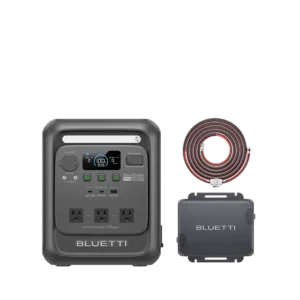
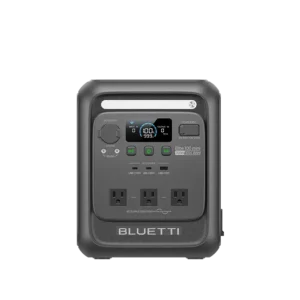

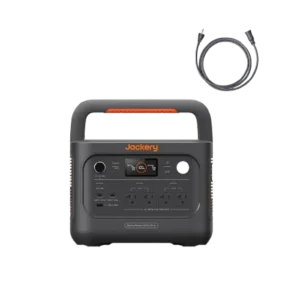
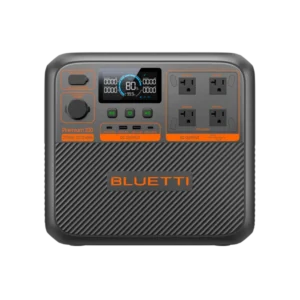
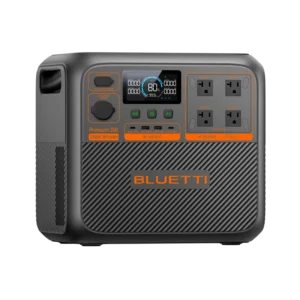
Solar Panel Pairing: Getting the Most Juice From the Sun
Here’s a truth bomb: even the best solar power RV generator is useless without decent panels. In 2026, portable solar panels will have become incredibly efficient. Look for panels rated at 200W or higher with efficiency above 22%. Brands like Bluetti, Jackery, and EcoFlow offer foldable panels with kickstands and carrying cases.
The key is matching your panel’s total wattage to your generator’s solar input limit. If your RV solar generator accepts 1,000W of solar input, hooking up five 200W panels lets you recharge in as little as 2-3 hours under ideal conditions. Cloudy day? You’ll still get 20-30% output, which beats a gas generator that produces exactly zero watts when you’re out of fuel.
Installation Tips That Won’t Void Your Warranty
Good news: most portable solar generators require zero installation. You literally plug in the panels and go. But if you’re hardwiring a permanent setup, keep these tips in mind.
Use appropriately gauged wiring—too thin, and you’ll lose power to heat. Install a proper fuse or circuit breaker between the panels and the charge controller. And for the love of all things electric, don’t drill holes in your roof without sealing them properly. Water damage is not a warranty-covered “feature.”
If you’re using a portable lithium solar RV generator, store it in a ventilated area. While LiFePO4 batteries are much safer than older chemistries, they still prefer moderate temperatures. Extreme heat or freezing cold can reduce performance.
Real Talk: What Can You Actually Power?
Let’s get practical. What does a 2,000Wh solar power RV generator actually run?
- Smartphone: 100+ charges
- Laptop: 15-20 charges
- LED lights: 30+ hours
- Portable fridge: 15-20 hours
- Coffee maker: 1-2 hours of brewing
- Microwave: 45 minutes to 1 hour
- TV: 10-15 hours
- Portable AC unit: 1-2 hours (depending on BTU)
The trick is managing your loads. You can’t run everything at once. But with a bit of scheduling—charge devices during the day, run the fridge continuously, save the microwave for sunny afternoons—you’ll live quite comfortably off-grid.
Comparison Table: Top RV Solar Generators at a Glance
1. Portable RV Solar Generators
| Feature | EcoFlow Delta 3 Ultra Plus | Anker SOLIX F2000 | Jackery Explorer 2000 Plus |
|---|---|---|---|
| Capacity | 3,072Wh (expandable to 11kWh) | 2,048Wh | 2,048Wh (expandable) |
| Max Output | 3,600W (7,200W surge) | 2,400W (2,800W surge) | 2,400W |
| Solar Input | 1,800W | 1,000W | 1,400W |
| RV Plug | 30A | Yes | No |
| Battery Type | LiFePO4 | LiFePO4 | LiFePO4 |
| Weight | ~74 lbs | ~67 lbs | ~67 lbs |
| Approx. Price | $1,599+ | $1,999 | $1,599 |
| Best For | Full-time RVers | Frequent travelers | Budget-conscious campers |
| View Details | View Details | View Details |
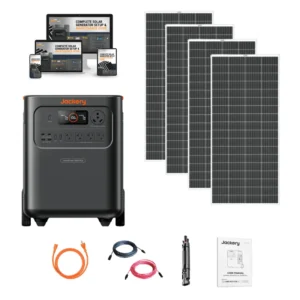
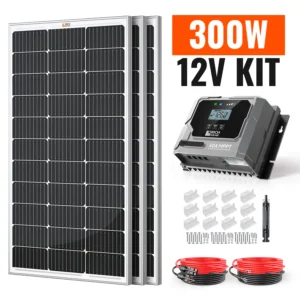
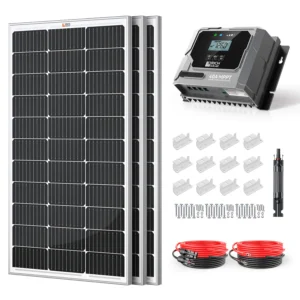
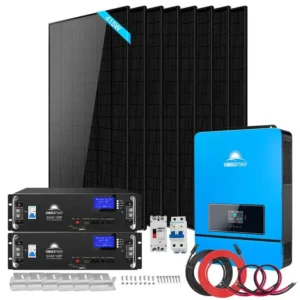
2. DIY RV Solar Generators
| Model | System Wattage | Battery Type | Key Features | |
|---|---|---|---|---|
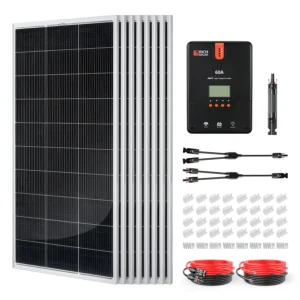
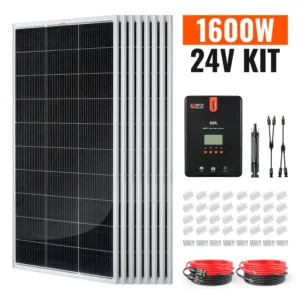
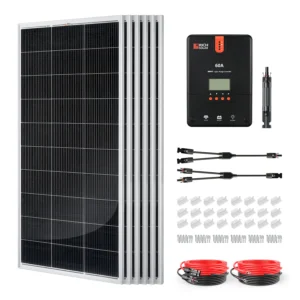
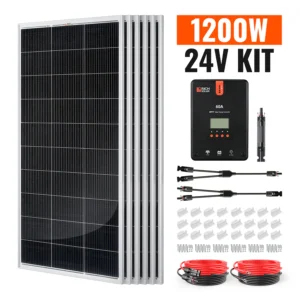
| 1200 Watt RV Solar Kit | 1200 Watt Solar Input | Compatible with various deep-cycle battery options | Automatically detects 12V/24V/36V/48V DC system voltages. | RV Solar Kits |
| 800 Watt RV Solar Kit | 800 Watt Solar Input | Compatible with various deep-cycle battery options | Fast and easy installation thanks to 14 pre-drilled holes; compatible with standard Z-brackets, ground mounts, side pole mounts, and tilt mounts. | RV Solar Kits |
| 600 Watt RV Solar Kit | 600 Watt Solar Input | 100AH 12V Lithium batteries | Built with strong, high-transmission “anti-reflective” coated tempered glass and an anodized aluminum frame. | RV Solar Kits |
| 400 Watt RV Solar Kit | 400 Watt Solar Input | 200AH 12V Lithium battery | High-quality components that work seamlessly together. | RV Solar Kits |
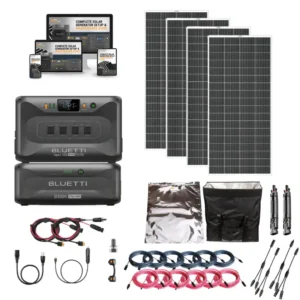
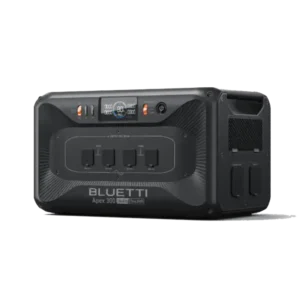
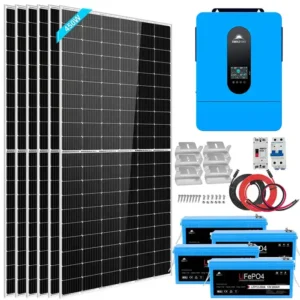
| BLUETTI RVSolar 48V System | Up to 3,000W Solar Input | Expandable B4810 48V LiFePO4 (up to 122kWh total!) | 5-in-1 power hub, 30-minute install, IP65-rated batteries, AI diagnostics. The futuristic, luxury option. | Tech enthusiasts and luxury RV owners want maximum power and seamless integration. |
Common Mistakes First-Time RV Solar Users Make
I’ve seen it all. The eager RVer who buys a 300Wh power bank and expects to run their air conditioner. (Spoiler: it won’t.) The weekend warrior who forgets to angle their panels toward the sun and wonders why charging takes forever.
Here are the biggies to avoid:
- Undersizing your system. Your solar generator for RV use needs to match your lifestyle. Weekend warriors can get away with 1,000Wh. Boondockers need 2,000Wh minimum.
- Ignoring surge watts. That microwave might run on 1,000W, but it needs 2,000W to start. If your generator can’t handle the surge, you’ll be eating cold leftovers.
- Forgetting about the weather. Solar panels work on cloudy days, but at reduced efficiency. Always have a buffer—aim for 20-30% more capacity than your calculations suggest.
- Neglecting maintenance. While solar generators need far less upkeep than gas units, your panels still need cleaning. A layer of dust or pollen can slash efficiency by 10-15%.
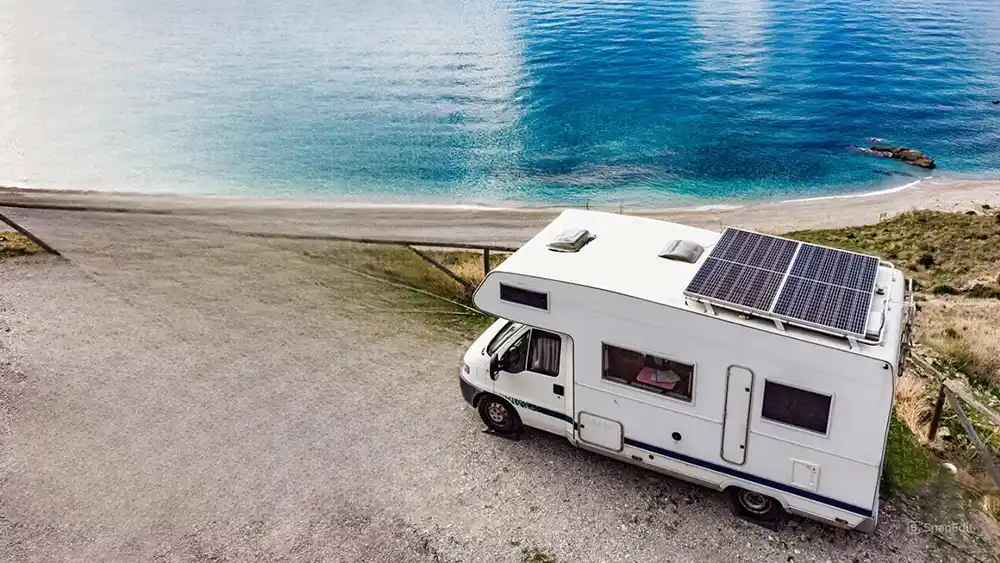
The Future of Solar Power RV Generators: What’s Coming Next?
If you think today’s RV solar generators are impressive, wait until you see what’s around the corner. The industry is moving toward even faster charging, smarter app integration, and alternative battery chemistries. Bluetti’s Pioneer Na, for example, uses sodium-ion technology—the first of its kind—allowing operation in temperatures as low as -13°F.
We’re also seeing bidirectional charging, where your RV solar generator can actually feed power back into your tow vehicle or even serve as an emergency power source for your home. Smart generators now connect via Wi-Fi and Bluetooth, letting you monitor every watt from your smartphone. Some models even integrate with EV charging systems, turning your RV into a mobile power hub.
The bottom line? Solar power RV generators aren’t a trend—they’re the future of outdoor recreation. And that future is bright. Pun absolutely intended.
Conclusion
So here’s the deal. If you’re still running a gas generator in 2026, you’re essentially using a flip phone in the smartphone era. Sure, it works. But a solar power RV generator offers something better: freedom. Freedom from gas stations. Freedom from noise. Freedom from fumes, maintenance headaches, and campground curfews.
Whether you’re a weekend camper who just wants to charge a phone and brew coffee, or a full-time nomad running a residential fridge and air conditioner, there’s an RV solar generator built for your life. The technology has matured. The prices have become reasonable. And the sun isn’t running out of fuel anytime soon.
Invest in a quality solar generator for RV adventures today, and you’ll thank yourself on every starry night, every quiet morning, and every moment when your neighbor’s gas generator sputters to a stop while yours keeps humming silently along. The open road is calling. Power it with sunshine.
FAQs About Solar Generator
Absolutely—if you size it correctly. For most RVers, a 2,000Wh to 3,000Wh solar generator for RV use can handle daily needs like lighting, phones, laptops, and even a fridge. High-draw appliances like air conditioners may require larger units or supplemental battery expansion, but for typical camping and boondocking, a solar power RV generator eliminates the need for gas entirely.
Quality units with LiFePO4 batteries last 3,000 to 6,500 charge cycles before dropping to 80% capacity. That translates to roughly 8-15 years of regular use. The solar panels themselves can last 25 years or more. Compare that to a gas generator, which typically conks out after about five years of steady use.
Yes, but with reduced efficiency. Solar panels still generate 20-30% of their rated capacity on overcast days. Cold weather can actually improve panel performance, though battery capacity drops slightly in freezing temperatures. Some newer models, like sodium-ion units, are specifically designed for extreme cold.
Traditional rooftop solar panels charge your RV's house batteries directly, but they don't store energy independently. A portable solar power RV generator is an all-in-one unit with its own battery, inverter, and outlets. You can take it out of your RV, use it at home during power outages, or move it to a picnic table. It's flexibility in a box.
Unlike gas generators, which produce deadly carbon monoxide and must stay outside, solar-powered generators for motorhomes produce zero emissions. They're completely safe to operate indoors, in tents, or inside your RV. Just ensure adequate ventilation for heat dissipation, and never cover the unit while it's running.
You Might Also Like