


Best Hybrid Solar Kits for Home Use: The Complete 2026 Buyer’s Guide
If you’re asking “What are the best hybrid solar kits for home use?” and “What is a hybrid solar kit?”, you’re probably trying to figure out one thing: Can solar power your home—and still keep you safe when the grid goes down? That’s exactly what hybrid systems aim to do.
Best Hybrid Solar Kits For Home Use – This guide walks through everything you actually need to know before you drop a few thousand dollars on one of these hybrid solar kits — no fluff, no sales pitch, just the straight talk.
But before you start comparing brands and prices, let’s break down the basics in plain English. Then we’ll move into the fun stuff: buying options, grid integration, how battery backup works, benefits, comparisons (hybrid vs traditional vs off-grid), and what you can realistically expect to pay.
What Is a Hybrid Solar Kit?
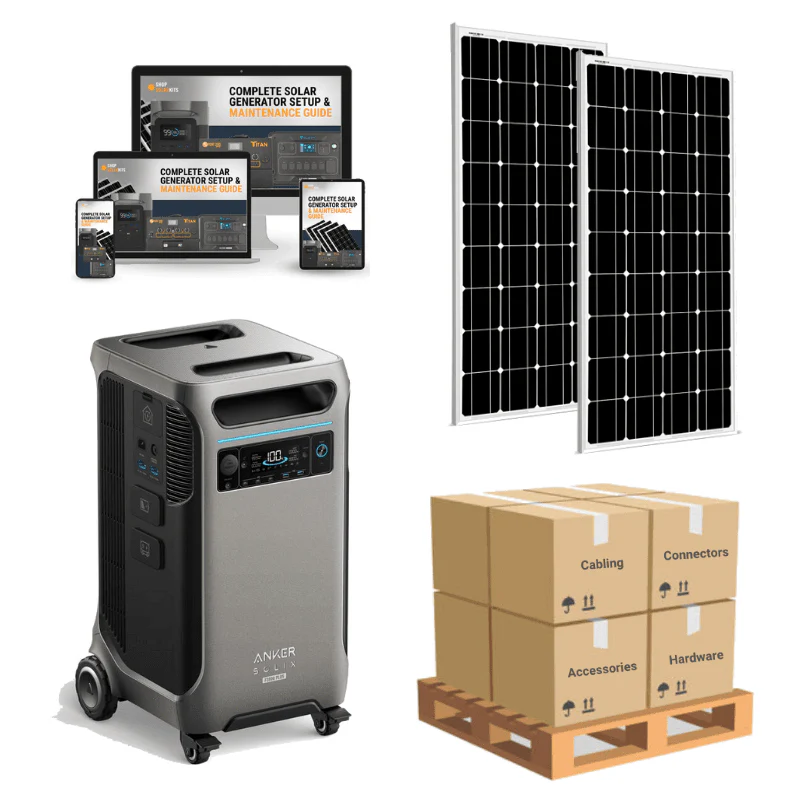
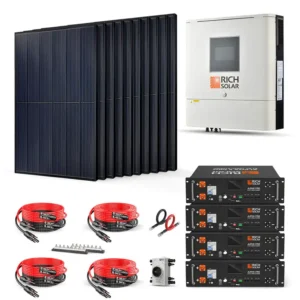
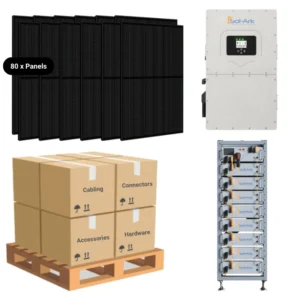
So what exactly is a hybrid solar kit? In plain terms, it’s a solar setup that combines three things at once: solar panels to generate power, a battery bank to store it, and a connection to the utility grid as a backup. Think of it like a car that runs on gas but also has an electric motor — you get the best of both worlds instead of betting everything on one system.
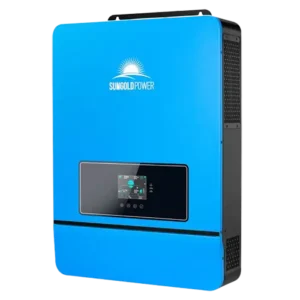
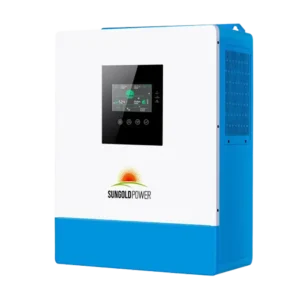
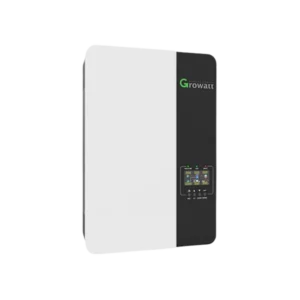
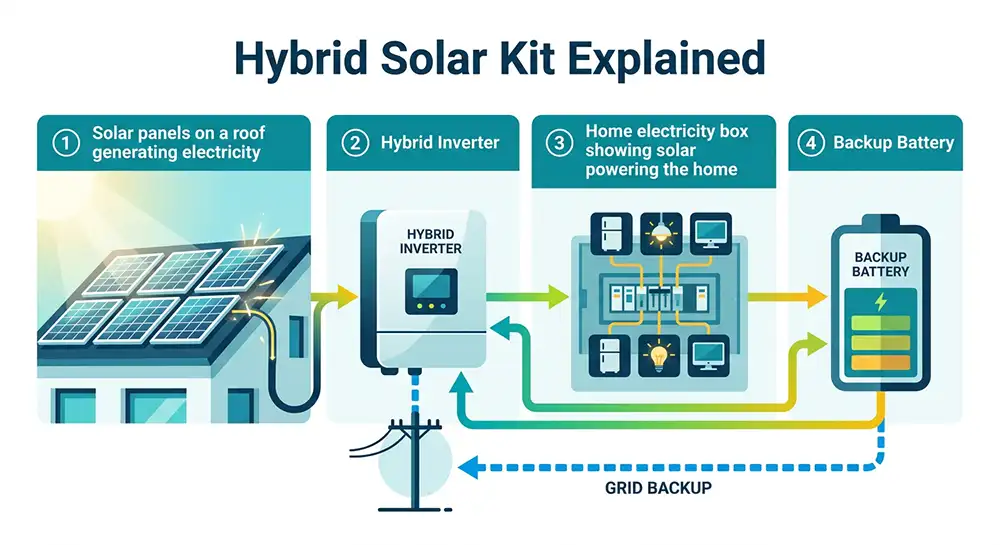
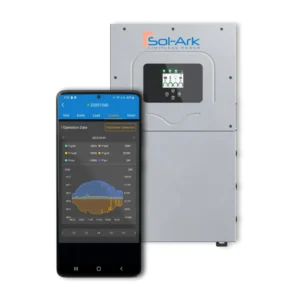
A hybrid inverter sits at the center of the whole operation. It juggles power from three sources — your panels, your battery, and the grid — and decides in real time where the electricity should come from and where the extra should go. During the day, your panels feed your home and top off the battery. At night, you draw from the battery first, then the grid picks up any slack. It’s basically a smart traffic cop for electrons.
Why the “Hybrid” Label Matters
Calling a hybrid solar kit “hybrid” isn’t just marketing spin. A pure grid-tied system has no battery — when the grid goes down, so does your power, solar panels or not. A pure off-grid system has no grid connection at all — you live and die by your battery capacity. Hybrid splits the difference, giving you resilience without forcing you to overbuild your battery bank for every rainy week of the year.
How Do Hybrid Solar Systems Integrate With the Grid?
How do hybrid solar systems integrate with the grid, exactly? The short version: through a piece of hardware called a hybrid inverter, plus a transfer switch that separates your “critical loads” (fridge, WiFi router, a few outlets) from everything else.
Here’s how a typical hybrid solar kit handles that flow in everyday terms:
- Solar panels generate DC power during daylight hours.
- The hybrid inverter converts that to usable AC power for your home.
- Any surplus energy charges the battery bank.
- Once the battery is full, extra power either gets sent back to the grid (if your utility allows net metering) or gets curtailed.
- When solar production drops — cloudy day, nighttime, whatever — the system pulls from the battery first, then automatically taps the grid if the battery runs low.
If the grid goes down entirely, most hybrid solar kits flip into “island mode” within milliseconds, isolating your home from the grid and running purely off solar and battery power. This protects utility workers from backfeeding your electricity into lines they think are dead, and it keeps your lights on without you lifting a finger.
Net Metering and Utility Rules
One thing that trips people up: net metering policies vary wildly by state and utility company. Some places credit you generously for excess solar sent back to the grid; others have scaled back those credits significantly in the past few years. It’s worth calling your utility before you buy a hybrid solar kit, because it genuinely changes the math on system size and battery capacity.
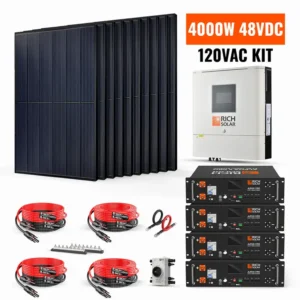
Benefits of Installing a Hybrid Solar Power System
Why go hybrid instead of a plain old grid-tied system? A few reasons keep coming up in conversation after conversation with homeowners.
- Backup Power When the Grid Fails
This is the headline benefit of a hybrid solar kit. Storms, wildfires, aging infrastructure — outages aren’t rare anymore in a lot of regions. A hybrid solar system with battery backup keeps your essentials running: fridge, medical devices, WiFi, a few lights. You’re not sitting in the dark wondering when the utility crew will show up. - Lower Electric Bills, Smarter Timing
Some utilities charge different rates depending on the time of day — this is called time-of-use billing. A hybrid solar kit lets you store cheap solar power during the day and use it during expensive peak evening hours instead of buying grid power at the worst possible price. It’s like filling your gas tank at the cheapest station and never paying full price again. - Energy Independence Without Going All-In
With a hybrid solar kit, you don’t have to gamble your entire household’s power supply on your battery bank surviving a week of gray skies. The grid is still there as a safety net, so you can size your battery more conservatively and still sleep easily. - Better Long-Term Value
Yes, hybrid solar kits cost more upfront than basic grid-tied systems. But when you factor in blackout protection, potential utility incentives, and reduced peak-hour charges, a lot of homeowners find that a hybrid solar system pays for itself in their favor over 10-15 years.
How Do Hybrid Solar Kits Compare to Traditional Solar Panels?
How do hybrid solar kits compare to traditional solar panels, aka standard grid-tied-only systems? The panels themselves are often identical — a solar panel doesn’t know or care whether it’s part of a hybrid solar kit. The difference between a hybrid solar system and a traditional one lives in the inverter and the battery.
| Feature | Traditional Grid-Tied | Hybrid Solar Kit |
|---|---|---|
| Works during a blackout | No | Yes (critical loads) |
| Battery storage | Not included | Included/optional |
| Upfront cost | Lower | Higher |
| Net metering compatible | Yes | Yes |
| Complexity of install | Simpler | More involved |
| Best for | Lowering monthly bills only | Bill savings + resilience |
Basically, if all you want is a smaller electric bill and you don’t care about blackouts, traditional grid-tied panels are cheaper and simpler. If you want your home to keep functioning when the power lines go down, a hybrid solar kit is the way to go.
Compare Hybrid vs Off-Grid Solar Kits
People mix these up constantly, so let’s untangle them. Comparing hybrid vs off-grid solar kits comes down to one core question: is the grid still part of your life or not?
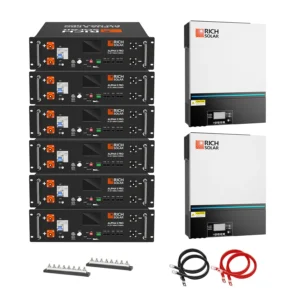
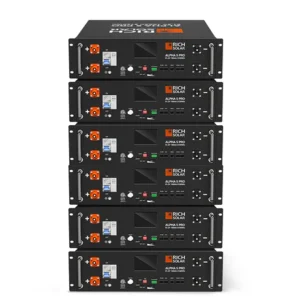
1. Off-Grid Systems
Off-grid means exactly what it sounds like — no utility connection whatsoever. Every watt you use has to come from your own panels and batteries. That means you need a much bigger battery bank sized to cover cloudy stretches, and you typically need a backup generator for worst-case scenarios. An off-grid setup makes sense for remote cabins, rural properties without utility access, or people who genuinely want zero dependency on a power company — but for most homeowners, a hybrid solar kit is the more forgiving choice.
2. Hybrid Systems
A hybrid solar system keeps the grid connection as a fallback, which means you can build a smaller, cheaper battery bank and never worry about running dry during an unusually cloudy month. For the vast majority of suburban and urban homeowners, a hybrid solar kit is the more sensible, budget-friendly choice.
3. Quick Gut-Check
Ask yourself: do you have grid access at your property right now? If yes, a hybrid solar kit almost always makes more financial sense than going off-grid. If no, off-grid isn’t a choice; it’s a requirement.
How Hybrid Solar Kits Compare in Real Life
1. Hybrid vs traditional grid-tied solar
If you’re asking, “How do hybrid kits compare to traditional solar panels?” here’s the plain comparison:
- Traditional grid-tied: lower cost, great for sunny cost savings, limited outage behavior.
- Hybrid with battery: higher upfront cost, more resilience, better control of when power comes from solar vs storage.
If your priority is “just lower the bill,” traditional might be fine. If your priority is “I want power when storms hit,” hybrid is usually the better match.
2. Hybrid vs off-grid: which one fits you?
Let’s make this easy.
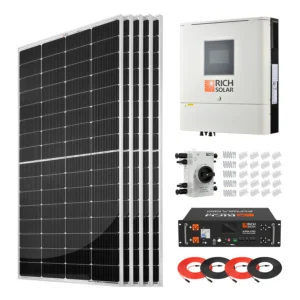
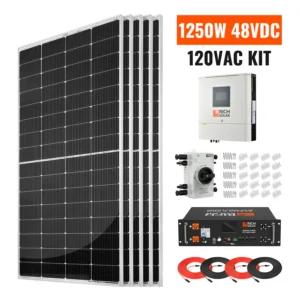
Choose hybrid if:
- You’re on-grid (or expect to be)
- You want backup during outages
- You want a system that’s simpler than a full off-grid system
- You don’t want to size for multi-week autonomy
Choose off-grid if:
- You’re remote or utility access is limited/expensive
- You need full independence
- You can afford larger batteries and careful energy planning
Which Companies Offer Hybrid Solar Kits With Battery Backup Options?
Which companies offer hybrid solar kits with battery backup options? A handful of brands have built solid reputations in the hybrid solar kit space, each with a slightly different approach:
- SunPower: pairs high-efficiency panels with its SunVault storage system, generally positioned toward the premium end.
- Rich Solar: RICH SOLAR began as a solar panel company and quickly grew into the off-grid solar solutions leader. What put us on the map was our dedication to reasonably priced, high-efficiency solar cell technology and our commitment to energy independence.
- ShopSolarKits: has grown into one of the most trusted names in DIY solar, with a team of 25+ solar + battery experts. We help customers ditch inflated utility bills, power off-grid adventures, and stay prepared. Full DIY, or need design/permits/contractors.
Top Hybrid Solar Kits Supplier
| Name | Price Range | Discount |
|---|---|---|
| Sun Gold Power | $5,774 – $31,853.00 | 👉 Get Special Offers |
| Rich Solar | $7,999 – $25,99.99 | 👉 Get Special Offers |
| ShopSolarKits | $2,539 – $149,989.99 | 👉 Get Special Offers |
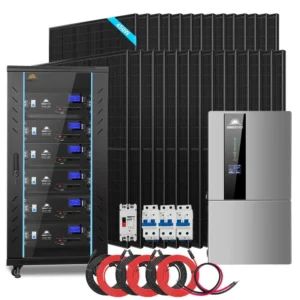

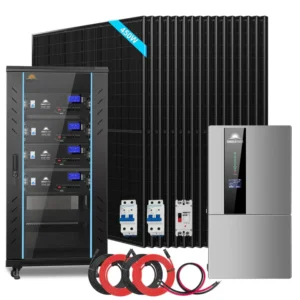

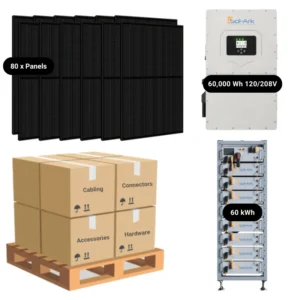
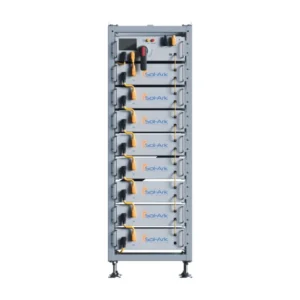
Hybrid solar kit availability depends heavily on your region and which installers are certified for which brands, so it’s worth getting quotes from at least two or three local installers rather than fixating on one manufacturer.
Where Can I Buy Hybrid Solar Kits With Installation Services?
Where can I buy hybrid solar kits with installation services, rather than just parts you install yourself? Most homeowners go one of three routes.
- National Solar Installers
Companies with a nationwide footprint typically handle everything for your hybrid solar kit — permits, design, installation, and warranty support — under one contract. This is the path of least resistance if you want to hand off the whole project. - Regional and Local Installers
Local installers often know your specific utility’s net metering rules, local permitting quirks, and roofing conditions better than a national call center will when quoting a hybrid solar kit. Getting a couple of local quotes alongside a national one is usually a smart move. - DIY Kit Retailers
If you’re handy and comfortable with electrical work (or hiring your own licensed electrician separately), some retailers sell complete hybrid solar kits — panels, hybrid inverter, and battery — as a package you install yourself. This route saves money on labor but shifts the risk and responsibility onto you, so it’s not for everyone. - What to Ask Any Installer
Before signing anything for a hybrid solar kit, ask about warranty length on the inverter and battery separately (they often differ), what happens if a component fails after year 3, and whether the quoted price includes permitting and interconnection fees. These questions catch a surprising number of hidden costs.
Average Cost of a Residential Hybrid Solar Setup
Let’s talk numbers, because this is usually the real deciding factor. The average cost of a residential hybrid solar kit typically lands somewhere between $20,000 and $35,000 before incentives, for a hybrid solar system sized to cover a typical home’s daily use plus a battery bank that can carry essential loads through an outage.
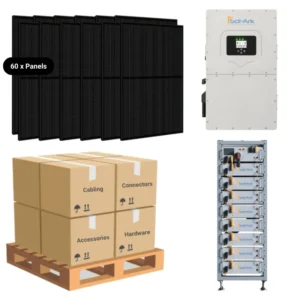
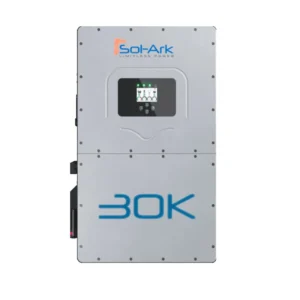
Here’s roughly how that breaks down:
- Solar panels and mounting hardware: a meaningful chunk of the total, scaling with your roof size and energy needs.
- Hybrid inverter: a few thousand dollars on its own, since it’s the brain of any hybrid solar kit and does more work than a standard string inverter.
- Battery bank: often the single biggest line item, and cost scales directly with how many hours of backup you want.
- Labor, permitting, and interconnection vary a lot by region and by how complicated your electrical panel upgrade needs to be.
Federal and state incentives can knock a substantial percentage off that upfront hybrid solar kit price, so always run the numbers after incentives, not before. And remember: a bigger battery isn’t automatically “better” — it’s better matched to your actual backup needs, which is a conversation worth having honestly with your installer instead of just buying the biggest option on the shelf.
Conclusion
Hybrid solar kits sit in a genuinely useful middle ground — you get real backup power when the grid fails, smarter control over when you use expensive utility electricity, and you’re not stuck footing the bill for an oversized battery system built for a doomsday scenario that probably won’t happen. Is a hybrid solar kit more expensive than a basic grid-tied setup? Sure. But for a lot of homeowners, especially in areas where outages are becoming more common, it’s the difference between “inconvenienced” and “completely in the dark” during the next storm.
Before you commit to a hybrid solar kit, get multiple quotes, ask hard questions about warranties, and be honest with yourself about how much backup power you actually need versus how much sounds impressive on paper.
FAQs About Hybrid solar kits
In many cases, yes, you can retrofit a battery onto an existing system, but it depends on whether your current inverter supports it. Some setups need a separate battery-ready inverter added alongside the existing one, which adds cost. It's worth asking an installer to review your current system before assuming either way.
No — by definition, a hybrid system relies on the grid as a fallback source. If you don't have grid access, you'd want to look at a true off-grid system instead, sized with a larger battery bank and typically a backup generator.
Most lithium-based batteries used in a hybrid solar kit are rated for somewhere around 10 years or a set number of charge cycles, whichever comes first, though actual lifespan depends on how deeply you discharge them regularly and local climate conditions.
That depends on your setup. Many hybrid solar kits are configured to back up only "critical loads" like the fridge, WiFi, and a few outlets, to stretch battery life further. Whole-home backup is possible but usually requires a larger, more expensive battery bank.
It can still make financial sense if your utility uses time-of-use billing, since you can store cheap solar power and avoid pricier peak-hour rates. But if outages are rare and your rates are flat, a simpler grid-tied system without battery storage might get you a faster payback period.
You Might Also Like