



EcoFlow Ocean Pro System Review: The Whole-Home Battery That Wants to Replace Your Generator
Everyone in the solar world is talking about the EcoFlow Ocean Pro system, and honestly? It’s hard to blame them. EcoFlow spent years making portable power stations for campers and van-lifers, and now they’ve walked straight into Tesla’s backyard with a permanent, whole-home battery setup that claims to out-muscle the Powerwall 3. Bold move, right?
What Exactly Is the EcoFlow Ocean Pro System?
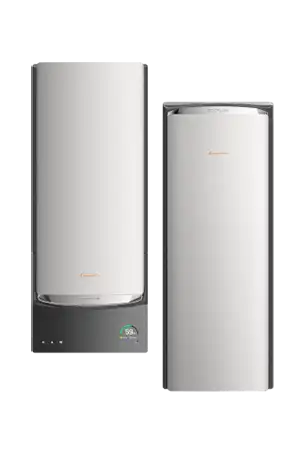 Think of the EcoFlow Ocean Pro system as a Swiss Army knife for home energy. It’s not just a battery. It’s a hybrid inverter, a battery bank, an EV charger, and a brain that manages all of it, wrapped into one modular package. EcoFlow calls it the first “fully integrated, multi-source home energy system” in the US, and that phrase actually earns its keep here.
Unlike a single-source backup battery, the Ocean Pro system can pull power from solar panels, the grid, portable generators, gas standby generators, and even EcoFlow’s own portable power stations. That’s five potential power sources feeding one home. If one runs dry, another picks up the slack. It’s less like a single lifeboat and more like a whole flotilla standing by.
The Core Hardware Behind the EcoFlow Ocean Pro System
Every EcoFlow Ocean Pro system starts with two building blocks:
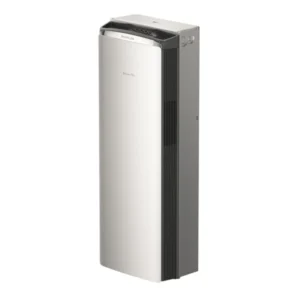
- The OCEAN Pro Hybrid Inverter – a 24kVA split-phase unit that handles the heavy lifting
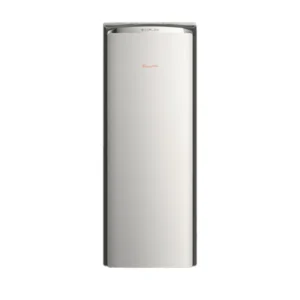
- The OCEAN Pro Battery – a 10kWh LFP (lithium iron phosphate) module that stacks with up to seven siblings
One inverter, up to eight batteries. That’s the whole formula, and it’s refreshingly simple once you see it laid out.
1. Solar Input That Doesn’t Play Small
The inverter accepts up to 40kW of solar input across 8 MPPT (maximum power point tracking) channels. That’s a genuinely massive appetite for rooftop energy, way beyond what most residential Powerwall-style systems can swallow. More solar in means less grid dependence, and honestly, more bragging rights at the next block party.
2. Continuous Output You Can Actually Lean On
Here’s where the EcoFlow Ocean Pro system flexes hardest: 24kW of continuous output with a 205A LRA (locked rotor amp) surge rating. Translation? It can start big, power-hungry motors, like two HVAC compressors or a pool pump, without stuttering. Ever watched a cheap generator choke the moment your AC kicks on? This system is built to never do that.
How the EcoFlow Ocean Pro System Actually Works
Picture your home’s electricity like water flowing through pipes. Normally, it comes from one source: the utility company. The Ocean Pro system adds several new taps to that plumbing.
1. Multiple Sources, One Smart Brain
Solar panels feed the battery first. Once it’s topped off, extra solar either powers the home directly or exports back to the grid, depending on how you’ve set things up. If the grid goes down, the battery seamlessly takes over.
If the outage drags on and the battery drains, you can plug in a portable generator, a gas standby unit, or even a compatible EcoFlow power station to keep the cycle going. EcoFlow markets this as “infinite backup,” and while nothing is truly infinite, the logic holds: as long as you can feed it fuel or sunlight, it keeps running.
2. The Role of the Smart Electrical Panel
Pair the inverter with EcoFlow’s Smart Panel, and the EcoFlow Ocean Pro system gets even sharper. It can prioritize essential circuits during an outage, shed non-critical loads automatically, and give you circuit-level visibility through the EcoFlow app. It’s the difference between guessing what’s draining your battery and actually knowing.
Battery Capacity: From a 10kWh Starter to an 80kWh Powerhouse
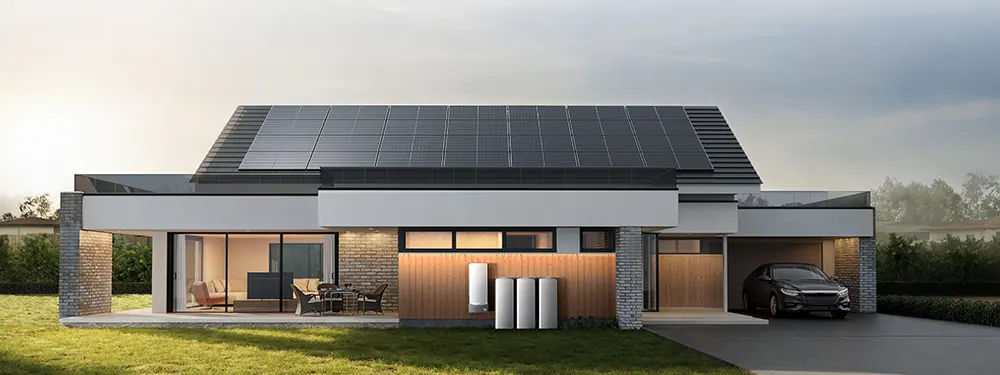
This is arguably the sneakiest advantage of the whole lineup. A lot of home battery systems lock you into a fixed size on day one. The Ocean Pro system, by contrast, scales.
Start with a single 10kWh battery if your needs are modest. Add more later as your family grows, you buy an EV, or you decide to go fully off-grid. Stack up to eight units per inverter, and you’re sitting on 80kWh of storage, expandable to roughly 90kWh when you factor in a second inverter setup for larger homes. Compare that to Tesla’s Powerwall 3, which tops out around 40.5 kWh. Wh across three units, and you can see why EcoFlow is talking trash in its marketing.
Why the Inverter Never Needs to Be Replaced
Here’s a detail that’s easy to miss but genuinely matters for your wallet: a single OCEAN Pro inverter supports the full 80 kWh range. Some competing systems force you to buy a second or third inverter as you scale up, which adds cost, wiring complexity, and more stuff that can eventually break. The EcoFlow Ocean Pro system keeps the math simple. One brain, however many batteries you need.
EcoFlow Ocean Pro vs Tesla Powerwall 3: A Side-by-Side Comparison
Numbers tell the story better than adjectives, so here’s a table comparing the two heavyweights.
| Feature | EcoFlow Ocean Pro System | Tesla Powerwall 3 |
|---|---|---|
| Max battery capacity | Up to 80–90 kWh (modular) | 40.5kWh (3 units) |
| Continuous output | 24kW | ~11.5 kW per unit |
| Solar input | Up to 40kW (8 MPPTs) | Up to 20kW |
| Surge/LRA rating | 205A | Lower, unit-dependent |
| Backup fuel sources | Solar, grid, generator, gas standby, power stations | Solar and grid only |
| Warranty | 15 years | 10 years (typical) |
| EV charging integration | Built-in, 11.5kW AI-scheduled | Requires a separate charger |
| Waterproofing | IP67 on battery/power electronics | Lower rating |
Numbers like these are exactly why the EcoFlow Ocean Pro system keeps getting compared to the Powerwall in every review I read. It’s not a subtle rivalry.

Installation: What to Expect When You Set Up an Ocean Pro System
Installing any whole-home battery isn’t a weekend DIY job for most homeowners, and the Ocean Pro system is no exception, even though EcoFlow advertises a “DIY-friendly” modular design. A licensed installer typically handles the electrical tie-in, mounts the inverter and batteries (indoor or outdoor, since the enclosure is NEMA 3R rated), and configures the Smart Panel.
What you can control is sizing: decide upfront how many batteries you’ll need, or at least plan for future expansion, so the install crew wires things correctly the first time.
Indoor or Outdoor? Your Choice
Because the OCEAN Pro battery carries an IP67 rating on its power electronics section and the inverter is weatherproofed for outdoor use, you’re not stuck putting this in a climate-controlled closet. Garage, exterior wall, even areas prone to light flooding, since it’s rated to handle up to 2.6 feet of water exposure. That’s a genuinely rare feature in this category.

Smart Features and the EcoFlow App
Every EcoFlow Ocean Pro system ships with app-based control, and it’s more than a glorified on/off switch. The app learns your daily energy patterns, predicts solar generation, and automatically shifts your usage to cheaper time-of-use rate windows. Flip on “Intelligent Mode” and let the algorithm handle the math you’d otherwise need a spreadsheet for.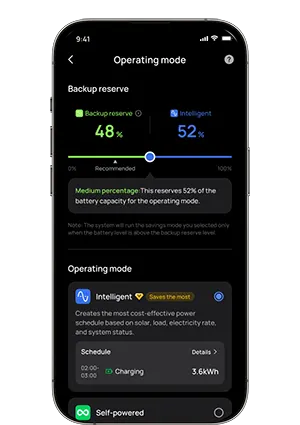
You also get remote diagnostics. If something’s off, EcoFlow’s support team can often catch and fix it before you even notice a problem, which saves you the hassle of a truck roll for a software hiccup.
EV Charging Built Into the Ocean Pro Ecosystem
Here’s a feature most competitors treat as an afterthought: EV charging is native to the EcoFlow Ocean Pro system, not bolted on. The optional charger delivers 11.5kW (48A) through a standard SAE J1772 connector, adding up to 46 miles of range per hour. AI scheduling coordinates your solar production, battery reserves, grid rates, and your car’s departure time so you’re not charging at peak price just because you forgot to flip a switch.
Fast Charge, Scheduled Charge, and Smart Charge modes cover pretty much every driving habit, whether you need a quick top-off before a road trip or a slow, cheap overnight trickle.
Safety and Durability: Built Like It Expects a Storm
Nobody wants a battery that’s a fire risk sitting next to their living room. The Ocean Pro system is certified to UL 9540A, UL 9540B, UL 1973, and UN 38.3 standards, with integrated fire suppression and thermal management baked in. The casing itself uses aerospace-grade materials designed to resist rust, UV damage, and cracking over time, so it’s not going to look like a battered lawn ornament after five Midwest winters.
Waterproofing That Actually Means Something
IP67 on the battery and power electronics, IP55 on the wiring compartment, and IPX4 on the inverter wiring section. In plain English: rain, dust, and even brief submersion aren’t going to take this system down. If you live somewhere hurricanes or flash floods are a real concern, that rating isn’t just marketing fluff; it’s peace of mind.
Warranty and Long-Term Cost of Ownership
A 15-year warranty is long by industry standards, and it covers both parts and performance. EcoFlow also claims the battery can handle over 10,000 charge cycles when used properly, which, if it holds up in the real world, means most homeowners won’t be thinking about battery replacement for a very long time. Add in remote diagnostics that catch problems early, and the total cost of ownership starts looking a lot friendlier than the sticker price alone suggests.
Who Should Actually Buy an EcoFlow Ocean Pro System?
Let’s be real: not every household needs 80kWh of battery storage. So who’s this actually for?
- Homeowners in areas with frequent, long-duration power outages
- Families running EVs, pools, or large HVAC setups that need serious surge power
- Off-grid or rural properties without reliable utility access
- Anyone planning to expand energy needs over time (bigger family, home addition, new EV)
If your power rarely blinks and your monthly usage is modest, a smaller, cheaper backup battery might make more financial sense. The EcoFlow Ocean Pro system shines brightest when your needs are big or growing.
Common Mistakes to Avoid When Sizing Your Ocean Pro System
I’ve seen a few recurring stumbles when people plan out one of these systems:
- Underestimating future load. Buying exactly what you need today, then wishing you’d left room to expand.
- Skipping the Smart Panel. Without it, you lose a lot of the circuit-level control that makes outages manageable.
- Ignoring installation logistics. Not every installer is trained on the OCEAN Pro lineup yet, so vet your contractor.
- Forgetting the generator cord accessories. Some connection cables are sold separately, and you don’t want to discover that mid-outage.
EcoFlow Ocean Pro System: Pros and Cons
1. Pros:
- Massive expandable capacity (up to 80–90 kWh)
- Multiple backup fuel sources, not just solar and grid
- 15-year warranty with remote diagnostics
- Native EV charging with AI scheduling
- Rugged, weatherproof, fire-suppressed design
2. Cons:
- Higher upfront investment than smaller single-battery systems
- Professional installation strongly recommended, adding to cost
- Newer product line, so long-term real-world data is still accumulating
- Some accessories (cables, cords) sold separately

Is the EcoFlow Ocean Pro System Worth It in 2026?
Here’s my honest take: if you think of home backup power the way you think of insurance, the EcoFlow Ocean Pro system is less like a fire extinguisher and more like a whole sprinkler system for your house. It costs more upfront, but it’s designed to handle the big stuff: the multi-day outage, the heat wave that pushes two HVAC units to their limit, the flood that knocks out the grid for a week.
Recognised among TIME’s Best Inventions in the green energy category, it’s clearly not just hype dressed up in a press release. Whether it dethrones the Powerwall 3 long-term will depend on real-world reliability over the coming years, but on paper, and increasingly in early reviews, it’s giving the segment leader a genuine run for its money.
Conclusion
The EcoFlow Ocean Pro system takes everything people already loved about EcoFlow’s portable power stations- bigger batteries, smarter software, rugged builds – and scales it up into permanent, whole-home territory. With expandable storage up to 80kWh, a beefy 24kW inverter, five different backup power sources, and a 15-year warranty backing it all, it’s built for homeowners who want real energy independence, not just a battery that quietly sits in the garage waiting for a five-minute blip.
Is it for everyone? No. But if your household leans on power-hungry appliances, lives somewhere storms or outages are common, or is planning to add an EV to the driveway, this system is worth serious consideration.
FAQs About EcoFlow Ocean Pro System
EcoFlow doesn't publish flat retail pricing since costs vary by battery count, inverter setup, and installation region. Getting a custom quote through EcoFlow or an authorized dealer is the most reliable way to know your actual number.
Yes, with the right battery count and Smart Panel setup, it's designed to power full-home loads, including HVAC, EV charging, and pool pumps, not just a handful of essential circuits.
EcoFlow rates the battery for over 10,000 charge cycles under proper use, backed by a 15-year warranty covering parts and performance.
While the modular design is described as DIY-friendly, most homeowners will still want a licensed electrician or installer to handle the electrical tie-in and Smart Panel configuration safely.
Absolutely. That's one of the system's biggest selling points: start with a single 10kWh battery and expand up to eight units (80kWh) on the same inverter without replacing existing hardware.
EcoFlow Stores
| United Kingdom | Italy | France | Spain | Germany | Canada | Australia | USA |
|---|---|---|---|---|---|---|---|
 |
 |
 |
 |
 |
 |
 |
 |
| Visit Here | Visit Here | Visit Here | Visit Here | Visit Here | Visit Here | Visit Here | Visit Here |
You Might Also Like